
How Some Very Old French Vines Made Me Examine My Thoughts on Aging
In the last few years, there’s been a new appreciation for very old vines. I wondered why ageing humans couldn’t enjoy the same recognition.
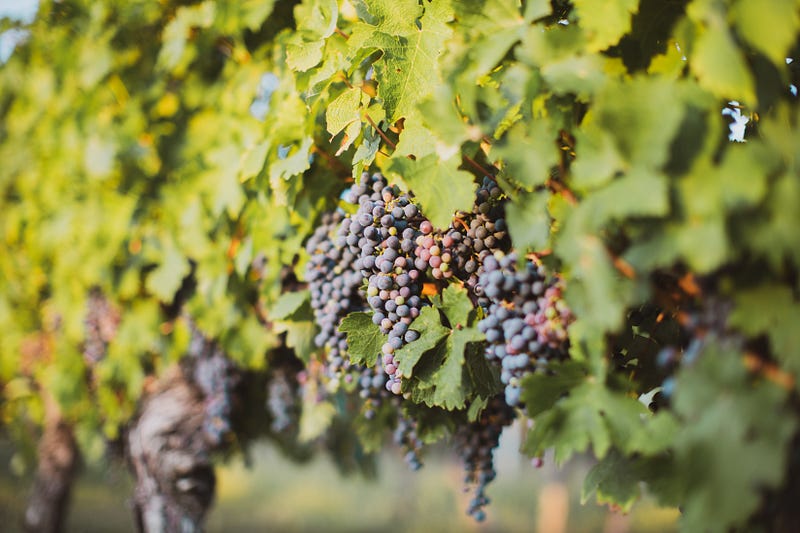
This is an edited version of an article I originally wrote for wine writer Jancis Robinson’s Old Vine competition.
I was almost seventy and had just moved, somewhat impulsively, from California to a small winemaking village in southern France where I didn’t know a soul and just barely spoke the language. I was also all alone which, while it seemed brave and adventurous, also made me wonder if, just maybe, I was a little long in the tooth (all still mine) for this type of adventure.
As much as I hated to admit it I was old. By almost every definition.
I even Googled “Is seventy considered old?” to make sure. Then I Googled again. And again, just in case the definition might have shifted to eighty or ninety. It hadn’t. I was old. Meaning confused and doddering like the old geezers in movies with nothing to do but hang out in the departure lounge waiting for their heavenly flights to be called.
In The Fountain of Age, Betty Friedan writes that ageing is acceptable only if it passes for youth. Taking this to heart, I slap on anti-ageing cremes and lie about my age. While this has never prompted bartenders to ask for my ID, on good days I can almost convince myself that I’ve passed under the old age radar.
Denial only goes so far though. I think of all the things I have yet to accomplish and probably never will now and, unlike Edith Piaf, I have regrets. And not just a few.
But one cold and windy March afternoon, I met up with some contemporaries. A cluster of Carignan vines in their sixties and seventies growing on the terraced hillside of a friend’s vineyard.
Gnarled and twisted, their bare limbs looked as fragile and arthritic as I sometimes feel on bad days. When I leaned down to touch a branch, I imagined it would snap with the slightest pressure. No way to slip under the age radar for this lot.
But, as I was about to learn, appearances are deceiving. These carefully tended old vines are tough and resilient, uniquely adapted to the often hostile Languedoc climate. While age has slowed them and they’re not as productive as they once were, years under the hot sun have mellowed their fruit, giving the wine a complexity that younger vines often lack.
In periods of drought—frequent in this region— their deep roots reach through layers of schist to find life-giving moisture and minerals. Safely anchored, they're able to withstand the winds that whip down from the mountains. In short, they're capable of dealing with whatever difficulties Mother Nature throws at them.
Carignan vines like these once dominated the Languedoc. Sturdy and high yielding, they were considered the workhorse of French vineyards. Soldiers in both world wars drank wine from such vines. But, as my friend explained, Carignan was also synonymous with the overproduction of cheap red wine which didn't help their popularity.
Languedoc was once referred to as the Land of Plonk.
Growers were offered cash incentives to pull up their Carignan vines and replace them with varieties more in vogue at that time.
My friend clearly has great affection and respect for her parcel of Carignan. But her old ladies, as she calls them, narrowly escaped the same fate of thousands of other vines in the region. The vineyard, previously owned by a former mayor of the village, had been in his family for several generations. But the vines he remembered harvesting as a boy were less productive now and required a lot of care and attention. He assumed my friend would have no interest in keeping them.
He was wrong.
"They are part of the history of this area," my friend said. "This man’s family, along with generations of Languedoc winegrowers, tended and sculpted these old vines.”
“These old vines were here before the noise of heavy tractors — when wine growers ploughed the land and horses had to be sheltered from the hot sun. They've been threatened with extinction, ravaged by time, by weather, but still, they hold on. If they'd been ripped up, there would be no place on this hill where you could remember all this. I felt it my duty to preserve them."
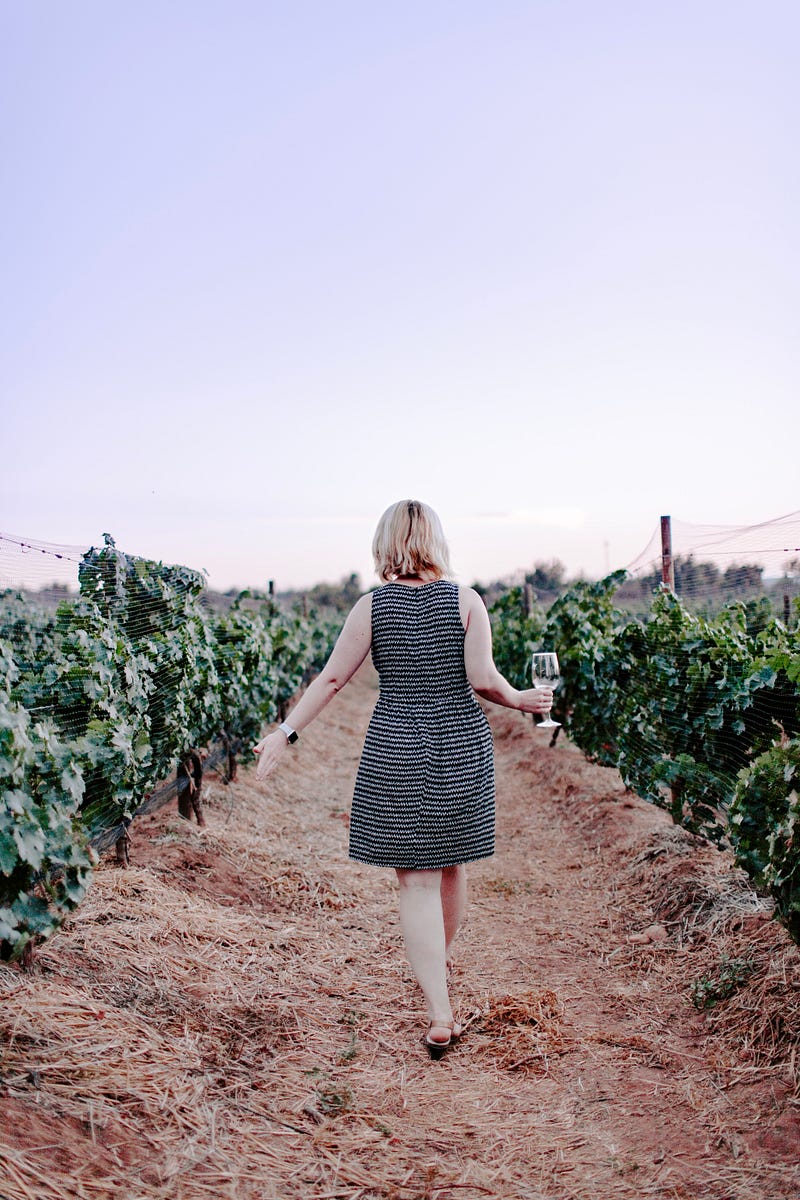
As I looked out over the hilly vineyard landscape and breathed in the clear cold air, I could hear birds and the sound of the wind.
Ignoring the distant hum of traffic below, it all seemed timeless, much as it must have looked when these old ladies were young.
In a few weeks, it would be spring, wildflowers would colour the hillside, the vines would wake from their winter slumber and the life cycle would begin again as it has for so many decades.
“I find it so inspiring," my friend said. "They have so much still to give, these old ladies. There is so much we can learn from them, from nature, if we just have the patience to observe."
Listening to her, I wondered what I could learn from these old vines. Wasn't there a richness to be drawn from my own seven decades?
I have experience, perspective, hopefully even a little wisdom, that I didn't have at thirty. Couldn't I draw from this inner source to find inspiration, creativity, courage? A spirit of inner youthfulness?
I decided I could and would. I might have slowed a bit, maybe I'm less productive these days, but, like the old ladies, I believe I still have a lot to give.
Which is not to say that I’ve entirely given up on the serums and wrinkle cremes.

If you’d like to read some of my other stories, plus thousands of others on Medium, why not subscribe?
Part of your subscription will help struggling (and elderly) writers like me and other struggling (and much younger) writers on Medium. Just hit the link. https://janicemacdonald.medium.com/membership
Thanks in advance, Janice
The Memoirist
What’s Your Story?
Following
425
8


