
Trans Women May Soon Give Birth— A Trans Woman’s Perspective
The first successful birth from a transplanted womb has surgeons speculating about transplanting wombs into trans women’s bodies. Here are my thoughts.
Here’s the link to the original article:
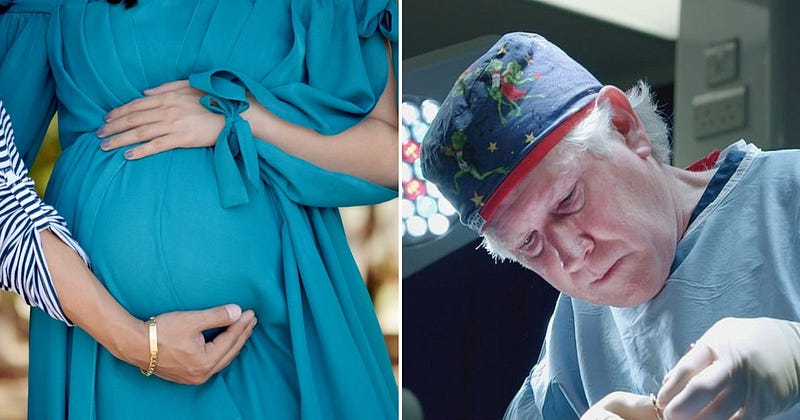
Surgeon Calls For Womb Transplants To Allow Transgender Women To Have Their Own Children
Here’s an excerpt from the article:
“According to Inglefield, the procedure involving a uterus transplant done on transgender women would be “essentially identical” to the procedure done on non-transgender women. “This pioneering birth is extremely important for any trans female who would like to carry her own child,” Dr. Inglefield said during an interview with The Mirror.
“Because once the medical community accept this as a treatment for cis-women with uterine infertility, such as congenital absence of a womb, then it would be illegal to deny a trans-female who has completed her transition.”
First off, let’s fix some of this language:
a) Can we stop referring to women as “females.” This probably comes from cops. They have this annoying, dehumanizing cop-speak — “a 22yo male,” “a middle-aged female.” Female is an adjective. ‘Female’ could be a female cow, or a female hummingbird. A woman is an adult, female human* (see note at end of this piece).
b) “Completing her transition” is an old concept from TPATH, the standards created by Dr. Harry Benjamin over a half-a-century ago. We are moving past that now. A number of surgeries are available to trans folk to help them alleviate their dysphoria. A woman can have as many, or as few, surgeries as she feels she needs to. A woman can decide to have facial feminization surgery. Or not. A woman can choose to have breast augmentation. Or not. A woman can undergo orchiectomy or genital reconstruction surgery (orchiectomy + vulvoplasty). Or not. It’s an individual choice, and no surgery should ever be done to meet some societal expectation of what it means to be a woman.
But now, to the article:
Surgeons are now able to transplant a working womb. This is wonderful. This is significant. This is historical. For trans women, this can mean so much. It makes me so happy to read this is now a possibility.
Not for me, of course. Even were I cisgender, I’d be menopausal. Missed the boat on that one. I’m thrilled for future generations, for young trans women seeking to bring life into this world.
Last fall I experienced a very strange emotional moment. I had woken up late on a Saturday, and was lost in thought in bed. More accurate would be to say I was feeling, rather than thinking. And suddenly I was overcome by such an overwhelming wave of emotion I was sobbing. I sat up, and I was crying so intensely I was gasping for air. I feel self-conscious recounting it even now. You see, my body is still evolving. My breasts have grown, and I’m full of hormones. And suddenly it hit me, like a ton of bricks, that I will never, ever be pregnant, and will never birth children. Even while sobbing, I was angry and frustrated — “I know this! Of course I know this.” And yet the feeling of loss wouldn’t subside.
It occurs to me that few men conceive of the courage it requires to embark on this adventure. One signs up for nine months of emotional upheaval and physical transformation. Small though it may be, there is always the chance of dying during childbirth. There is also the chance of a baby being born with deficiencies or birth defects. There’s almost a certainty that one’s body will never quite bounce back. There’s the enormous responsibility of bringing a life into this world.
The actor Blake Lively, speaking about learning she was pregnant with her first child, says, “It felt like being a passenger on board a plane and being told: ‘By the way, you are now going to be piloting the plane’.”
And yet so many women happily take this on. I would, in a second.
Women who cannot conceive, or cannot carry to term (what used to be called “barren” women) have historically been looked down on, seen as lesser women, as less than women. Even in present society that stigma bites hard. Marriages have broken apart because of it. Women who CAN conceive but choose — for one of many possible personal reasons — to remain child-free are often derided. There are articles written by childless women, defending this choice. Here are a few of the awful comments made to child-free women, and their responses. And here is the comedic duo Garfunkel & Oates, poking fun at this.

Imagine the feelings around this from a trans woman’s perspective.
Here are two comments I saw in a trans women’s group where the link to the original story was posted:
“I don’t care what it takes. C-section? Okay. Medical problems? Okay. Mental problems (come back)? Okay. Death? Okay. I want a biological child, and I can’t give sperm now to a womb even before hormones.” — Jaimee B.
“I have always dreamt I would wake up and be fully female and having a baby. I am 61 and have been post-op for 13 years now and even before I began my transition back in 1998 I had looking into this because I have always wanted to become pregnant have a baby and be a mommy. I had even dreamt of meeting a female to male and having the doctors switch our genitals so we could have a baby, but it was not meant to be for me. I am happy that the current generation and the ones that will follow will be able to have this procedure so they can have their dreams come true” — Anya M.
I have three wonderful children. One is a full adult now, the others now in their teens. I am tremendously proud of them. If I were to meet any of them for the first time, I’d want to know them. Being a parent is one of the better things I’ve done in my life — and becoming a parent was a very important priority for me. I love those kids. So I feel self-conscious admitting that something about my parenting experience feels incomplete — because I didn’t birth them myself.
Still, I do have children. Many trans women never have this opportunity.
I had to make a hard choice when I was twenty-two years old. One path would have taken me to Hollywood, away from my family in New York. I imagined myself working in the porn industry or as a sex worker, paying for transition that way (it’s expensive!). That road meant saying goodbye to any sense of security I had. It also meant, I thought, that no one would ever love me. And it meant I’d never have kids. (I had already amassed a hefty dose of internalized transphobia by then, and I couldn’t envision a happy life for me on that path). So I chose another route. I chose to play the part of a man, to try and shrug off this female identity, to “beat it” somehow.
I came close to pulling it off, at least as far as appearances go. I had two marriages, three children — two little ones and one entering adulthood. I had a house, a comfortable income. Respectability. Stability.
One of the happiest moments of my life was taking my oldest daughter to Disneyland when she was nine.
One of my most peaceful moments: my then spouse and myself walking through our neighborhood at sunset with our two-year old, each of us holding him by the hand, and swinging him high, together. The sound of my kid laughing, asking “again, again!”
One of my proudest moments is simply watching my then-wife as she reclined on a lawn chair in the back yard, on a warm summer’s day — our baby daughter resting on her bosom.
I almost pulled it off. Except I was deeply depressed a lot of the time.
I witnessed three pregnancies. I’ve held three babies in my arms as they emerged from another woman’s womb. I went to the ultrasounds, the doctor’s appointments. Such melancholy. My spouse had the miracle of life growing inside her — my barren body held no such miracle. And I couldn’t voice my sadness, my envy. Once I shyly expressed it, and was immediately shut down by “oh no, trust me, you wouldn’t want this.” Except I do. I would gladly take the cramps, the morning sickness, the pain of childbirth. I would be grateful and honored. And then there’s the TERFs. These bigots love to tell trans gals that we’re “not real women” because we cannot conceive, cannot birth a child. The premise is faulty, of course. A childless woman are no less a woman. “That’s different,” yell the TERFs. “You don’t even HAVE a uterus. You’ve never had one.”
There is something profoundly vile in using a biological handicap against someone to rob them of legitimacy.
The notion is easily disproven. There are women born without a uterus — Mayer–Rokitansky–Küster–Hauser syndrome (MRKH). There are women who experience Complete Androgen Insensitivity Syndrome (CAIS). Women with Polycystic ovary syndrome (PCOS) often have trouble conceiving or carrying to term. And trans men can (and do) have pregnancies. We live in a society with rapidly evolving gender roles.
If I go to my deathbed with only one regret, it’ll be not being able to give birth to a child. Never feeling the kicks inside my belly. Never seeing that little shadow-among-shadows on ultrasound and recognizing the life inside me. Never holding in my arms a baby born from my own body. I’m thrilled for future generations, for young trans women seeking to bring life into this world. They will get to live the miracle, not just witness it.
A Recent Study of Trans women
A recent study of 182 trans women showed 171 of them (94%) expressed eagerness to gestate and give birth to a child. 161 (88%) said that the ability to menstruate would enhance their self-perception of femininity. Nearly all of them (180, or 99%) said they believe having a uterus transplant would lead to greater happiness.
Previous studies have already confirmed that trans women want to become mothers at the same rate as cisgender women.
Uterus Transplants in Cisgender women
Even among cis women, uterus transplant procedures are a very new development. There are few medical centers that focus on this, and they have stringent requirements for acceptance (including an age requirement, 20–40 yrs. of age). Donors can be up to 50 years old. Live donors are always preferred — and there are many people who do not want to experience gestation or childbirth, who are willing to volunteer for this.
Science is constantly evolving, and it’s likely this procedure will be more commonplace in the future. And it’s quite possible that this procedure will expand to include trans women (just like laparoscopic peritoneal vaginoplasty was a procedure pioneered on cisgender women with vaginal agenesis, and then became a standard option for vaginoplasty for trans women).
Only a handful of uterus transplants have been carried out. These procedures were performed at BaylorScott&White Health, in Texas. Here are recent two success stories (cisgender women):
If you’d like to see the actual procedure, click here (TW: graphic video).
Another recent successful uterus transplant was carried out at Cleveland Clinic.
*NOTE: Posie Parker and her gang of TERFs in the UK have taken to using “woman = adult human female” in their anti-trans rhetoric. Some people have objected. I personally shrug. I am trans. I am an adult female human. I don’t see the problem.
Resources:

If you liked it, please ⭐applaud⭐️ it with a few claps (up to 50) — — — — — ⭐ ️And share this with friends! ⭐️ — — — — —
Please consider supporting my work on Patreon
Or you can just support my work by sending me a cup of coffee ☕
► Find me on Facebook | ► And Twitter | ► And Instagram
Top stories by Cassie Brighter:
■ Mariee Juarez Died ■ 15259 — That’s Our Family Number. You Have to Remember ■ The End of White Civilization ■ What Do We Do About Wombs? ■ Men Need Clear Instructions (a #MeToo conversation) ■ Just a Bad Date ■ An Open Letter To A Good Man ■ Gender, Orientation, Presentation ■ Why This Sudden Trans Kids Trend? ■ What Do We Do About Women With A Penis? ■ Trans Women & The Danger of a Single Story ■ Trans Women May Soon Give Birth — a trans woman’s perspective ■ I Wasn’t ‘Annoyed’ at Your Misgendering Me ■ Welcome, Welcome Cassandra! — The Long Journey to Self-Acceptance ■ Coming Out Trans To Your Children: A Step-by-Step Guide ■ Tales of Transition: The Landscaper and the Icecream Man ■ The Day I Invented a Religion for my Children ■ The Things I Can’t Tell You (something of a love poem) ■ Sportsball, Love, Loss, and Friendship ■ Happiness is Magic


