15259. That’s Our Family’s Number. You Have To Remember.
We don’t call them concentration camps.
15259
Harumi is having trouble concentrating. There are too many things clamoring for her attention.
Like why are the windows on the bus painted shut.
Like why is that lady crying.
Like why is she not home. It’s almost Harumi ‘s bedtime. And she hasn’t even had a bath. And no dinner.
“15259, remember,” Harumi ‘s mother shakes her by the shoulders. It’s not a hard shake. It’s gentle. But it’s still upsetting. Her mother’s urgent tone, her intense stare, those are things clamoring for Harumi ‘s attention too.
“15259. That’s our family’s number. You have to remember, in case we get separated.”
Harumi doesn’t understand. But she remembers. She’s only three, but she remembers. She will always remember.
She will remember still, 77 years later, at age 80, as she tells the story to her granddaughter Setsuko.
Three
That’s how old Harumi is. She can hold three fingers and show anyone who asks.
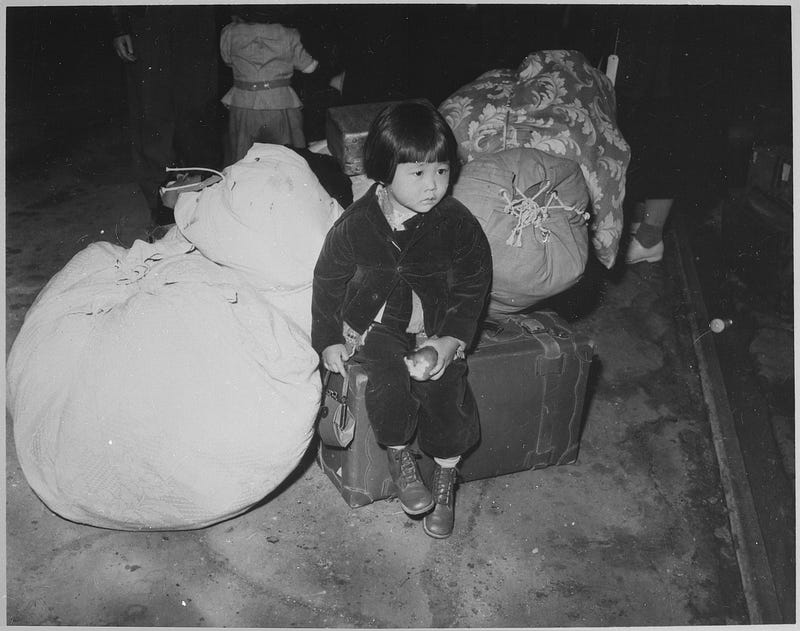
Harumi feels a shiver as the bus — the one with windows painted shut — slows down and goes over some metal bumps on the road. They’re coming to some place.
“Harumi, this is where we’ll live for a while. We don’t know how long we’ll be here. There’s going to be a lot of people here.”
9,373
That’s how many detainees are housed at the Minidoka War Relocation Center, in South-Central Idaho. Harumi doesn’t know how many, exactly. But she does know there are a whole lot of people. It feels overwhelming. Harumi has never seen so many people. That’s why she must remember her family’s number. It’s 15259. Harumi remembers.
9066
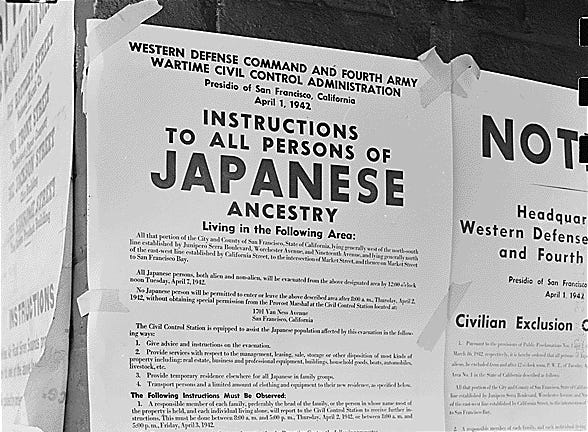
Executive Order 9066, signed by President Franklin Delano Roosevelt in April 1942, had triggered the massive rounding up of people of Japanese descent. Some families have more time to prepare. Some less. Harumi’s family has had two weeks to prepare.
Ten
That’s how many hours the bus ride has been. They gathered at 10am, but were made to wait until noon.
Harumi had been ‘fussy.’
The thing is, grownups don’t understand little ones. Harumi has sensed for two weeks that the mood of her parents has shifted dramatically. It’s been making her anxious. It’s making her sleep poorly. For three days she has hives, and cream has to be applied. And now the thing — the dreaded dreadful thing, whatever it is — is happening.
Babies and toddlers use their parents’ — well, mostly their mother’s — mood as a regulator. Harumi can tell her mother is sad — grieving even. Her mother is also angry at something. There is a quiet rage somewhere deep. Harumi can tell it isn’t about her — her mother is sweet and patient with her. But something is making her mother fiercely angry.
It’s part of Japanese culture to be obedient. Obedient to one’s elders, to teachers, to government officials. “Shikata ga nai (It can’t be helped),” Harumi’s father says often, at Minidoka. Harumi remembers this, too.
Six
That’s how old Harumi is when they are finally allowed to leave Minidoka and return to Portland. At six, she can’t understand what it is to rebuild a life that has been halted, taken, derailed. Her parents just do things, and she takes these things for granted — parents do things. But there is a quietness, and a sadness, that weren’t there before. There is, and will be, a broken something, a grief.
Three years without happiness. She was three when she arrived at Minidoka — she has lived her whole young lifetime once over at that place — another three whole years. Her parents will never be the same, and neither will she.
77
That’s how many years pass until Harumi returns to Minidoka.
As she travels there with her daughter and granddaughter, she can scarcely remember anything from those days. But then, as they pull up to the facility — now named Minidoka National Historic Site — the car goes over some type of metal railings, and a flood of memories hits Harumi square in the chest, so strongly she almost faints. Her eyes water. Behind her closed eyelids, Harumi sees the long lines, the gaunt looks, the hopeless faces. People waiting day after day, month after month, for permission to rejoin the living.
Harumi had wanted her granddaughter to see it. As they leave, Harumi grabs Setsuko’s sleeve and pulls tight. “I wanted you to see this, understand? We mustn’t let this happen again,” she whispers fiercely. “Never.”
2019
It’s 2019 and Setsuko stands in front of a crowd. People are gathered in front of the ICE Detention Center in downtown Portland — a vigil for the detainees of the new camps. (Of course the administration doesn’t call them concentration camps. They hadn’t called Minidoka a concentration camp either, it was a “relocation center”).
780
That’s how many vigils are happening simultaneously all over the country. When Daniela, the organizer, learned about vigils happening nationwide — organized by Lights For Liberty, in coordination with hundreds of local organizations, she decided she’d host her own local event in Portland, OR. She figured, maybe thirty or forty of her friends might show up. But there are over 300 people listening. The crowd holds signs: “Children Don’t Belong In Cages.” “Close The Camps.” “Immigrants Make This Country Great.”
Daniela hands the microphone to Setsuko. Setsuko tells her grandmother’s story. Sitting not too far from where Setsuko is standing, there is a Jewish woman. She’s wearing a yellow star of David, with the word “Jude” written on it. She’s holding a sign that says, “Never Again”.
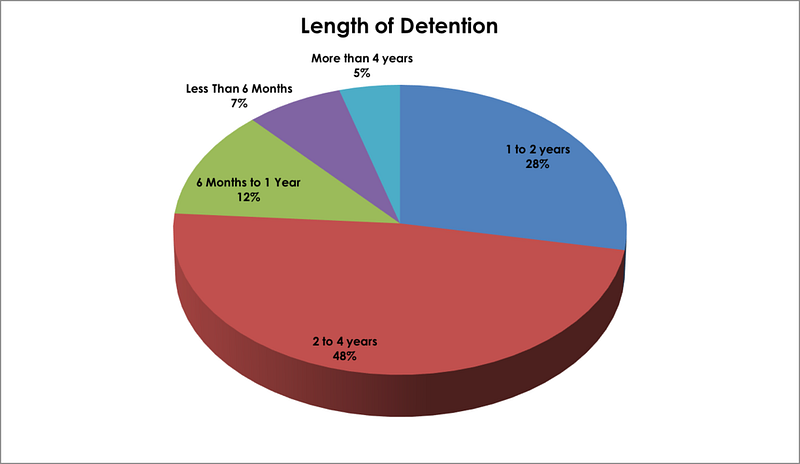
48%
That’s the percentage of detainees who are held in ICE detention facilities for over two years. That’s almost half. A quarter of the detainees are kept between one and two years. Some are kept longer than four years.
The most common complaint among detainees is the lack of medical care. Next on the list is nutrition. Food is scarce, unhealthy, often poorly prepared. Access to legal representation, access to a phone, lack of news about family members are next on the list of grievances.
106
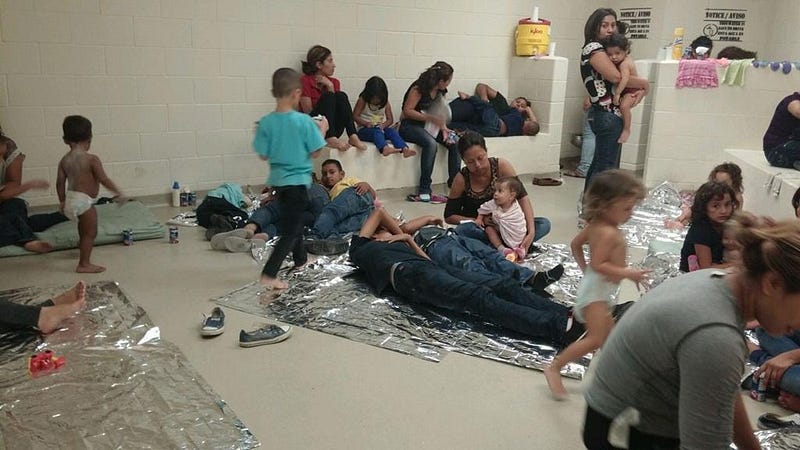
That’s the maximum number of adults meant to be housed at the Clint, Texas CBP. That’s maximum capacity.
In June 2019, Clint holds over 700 children.
20
Yazmin Juarez is just 20 years old; a young mother fleeing violence in her native Guatemala. Yazmin is proud of her toddler — Mariee has traveled the whole journey from Guatemala a happy, healthy baby. Things are going well. Having braved the hard voyage and faced many dangers, Yazmin rejoices to finally be on American soil. The promised land. Land of the free, home of the brave. Yazmin seeks out Border Patrol officers and requests asylum.
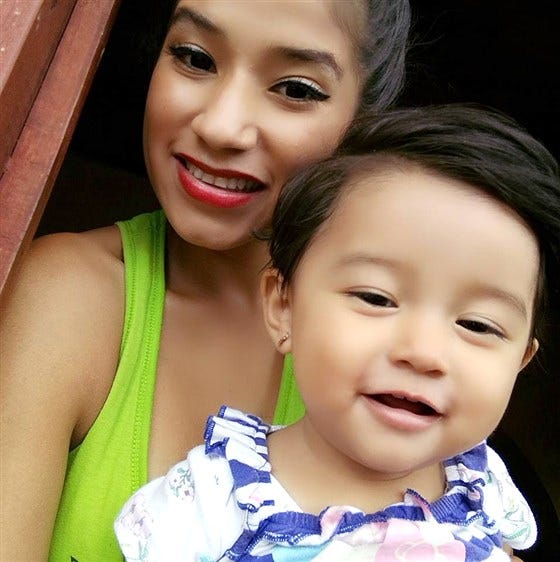
2,400
That’s the number of beds at South Texas Family Residential Center in Dilley, Texas. That’s the facility in which Yazmin Juarez is detained — along with her daughter Mariee, after turning herself in to CBP (Customs & Border Patrol) officers.
30
30 people (mothers with their children) are in the cage where Yazmin and Mariee are held. They call the place “the ice box,” because it’s very, very cold. They are all forced to sleep on the concrete floor.
Mariee begins to have trouble breathing. She is taken to the infirmary six times — and only on the sixth time a doctor finally sees her. Mariee is diagnosed with a viral lung infection and rushed to an outside hospital.
19
Mariee Juarez is just nineteen months old when she dies, three days before Mother’s Day. Yazmin Juarez leaves the hospital with a handprint of Mariee’s hand, on a piece of paper. This piece of paper is her only claim to motherhood now.
“We came to America, where I hoped to build a better, safer life for my daughter Mariee. I watched my baby girl die, slowly and painfully. A few months before her second birthday, she ceased to exist.” — Yazmin Juarez
30
That’s how many actors read another mother’s letter in the video below.
$6 Billion
Operational funding for ICE.
400
ICE offices and facilities in the United States.
20,000
ICE personnel (and expanding).
$184,000,000
That’s how much money the Geo Group has received in taxpayer dollars for managing the privately-owned detention facilities.
Caging people is good business.
And business is brisk.