
Top Secret Caves That Concealed Holland’s Most Priceless Art From The Nazis
During WWII, 800 of the most priceless pieces of art and artefacts were hidden in these caves — embodying almost the entire national art treasures of Holland.
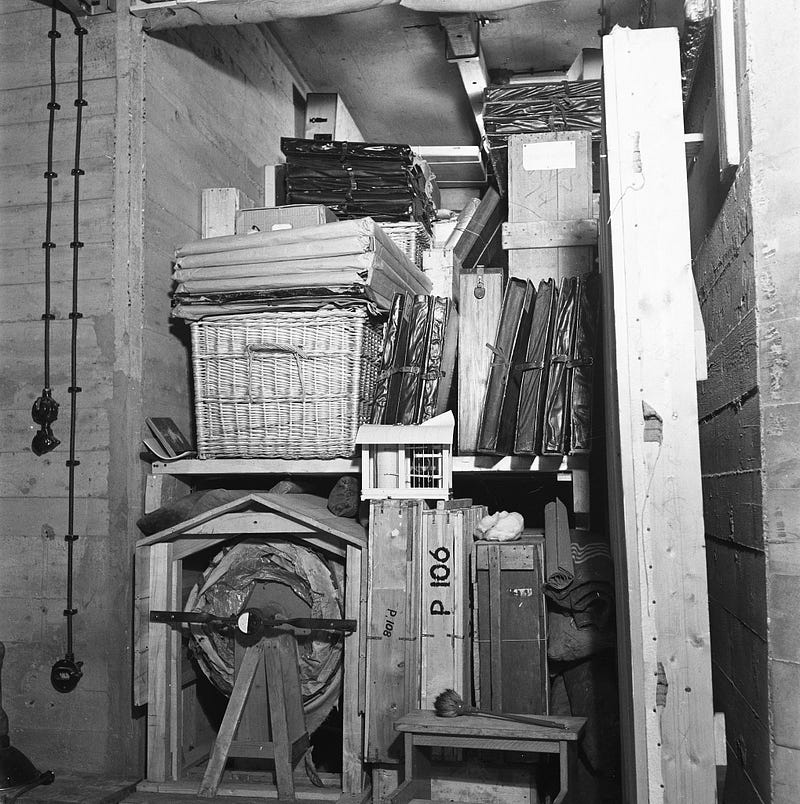
Near the end of WWII, an estimated 45,000 individuals were hidden underground. Along with them were 30 tanks (to be deployed at the time of liberation), various armaments, and about 800 of the country’s most priceless pieces of art and artefacts. These represented almost the entire national art treasures of Holland by artists such as Rembrandt, Van Gogh and Monet.
These caves were in themselves a work of art that had already served as a hideaway since the 16th century, boasting 330 artworks carved and painted in the tunnels.
It was vital to hide this art from the Nazi invaders. Today's figures show that an estimated 650,000 paintings were stolen by the Germans from 1933–1945.
Early History
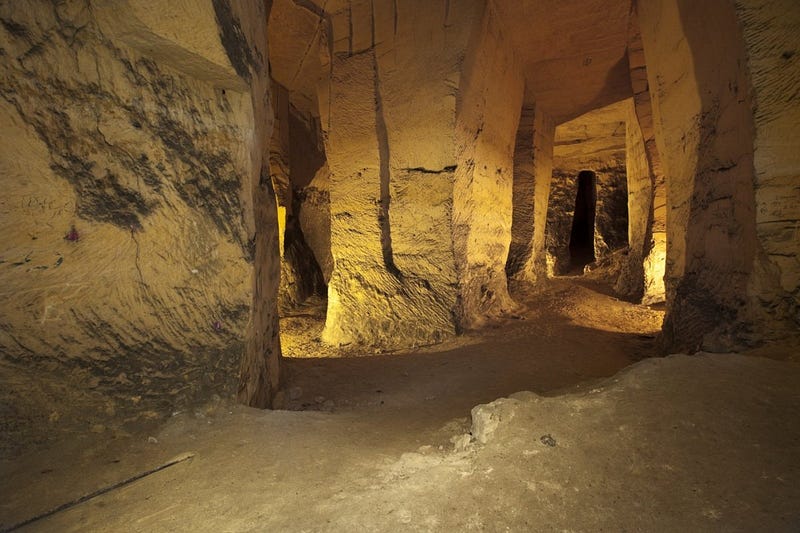
Deep under Mount Saint Peter in Maastricht, the Netherlands lies Saint Peter’s caves, also known as the Maastricht Underground, which date back over a thousand years. Originally they were dug by the Romans to mine marl (a type of limestone) for buildings and construction. They are located some 30 meters underground and now house more than 60 km of intricate tunnel systems and approximately 8000 passages.
Between the 16th and the 18th century, Maastricht was continuously invaded by first the French and then the Spanish, due to its important strategic location. Large fortifications were built on the hill to defend the town but in times of crisis, these caves continuously provided a natural shelter for the local civilian population.

17th & 18th Century
From the initial work by the Romans, the 17th century saw the expansion of the caves under the Belgian part of the border, the construction of a water well, cooking ovens, and toilet facilities. In the 18th century, it was further extended to house up to 25,000 refugees. A wealth of early graffiti from this time still survives.
19th Century
In the 1880s, a local order of Jesuits started occupying a section of the caves, now referred to as Jezuietenberg (Jesuit Caves). As a distraction, and as a recreation from their hard labor, the order let the monks have Wednesdays off, to pursue artistic practices here.
They slowly converted the passageways into workshops and galleries with hundreds of artworks. They chiselled, carved, and painted the walls in these dreamlike catacombs and left some of the most wondrous and breathtaking art behind.
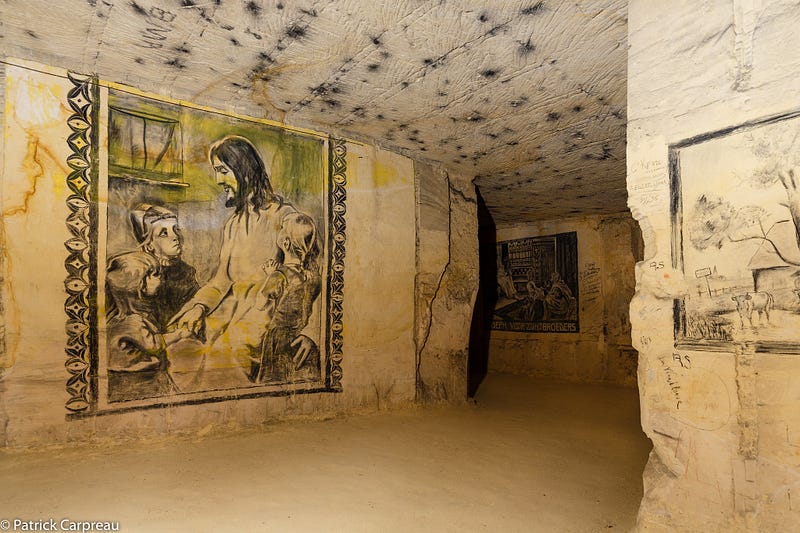
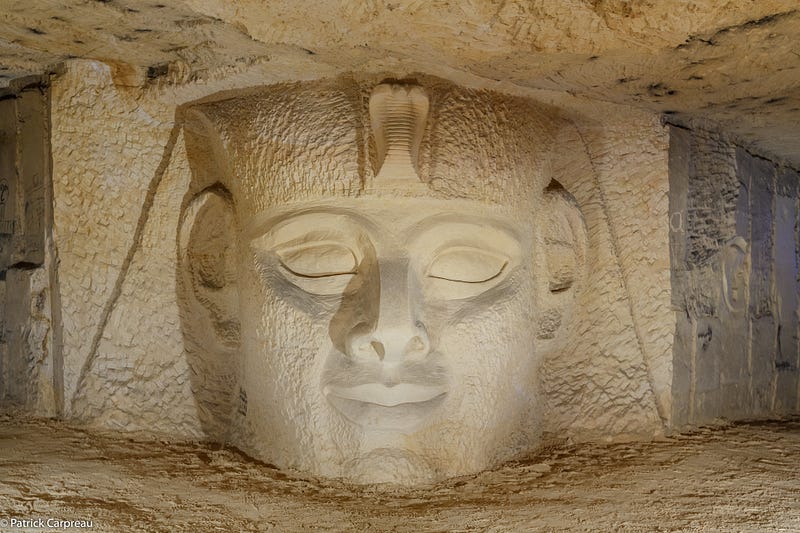
Though most of the works were of a Christian origin, curiously and uncommonly for a religious catholic order, they recreated many works taken from other religions too. In an almost idolatrous admiration, statues of Egyptian Pharaohs, Buddhas, and Hindu deities were created along with obscure and phantasmagorical sculptures.
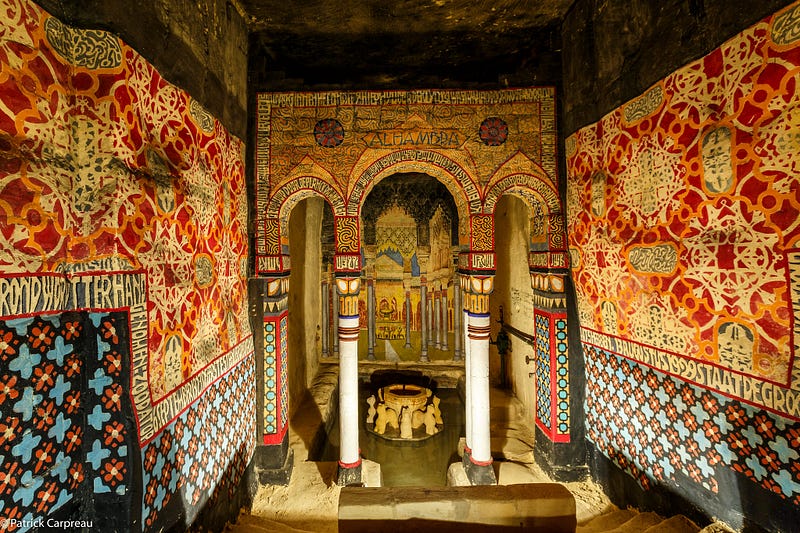
In reverence of the Islamic, Moorish architecture, they even recreated parts of the famous Alhambra in Granada. Complete in all its splendor with bright, vivid colors, intricate geometric patterns, arches, gateways, and pillars, and even a miniature version of the Court of the Lions fountain, as seen in the photo below.
World War II
The beginning of the Second World War, sadly, led to the expulsion of the monks by the invading forces.
In May 1940, the Germans took Holland by surprise, during the Battle of Maastricht. Yet again, the city’s strategic position made it one of the first targets for occupation by the Nazis. Maastricht would stay occupied until the Allied forces finally liberated it on the 14th of September 1944.
During this time of occupation, the population of Maastricht once more found shelter and safety in the depths. They hid their most prized and important art within this treasure vault that had over time become a national treasure itself.
The Nazis & Art
The Nazis hungered for the arts, but not all art was equal, nor considered art to them. In his youth, Hitler had wanted to be an artist but failed twice to be accepted into the Academy of Fine Arts in Vienna, due to his “unsatisfactory” drawing skills. He continued to paint, but it came to an end in 1914, when he was picked up by the police, having avoided registering for the military draft. He also failed his military fitness exam, but nevertheless, enlisted voluntarily at the outbreak of WWI.
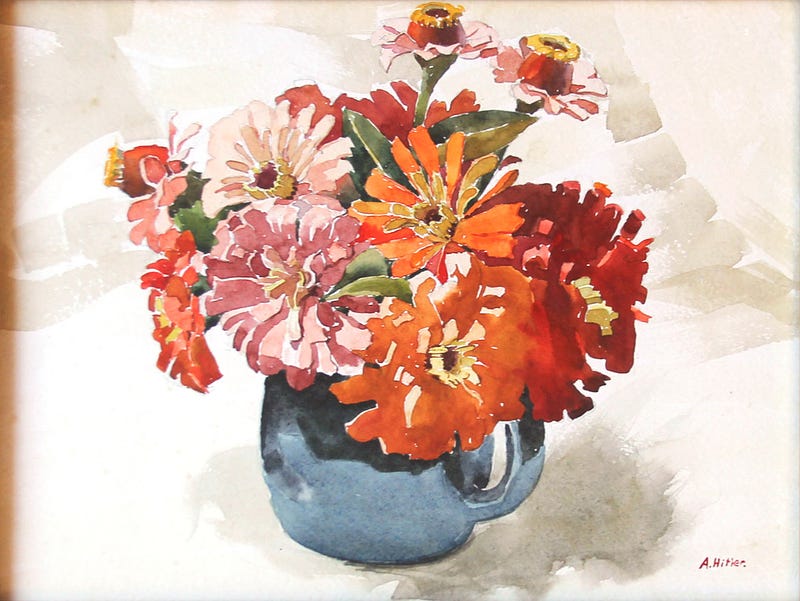
Subsequently, during his rise to power, he railed against “degenerate” and “deviant” art. He believed non-representational and experimental artworks to be products of mere “Jews and Bolsheviks” in stark opposition to the stereotypically “Aryan” and more conventionally “beautiful” art.
Art was a powerful tool in Nazi rhetoric. A firm position was taken that “any true German would immediately be able to tell the difference” between what was “right and wrong”. Visual symbolism and storytelling were at the core of the conveyance of Nazism, and it became vitally important, not just to destroy the opposition, but to completely erase its very existence.
The “Degenerate Art” Exhibition
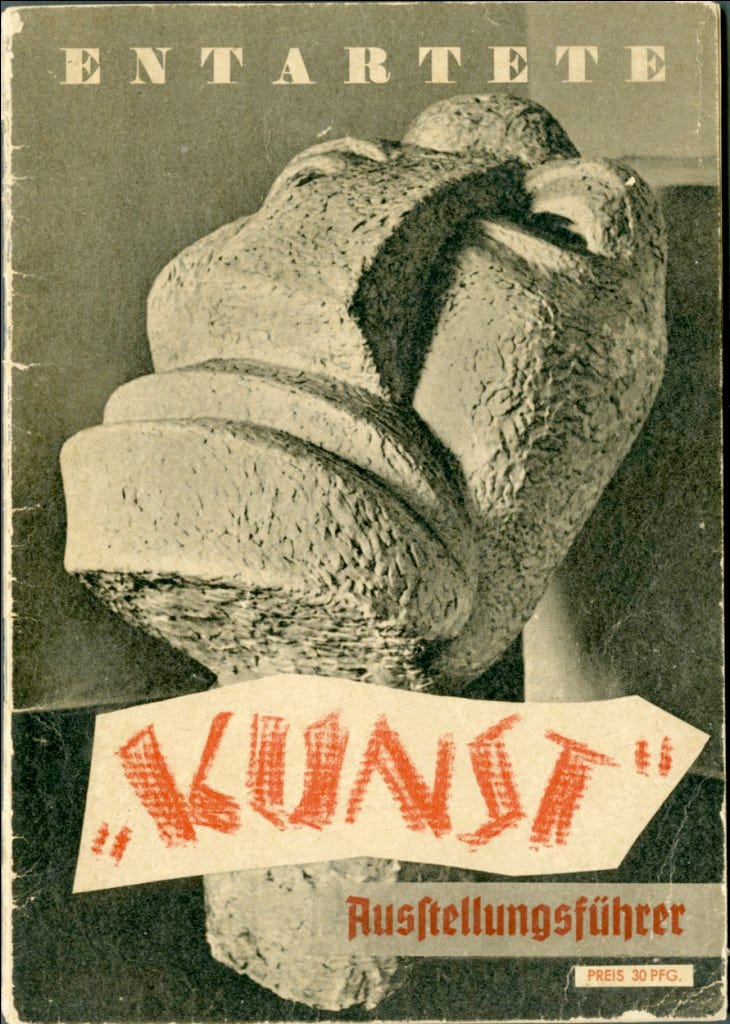
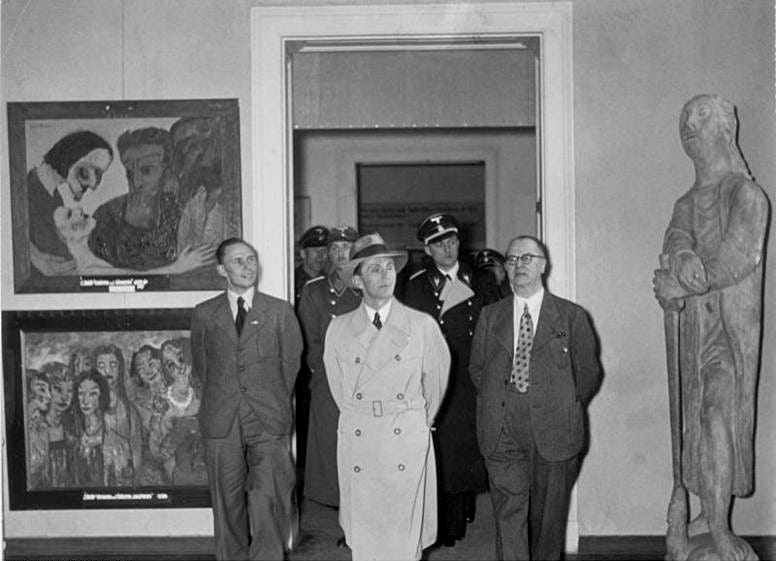
By opening the “Entartete Kunst Exhibition” (Degenerate Art Exhibition) at almost the same time as the “Große Deutsche Kunstausstellung” (Great German Art Exhibition), Hitler made it quite clear what was classed as “acceptable” arts and what was “dangerous and impure iconography”, that “threatened the very fabric of the Aryan nation” and fueled its cultural disintegration.
_1912_No_known_copyright_restrictions_17-20_(3).jpg#)

The ”Degenerate Art Exhibition”, was cleverly staged and marketed as a “freak show”. It gave the German population a “last chance” to publicly mock, scorn, and reduce previously highly-regarded artworks to simplified, decadent, and perverted objects of ridicule, before their imminent destruction. There would be no room for interpretation.
Slogans were painted on the walls in between the art, to enhance the shock and outrage the viewer should be left feeling. Among these slogans were sentences such as “Nature as seen by Sick Minds”, “Deliberate Sabotage of National Defence” and “Revelation of the Jewish Racial Soul”.
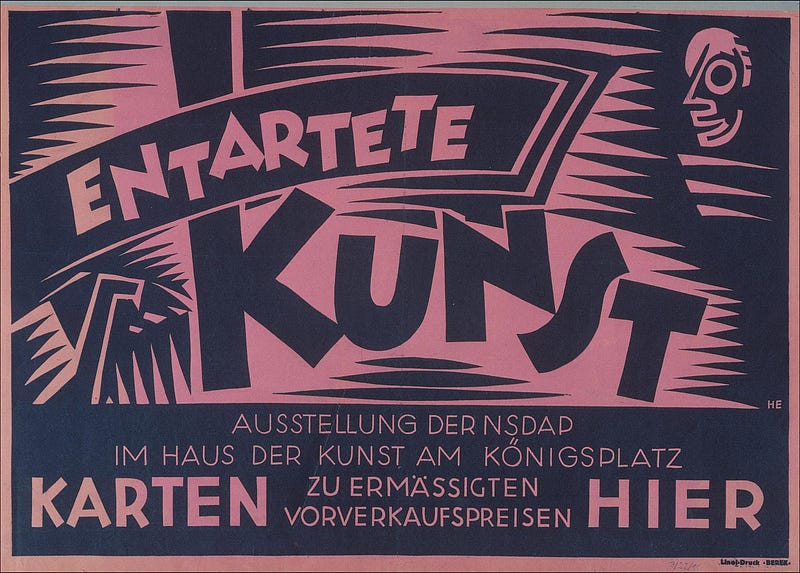

Over 2 million people attended. Later, historians argued that the majority of the visitors were most likely forced. Paradoxically, many within the highest echelons of the Nazi party strongly disagreed with Hitler’s ideas of “degenerate art”. Among them were powerful men such as Goring and Goebbels. They eventually, officially, adhered to the party line.
Goebbels was so eager to redeem himself, that he conceived the idea of the “Entartete Kunst Exhibition”(Degenerate Art Exhibition), though many of the paintings had bizarrely first been selected by him for the original “German Art Exhibition”(Great German Art Exhibition)!
In only two weeks, more than 5,000 works were seized, and in total over 16,000 pieces were put on display, derided, and ultimately burned, in the same way, they had done with much of the opposing literature in Germany.
According to Hitler’s beliefs, all the art, literature, music, and philosophies of the decadent Weimar period were to be permanently erased and replaced by traditional ideals.
The Fuhrer-Museum
Hitler had a clear idea about what was to happen with all the esteemed “Aryan” art. He had long held a vision of what was eventually to be the “Fuhrer-Museum”.
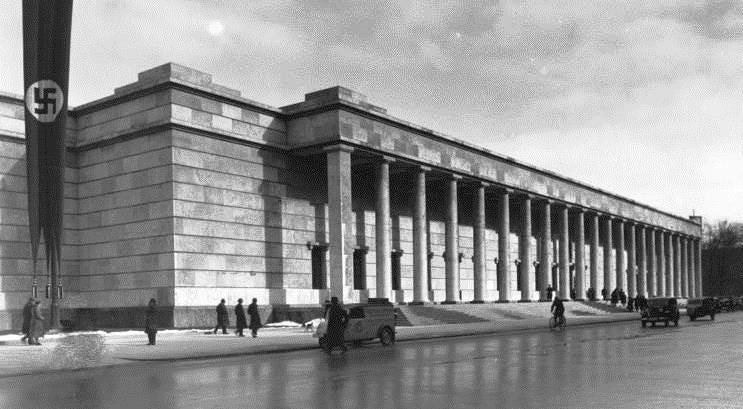

All the art treasures that were bought, appropriated, or simply stolen were to become the foundation of this great big bastion in his hometown of Linz. Thankfully, this never happened and the museum, intended to be finished in 1950, was never built.
For the people of Maastricht, it was, therefore, extremely important, to hide away their art to stop the Germans from stealing or destroying their heritage.
In recent years, some paintings have resurfaced. Purportedly destroyed during the war, but actually, “acquired” by certain contemporary scrupulous art dealers.
The Monuments Men
Many will possibly have seen the 2014 film “The Monuments Men”, a film loosely based on the book “The Monuments Men: Allied Heroes, Nazi Thieves and the Greatest Treasure Hunt in History”, by Robert M. Edsel. His book was based on a true initiative, started by the Allied forces in 1943.
By then, it was widely known the Germans were systematically looting art. They created the MFAA, an acronym for “Monuments, Fine Arts and Archives Program”. Its task was to protect and safeguard cultural property and historic buildings along with finding, identifying, and later returning works of art the Nazis had stolen during the war.
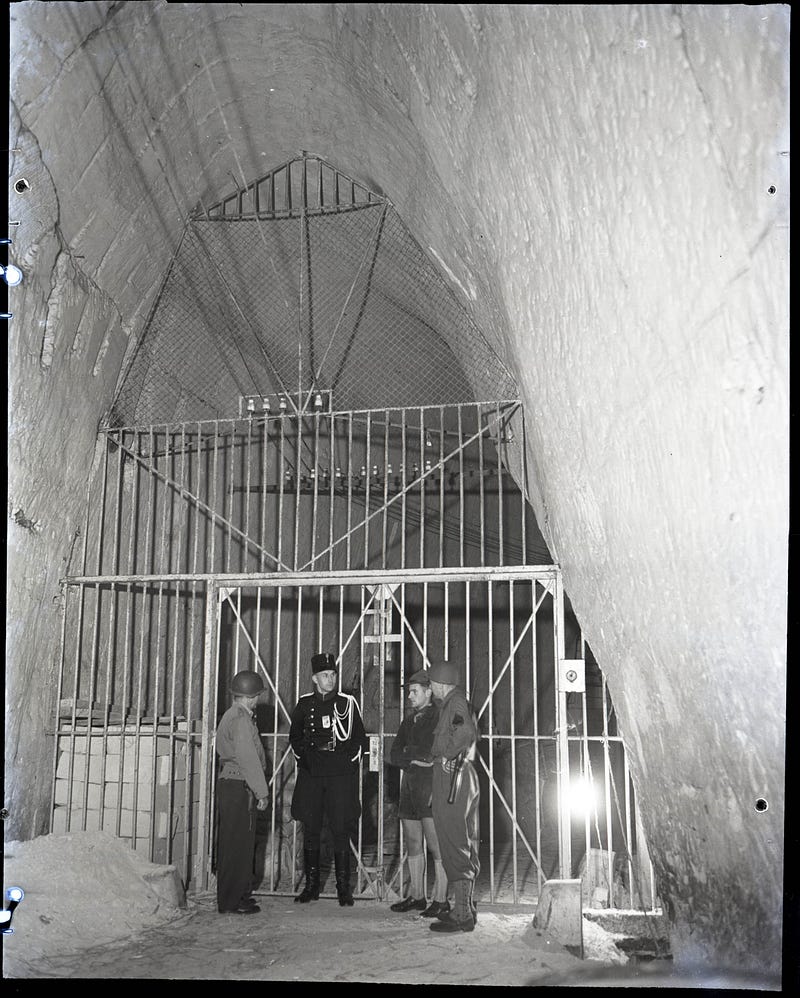
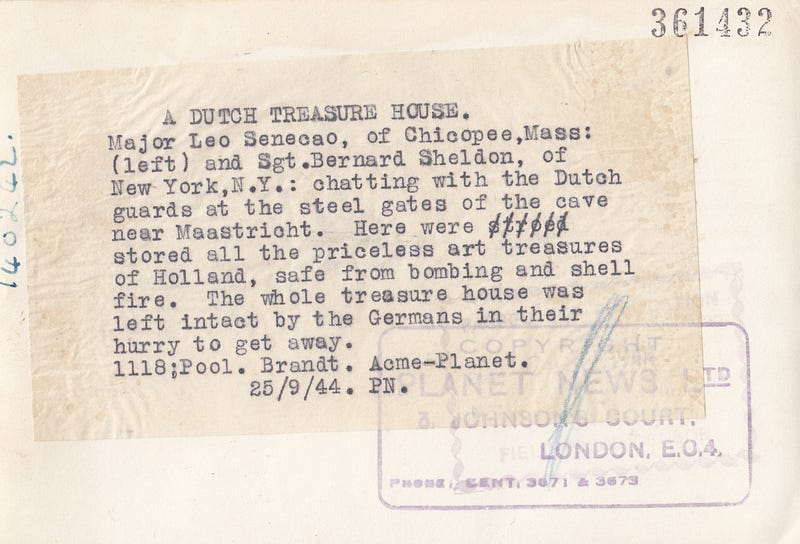
The Works Of Art
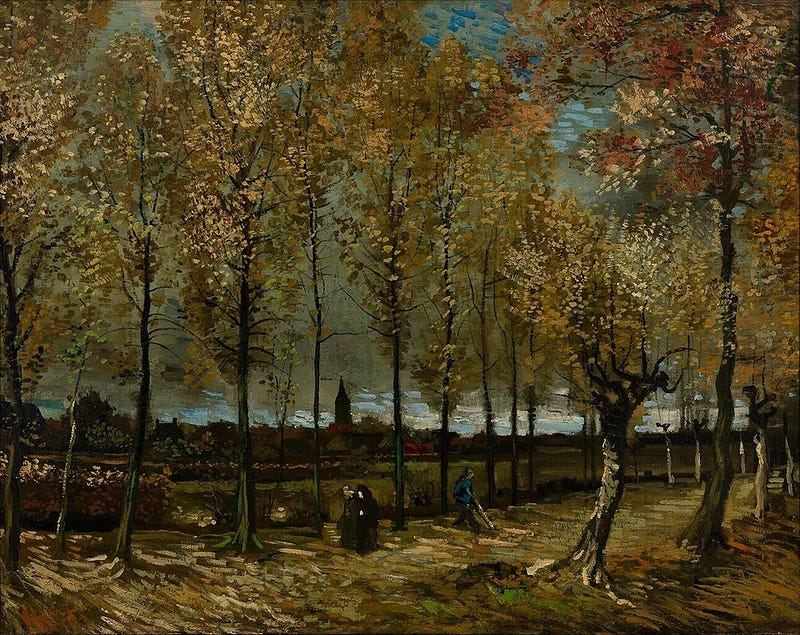
Among the works were Rembrandt’s “Night Watch”, “Titus at his Desk” as well as his rendition of “Saul and David”. There was Vincent Van Gogh’s “Poplars Near Nuenen”, several Claude Monet paintings, The Lamentation of Christ by Rogier Van der Weyden, and The Wayfarer by Hieronymus Bosch.
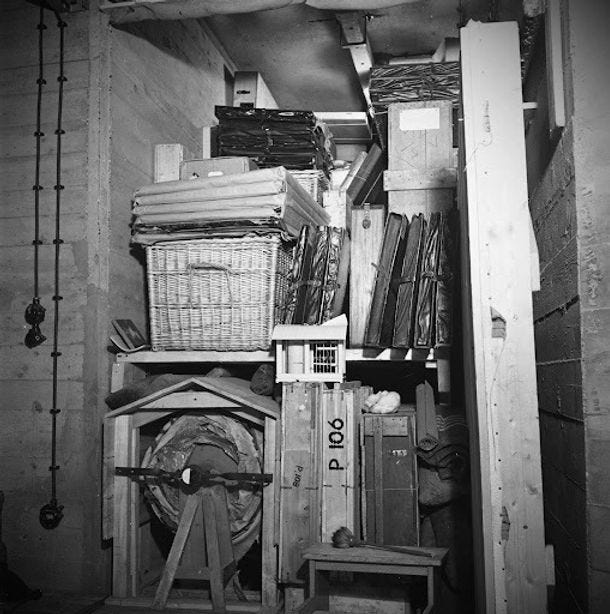
The Night Watch was placed on a roll (left bottom in the image) that had to be turned to prevent damage, due to the extreme humidity in the caves. At 12 x 14 feet, it is the largest and most famous of Rembrandt’s works.
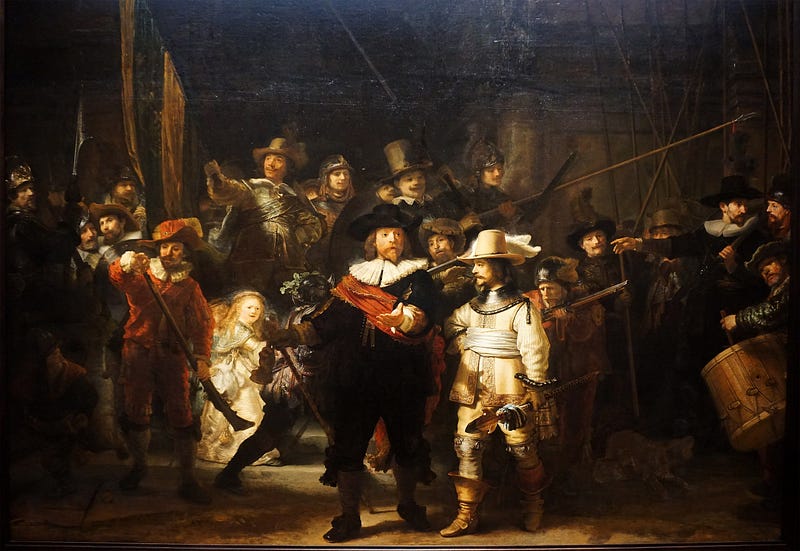
Interestingly, the Jesuits, some 60 years prior to 1944, had copied several of Rembrandt’s works onto the walls. As fate would have it decades later the master’s actual original works would occupy the very same space.
Han Van Meegeren — Art Forger
Hidden in the vault was also one of Han Van Meegeren’s most successful forgeries ever, Supper at Emmaus by Caravaggio.
Meegeren was arguably considered the greatest art forger of the 20th century. He was famously arrested and put on trial in 1945, for collaborating with the enemy, having traded a supposed original Vermeer painting with none other than Hermann Goring, for a total of 200 original Dutch paintings.
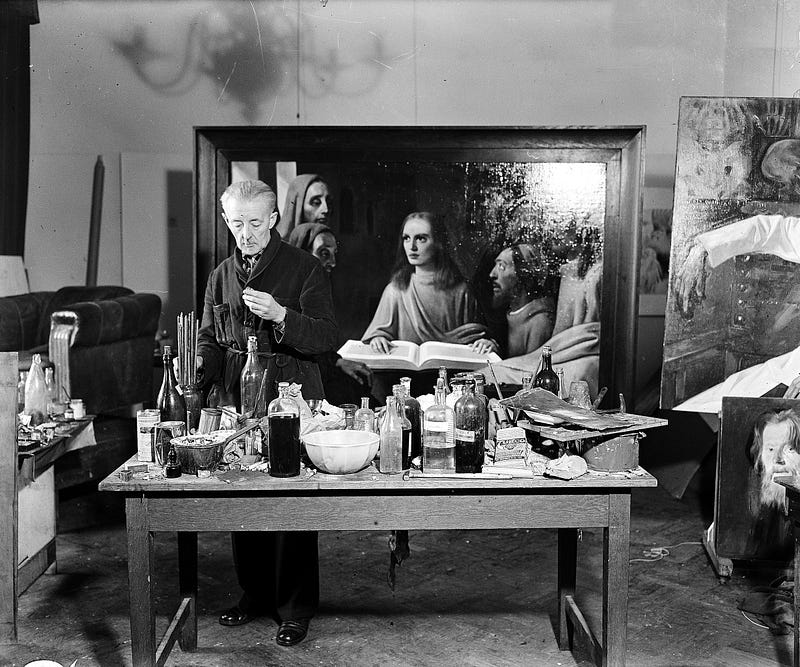
When faced with prison, Van Meegeren came clean and allegedly exclaimed:
”The painting in Goring’s hands is not, as you assume, a Vermeer of Delft, but a Van Meegeren! I painted the picture!”
Although he was undisputedly a criminal, Meegeren was eventually hailed as a national hero, rather than a Nazi collaborator, for having ingeniously saved the precious paintings that Goring himself had stolen earlier in the war.
Other Uses Of The Caves
Additionally, while serving as a refuge for civilians and treasures, the caves were also a hiding place for downed Allied pilots. The many passageways, previously extended to the Belgian side of the border, now served as part of an elaborate escape route out of Holland. Once on the other side in Belgium, the airmen would be provided with new papers, and clothing and brought on from there.
The Importance Of The Events
The Caves of Maastricht were never on the official list of art repositories by the MFAA, as this was not a cache of stolen goods made by the Germans, but rather a treasure vault, hidden from the Germans. So while the individuals responsible for the hiding, safeguarding, and preservation of these pieces were never really technically “Monuments Men”, their work was nevertheless invaluable. (The stories of how the paintings got there, how they left, and to where is a different matter altogether).
Frida Kahlo once wrote, “I paint flowers so they will not die”. By painting them, she believed the flowers would be preserved and immortalised in perpetuity. These men, likewise, preserved the very foundation of modern humankind, by protecting these paintings.
For what is art, but the most fragile, pure, and elevated expression of human emotion and capability? The cradle for the advanced ability to freely — and without inhibition or repercussion — observe, imagine, and create. The very essence of what was in danger of disappearing, had the outcome of the war been different.
Aftermath
As a sad footnote, the caves were excavated again after WWII and were extended to more than 230 km and over 20,000 corridors. Large parts of the caves were regrettably demolished during this time. Excavations ceased in 2006 and luckily since then, Dutch Heritage has taken over the site and now provides guided tours to tourists, to show off this remarkable place.
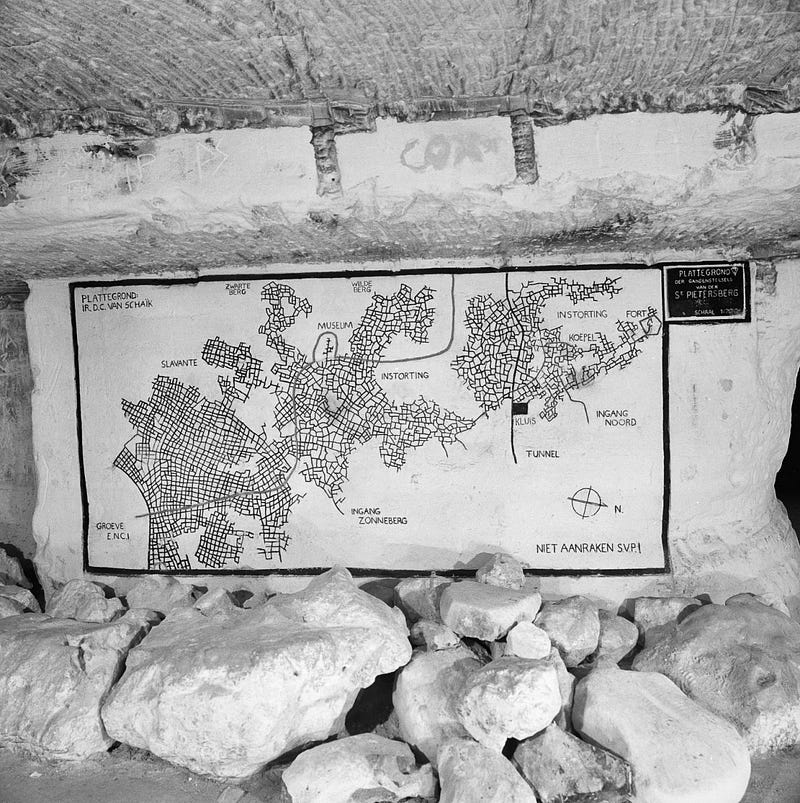
The map below was made on the wall inside the caves during the 1940s. The parts above the diagonal, sinuous line (bottom-left to top-right) were those lost during the post-WWII excavations.

Useful Links
PLEASE FOLLOW US ON OUR ANTIQUES AND COLLECTABLES PAGE TOO!