
WWII Operation Mincemeat: The Bizarre Plan That Fooled Hitler
An elaborate web of deceptions that ultimately misled Hitler and all Germans, playing a crucial role in favour of the Allied invasion of Sicily.
Part 1: Operation Mincemeat — A Web of Deception Unveiled
World War II - one of the most cataclysmic events in human history, witnessed the convergence of innovative military strategies and covert intelligence operations.
Among these operations, Operation Mincemeat stands as an exemplar of ingenuity, as British intelligence agencies orchestrated an audacious deception that played a pivotal role in shaping the course of the war. The operation successfully misled Germans and played a crucial role in the success of the Allied invasion of Sicily under Operation Husky.
Context and Objectives
By 1943, Axis powers held sway over vast swaths of Europe, and Allied forces were searching for ways to gain a strategic advantage. One such avenue lay in Southern Europe, where an invasion could divert German attention from the Eastern Front and facilitate a more direct approach to the heart of Nazi-controlled territories.
Codenamed “Operation Husky” the envisioned Allied invasion hinged on maintaining an element of surprise. Thus emerged the need for a masterful deception that would divert the Axis powers’ attention and resources away from the true target.
Genesis of Deception
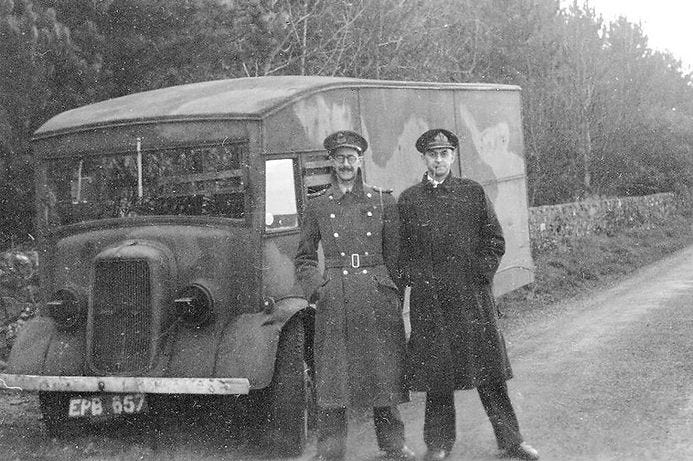
The genesis of Operation Mincemeat is rooted in the collective genius of British intelligence officers. Spearheaded by Charles Cholmondeley, a disinformation expert, and Ewen Montagu, a naval intelligence officer, the plan was conceived with meticulous attention to detail. The objective was to plant false information into the hands of the German high command, thus misleading them about the Allies' intended invasion plans.
Constructing a Fictional Identity
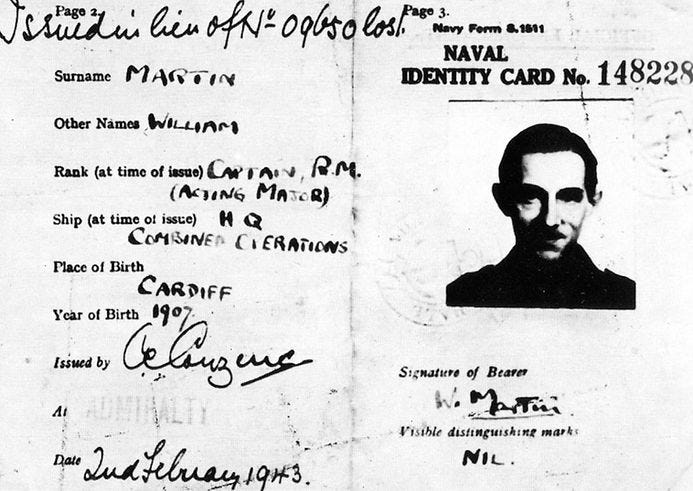
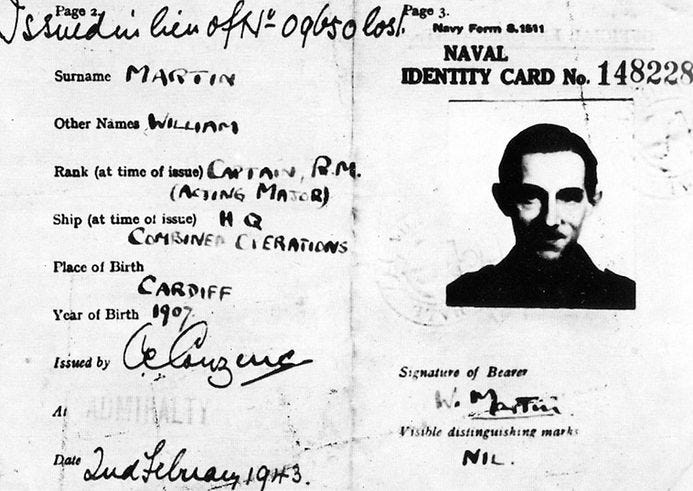
A cornerstone of Operation Mincemeat was the fabrication of a false identity for the decoy that would serve as the linchpin of the operation. The fictional persona of “Major William Martin” a Royal Marines officer, was created. This identity was painstakingly woven together, complete with a detailed personal history, a network of acquaintances, and correspondence that lent credibility to the narrative. It was imperative that every aspect of Major Martin’s life was impeccably constructed to withstand scrutiny.
The Role of Ian Fleming
Among the notable figures involved in crafting Operation Mincemeat was Rear Admiral John Godfrey and Ian Fleming (later renowned as the creator of James Bond). Fleming’s literary acumen and his understanding of narrative tension contributed significantly to the creation of Major Martin’s fictional backstory. His ability to infuse the narrative with human emotions and nuances lent an air of authenticity to the fabricated documents that would later become instrumental in deceiving the enemy.
“The greatest writers of spy fiction have, in almost every case, worked in intelligence before turning to writing. W. Somerset Maugham, John Buchan, Ian Fleming, Graham Greene, John le Carré: all had experienced the world of espionage firsthand. For the task of the spy is not so very different from that of the novelist: to create an imaginary, credible world and then lure others into it by words and artifice.”
Ben Macintyre, author of Operation Mincemeat
The Deceptive Payload
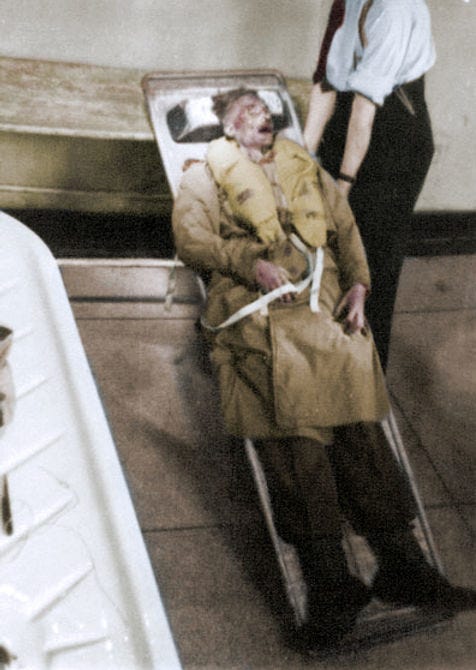
A key element of the operation was the payload, designed to lend authenticity to Major Martin’s fictional mission. Inside a steel canister, the body of a deceased man was placed, dressed in a Royal Marines uniform. The man was a homeless Welshman by the name of Glyndwr Michael, who had died from digesting rat poison. This ‘cadaver agent’ was accompanied by a briefcase containing an assortment of forged documents, including letters from fictional associates, official orders, and maps. Documents were designed to convey that the Allies’ intended target was not Sicily, but Greece and Sardinia.
Logistical Challenges and Solutions
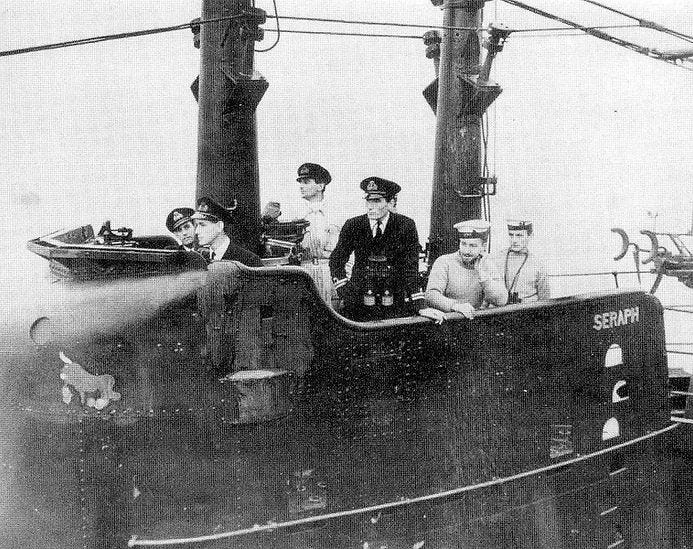
The execution of Operation Mincemeat required coordination on a staggering scale. Body and documents had to be transported to the Spanish coast without detection. This monumental task fell to the submarine HMS Seraph, which released the canister off the coast of Spain on April 30, 1943. The canister was strategically set adrift to ensure it would be discovered by Spanish fishermen and subsequently fall into the hands of the German authorities.
Part 2: Operation Mincemeat — Executing the Grand Illusion
Spanish Connections
With the canister containing the “body” of Major William Martin and the fabricated documents successfully adrift off the coast of Spain, the first crucial step of the operation had been accomplished. Spanish fishermen, in a twist of fate, discovered the canister and its contents and promptly turned them over to Spanish authorities. This chain of events set the stage for the intended outcome: the documents reaching German hands.
Spanish Neutrality and German Involvement
Spain, a “neutral” country during the war, played a pivotal role in the unfolding of Operation Mincemeat. The Spanish authorities, entrusted with deciphering the documents and determining their significance, were placed in an intricate diplomatic quandary. The Germans, with a vested interest in the contents of the documents, were keenly monitoring the situation. This delicate dance between neutral Spain and the Axis powers added an extra layer of suspense to the operation.

Documents in German Hands
The pivotal moment arrived when Spanish authorities forwarded the contents of the canister to the Germans. The fake documents were meticulously designed to corroborate the fictional narrative of Major Martin’s mission to Greece and Sardinia. These papers suggested an impending Allied attack on those locations, which the Germans took seriously. The success of the deception lay in the Germans’ propensity to trust the documents’ authenticity.
Allied forces were aware of Adolf Hitler’s fears concerning a Balkan invasion, given that this particular region served as a crucial supply of raw materials for the German war machine. Resources encompassed copper, bauxite, chrome, and oil, all of which were integral to the German wartime industry. The Allies knew this and played right into this fear. Their hope was, that his fear was so great, that he wanted and was willing to believe a deception.
“Deception is a sort of seduction. In love and war, adultery and espionage — deceit can only succeed if the deceived party is willing, in some way, to be deceived.”
Ben Macintyre, author of Operation Mincemeat
Diverting Axis Resources
Success of Operation Mincemeat lies not merely in deceiving the Germans but in the tangible results it yielded. The Germans, convinced of the validity of the information, diverted significant military resources to reinforce their defences in Greece and Sardinia. This diversionary tactic was a triumph for the Allied forces, as it created a window of opportunity for the true objective of the operation: the invasion of Sicily under Operation Husky.
The Allied Invasion and Aftermath
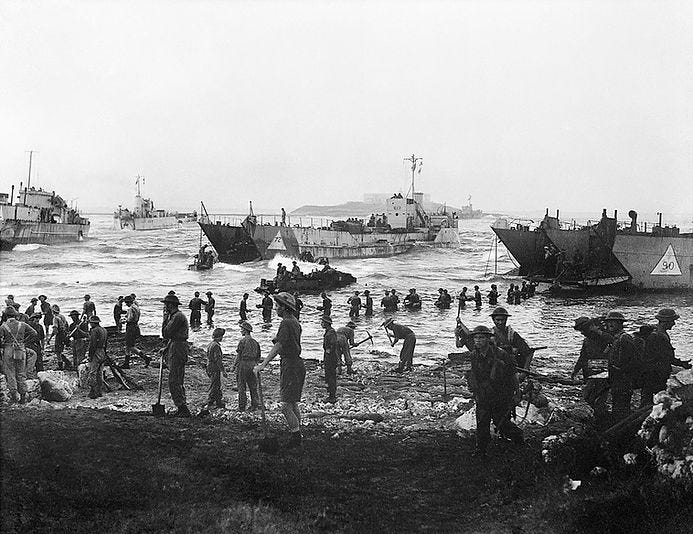
With the Germans misdirected and their defences dispersed, the Allies launched the invasion of Sicily on July 9, 1943. An element of surprise, enabled by the success of Operation Mincemeat, played a critical role in the success of the campaign. The Allies secured an important foothold in the Mediterranean, opening a new front against Axis forces and laying the foundation for further, and ultimately victorious advances, into mainland Europe.
Lessons Learned
The execution of Operation Mincemeat offers a plethora of academic insights into the realms of intelligence, psychology, and strategy.
The operation effectively exploited the psychology of deception, tapping into the cognitive biases that influenced the Germans’ interpretation of the false documents. This success underscored the power of narrative and psychological manipulation in shaping wartime decisions and outcomes.
Moreover, Operation Mincemeat demonstrated the complex nature of intelligence operations. It revealed the interplay between deception, diplomacy, psychology, and geography in orchestrating a complex ruse that altered the course of military events. This interdisciplinary approach served as a model for future intelligence operations that necessitated a comprehensive understanding of various fields.
Inspiration in Popular Culture
Mincemeat’s legacy extends beyond the realms of intelligence and academia, permeating popular culture. The story has since captured the public imagination and inspired numerous literary works and documentaries. This captivating narrative of deceit, strategy, and courage became a source of intrigue and fascination and has most recently been made into a motion picture in 2021, featuring Colin Firth and Matthew Macfadyen.
#OperationMincemeat #WWIIdeception #IanFleming #MilitaryHistory #IntelligenceOperations #PsychologicalWarfare #WartimeTactics #WorldWarII #Espionage
Useful Links


.jpg)