
Too Fat to Matter? How We Were Tricked That Weight = Worth
Weight loss is not about health, it’s about control.
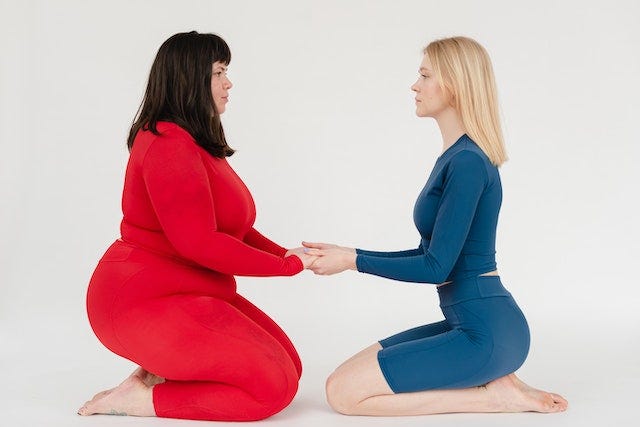
Weight loss is not for the weak!
I used to be one of those thin and hot girls that everyone wanted to be with. You know, the model type. I’m not going to lie, I liked it, especially since I didn’t have to do anything for it, that was just what my body naturally looked like.
In the meantime, I gained about 20 pounds. Am I still healthy? Absolutely. Am I still hot? That’s what they say.
Then why the hell am I constantly thinking about losing weight? What’s my problem? What would change for the better in my life if I lost those extra 20 pounds? Honestly, nothing but my self-esteem.
And I hate that. Because I hate having my mental well-being controlled by some societal concept of what I should look like. I hate knowing they got to me… Especially since I know most women feel the same way I do.
They got to us all.
Half of a woman’s life is about her weight. Mainly — how can she lose weight? Even when that weight is not a threat to her health or losing it won’t be a source of happiness. Not a long-lived one anyway.
Dieting is the worst way to lose weight.
Yet it’s being pushed on people as the ultimate method to lose some extra pounds. Or a lot of extra pounds.
Although it’s been proven time and time again that dieting leads to weight loss only in the first few months. Then it leads to weight gain and eventually to eating disorders.
And still, people do it. Especially women. Do you know any woman who hasn’t dieted at least once in her life? I don’t.
And that’s because the pressure to lose weight is so strong that women are willing to do no matter what it takes to have the feeling they’re doing something about it. Even something that doesn’t work. Even when it’s not necessary for health reasons.
Because let’s face it: 10 (or even 20) extra pounds won’t be a huge problem for your health. They won’t be a problem at all.
They will be a problem for your self-esteem though. That self-esteem is constantly bombarded with society’s pressure to lose weight.
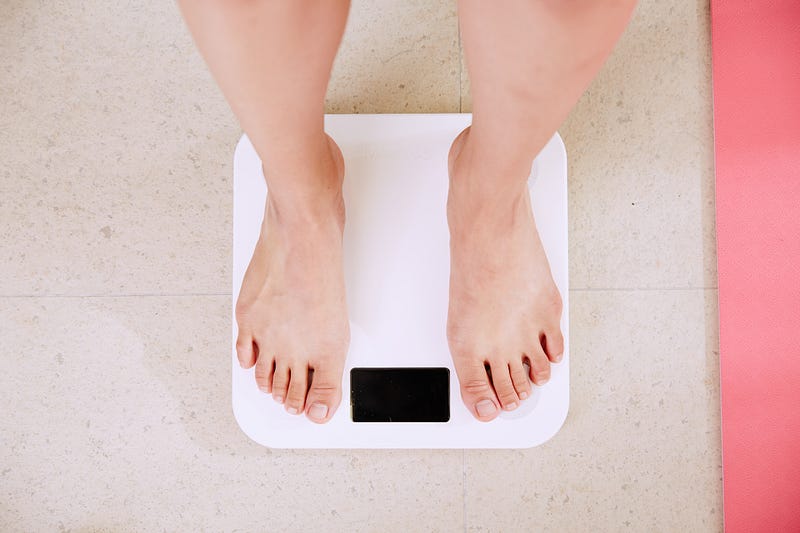
Weight loss is not about health. It’s about control.
Ok, let’s presume for a moment that the above is not true. Let’s presume this extreme weight loss culture is all about health.
And then let’s draw a parallel between that and any other disease. Let’s take a very prevalent one: diabetes.
Do you see diabetes all over women’s magazines? No. Is diabetes a hot topic of conversion on TV? No. Do celebrities get a lot of attention when they get diabetes? No.
Do you know why? Because diabetes is a real disease.
So it’s talked about in medical environments and during conversations involving medical issues. It’s not a hot topic, it’s a medical topic.
Weight is a hot topic because it was made that way.
Mind you, I am not talking about obesity here. And I’m definitely not supporting the kind of fat that will make you sick. I’m talking about society’s obsession with fat, no matter how much or how little.
Thin bodies, fat bodies, muscular, obese, slender, chubby, etc. Weight in all its forms can be the main subject in all situations.
Why? Who cares how much extra weight you have?
Weight loss is a made-up problem as long as there are no medical issues related to it. It’s something produced to give people something useless to think about and keep their minds occupied with an unattainable task. An impossible task that will make us miserable because we live in an environment that doesn’t support weight loss.
Look around. Everything is about food: how enjoyable it is, how much pleasure you can derive from it, and how we use it to form social connections, or as emotional support when we’re lonely.
Umami, savory, yummy, delicious, drenched in flavor. Seriously?! Idealizing eating but chastising those who suffer its consequences!
One message is: get high on food. The other one: fat is murder. Unless it’s fat that you can eat.
That’s how control happens. You are constantly bombarded with contradictory messages. Damned if you do, damned if you don’t.
You alternate between cycles of indulging and restricting, indulging and restricting until your brain turns to mush.
And mush is easy to control.
Beauty ideals are for the rich.
For hundreds of years, roughly between the 1500s to the 1900s, it was fashionable to be fat. The Renaissance liked them big and fleshy. You can see it all over art — beautiful bodies used to occupy a lot of space.
For a moment I wished this never went out of fashion. What a good reason to indulge in as much deep-fried ice cream as your stomach is capable of, my addicted brain said!
But of course that wouldn’t happen. One, because they didn’t have deep-fried ice cream back then. They had deep-fried pork feet at best.
And 2, because fat was popular only when it was almost impossible to attain.
People weren’t overweight back then because they couldn’t afford it. They were incredibly thin, some of them even emaciated, because most were dirt poor and literally couldn’t afford to eat.
The only ones who could reach the chubby beauty ideal of the Renaissance were people who could afford to eat enough to get there: the aristocracy. Just like today, the only ones who can afford beauty are people like the Kardashians, who are rich enough to get all the plastic surgery the beauty ideal requires.
As the old meme goes: you’re not ugly, you’re just poor. Too poor to afford the plastic surgery that would make you beautiful.
Too poor to pay for tummy tucks, Ozempic pens, face lifts, and fat transfers from the parts of the body where fat naturally forms to the parts society deems desirable.
Big belly — bad, big boobs — good.
Big butt — good (2 years ago) — big butt bad (today).
Looking forward to the moment when big brains become fashionable!
Maxim awards a fat(er) old(er) woman with the title of sexiest woman alive.
First of all, I want to apologize for the sentence above to the woman in question and every other woman in the world. I also need to apologize for taking into consideration Maxim’s opinion on what sexy is.
But there is a point to it. Hear me out now, stone me later.
Ashley Graham won the title of sexiest woman in 2023.
She is plus size and she is 35. There has been no other plus-size over-30 woman gracing Maxim’s 1st place as the sexiest woman alive! Ever!
This is a huge achievement, no matter how much you disregard Maxim’s opinion.
And while a lot of people are complaining that this has been a political decision, I’m here to ask: so what?
I surely hope it was political! I hope politics is finally surpassing the rigid standards of what is considered sexy, beautiful, and cover-worthy.
We don’t care what Maxim has to say about what’s hot and what’s not. But we do care that society has decided that enough is enough and even Maxim decided to have a different perspective on beauty ideals.
If it’s gone that far, we are on the cusp of a new era. Hopefully an era when we’re mature enough to not measure our worth by our weight.
This article was inspired by Tara’s well-researched and well-written piece You Have the Right to Remain Fat.
Love this article? Follow The Soulciety.
Love my writing? Join my email list.
Love reading? Join Medium.
Love me? Get me a Ko-fi.