
Tonga
Lowercase and uppercase “T” give this word different meanings
Today’s New York Times Spelling Bee letters:
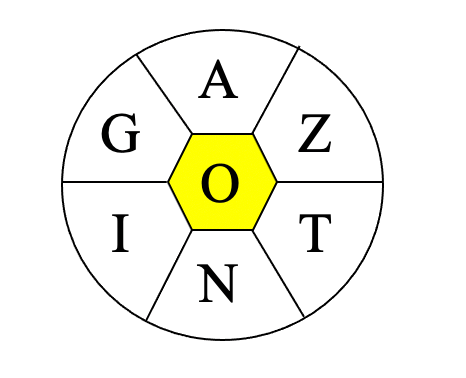
A, G, I, N, T, Z, and center O (all words must include O)
Merriam-Webster says…
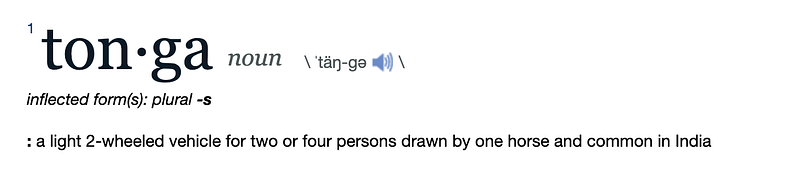
Silly little dictionary! Don’t you know tonga can’t possibly be a word if the New York Times says it ain’t?
For further fascinating facts, check out the Spelling Bee Master.
What’s your favorite dord* from today’s puzzle?
My Two Cents
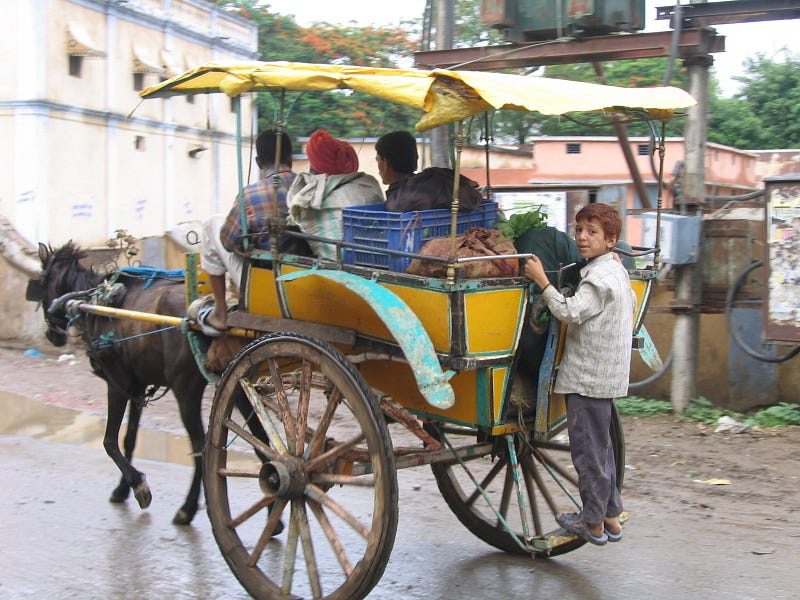
Way back in March of last year, when we were celebrating Year 1 of Covid Pandemic, I wrote about a two-wheeled vehicle drawn by a horse and used in India.
Now, as we approach the second anniversary of SARS-19, I am writing about a two-wheeled vehicle drawn by a horse and used in India.
But the tonga is designed for carrying two to four people, while the ekka was built for one (which makes sense, considering that the word came from the Sanskrit ekatā, derived from eka, meaning “one”). So, as you can clearly see, these are two completely different and unrelated things.
The word tonga has a slew of different meanings, depending on whether or not you capitalize the “t”.
lowercase tonga
The reason why the word tonga should be accepted as a valid answer in today’s Spelling Bee puzzle is because it’s not just the name of a Paciic island nation, but also a common noun. Proper nouns are not accepted as answers by the New York Times, which makes sense.
The argument for not including tonga might be that it’s an obscure word. My counterargument is that yesterday’s puzzle included the word nepenthe, while Monday’s accepted tommyrot. Neither seems very obvious to me; on the other hand, one may reasonably think a player might attempt to key in tonga (considering most people have heard of the country) and discover it’s accepted, leading to a search in order to find out what the word means when it’s not capitalized.
Therefore, the editors of the Spelling Bee missed a great opportunity to educate their fandom about a two-wheeled vehicle drawn by a horse and used in India that is completely different from the other two-wheeled vehicle drawn by a horse and used in India that I wrote about last year.
William Gilbert, Jr., in his 1944 book Peoples of India, described the tonga as “a two-wheeled horse-drawn conveyance with back-to-back seats” that was frequently seen in “Hindustan” (a term used way back when to refer to the entire Indian subcontinent, including Pakistan, which was not yet an independent nation when the book was written).
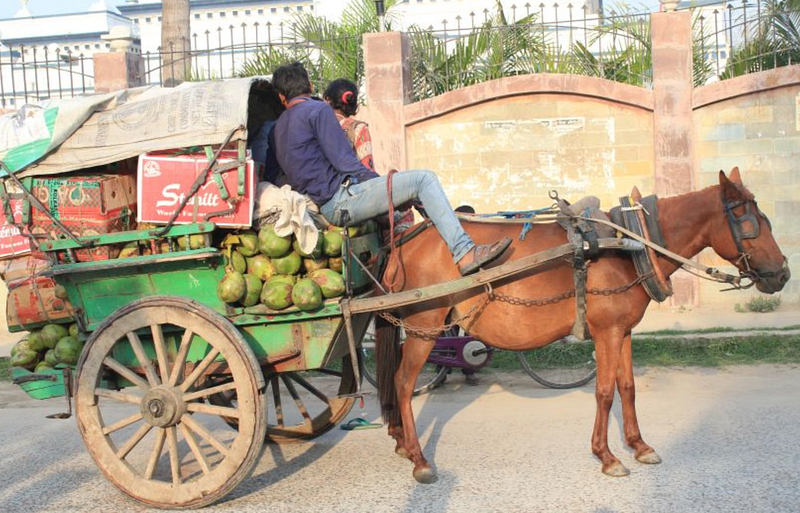
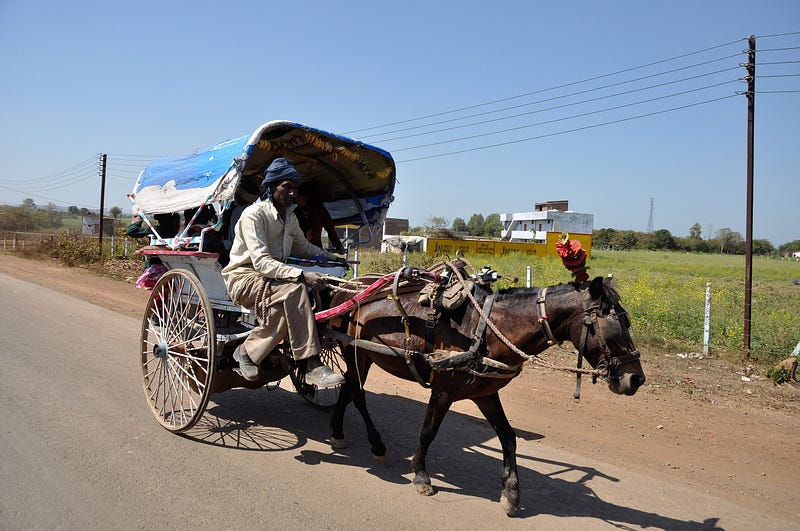
Tongas typically have a canopy over the carriage. Passengers access their seats by climbing on from the back, while the driver sits in front. Space is usually available for baggage below the carriage, between the wheels. Tongas can also be used to carry foodstuffs and other materials instead of passengers, as we can see here:
Tongas are usually cheaper rides than taxis or rickshaws. In India, tongas prevail in rural areas of the north, like Uttar Pradesh, Rajasthan, Madhya Pradesh, and Punjab. They still line up at railway stations and bus stops to transport passengers and their luggage to small towns.
In Pakistan, tongas are mainly found in the older parts of cities and towns. They have become less popular as a regular, everyday mode of transportation and are used more for leisure and celebrations, like weddings.
Tongas have been banned in many cities and on highways because of their slow pace. However, this guy is fresh out of giving a you know what about the ban:
Lowercase tonga also means something else, according to our good friends at Merriam-Webster.
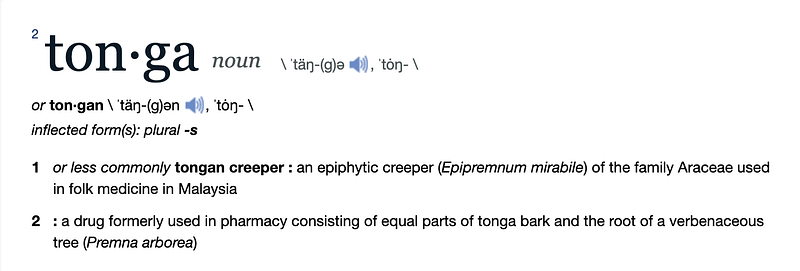
Epipremnum is a genus of evergreen perennial flowering vines in the family Araceae. They typically grow in the tropical forests of China, the Himalayas, and Southeast Asia, as well as Australia and the western Pacific. Hence possible the origin of the name “tongan creeper”.
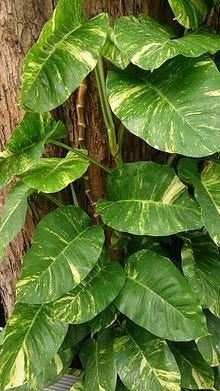
These plants can grow to over 130 ft (40 meters) high, while their leaves have been known to stretch out to about 10 ft long, equivalent to the official height of a basketball rim in the NBA. All parts of the plant are poisonous, which may explain why the second definition above says “drug formerly used…”
Uppercase Tonga
Officially named the Kingdom of Tonga, Tonga is both a country and an archipelago of 169 islands in the southern Pacific Ocean, to the east of Australia. In other words, right here:
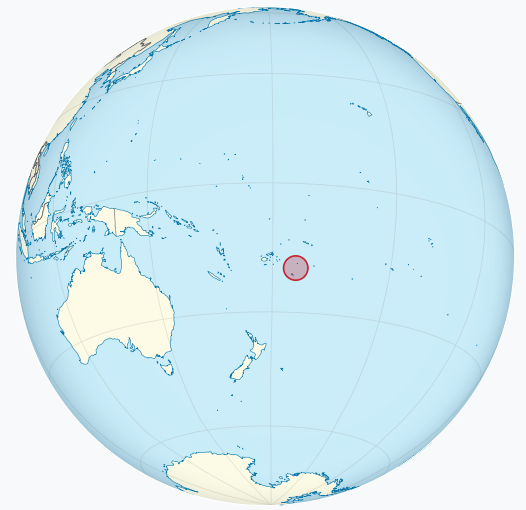
It is believed the islands were first inhabited more than two millennia ago, its settlers eventually became distinctly known as Tongan, and even became a strong and conquering maritime empire. From 1900 to 1970, Tonga had British protected-state status, which meant the United Kingdom looked after Tonga’s foreign affairs under a treaty in which Tonga never gave up its sovereignty.
Supposedly the name Tonga comes from fakatonga, meaning “southwards”, as the archipelago is the southernmost group among the island groups of central Polynesia.
Although Tonga has competed at both the Summer and Winter Olympics, its only medal came at the 1996 Summer Olympics in Atlanta, where Paea Wolfgramm (the “Tongan Warrior”) won silver in super heavyweight boxing. He lost the gold to Wladimir Klitschko, who later had a successful professional heavyweight boxing career.
There are also a few other Tongas with an uppercase “T”:
o It is the name of a town in Cameroon, a river in Fiji, an island in New Zealand, a trench in the Pacific Ocean, a tectonic plate, an ethnic group in Zambia and Zimbabwe, and, in Polynesian mythology, the last wind to be reined in by Maui.
o The 0.25 μm Tonga core was the first Pentium II chip for laptops, and had all of the features of the desktop models.
o Operation Tonga, the codename given to the airborne operation undertaken by the British 6th Airborne Division between 5 June and 7 June 1944 as a part of Operation Overlord and the D-Day landings during World War II.
Well, there you have it, as promised. A generous plethora of tongas. But only one, the carriage, could have been accepted as an answer in today’s Spelling Bee game. And yet… the New York Times determined that the word tonga is actually a dord*.
You can check out my previous entry on another dord* here:
*What the heck is a dord, you ask? Here’s the answer: