
To Make Real Change, We Need to Change the Way We Consume Media
Black lives won’t matter unless we correct our media course
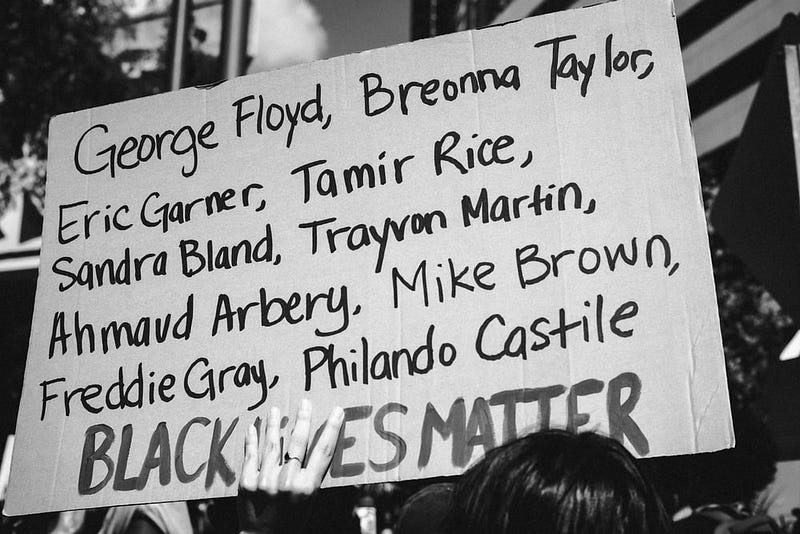
Like you, I’ve been hurting from the news of George Floyd getting murdered. My hurt has increased more and more, as Donald Trump has threatened to take declare war on peaceful protesters.
(Here on out, I will not call him “President” Trump in my writing — as that title is only deserving for people who have earned my respect.)
But the truth about my hurt is this: it’ll only last for so long. I am not black and don’t have to deal with these issues on a daily basis. As a friend put it, imagine what it’s like to live this hurt everyday. Imagine what it’s like to walk on the street and not feel protected (but the opposite) by your own police. Imagine what it’s like to know that you are constantly at risk of dying for doing nothing warranting your death.
This is the daily reality of black lives in America.
And this is the daily reality of white male lives in America: privileged, comfortable, and complacent.
When we’re not in a global pandemic, I go on long walks multiple times a day for leisure. All I do is put on my AirPods, open my Spotify, and jam within the confines of my own thoughts. I don’t have to worry about getting stopped by a cop or catcalled by a creep.
I don’t have to deal with additional problems à la the color of my skin. I didn’t win the birth lottery because I was born in the West, I won the birth lottery because I was born white and male in the West.
While writing about my white privilege is a start, it’s nothing but that. We need actual change and reform, now. If we don’t, then we risk more black lives getting slaughtered.
Getting Half the Country to Empathize
I have written before on the subject of political polarization — we need to briefly revisit before moving forward.
To put it as simple as possible, we’re dealing with three types of polarization: polarization of the media, polarization of the people, and polarization of the elected.
- Polarization of the Media: When media narrates the same phenomena in different frameworks. A brilliant example is coverage on the coronavirus crisis. Fox News will headline that Democrats are using “fear to take aim at Trump”, while MSNBC will headline Trump’s “poor leadership”. Same story, two separate narratives.
- Polarization of the People: When actual Americans cannot agree on the issues.
- Polarization of the Elected: When politicians vote based on party interest over constituent interest.
“The media” is a term that constantly fluctuates in definition. Before the 21st century, most news and political media were distributed by newspapers and cable news. Today, however, most media consumed is from social media platforms: places that use algorithms to separate us into echo chambers.
Why would Facebook want to divide the country when they have the power to not? Quite simply, advertising dollars. “Enragement is engagement.” Anger is a powerful cause to keep us stuck on their platform. Albeit not good for us, polarizing content is addictive as a drug. Probably worse, as at least drugs only affect the individual and their loved ones: polarizing content affects us all. It gets people like Donald Trump elected as POTUS.
It’s not like we’re born Democrat or Republican, liberal or conservative. From my eyes, at least, the core issue here is media. Companies like Facebook can utilize their platforms to do social justice, but instead — like big oil companies — they’re going to act for the sake of profits rather than for the sake of society.
In addition, content on national politics gets disproportionate engagement compared to local politics. I don’t even have to note statistics here. When was the last time you saw something on Facebook and Twitter for your local sheriff, judge, and superintendent races compared to Donald Trump?
There’s a dangerous feedback loop at play: the more polarized we get, the more polarized we get. As media platforms polarize people into echo chambers, those individuals act in the ballot box. They don’t engage with content on local elections, so they down ballot vote based on party. And when that happens, we have a more polarized political system.
Don’t believe me? Believe the Pew Research Center. The first chart shows where members of Congress fit on the political spectrum in 1994. The second depicts 2017. We see that there was somewhat of a normal distribution in the first chart — meaning in this case there were many Democrats and Republicans who overlapped on political issues. The 2017 chart shows the opposite: way more Democrats who are liberal and Republicans who are conservative. Although the data is three years old, I wouldn’t be surprised if things got worse.
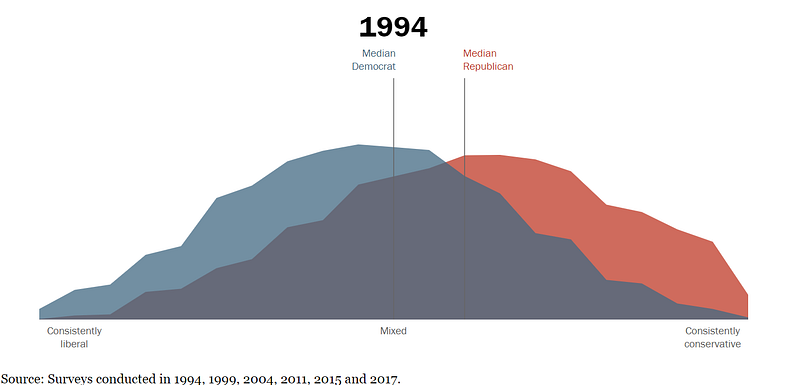
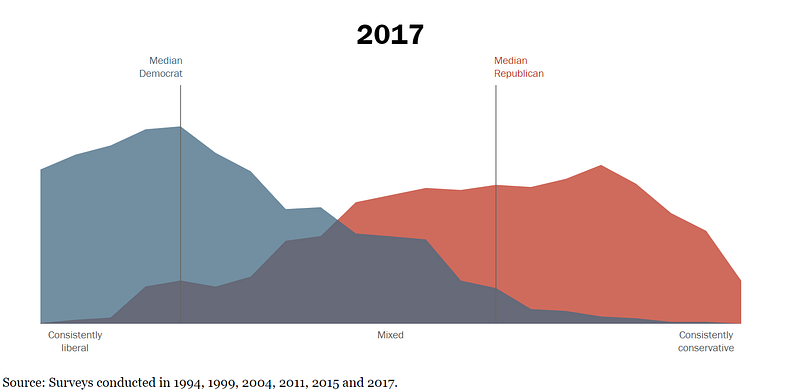
The moral of the story is this: we cannot make real change unless it’s political, and that political change begins with media.
If you haven’t noticed by now, national politics isn’t everything. It’s not Donald Trump who makes decisions on your housing, your police force, or your schools— it’s your mayor, your sheriff, and your superintendent.
But we refuse to give a fuck about local elections.
Media is a Zero Sum Game
I don’t normally believe in the idea of “zero sum games”. Yet they apply to our attention on media.
Before I get into that, let’s review what a zero sum game is.
A zero sum game is a scenario where your win is my loss and vice versa.
Let’s say we have a bucket of popcorn with one-hundred kernels and I’m designated with 74 pieces and you have 26. If I take one from your side of the bucket, that’s my win and your loss.
Applications of zero sum games are limited. Personally, I don’t believe zero sum games exist in many marketplaces. Take a look at e-commerce. Just because some venture capitalist put on a graph that Amazon owns most of the e-commerce market, doesn’t mean that all other actors lost those percentage points. As a consumer, it’s not mutually exclusive for me to buy a book on Amazon, then some jewelry on Shopify. Plus, the amount of capital consumers have to spend is not zero sum and is constantly changing.
But our attention is a zero sum game.
There’s no denying that there are 24 hours in one day. Let’s say we sleep for eight of them — this means we’re awake for 16 hours each day. You work for eight of them, eat for two of them, and now you have six hours left for miscellaneous shit (like going to the bathroom or watching Netflix). We’ll estimate that you have five hours for media consumption.
What are you going to do with those five hours? Read a book? Scroll on Twitter and Facebook? Watch cable news? What are you going to do?
Ultimately, it’s up to you and it’s your decision. You should feel empowered to make a choice for yourself as it’s your own life and time.
But when we spend our time consuming media that we already agree with, we’re never going to grow the fuck up.
Every minute that we spend scrolling in our echo chambers on Facebook or watching Netflix could’ve been a minute of reading Carol Anderson’s White Rage. Or Ta-Nehisi Coates’ Between the World and Me. Or Barack Obama’s Dreams from My Father.
It could’ve also been spent on engaging in local politics.
Normally I would say that it’s okay to take a break and fuck around on social media and Netflix, but that’s the privilege of being white. At the end of the day, time is a zero sum game and each moment you refuse to challenge your white privilege is another opportunity for inaction to happen at the hands of injustice.
When you’re white and feel uncomfortable because of the current, then good. Imagine feeling that way every day.
But I have news for us, white folk: get used to being uncomfortable. Some day or another — preferably sooner, we’re going to have to enact real change in office. Expect us to knock on your days to politically canvass. Expect us to text you about why you should vote for X official. Expect us to bother the fuck out of you until you realize that voting in local politics is important.
Because if we don’t, more black lives will be lost.