
Tinmen
The ones who work it, and the ones who embody it
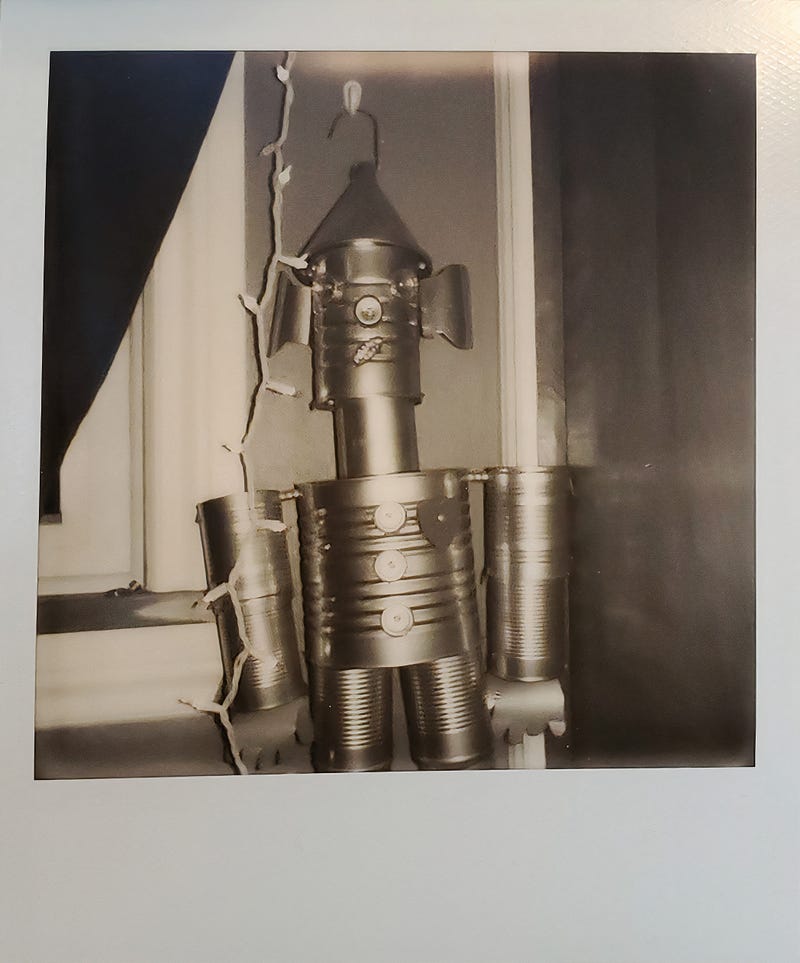
Today’s New York Times Spelling Bee letters:
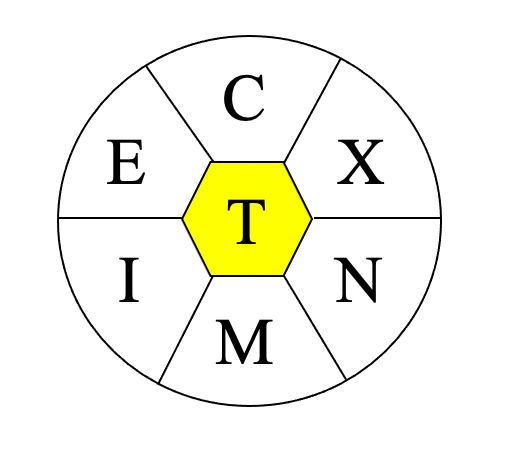
C, E, I, M, N, X, and center T (all words must include T)
Merriam-Webster says…
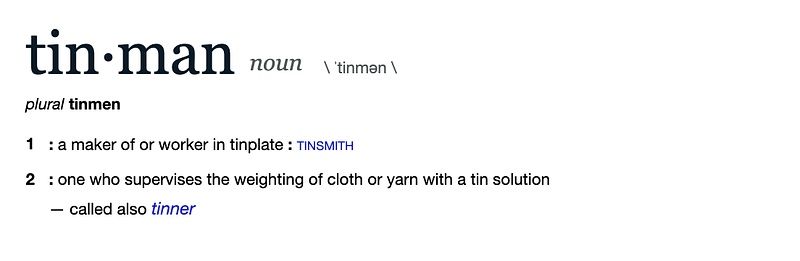
Silly little dictionary! Don’t you know tinmen can’t possibly be a word if the New York Times says it ain’t?
For further fascinating facts, check out the Spelling Bee Master.
What’s your favorite dord* from today’s puzzle?
My Two Cents
How is it possible that the honorable professions of working with tin and dressing up in it for a classic movie were both rejected by The New York Times?
SN, hold the L
A person who makes and repairs things made of tin is known as a tinsmith, in the same way that the term blacksmith is used to describe the person who works with a person who works with iron or steel, usually using heat. In contrast, tinsmiths work with the metal after it has already cooled. The “black” in “blacksmith” refers to the distinction of “black metal”, or iron, possibly due to the layer of oxide that forms on its surface during forging.
Tinsmiths are also known as tinners, tinkers, tinmen, or tinplate workers. As with blacksmiths, tinmen were much more commonTinsmith was a common in pre-industrial times.
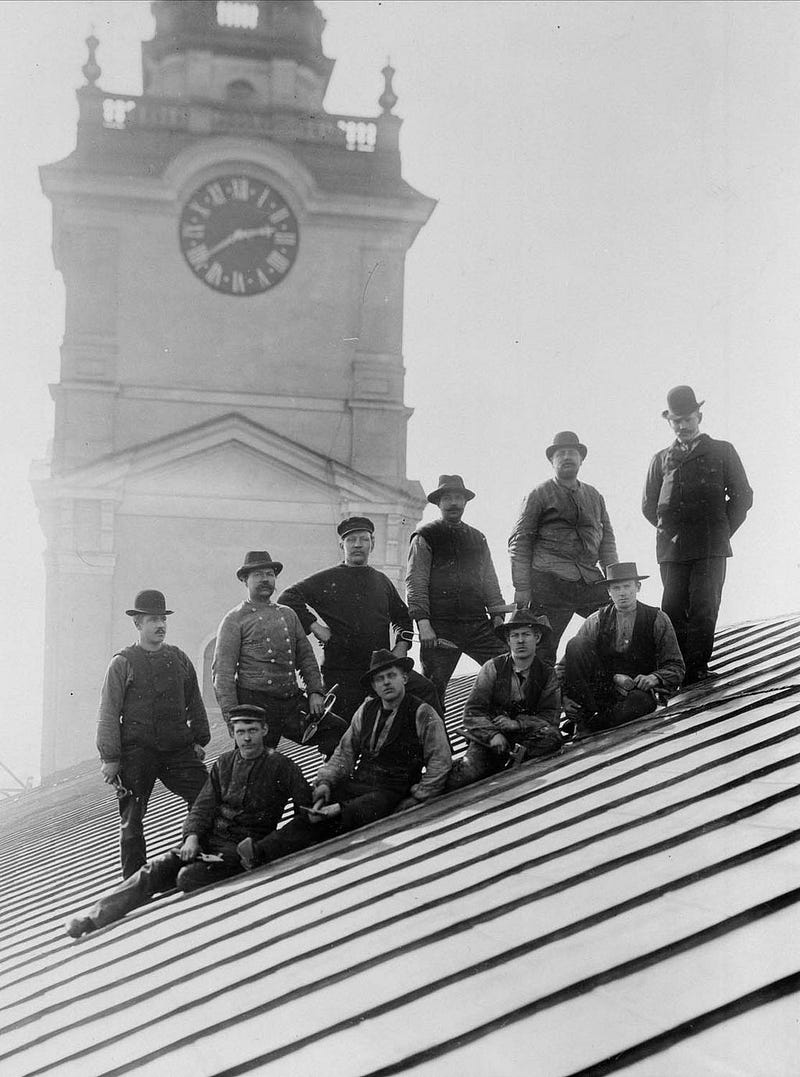
Here are some tinmen on the roof of Storkyrkan, the oldest church in Stockholm. This photo was taken in 1903 and clearly shows what a joyful profession it was. Please note that all these guys are barely seventeen or eighteen years old. I think the one on the far left might be fifteen. Being a tinman certainly put hairs on your chest back then. Also on your face.
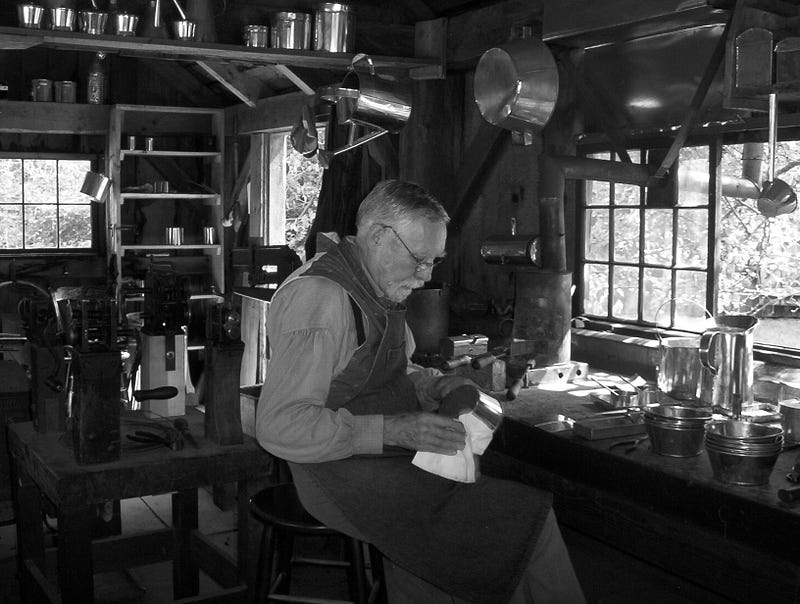
And here is a modern tinman in his modern shop. He’s a bit older, perhaps thirty or thirty-two.
Tin is a chemical element in the carbon family; it’s a soft, silvery-white metal that shows a bluish tinge. Ancient civilizations used tin as a copper alloy to make bronze. (The symbol Sn for tin is an abbreviation of the Latin word for the metal: stannum.) And because we are in the middle of the Winter Olympic Games, tin is being hung on the necks of third-place finishers even as I type these words.
The metal is found as stannic oxide in the mineral cassiterite, the only tin mineral of commercial significance. It has to be isolated in a process using with coal or coke in smelting furnaces. No high-grade deposits of tin have been found anywhere in the world.
Tin is still widely used for plating steel cans used as food containers, in metals used for bearings, and in solder. Tin-plating protects iron from corrosion; tin piping and valves help maintain purity in water and beverages. But due to the fact that pure tin is not very strong or resistant, the metal is not used to make weight-bearing structures unless alloyed with other metals. The most common alloys are bronze, pewter (tin, antimony, copper, bismuth, and sometimes silver), lead-based solders, and babbitt metal.
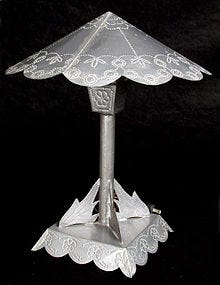
Here is a picture of a tin desk lamp from the late 1930s, Bandelier National Monument. Made by a tinman from the Civilian Conservation Corps. That tinman was only forty years old, although he looked like he was ninety-three.
Nick Chopper
I read the The Wonderful Wizard of Oz decades ago and never reread it in adulthood. And although I’ve seen the original The Wizard of Oz movie a couple of times, and even the awesome Motown remake, I did not remember the actual name of the Tinman character until I looked it up today.
Nick Chopper.
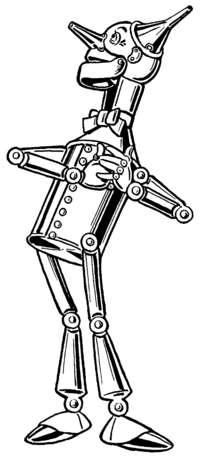
Interestingly, Chopper is not referred to as the “tinman”, but rather as the “Tin Man” or “Tin Woodman”… which sounds a bit contradictory. Is he made of tin or lumber?
In the classic 1939 film the Tin Man was played by actor Jack Haley. Haley is best known for… well, playing the Tin Man in that movie. Originally, Ray Bolger ––who ended up playing the Scarecrow–– was cast to play the Tin Man. Buddy Ebsen (later famous for his role as Jed Clampett in the CBS television sitcom The Beverly Hillbillies) had already been chosen for the Scarecrow, but was convinced to swap roles with Bolger. This became a huge problem for Ebsen. The makeup used for the Tin Man character had aluminium powder that Ebsen regularly inhaled, which caused lung issues that almost killed him. He ended up in hospital and had to give up the role.
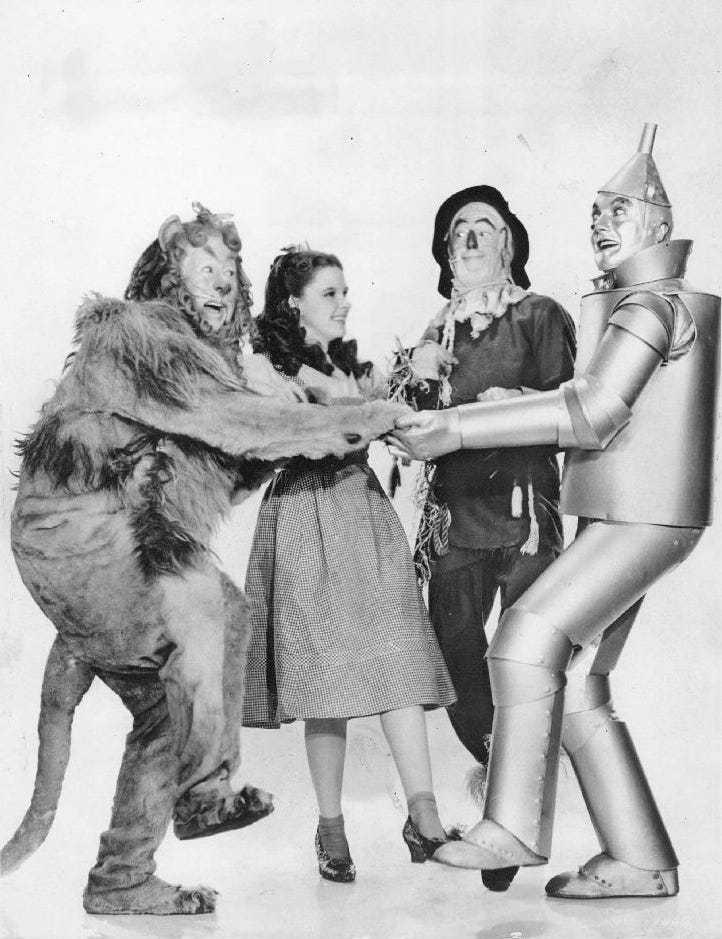
The makeup was changed to a safer aluminium paste, allowing Haley to bring to life his iconic characterization. One interesting fact is that Haley spoke his lines in a breathy style that he used for telling his son bedtime stories.
There is no explanation in the film of how the Tin Man became the Tin Man. It is implied that he was always made of tin, and the only reference to the tinsmith is the Tin Man’s remark “The tinsmith forgot to give me a heart”.
Here’s a non sequitur from left field: yes, I’ve heard the infamous story about one of the Munchkins hanging himself on set and appearing in a scene of the original film. That urban legend has been debunked, supposedly. Here is Snopes take on it:
Now you know. Whether you’re talking about the people who smith tin or the ones who cover their body with it, don’t you dare use the word tinmen… because the editors of the Spelling Bee decided that tinmen is a dord*.
You can check out my previous entry on another dord* here:
*What the heck is a dord, you ask? Here’s the answer: