on of words in imitation of natural sounds” and “the naming of a thing or action by a more or less exact reproduction of the sound associated with it (such as <i>buzz, hiss, bobwhite</i>)”. <b>Onomatopoeia </b>comes from the compound Greek word <i>onomatopoeia</i> (ὀνοματοποιία) meaning “making or creating names”.</p><p id="556f">Other common onomatopoeias include animal noises such as <i>oink</i>, <i>meow</i>, <i>roar</i>, and <i>chirp</i>. And, of course, who can forget these:</p>
<figure id="36aa">
<div>
<div>
<img class="ratio" src="http://placehold.it/16x9">
<iframe class="" src="https://cdn.embedly.com/widgets/media.html?src=https%3A%2F%2Fwww.youtube.com%2Fembed%2FDs_eI8J50Dw%3Ffeature%3Doembed&display_name=YouTube&url=https%3A%2F%2Fwww.youtube.com%2Fwatch%3Fv%3DDs_eI8J50Dw&image=https%3A%2F%2Fi.ytimg.com%2Fvi%2FDs_eI8J50Dw%2Fhqdefault.jpg&key=a19fcc184b9711e1b4764040d3dc5c07&type=text%2Fhtml&schema=youtube" allowfullscreen="" frameborder="0" height="480" width="854">
</div>
</div>
</figure></iframe></div></div></figure><p id="ab2a">Interestingly, onomatopoeia for the same sound differs between cultures. That’s why a dog goes “bowwow” in English but “guau-guau” in Spanish. Or why why scissors go “snip snip” in English but “krits-krits” in Greek. <i>Tictoc</i> is <i>tic tac</i> in Spanish and Italian, <i>dī dā</i> in Mandarin, <i>katchin katchin</i> in Japanese, and <i>tik-tik</i> in Hindi.</p><p id="f848">But why tictoc, tictoc, tictoc, and not…</p><h2 id="d16f">Toctic, toctic, toctic</h2><p id="a589">Ever heard of the that lesser-known fairy tale, “Riding Red Little Hood? No? Probably because that name does not sound as pleasant to the ears as “Little Red Riding Hood”. (Riding Red Little Hood also sounds like it could be a dirty movie, but we won’t go there.)</p><p id="14e1">In 2016, a section of Mark Forsyth’s <i>The Elements of Eloquence</i> went a bit viral. It explains one of those unwritten rules that native English speakers know without knowing, but that sometimes English learners struggle with. As an <a href="https://www.theguardian.com/commentisfree/2016/sep/13/sentence-order-adjectives-rule-elements-of-eloquence-dictionary">article</a> from the Guardian sums up (bolded words are mine):</p><blockquote id="ddcb"><p>…if you’re using more than one adjective before a noun, they are subject to a certain hierarchy. You know it’s proper to say “silly old fool” and wrong to say “old silly fool”, but you might never have thought about why — or if you did you probably imagined it was just some time-honoured convention you picked up by
Options
rote. But it isn’t. There’s a rule. The rule is that multiple adjectives are always ranked accordingly: <b>opinion, size, age, shape, colour, origin, material, purpose</b>. Unlike many laws of grammar or syntax, this one is virtually inviolable, even in informal speech. You simply can’t say <b>My Greek Fat Big Wedding</b>, or <b>leather walking brown boots</b>. And yet until last week, I had no idea such a rule existed.</p></blockquote><p id="06e1">Speaking of Little Red Riding Hood, remember who she runs into? <b>The Bad Big Wolf</b>! No, you say? You remember it as the <b>Big Bad Wolf</b>? Wouldn’t this be incorrect, since opinion (bad) comes before size (big) according to the explanation above?</p><p id="c41b">Well, there’s another unwritten rule that overrides the “order of adjectives” one. And it’s known by the fancy and technical name of ablaut reduplication. I found out about it yesterday thanks to my best bud Michael Benharroch, via this meme:</p><figure id="650a"><img src="https://cdn-images-1.readmedium.com/v2/resize:fit:800/1*42-7x3RgjnyNXpabqpM3vg.png"><figcaption>Credit: BBC article?</figcaption></figure><p id="08f6">Next time you hear a loud clock’s second hand go around, you’ll think <b>ticktock</b>, not <b>tocktick</b>. Just don’t think of <i>tictoc</i>, because the editors of the Spelling Bee determined that it’s a dord*.</p><p id="58bc">You can check out my previous entry on another <b>dord* </b>here:</p><div id="bdc5" class="link-block">
<a href="https://readmedium.com/bota-3a3c2a0077c">
<div>
<div>
<h2>Bota</h2>
<div><h3>What time is it? Wine o’clock!</h3></div>
<div><p>medium.com</p></div>
</div>
<div>
<div style="background-image: url(https://miro.readmedium.com/v2/resize:fit:320/1*e07Q4HOwZNhgcrIsOBZBsw.png)"></div>
</div>
</div>
</a>
</div><p id="ee89">*What the heck is a <b>dord, </b>you ask? Here’s the answer:</p><div id="8556" class="link-block">
<a href="https://www.merriam-webster.com/words-at-play/dord-a-ghost-word">
<div>
<div>
<h2>'Dord': A Ghost Word</h2>
<div><h3>One of the questions people like to ask lexicographers is this: Can you sneak something into the dictionary? Can you…</h3></div>
<div><p>www.merriam-webster.com</p></div>
</div>
<div>
<div style="background-image: url(https://miro.readmedium.com/v2/resize:fit:320/0*CPDXjdgRuAHdvKnX)"></div>
</div>
</div>
</a>
</div></article></body>
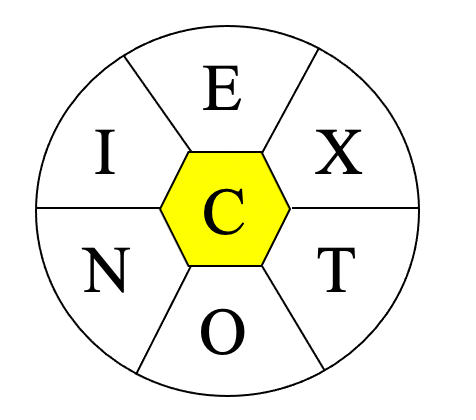
I know the dictionary’s preferred spelling for today’s word is ticktock with a “k” (or actually, two). But we’ve seen cases in which the Spelling Bee allows for variant spellings. Less than two weeks ago the game’s editors had no problem allowing both nunchuck and nunchuk as answers. On the very next day, they rejected the word multitool because they accept only the hyphenated version (multi-tool).
It’s no surprise, then, to see that tictoc wasn’t on the list of accepted answers.
Onomatopoeia who?
The word tictoc is also a verb, and I promise you won’t be shocked by its meaning:
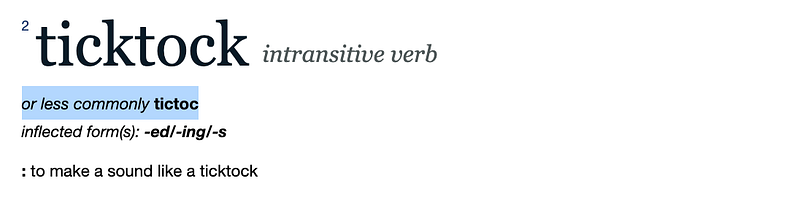
Credit: merriam-webster.com
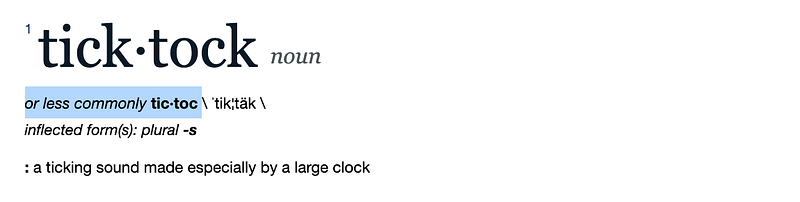
Our friends at Merriam-Webster explain that its origin is “imitative” and the first known use was very specifically in 1848. Before that, apparently no one had ever thought of saying that, despite clocks having been around for quite a while.
By “imitative” the dictionary means the process of onomatopoeia, or the “formation of words in imitation of natural sounds” and “the naming of a thing or action by a more or less exact reproduction of the sound associated with it (such as buzz, hiss, bobwhite)”. Onomatopoeia comes from the compound Greek word onomatopoeia (ὀνοματοποιία) meaning “making or creating names”.
Other common onomatopoeias include animal noises such as oink, meow, roar, and chirp. And, of course, who can forget these:
Interestingly, onomatopoeia for the same sound differs between cultures. That’s why a dog goes “bowwow” in English but “guau-guau” in Spanish. Or why why scissors go “snip snip” in English but “krits-krits” in Greek. Tictoc is tic tac in Spanish and Italian, dī dā in Mandarin, katchin katchin in Japanese, and tik-tik in Hindi.
But why tictoc, tictoc, tictoc, and not…
Toctic, toctic, toctic
Ever heard of the that lesser-known fairy tale, “Riding Red Little Hood? No? Probably because that name does not sound as pleasant to the ears as “Little Red Riding Hood”. (Riding Red Little Hood also sounds like it could be a dirty movie, but we won’t go there.)
In 2016, a section of Mark Forsyth’s The Elements of Eloquence went a bit viral. It explains one of those unwritten rules that native English speakers know without knowing, but that sometimes English learners struggle with. As an article from the Guardian sums up (bolded words are mine):
…if you’re using more than one adjective before a noun, they are subject to a certain hierarchy. You know it’s proper to say “silly old fool” and wrong to say “old silly fool”, but you might never have thought about why — or if you did you probably imagined it was just some time-honoured convention you picked up by rote. But it isn’t. There’s a rule. The rule is that multiple adjectives are always ranked accordingly: opinion, size, age, shape, colour, origin, material, purpose. Unlike many laws of grammar or syntax, this one is virtually inviolable, even in informal speech. You simply can’t say My Greek Fat Big Wedding, or leather walking brown boots. And yet until last week, I had no idea such a rule existed.
Speaking of Little Red Riding Hood, remember who she runs into? The Bad Big Wolf! No, you say? You remember it as the Big Bad Wolf? Wouldn’t this be incorrect, since opinion (bad) comes before size (big) according to the explanation above?
Well, there’s another unwritten rule that overrides the “order of adjectives” one. And it’s known by the fancy and technical name of ablaut reduplication. I found out about it yesterday thanks to my best bud Michael Benharroch, via this meme:
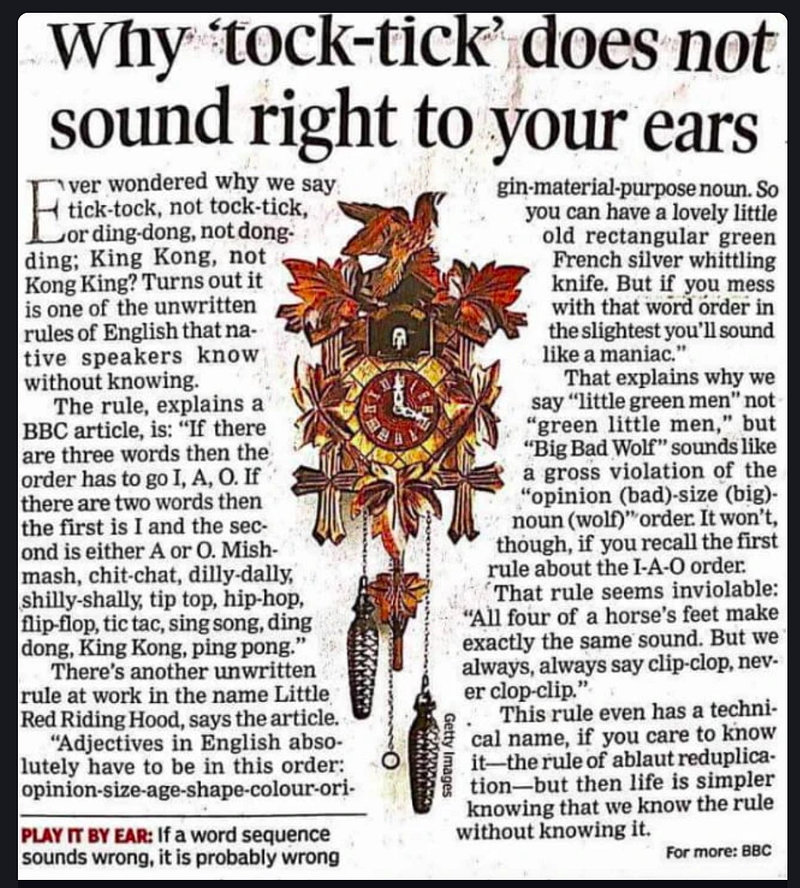
Credit: BBC article?
Next time you hear a loud clock’s second hand go around, you’ll think ticktock, not tocktick. Just don’t think of tictoc, because the editors of the Spelling Bee determined that it’s a dord*.
You can check out my previous entry on another dord* here: