
Thymol
Part of the parsley-ol, sage-ol, and rosemary-ol verse
Today’s New York Times Spelling Bee letters:
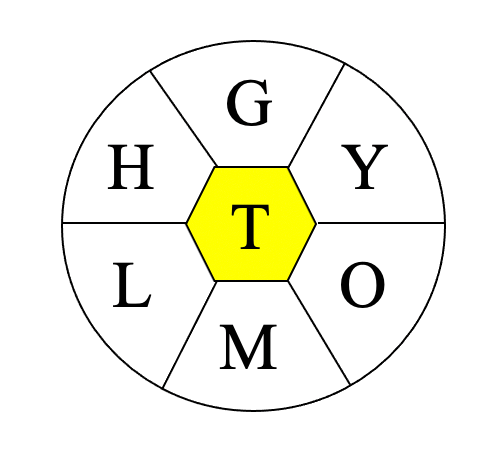
G, H, L, M, O, Y, and center T (all words must include T)
Merriam-Webster says…
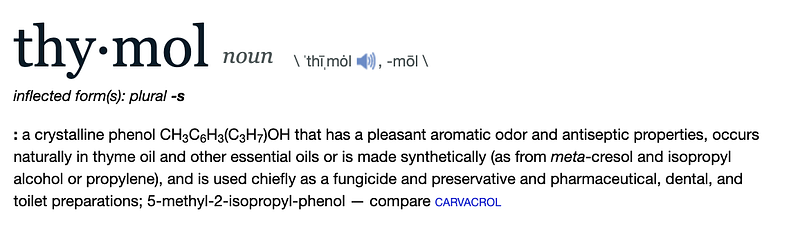
Silly little dictionary! Don’t you know thymol can’t possibly be a word if the New York Times says it ain’t?
For further fascinating facts, check out the Spelling Bee Master.
What’s your favorite dord* from today’s puzzle?
My Two Cents
Can you guess the song I’m referencing at the top of today’s column? Well, don’t worry if you can’t. We’ll find out more about further below. But please be patient and read the first part too, will ya?
Science-y stuff
As Wikipedia explains (with references that can be checked):
Thymol (also known as 2-isopropyl-5-methylphenol, IPMP) is a natural monoterpenoid phenol derivative of p-Cymene, C10H14O, isomeric with carvacrol, found in oil of thyme, and extracted from Thymus vulgaris (common thyme), ajwain, and various other plants as a white crystalline substance of a pleasant aromatic odor and strong antiseptic properties.
Translation: it’s the stuff that makes thyme thyme-y.
I told you this was going to be science-y.
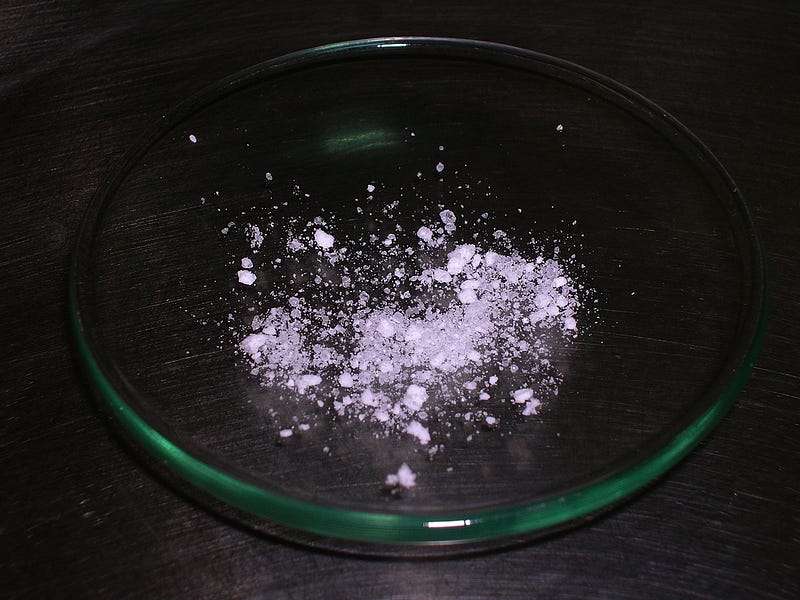
I hope Danny S. wasn’t trying to fool everyone by disguising a photo of cocaine or crystal meth as thymol. That’s what the image above shows. And that picture is much easier to understand for most people than this:
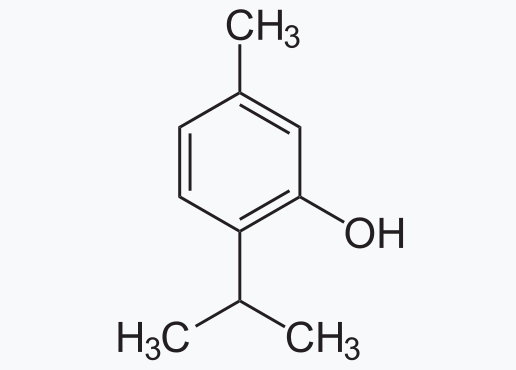
The ancient Egyptians used thyme for embalming, while the Greeks used it in their baths and burned it as incense in their temples, as a source of courage. The spread of thyme throughout Europe was thought to be due to the Romans, who used it to purify their rooms and to “give an aromatic flavor to cheese and liqueurs”.
In more modern times, Thymol has been used in alcohol solutions and in dusting powders for the treatment of ringworm infections, and during the 1910s was the treatment of choice for hookworm infections in the United States.
Oh, and it’s also the stuff that makes thyme thyme-y.
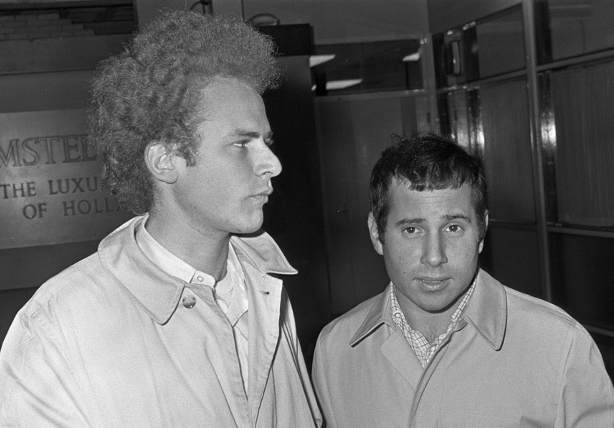
Paul and that other guy with the weird hairdo
The word thyme always brings to mind two things: (1) Why the hell is it pronounced time and not thyme? It’s like an anti-lisp! (2) A famous song that begins with a shopping list of herbs:
Are you going to Scarborough Fair? Parsley, sage, rosemary, and thyme. Remember me to one who lives there, For she once was a true love of mine.
Let’s switch gears from the science of plants and talk music for a bit. It’s more fun and it will give me a chance to reference a column from last year and hopefully earn an additional 13 cents today.
Paul Simon and Art Garfunkel became the biggest thing in folk-rock music and one of the best-selling musical acts of the 1960s–– before I was born. By the time I gained musical consciousness of their greatness during my teen years in the 1980s, they had broken up and “sorta reunited” a few times.
One forgets that when someone is a folk-song musician they likely play a lot of traditional or old songs composed by others. Because S&G penned most of their greatest hits, one might assume incorrectly that they penned all of their hits, greater and lesser.
That’s not the case with “El Condor Pasa”, or “If I Could”. That song is well-known for its panpipe music and––surprisingly––less-known for the traditional folk-tune origin of its song, which you can learn about by reading my column from last year. Just remember to scroll down slowly to the end, thank you very much.
Turns out, “Scarborough Fair”, another S&G hit, is also a traditional ballad. From England. So the Scarborough refers to North Yorkshire, not New York. The original song lists lists a number of impossible tasks given to a former lover who lives in… you guessed it! Scarborough. It’s believed that, in turn, this tune may the bastard child of an older song with a similar theme of impossible tasks called “The Elfin Knight”.
Here are the first three stanzas of the song as Frank Kidson published it in 1892:
“O, where are you going?” “To Scarborough fair,” Savoury sage, rosemary, and thyme; “Remember me to a lass who lives there, For once she was a true love of mine. “And tell her to make me a cambric shirt, Savoury sage, rosemary, and thyme, Without any seam or needlework, And then she shall be a true love of mine. “And tell her to wash it in yonder dry well, Savoury sage, rosemary, and thyme, Where no water sprung, nor a drop of rain fell, And then she shall be a true love of mine.”
The version that Simon & Garfunkel later used was first sung by Mark Anderson (a retired lead miner from England) to Ewan MacColl in 1947. MacColl later included it on his and Peggy Seeger’s The Singing Island (1960). In 1965, English folk singer Martin Carthy recorded “Scarborough Fair” after having picked up the tune from the songbook where MacColl and Seeger had written it down. That same year, Paul Simon learned the song from Martin Carthy; it came out in S&G’s 1966 herbal album Parsley, Sage, Rosemary and Thyme.
And here they are singing it in their record-breaking (at the time)1981 Central Park concert:
See? This was much nicer than that science-y part from before.
We’ve discussed some serious science today. And also some serious songs. Yet, despite that, the editors of the Spelling Bee decided that thymol is a dord*.
You can check out my previous entry on another dord* here:
*What the heck is a dord, you ask? Here’s the answer: