avatarPhilip Ogley

Free AI web copilot to create summaries, insights and extended knowledge, download it at here

3107

Abstract

v2/resize:fit:800/0*lWlq5MZL0EWE6QM4"><figcaption>(Image/Penguin)</figcaption></figure><h1 id="7ca3">L’étranger (1942) — Albert Camus (The Outsider)</h1><figure id="83a6"><img src="https://cdn-images-1.readmedium.com/v2/resize:fit:800/0*8kCAtlXdGyYSipWn.jpeg"><figcaption>(Credit/Folio)</figcaption></figure><p id="93dc"><b>I first read </b>the book in English when I was 20, after finding it in a pile of my grandfather’s belongings after his death.</p><p id="f486">Since then, I’ve read it four times at different stages of my life (once in French), and each time have been mesmerized by the haunting routines of the protagonist, Meursault. A man whose days, routines, acquaintances, family, work, hold little or no value.</p><p id="fa6c"><b><i>“I cooked some eggs for myself and ate them out of the pan without bread because I’d run out and couldn’t be bothered to go downstairs to buy some.”</i></b></p><p id="a003">I love this line. It sums up the character. The minimum is always done. Eating the eggs out of the pan is enough. He would like some bread with the eggs — he is hungry; we know this! — but he lets it pass. It’s not important.</p><p id="157d">I’m drawn into Meursault’s world, a world free of unnecessary distraction. He lives in his old mother’s flat, he goes to work in an office, he smokes, he reads, he goes swimming, he has occasional sex, he goes to the cinema. All done and undertaken without feeling particularly anything for any of them.</p><p id="5714">I understand Meursault. I’ve always felt like an outsider looking in on the world. Indifferent to events around me and happy to plod along, doing whatever is necessary to get through the day.</p><p id="dce3">I remember my headmaster at school, describing me one afternoon as “<i>Insular</i>”. I didn’t know what it meant at the time, so I looked it up: “Island like.” I couldn’t have agreed more with my master’s description of me.</p><p id="fcb9">I’m better now. I’m not as <i>insular</i> — I like people for one. But there’s still a part of me that can’t help thinking like Meursault. The Outsider.</p><h1 id="e362">Le Mont Analogue (1952)— Réné Daumal (Mount Analogue)</h1><figure id="60e3"><img src="https://cdn-images-1.readmedium.com/v2/resize:fit:800/1*KvJlKIUV8TG1A78-PI_99A.png"><figcaption>(Credit: Gallimard)</figcaption></figure><p id="62e6">Réné Daumal never got to see his book's publication. One afternoon he got up from his table as he was working on the book to answer a call.</p><p id="7245">He never returned to finish the sentence, and a few weeks later died from tuberculosis. Eight years later, the novel was published posthumously, unfinished.</p><figure id="d8ce"><img src="https://cdn-images-1.readmedium.com/v2/resize:fit:800/0*d9DpV9b5h_kT7vTh.png"><figcaption><b>The Final Page of Mount Analogue</b> (Image/Author)</figcaption></figure><p id="c4dc">The book follows eight explorers led by their mysterious leader, <i>Père Sogol</i>, to Mount Analogue. A mountain higher than anything discovered so far on Earth. A mystical mountain, a link between Heaven and Earth. A place that cannot exist, but <

Options

i>must </i>exist.</p><p id="1574">Sogol believes it remains undiscovered due to certain rocks within the ‘magic’ mountain that causes light to bend around it. Just like a star can bend light rays, Mount Analogue creates a field around it, making it invisible to humans.</p><p id="10aa">After months of detailed preparation, the eight explorers set out in a yacht called <i>Impossible, </i>in search of <i>Mount Analogue</i>.</p><p id="3cd5">In many ways, the abrupt conclusion to it, increases its poignancy. Adds to the sense of mystery. As Sogol and the explorers were about to enter the unknown, the story ends. As though Daumal had done it on purpose. Asking the reader to make their own ending up. Challenging us to make our own spiritual journey up the steep slopes of <i>Mount Analogue, </i>and beyond.</p><figure id="72a1"><img src="https://cdn-images-1.readmedium.com/v2/resize:fit:800/0*DoiFffzBsWgIhH8L.jpg"><figcaption><b>English edition 1st edition, 1962 </b>(Wiki <a href="https://en.wikipedia.org/wiki/Mount_Analogue#/media/File:ReneDaumal_MountAnalogue.jpg">Comms</a>)</figcaption></figure><p id="c271">Thanks for reading. For more books.</p><div id="b87f" class="link-block"> <a href="https://fanfare.pub/why-raymond-chandler-is-one-of-the-great-20th-century-novelists-930b5c98552f"> <div> <div> <h2>Why Raymond Chandler Is One of the Great 20th Century Novelists</h2> <div><h3>And why crime fiction was never the same again</h3></div> <div><p>fanfare.pub</p></div> </div> <div> <div style="background-image: url(https://miro.readmedium.com/v2/resize:fit:320/0*7qCc5_lW2IIosUT0.jpg)"></div> </div> </div> </a> </div><div id="71b4" class="link-block"> <a href="https://readmedium.com/why-jg-ballards-1975-cult-novel-high-rise-is-so-good-1092e98c719"> <div> <div> <h2>Why JG Ballard’s 1975 Cult Novel High-Rise Is So Good</h2> <div><h3>It starts and ends with the protagonist, Dr Robert Laing, sitting on his balcony eating an Alsatian.</h3></div> <div><p>medium.com</p></div> </div> <div> <div style="background-image: url(https://miro.readmedium.com/v2/resize:fit:320/1*2jb9CTE7Qr-hRcXbIWB6Zg.jpeg)"></div> </div> </div> </a> </div><div id="d378" class="link-block"> <a href="https://readmedium.com/billennium-by-jg-ballard-9bc589e11f94"> <div> <div> <h2>Billennium by JG Ballard</h2> <div><h3>Did the British author predict the global housing crisis — in 1961</h3></div> <div><p>medium.com</p></div> </div> <div> <div style="background-image: url(https://miro.readmedium.com/v2/resize:fit:320/1*7cb8BbVx8c3lyR1evA9_LQ.jpeg)"></div> </div> </div> </a> </div></article></body>

Culture + Philosophy

Three French Novels You Must Read if You Ever Learn French

Three French novels to make you think and dream
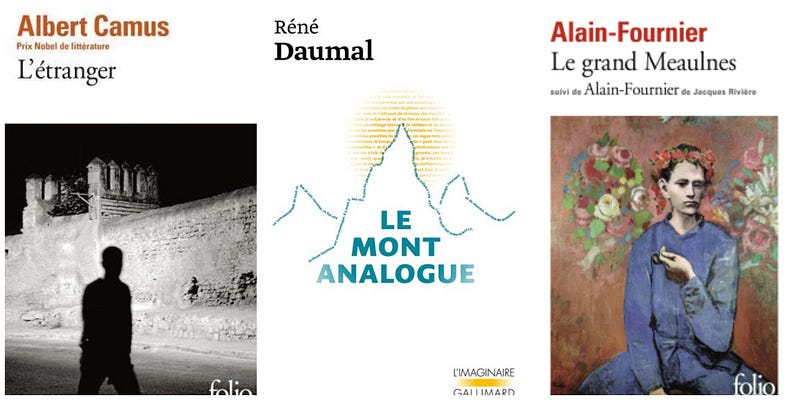
(Image Credits: Folio/Gallimard)

After living in France for nearly 12 years now, I’m finally able to read a novel in the language. It’s been a hard slog, I’m not a natural linguist like my wife, who picks up languages like one might pick up groceries in a store.

I’ve read about 20 French novels now, including works by Maupassant, Houellebecq, Voltaire, Exupéry, Zola, Balzac, as well as countless children’s stories. Kids books are not only a great way to learn a language, but an excuse to read fairytales again.

Most of the books I’ve enjoyed. Some, I admit, I’ve got lost in. But it’s always a worthwhile exercise in understanding French literature, language and history.

The three below, I particularly enjoyed, and even if you’ve no inclination to learn French, they’re all available in English. Plus many other languages.

Les Grand Meaulnes (1913) — Alain Fournier (The Lost Estate)
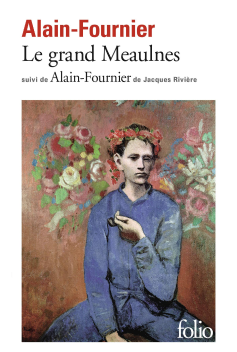
(Image/Folio)

I bought Les Grand Meaulnes a few years ago, but never read it. When I realized the author had been killed in action in 1914 in the first month of WW1, I couldn’t bring myself to read it.

What if I enjoyed it? There would be no more Alain Fournier, as this was his only novel. What would I do? How would I feel? So I kept on putting it off, until last Christmas, when I finally read it.

I’m glad I did.

It tells the story of a schoolboy, Augustin Meaulnes, who after running away from his boarding school encounters a mysterious country house and a beautiful woman within it.

After his return a few days later, he tells about his adventures to his best friend François (the narrator of the book), and his promise to return there one day to find her.

It’s set in the bleak landscape of the Sologne in north central France, where I once lived. And from Fournier’s description of life there, ‘the loneliness of winter’, I understand what he was talking about.

It’s not too dissimilar in many ways to The Great Gatsby. Both tackle the idea of striving for something that is no longer possible. The lost château, in Fournier’s novel, mimics the green light at the end of Daisy’s jetty in The Great Gatsby. Both are symbols of hope, both are unattainable.

‘…once a man has taken a step in Paradise, how can he afterwards get used to living like everyone else…’ — Les Grand Meaulnes.
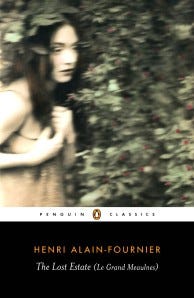
(Image/Penguin)

L’étranger (1942) — Albert Camus (The Outsider)
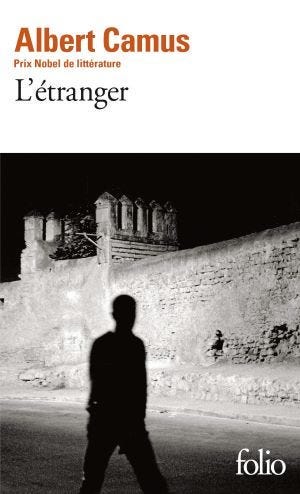
(Credit/Folio)

I first read the book in English when I was 20, after finding it in a pile of my grandfather’s belongings after his death.

Since then, I’ve read it four times at different stages of my life (once in French), and each time have been mesmerized by the haunting routines of the protagonist, Meursault. A man whose days, routines, acquaintances, family, work, hold little or no value.

“I cooked some eggs for myself and ate them out of the pan without bread because I’d run out and couldn’t be bothered to go downstairs to buy some.”

I love this line. It sums up the character. The minimum is always done. Eating the eggs out of the pan is enough. He would like some bread with the eggs — he is hungry; we know this! — but he lets it pass. It’s not important.

I’m drawn into Meursault’s world, a world free of unnecessary distraction. He lives in his old mother’s flat, he goes to work in an office, he smokes, he reads, he goes swimming, he has occasional sex, he goes to the cinema. All done and undertaken without feeling particularly anything for any of them.

I understand Meursault. I’ve always felt like an outsider looking in on the world. Indifferent to events around me and happy to plod along, doing whatever is necessary to get through the day.

I remember my headmaster at school, describing me one afternoon as “Insular”. I didn’t know what it meant at the time, so I looked it up: “Island like.” I couldn’t have agreed more with my master’s description of me.

I’m better now. I’m not as insular — I like people for one. But there’s still a part of me that can’t help thinking like Meursault. The Outsider.

Le Mont Analogue (1952)— Réné Daumal (Mount Analogue)
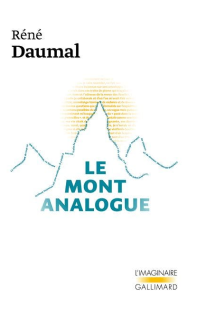
(Credit: Gallimard)

Réné Daumal never got to see his book's publication. One afternoon he got up from his table as he was working on the book to answer a call.

He never returned to finish the sentence, and a few weeks later died from tuberculosis. Eight years later, the novel was published posthumously, unfinished.
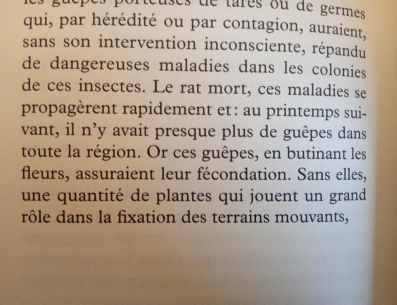
The Final Page of Mount Analogue (Image/Author)

The book follows eight explorers led by their mysterious leader, Père Sogol, to Mount Analogue. A mountain higher than anything discovered so far on Earth. A mystical mountain, a link between Heaven and Earth. A place that cannot exist, but must exist.

Sogol believes it remains undiscovered due to certain rocks within the ‘magic’ mountain that causes light to bend around it. Just like a star can bend light rays, Mount Analogue creates a field around it, making it invisible to humans.

After months of detailed preparation, the eight explorers set out in a yacht called Impossible, in search of Mount Analogue.

In many ways, the abrupt conclusion to it, increases its poignancy. Adds to the sense of mystery. As Sogol and the explorers were about to enter the unknown, the story ends. As though Daumal had done it on purpose. Asking the reader to make their own ending up. Challenging us to make our own spiritual journey up the steep slopes of Mount Analogue, and beyond.
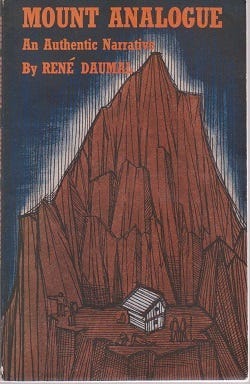
English edition 1st edition, 1962 (Wiki Comms)

Thanks for reading. For more books.

French
Culture
Books
Language
Literature
Recommended from ReadMedium