
Great ideas by Great Authors
Billennium by JG Ballard
Did the British author predict the global housing crisis — in 1961
In an interview with I-D magazine in 1987, British author JG Ballard stated
Every home will be transformed into its own TV studio. We’ll all be simultaneously actor, director and screenwriter in our own soap opera. People will start screening themselves. They will become their own TV programmes.
Sound familiar, YouTubers? Furthermore, in 1971, he said
I’d love to have a tickertape machine in my study constantly churning out material: abstracts from scientific journals, the latest Hollywood gossip, the passenger list of a 707 that crashed in the Andes.
Twitter, anyone?
In his many books, short stories, interviews and essays, JG Ballard ruthlessly explored mankind’s relationship with technology, sex and the mass media. His novels such as The Drowned World, The Drought, Crash, High Rise, and Super Cannes, illustrated humanity’s fate in brutal detail.
Furthermore, his acute eye for human folly, enabled him to predict a whole raft of future events, from climate change to reality TV, from social media to social and political breakdown. He even predicted in 1967 that Ronald Reagan would one day become US President.
I’ve been an ardent reader of Ballard since boarding school. His early short stories The Terminal Beach and End-Game, describing post-atomic or dysfunctional worlds, fascinated me. For me, this imminent breakdown of reality seemed to be the only way out of the harsh, insular world I inhabited.
It’s been almost forty years since then, but I still read him today. And there is one short story that rings so true with the modern world, I’m surprised it hasn’t been written about more.
His 1961 short story, Billennium, tells the story of Ward and his friend Rossiter, stuck in a futuristic hellhole. But this nightmare isn’t some barren radioactive landscape or an abandoned lunar station, this is London. (London isn’t actually mentioned, but we can assume it is.)
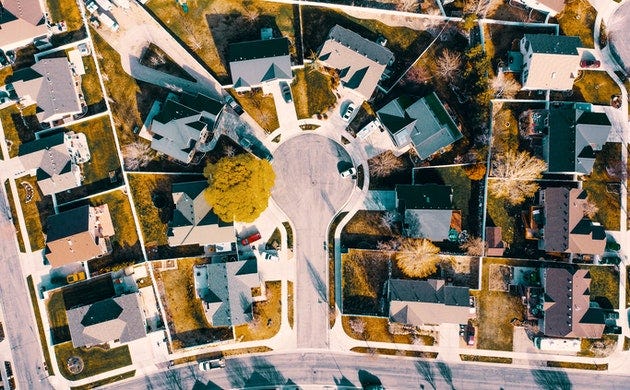
In this world, due to chronic overpopulation, people are forced to live in small rooms called cubicles.
Ward, at least, had a certain degree of privacy. Two months earlier, before he came to live on the staircase, he had shared a room with seven others on the ground floor of a house in 755th Street, and the ceaseless press of people jostling past the window had reduced him to a state of exhaustion.
Ward has a private cubicle of 4½ m², just enough room for a bed and a chair. Rossiter lives in one even smaller. No one cooks as there simply isn’t the space for a kitchen. Everyone has to eat out in crowded food-bars serving poor quality food. Cars don’t exist as there’s no room. Cities are just a mass of people moving slowly from their work and back again. And then every few years, the government changes the rules, reducing the legal minimum space for a cubicle.
“I hear they may reduce the allocation to three and a half metres,“ Rossiter remarked.
It’s a terrifying world, and yet, it’s probably one of Ballard’s most real. I have a friend who pays €1000 per month to live in an 11 m² flat in Paris. This isn’t uncommon, of course, especially in the big cities, where unscrupulous landlords milk every last cent out of everyone who earns just enough to live on in the first place.
In Billennium, it’s not long before Ward is evicted from his cubicle when yet another rule change allows his landlord to rent his cubicle out to couples for more money. Ward decides to leave and bunks up with Rossiter in a double cubicle with a flimsy partition wall to give them some privacy.
As with all Ballard’s writing, its bleakness is unnerving, but draws you in all the same. You feel for the characters but at the same time you don’t. As you know these are mere players in Ballard’s far-reaching dystopian ideal. A landscape that is fictional but at the same time frighteningly real.
We’re not in Ballard’s world yet. Or are we? This is an extract from a 1977 interview with Vogue.
Every one of our actions during the day, across the entire spectrum of domestic life, will be instantly recorded on video-tape. In the evening we will sit back to scan the rushes, selected by a computer trained to pick out only our best profiles, our wittiest dialogue, our most affecting expressions filmed through the kindest filters, and then stitch these together into a heightened re-enactment of the day. Regardless of our place in the family pecking order, each of us within the privacy of our own rooms will be the star in a continually unfolding domestic saga, with parents, husbands, wives, and children demoted to an appropriate supporting role.
JG Ballard died in 2009. While he saw the launch of the likes of Facebook and Twitter in the first decade of the millennium. He didn’t live long enough to witness the total grip social media, and the internet in general, now has on our lives. If he had though, I doubt he would be surprised. I mean, why would he? He’d already predicted it.
You can read Billennium here.
Thanks for reading. For more of my pieces on a whole range of subjects, click below:


