
THE MEGADROUGHT SERIES 2022
This Might Be the Dumbest Place to Grow a City
What city is located in the epicenter of the megadrought?
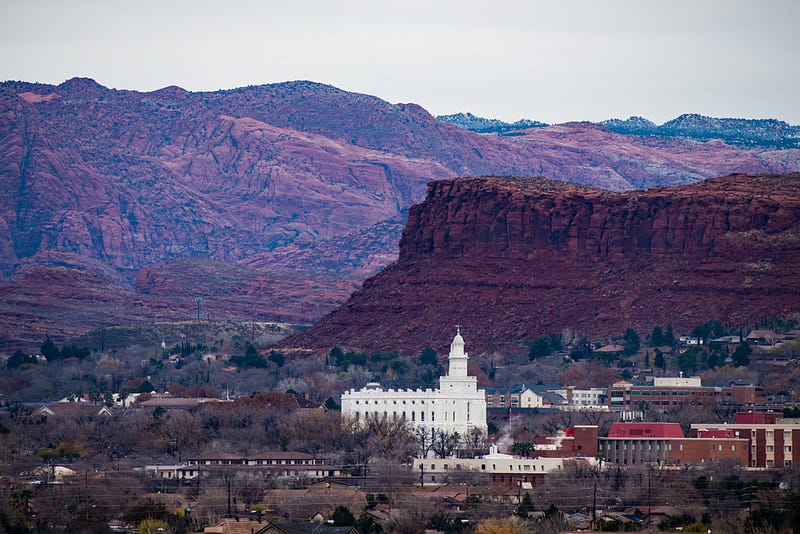
About St. George
It’s not in Arizona, nor is it in California. Las Vegas? Nope.
It’s St. George, Utah, a city where no city should be.
Well, a river runs through it, so, you know…at least for now.
It may have been a perfect place to build a town back when it was incorporated in 1862. But not so much for a burgeoning metropolitan area of today’s 184,913 residents.
Founded by Mormons, St. George was initially ordained by Brigham Young as “Dixie,” presumably echoing the south, as the area’s specialty was growing cotton. Unfortunately, the cotton thing didn’t work out too well, so the settlement was renamed St. George, after an apostle of The Church of Jesus Christ of Latter-Day Saints, or LDS.
Nearby, Zion National Park became Utah’s first in 1919, and the economy turned to tourism.
The desert cities in the Southwest — Phoenix, Tucson, and Las Vegas — didn’t start to grow exponentially until the advent of air conditioning. Then, the availability of automobiles for the masses after the war and big new streets and highways brought hordes.
St. George, too, began to grow briskly, from just 4,562 residents in 1950 to 49,728 in 2000.
From 2000 to 2020, the size of the city doubled, and once it surpassed 50,000 residents, it became an MSA or Metropolitan Statistical Area. In 2018, it was the fourth fastest-growing metropolitan area in the U.S. The Census Bureau claims it was the fastest-growing metro area from 2000 to 2021.
Like the rest of Utah, St. George is about 65% Mormon. But compare that to Salt Lake City’s 35%, and you’ve got a Mormon Mecca! So you know, if you’re not of that persuasion, this might not be the place for you.
What’s the Draw?
Warm climates draw retirees! At the northern tip of the Mojave Desert, the heat isn’t quite as harsh as it might be in Las Vegas, and the lack of clouds gives it radiational cooling in the evenings. There are 12 golf courses in the area, with a thirteenth opening this fall. One for every 15,000 people! The cost of living is below the national average. It’s only a two-hour drive to Las Vegas, and outdoor recreational opportunities abound nearby. The crime rate is extremely low.
On the other hand, the hot, dry summers might not become you. The median price for a home has skyrocketed to over $475,000. Few rentals are available. There are only two stores that sell liquor. Mormonism is omnipresent, which could make you feel like an outsider.
There is a lot to be said for St. George, but there is trouble in every “paradise.” Here it’s called water — or the lack thereof. Below the surface, a big problem is brewing. Perhaps the city and Washington County, of which St. George is the county seat, are doing an excellent job of SEO management. When searching for this issue on Google using “St. George” as the keyword, water doesn’t come up until about the sixth or seventh page of results.
Water. It’s the new gold in the West.
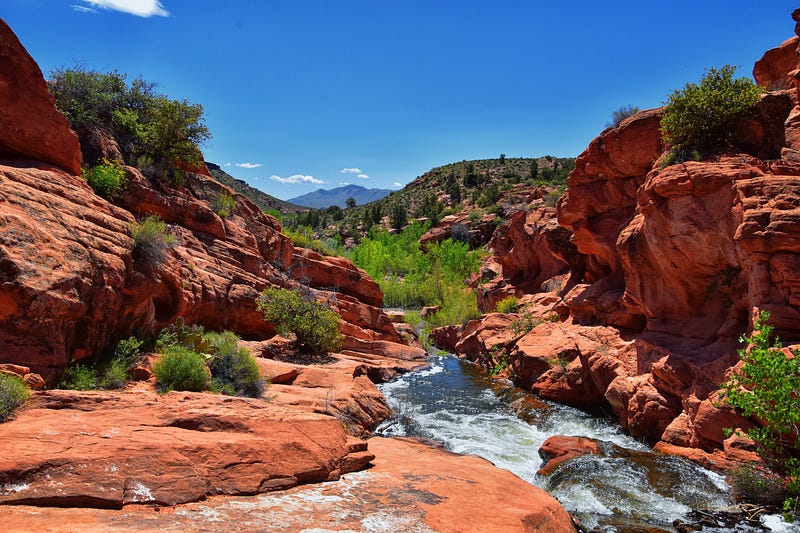
Water Woes
St. George gets its water solely from the Virgin River, which runs through the city. Some estimates have placed Washington County’s population to hit 600,000 by 2075. There is a contingent that says conservation and reuse efforts will sustain the city with that single water source.
History, however, doesn’t bear that out.
The United States Geological Survey, or USGS, conducts a water usage study among the states in years that end in 0 and 5. Unfortunately, it takes three years to cull the data, so the year 2015 is that on which we’re basing today’s figures.
In the last study, the national average of gallons of water per capita per day (GPCD) used by American households was 88. Considering public-supply water and self-supplied (well) water, Utah came in at 184 GPCD, second only to Idaho. However, when considering public supply only, you guessed it. Utah comes in first at 248 GPCD.
Maybe cleanliness is next to godliness.
Utah has had somewhat of a spendthrift attitude when it comes to water. But water is cheap in St. George! The city has put a tiered structure into place (the more you use, the more you pay per unit) for water usage. Still, the base rate is just $20.75 for up to $7,500 gallons per month. While this is somewhat of an apples to oranges comparison, Phoenix water users spend about $42 per month, Tucson $48, and Las Vegas $70. All three of those cities have much of their water transferred over land or via pipeline from the Colorado River.
In St. George, the water source is right outside your front door! Why worry?
The Virgin River is a tributary of the Colorado River, on which climate change is having a huge impact. The water flow 200 miles downstream into Lake Mead is already severely diminished, with the lake itself holding just 25% of capacity, an all-time low.
But wait! There’s another lake just waiting to be tapped! That would be Lake Powell.
The Solution?
The Lake Powell Pipeline (LPP) was conceived in 2008 to bring water 140 miles west in a buried pipeline from Lake Powell to St. George, where it would be stored in a nearby reservoir.
Even if the bills necessary to build the pipeline pass, construction wouldn’t begin until 2027 at the earliest. At a cost of nearly $2 billion, the project is not only expensive (and with plenty of physical barriers), but one also has to wonder if there will be enough water in Lake Powell to run through the LPP.
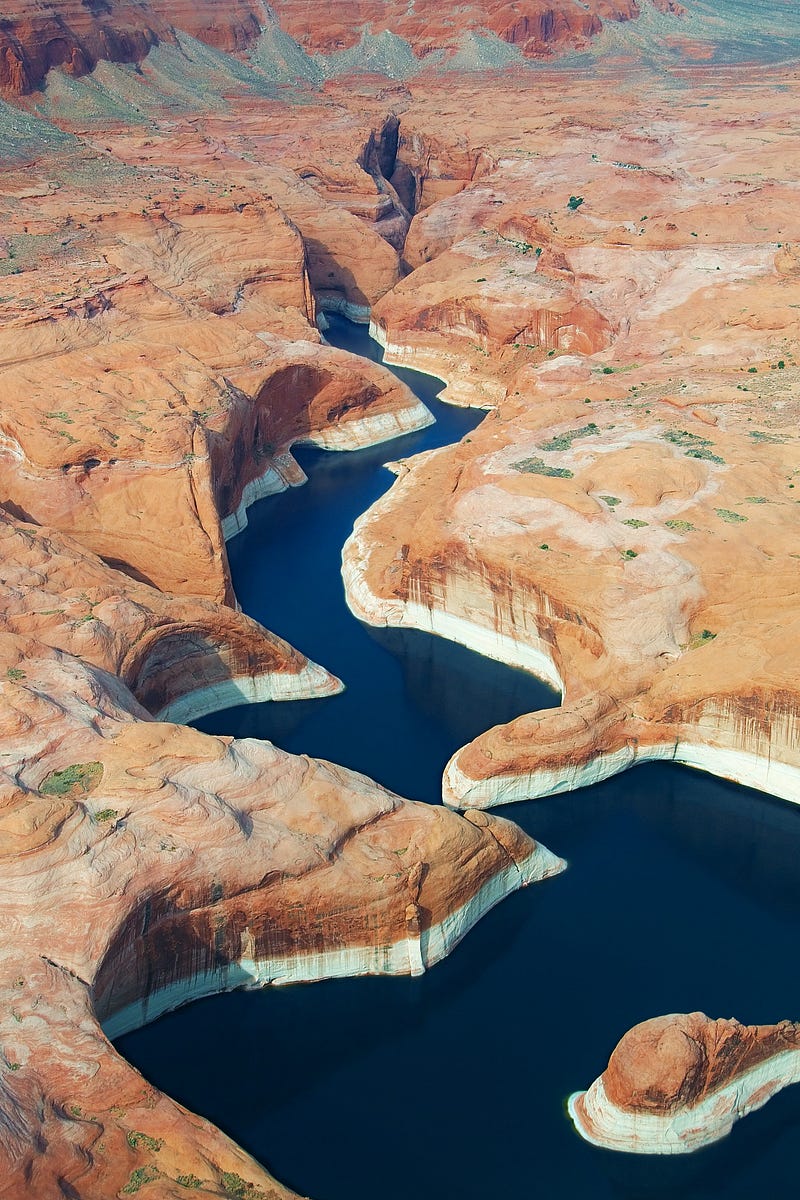
Lake Powell is currently at a record low of 24% of its maximum capacity. At 23%, more releases from upstream reservoirs, which are also suffering, will be required to ensure water for the lake. While the spring runoff will help somewhat, the lake is only a foot shy of having the Glen Canyon Dam power plant turned off. (The dam supplies power to approximately five million people.)
Many entities have a beef about the LPP. Those are the six other states in the Colorado River watershed and Mexico. Plus county jurisdictions in two states, tribal agreements, the National Park Service, the U.S. Fish and Wildlife Service, and the Bureau of Indian Affairs. That’s some formidable opposition.
The Utah Division of Water Resources in October of 2021 said that Washington County would run out of water in ten years, and the future depends on the LPP. The pipeline would meet the anticipated water demands of the city and county through 2070, after which time southeastern Utah’s water future is anyone’s guess.
If this is true, why keep developing? Twenty Seventy is not that far away!
Conclusion
The megadrought in the Southwest has been torturing the land for 22 years. Climate change here is exacerbated during the years of La Niña, a cooling of Pacific Ocean waters near the equator. This weather phenomenon steers rain-bearing storms north and warmer temperatures and lower precipitation to the Southwest. La Niña usually doesn’t last more than 9–12 months, but now it’s been two years, and it can go longer.
The Colorado River is the basis of the water needs of more than fifty million people. It’s given us all it can, and it’s hurting badly. The leaders of the St. George area want to continue to see the region thrive. Maybe they should consider growth limits before the spigot runs dry.
Sources:
- The Spectrum (St. George, UT) — 6/13/2021, 2/19/2022, 4/7/2022
- 24/7 Wall Street Journal — 8/31/2021
- The Salt Lake Tribune — 7/28/2021
- The Daily Mail — 3/11/2022
- Las Vegas Valley Water District
- Arizona Republic — 4/14/2022
Please read a couple of my other stories on water woes in the West:
If you like what you’ve read, why not become a Medium member? It’s just $5/month and gives you access to all of my stories and those of all the other fine writers on Medium. Plus, I get a small commission which helps a lot! Just click on the link below. Thanks for being a member!


