
This Is An Important Book That Should Change Your Life
What I learned from reading ‘Radical Compassion’ by Tara Brach
We need the courage to love.
To love ourselves, to love each other, and to love the world. That is open-hearted living.
There is so much to learn from ‘Radical Compassion’ by Tara Brach, I have summarised my takeaways.
This book could and should change how we live our lives.
Who is Tara Brach?
Tara Brach is a meditation teacher who uses a technique called RAIN. This practice was first developed by Buddhist teacher, Michele McDonald in the 1980s and Tara has evolved her own approach from the original.
What is the RAIN technique?
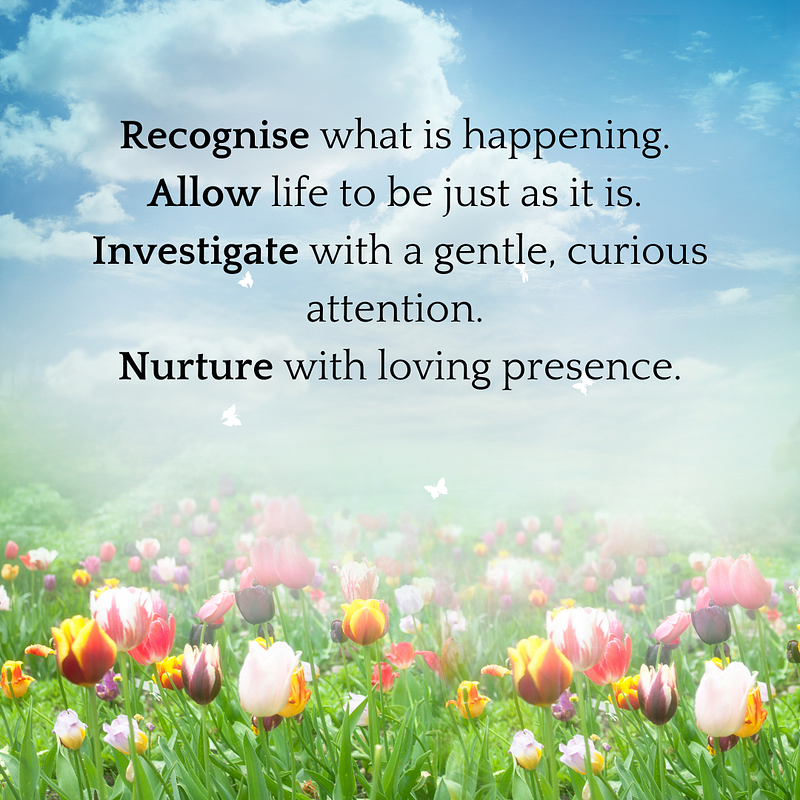
RAIN is an acronym that stands for Recognize, Allow, Investigate and Nurture.
The technique is used to tap into the wisdom and love which we all hold inside us.
The 4 steps of RAIN allow us to pause in the middle of our emotional storm, take a few breaths, and come back to the present moment.
When we are feeling emotional, our unconscious mind is either fixating on a limiting belief from the past or worrying about what this event could mean for the future (note the word ‘could,’ not ‘does’).
However, in the present moment, we can focus only on what is happening now.
Step 1: Recognize
Something upsets you. Boom! You are triggered.
Before you know what’s happening, emotion has taken control and you get angry, or maybe you get tearful. You may go quiet or storm off. Whatever happens, you feel anxious and out of control.
The recognize part of the technique is to pause, take a few slow breaths, and notice that you have been triggered.
That’s all, just say to yourself, ‘Oh, this is happening.’
Step 2: Allow
‘Hello, emotion, come in, and sit with me for a while.’
The second step is just being OK with whatever emotion or feeling comes up. Not trying to stop it or fix it in any way. Just being there with the feeling, no matter how uncomfortable it might be.
Recognize and Allow are the basics of being present in a mindfulness practice.
The next two steps go a little deeper.
Step 3: Investigate
What does this feeling want?
The third step is to notice where the feeling is in your body. Maybe you feel a tightness in your chest, a churning in your stomach, or a pain in your heart.
Once you have located it, ask the feeling what it believes to be true about what happened. Then feel into the answer. It might be something like believing you will fail, that people don’t like you, or that you are not good enough in some way.
Next, ask yourself, ‘What is it that I need most right now?’ That might be some sort of reassurance that everything is OK.
Step 4: Nurture
The fourth step is to calm yourself down in the way you would a child or a dear friend.
Say to yourself something like: ‘There, there, everything will be OK.’
Let the emotion move through you
RAIN should only take a few minutes and it is basically just stopping and letting the emotion move through you without trying to change it or push it away.
Emotions are energy in motion, hence the word: E — Motion. Like all energy, it wants to flow.
Although this sounds simple, it can also be uncomfortable. Tara Brach recommends that when dealing with any deep trauma, the practice should be carried out with the help of a suitable professional.

My Takeaways and Actions
I will focus on staying present as much as possible.
Staying present means being aware of what is happening around me and inside me. Being present also means I can pause before I respond to a situation rather than purely reacting.
I will allow my emotions to flow — to be energy in motion.
Presence is also knowing and feeling that I am connected to everything and everyone else in the world. Not only in the world but in the Universe. Remembering we are all energy and energy wants to flow.
The more I allow my emotions to flow, the more present I will feel.
I will live from my heart.
Radical Compassion is living from our heart. Having the courage to love ourselves, each other, and our world. This is a way of living that seems impossible but if it could be achieved for everyone, we would see peace in the world at last.
I know my limiting beliefs are not reality.
Our limiting beliefs are not just thoughts, we feel them too. Feeling them makes them ‘feel’ more like reality. This is why they are hard to shift.
Just thinking positive thoughts is not enough. We need to constantly remind ourselves that our beliefs are not always facts.
I use an image of Mother Earth holding me.
Love is always there in our hearts, even if we are not feeling it. Tara tells you to imagine someone or something holding you and giving you the love and strength that you need in emotional times. This is part of Nurture.
I have goals but the journey is more important.
The things that we want in life should motivate us to act but not control our life. When we desire something so much and don’t get it (like love, connection, safety, security), we may try to fill the need gap with a substitute (like sex, drugs, alcohol, or food).
Focusing on the next step will lead to the goal without it becoming the main event.
I will use RAIN to release my negative emotions.
Resentment, anger, and pain can strangle our heart. If we do not let these emotions go, they can tighten up so much that it is difficult to breathe let alone break free. I recognize this tightness from my previous marriage.
Conclusion
When I choose to open my heart, I can feel the light flow in. The light brings with it the energy of love. This is a benefit of regular meditation and mindfulness.
I have been meditating daily for around 5 years and feel I have built up a deep connection with myself. I have added RAIN to my mindfulness toolbox for times when I need it and also to use it in my coaching practice.
“There is no presence and no potential for compassion if we don’t fully contact the reality of emotions.” Tara Brach
You may also enjoy reading:


