THE MEGADROUGHT SERIES
“This Is A National Disaster” — SoCal Must Reduce Water Use by 35%
And Las Vegas is Lucky to Be Alive
The Megadrought, Continued
It’s May in New Mexico, and the wind defines our springtimes. As a result, those at risk for allergies suffer from “juniper fever” and from the pollen of any other number of plants that are endemic to this area. Along with dust itself.
Dust, dust, sneeze, sneeze. Ooh, there’s grit in my mouth!
Tumbleweeds pile high against any blockage, and yes, they go a tumblin’ across our highways.
This year is different, though. The wind feels angry. It is unrelenting.
Nearly two weeks ago, Albuquerque had wind gusts above 60mph. For eight hours. As a result, we couldn’t even see the Sandia Mountains, which are at our doorstep.
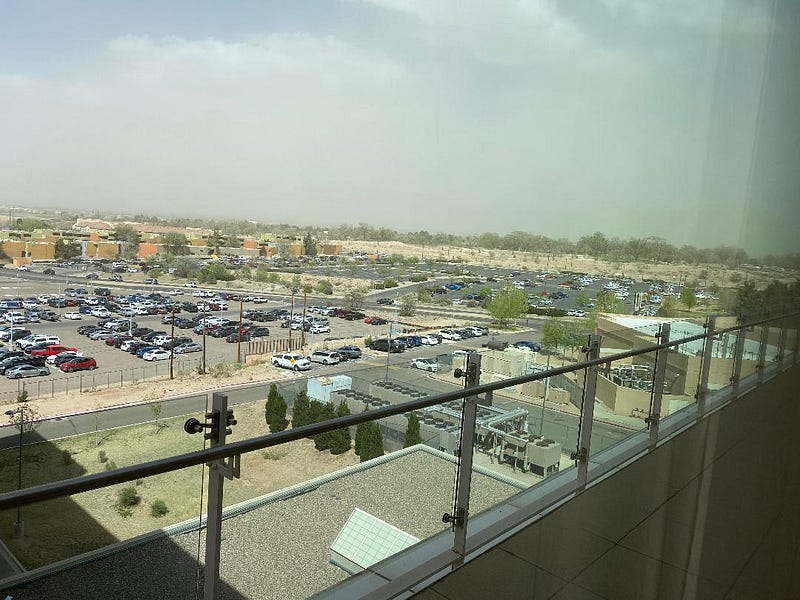
The winds have been particularly ferocious, whipping from Arizona all the way to Nebraska and leaving wildfires in their wake. They take every drop of moisture they can take with them, leaving the area parched.
One fire in New Mexico has now become a “megafire” because it has consumed more than 100,000 acres or 157 square miles. Fire officials say it could still more than double in size. The “Calf” fire started on April 6 and is due to a USFS prescribed burn. Someone is in trouble.
A megafire in a megadrought. Sounds like hell.
I’ve been writing about the conditions of the megadrought and the solutions for about a year now. But, sadly, we cannot seem to get the upper hand on anything that offers real, long-term solutions. We’re too busy fighting today’s battles.
It’s so much worse now than it was last year.
Our Cites
Las Vegas
If the city that never sleeps would sleep, maybe they’d manage to use less water.
But let’s give them some credit. The Southern Nevada Water Authority says since 2002, the city has used 26% less water while its population has grown by 49%.
Having about 40 million tourists per year does not help.
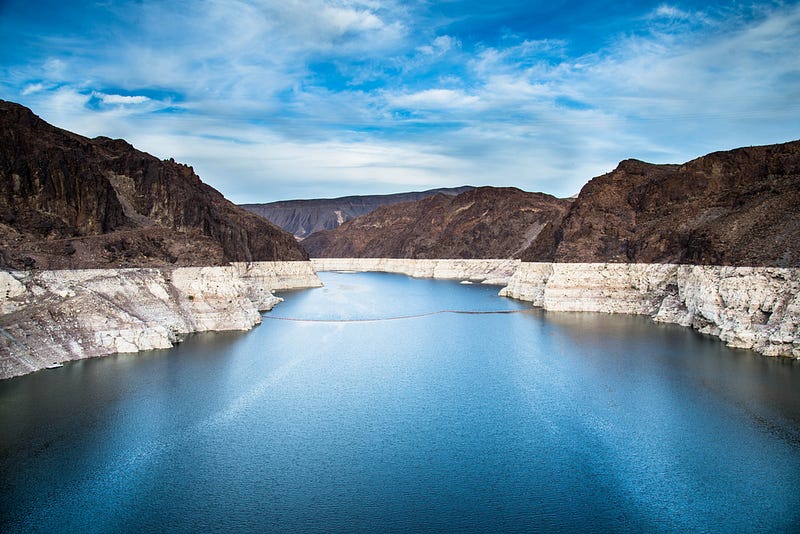
Las Vegas gets 90% of its drinking water from intake valves at Lake Mead. Well, guess what? The first intake valve has now appeared above the surface of the lake.
Fortunately, it has a low-level intake valve that allows for uninterrupted water flow. (Or does it?) Knowing that an extended drought might require, a third intake valve was drilled in 2014. Unfortunately, that valve taps the lake at 895 feet above sea level, which would be a catastrophic blow for the lake. The mid-level intake sits at 1,000 feet.
“Without the third intake, Southern Nevada would be shutting its doors.” ~ Pat Mulroy, former chief of the Southern Nevada Water Authority
Vegas may never be the same.
Flowing into Lake Mead, the Colorado River is the Southwest’s lifeline.
So of equal concern are the cities of Phoenix and Tucson and tribal lands and farms that depend on Colorado River water. At 895 feet, the Colorado River would cease to flow beyond Hoover Dam.
Given the hydroelectric power that the dam produces, the Southwest could not only be left thirsty but also in the dark.
Los Angeles/Southern California
“We don’t have enough water supplies right now to meet normal demand. The water is not there.” ~ Rebecca Kimitch, Metropolitan Water Board of Southern California
About 6 million customers in Los Angeles, Ventura, and San Bernardino counties are on the line for historic mandatory reductions in water usage of 35%. The reason is, a large part of their usual water supply will not be delivered this year. It comes from a pipeline originating in Northern California, where their supply has been diminished due to low precipitation and high temperatures in the first quarter of the year.
Eighty gallons per person per day is the cap, compared to the current average usage of 125 gallons. Green lawns will have to be compromised, as outdoor watering will be limited to one day a week, for eight minutes.
More efficient appliances — particularly toilets — could make the goal easier to achieve. And then there’s this:
Back in the day, it used to be, ‘If it’s yellow, let it mellow’, so we could bring that back.” ~Shahzeen Atari, Associate Professor at Indiana Univeristy in Bloomington
Some areas of Southern California receive their water from the Colorado River and are not affected by cuts at this time.
Reflections
The Southwestern United States is a tiny percentage of the earth’s surface that is being affected by climate change. I am writing about it because it’s where I live. It’s in my face every day.
We’re all looking for solutions, but it doesn’t seem possible unless it rains. That’s all it has to do. Rain. Rain like it used to. Even purple rain will do. Absent that, all we have to rely on are science and technology. But we’re behind the eight-ball. This couldn’t have been envisioned one-hundred, even fifty years ago.
Over the weekend, I went camping with a bunch of guys in the mountains west of Socorro, NM. A big valley separates the mountain ranges, and at this time of year, it should have been green, and wildflowers should have been in abundance.
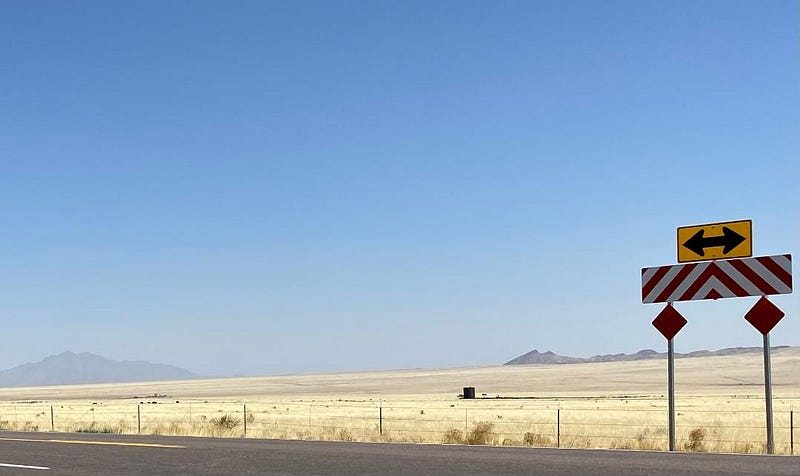
The valley was brown. There was nothing for the ranchers’ cattle to graze on. I hiked around a bit, and no green grass had replaced last year’s growth. The sunflower seeds were gone, but there were no seedlings. Tinder-dry conditions existed where we camped. The USFS had just implemented a no-campfire ban the day we got there.
No s’mores.
We were at Water Canyon. No water was flowing through the riverbed.
Next, I’ll be looking at how our other most unsustainable cities in the Southwest are amending their plans for the water year. One new city will be added: El Paso, TX. Nearly four million people live in the greater El Paso/Ciudad Juarez, Mexico, metropolitan area. They get most of their water from the Rio Grande, which is forecast to run dry in 2022.
Also this summer, and because aridification is moving east, I’ll be reporting stories on the drought in the Great Plains states and the mighty Ogallala aquifer that is being used beyond its ability to restore itself.
To get the most out of the series, I highly recommend reading the following articles:
Sources include:
- “New Mexico ‘megafire’ could more than double in size — official”, by Andrew Hay, The Taos News and published by Reuters, 4/30/2022
- “To survive drought, parts of SoCal must cut water use by 35%. The new limit: 80 gallons a day”, by Hayley Smith and Ian James, Los Angeles Times, 4/30/2022
- “Vegas water intake now visible at drought-stricken Lake Mead”, Associated Press, 4/30/2022