
A Road Trip To Ground Zero Of Climate Change, Part 1
Seeing climate change first-hand
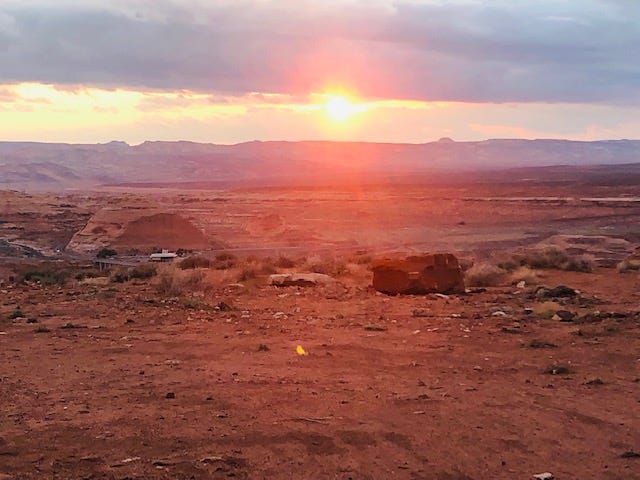
Can you see climate change where you live? Are there any visible signs?
If you live in the Eastern half of the U.S., you probably can’t. The land is green and verdant, just like it always is. Sometimes it’s greener than others, but lately, drought has been a stranger to the East. If anything, you’ve had too much water. The map below illustrates that.
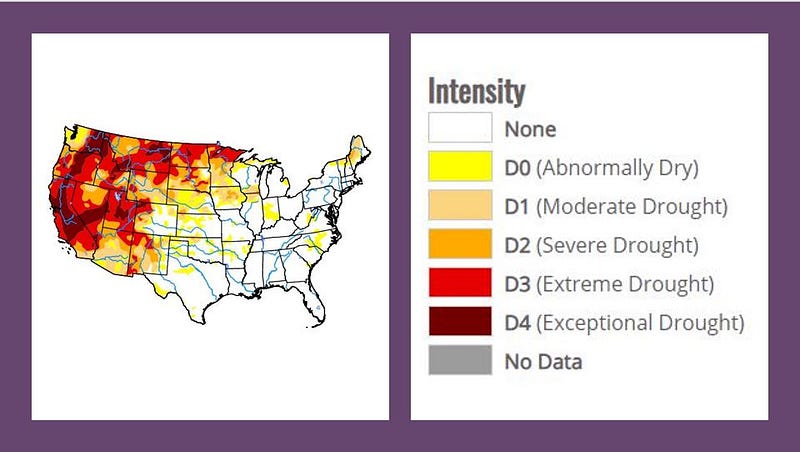
The ground zero of global climate change is occurring at our poles. In the U.S., we have two ground zeros: the East, featuring too much water, and the West, where, as you can see above, is wilting and burning from lack of water.
Many climate change stories speak to higher seawater levels due to ice breakup in the polar regions. Of note, it got up to 60° at one of the highest points in Greenland this summer where it rained, not snowed, for the first time! That’s an ice melter if I’ve ever heard of one. But we can’t see this change, mainly because we can’t travel to these areas. (Not sure why you’d want to!)
Climate change is happening the world over. Here, I’m focusing on the West, and particularly the Southwest section of the country. Whereas the East is green, the West is brown.
But some browns are darker than others. Along with the rest of the Southwest, New Mexico has been in the grips of drought for at least the past 20 years. Here, we can see climate change on our hillsides. The drought has stressed the piñon trees (the New Mexico state tree, by the way) to the point where they are susceptible to tree-eating bugs, most recently the bark beetle. And then they die. In some forests, 60% of the piñons have been killed. So the cost to make your pesto sauce will be on the up and up.
We see climate change in our reservoirs. Most are only about 10–25% full. New Mexico owes water to Texas from the Pecos River!
Since I moved to Albuquerque, I’ve been itching to get on the road and see as much of the Southwest as possible. But, unfortunately, COVID-19 put a dent in many of those plans.
Edward Abbey I’m not. I don’t have time to linger. So instead, through shorter road trips, I am trying to get an overview of the Southwest and will return to the places that most interest me later.
Earlier in the summer, I took a trip from Albuquerque to the Northern tip of Lake Powell, stopping at numerous attractions along the way. As I hiked in the 100° -plus weather, I could see that even the sagebrush was dying. Everything needs at least a little water.
The second trip took me to California. I’ll talk about that in Part 2.
Please read my other stories on climate change in the U.S.
Click below to subscribe to Medium and read all of my stories, along with thousands of other writers. It’s like creating your own magazine! (Note: this is an affiliate link, and I will receive a portion of your membership fees.)


