NATURE | ENVIRONMENT
There Is Something Fishy Going On
And When Is A Fish Not A Fish?
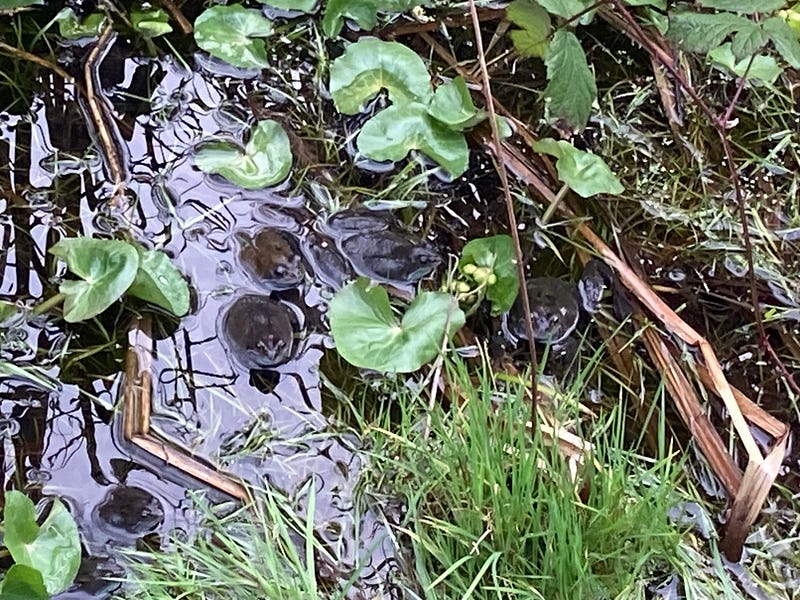
You might think that I’m missing a key point about this prompt (Flickering Fish) by headlining with a photograph of amphibians lazing in the pond earlier in the year, but I have another angle on it. Fish is a less precise term than you might think. The classification of all creatures has become more exact as we have learned more. It occurred to me that we dismiss accurate classification — not only of fish — at our peril.
Consider the following three examples:
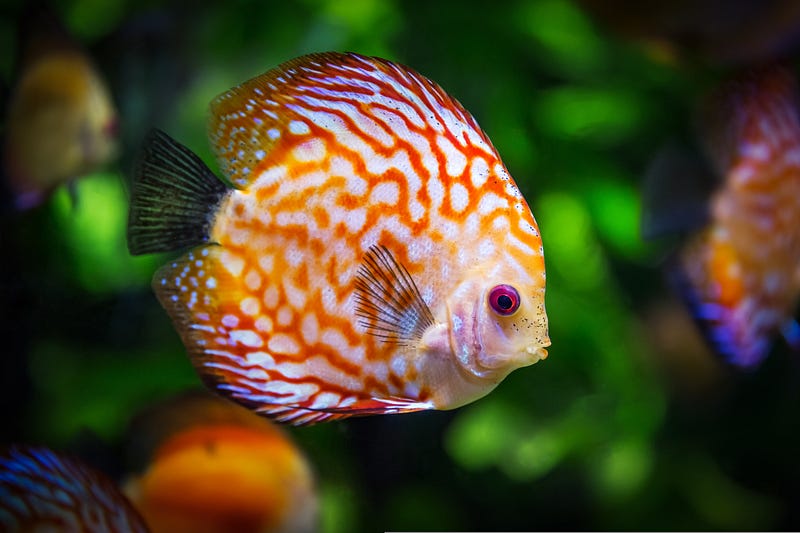

The discus fish is native to the Amazon and also popular in freshwater aquariums for its distinctive shape and bright colours. It has always been classified as a fish.
The humble bicycle, despite being found in surprising abundance in rivers and canals, has never been classified as a fish.
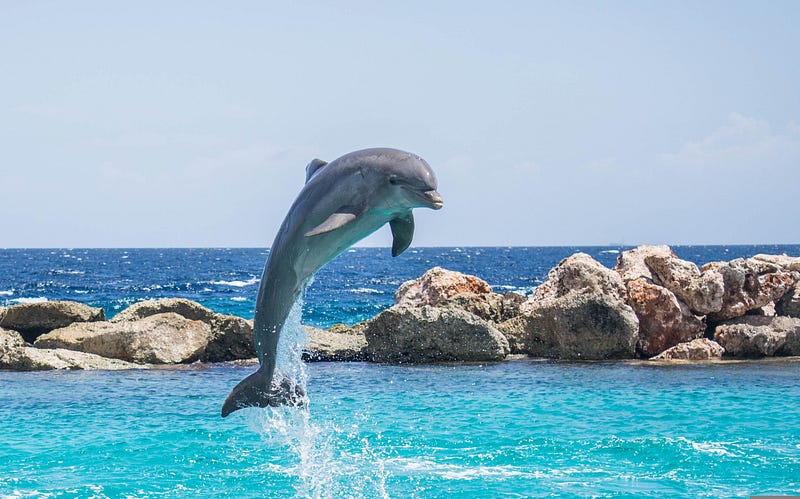
The dolphin has in common with the discus fish that it too was once classified as a fish, and it has in common with the bicycle that it is not a fish.
Before the rise of modern taxonomy, where organisms are classified based on their evolutionary relationships and genetic similarities, many sea mammals including the dolphin were inaccurately classified as fish. It wasn’t just mammals that fell into this trap. Echinoderms such as starfish (sea stars) were also once classified as fish.
Does Accurate Classification Matter?
Yes, it matters a lot. Wrongly classifying something is a way to attack it. If lawmakers, knowing no more than Kindergarten biology, were to enact laws in which they defined the term “fish” to try to cover dolphins, they would leave a horrible mess that would do more harm than good. Of course, such a set of lawmakers would require breathtaking ignorance and arrogance to think they knew enough to enact such laws.
But surely, no lawmakers would be that stupid or that arrogant, right? Wrong, of course.
Laws have already been enacted where the lawmakers have generated definitions mined from the bits of school biology they vaguely remember from when they were 12. Stoked by hysterical panic, they rush to impose draconian restrictions on the “minority group of the week” — a construct designed to divert attention away from areas such as bribery, corruption, incompetence, and anything relating to the actual job that they are being handsomely paid to do. There are places within so-called advanced countries where laws have been enacted that deem the majority of women over 50 not to be women at all. The unfortunate women in such places find themselves under all manner of bizarre restrictions e.g. that they can no longer legally use public toilets.
Just imagine what will happen to the world’s fish, oceans, climate, and the planet’s ability to sustain human life if these lawmaking dingbats are asked to address climate change. Well, sadly, you won’t have to imagine. The dingbats, proudly sporting their cloaks of arrogance and ignorance, are already at it.
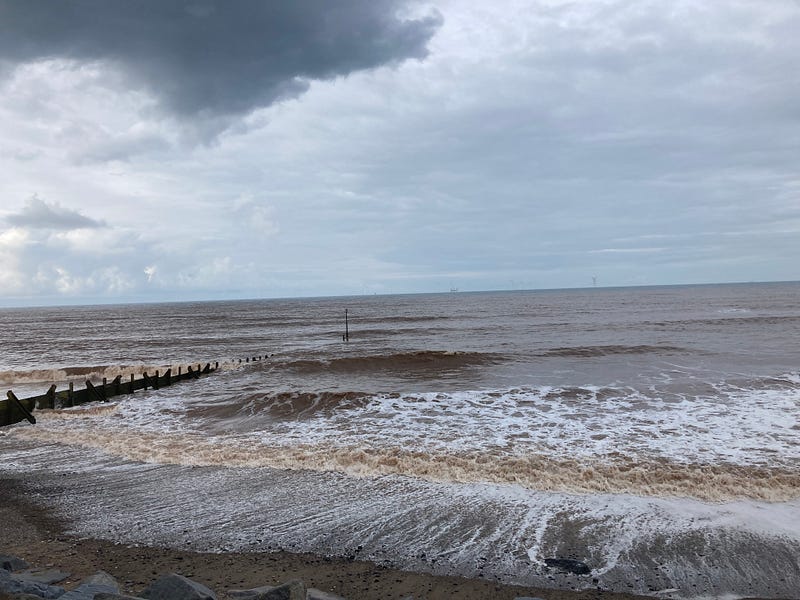
There was a time I could have said with confidence that the picture below contains huge numbers of fish, but you just can’t see them. I no longer have that confidence.
There are so many writers who touch on areas relevant to this topic, it’s hard to choose just two, so for a moment I will pretend I’ve forgotten how to count and give you a handful of favourites. After all, pretending to forget how to count is a lesser sin than pretending to forget how to look after the environment we live in.
Here are some writers who constantly explore the world around them, take photos, and give fascinating snippets about their parts of the globe.
Here is the original prompt from Sahil Patel