
The Worst Source Of Anxiety
I thought it was fear of failure but I was wrong.
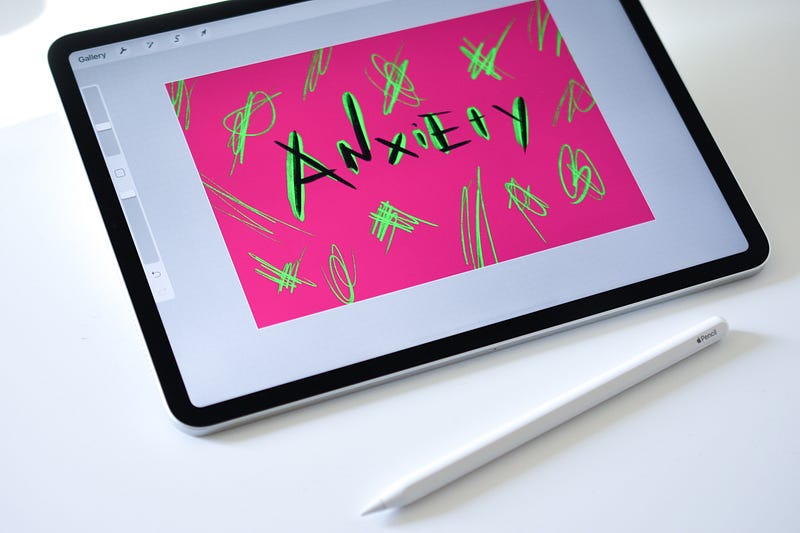
Don’t get me wrong. I know that anxiety is complex and a lot of different elements play a role in its presence.
However, some things play a bigger role than others. For example, our insecurities and fear of failure seem to stand out. But there is something else that makes an even bigger contribution— relationships.
By far, I haven’t come across anything that affects mental health more than relationships.
It just wasn’t something that was always obvious.
But when you think about it, it makes sense.
Whether we like it or not, we can’t escape others and their effect on us. Our daily interactions with people can make our day great or it can make it miserable.
It doesn’t have to be intimate relationships or even close relationships. Any interaction, no matter how long, can have an effect.
That effect can be a positive or a negative one.
If you have a heightened sensitivity due to mental health, it’s likely that very few interactions feel neutral to you.
Unfortunately, you don’t always have control over these situations. Someone can walk by you on the street and insult you — you can’t prevent that.
The good news, however, is that you can control the relationships that matter and you can learn to cope with the ones that don’t.
The Ones That Matter
Those are relationships of personal nature. We usually feel an obligation when it comes to those types of relationships.
But you always have a choice how to handle them.
Family
Family relationships are probably the hardest to manage, especially at a younger age, as you may feel that you don’t have control over them.
Whenever I tried to limit my connection to my family, I felt guilty.
There’s still a social stigma when it comes to cutting off your family. That always stopped me.
But once I actually left that toxic environment, I felt like a weight had been lifted off my shoulders.
The lack of effort on your family’s part to make a positive difference in your life is a sign that it’s time to move on and it’s not your fault.
Just like you, your family has a choice too.
Give them an ultimatum. Tell them how they make you feel and why there needs to be a change.
If they love you and want to be a part of your life, they would reconsider their actions and stop hurting your well-being.
If they chose not to, then you leaving the relationship is entirely their fault.
Partners
Unlike with family, we actually chose our intimate partners.
So why chose to be with someone who makes you unhappy?
There could be a lot of reasons — fear of being alone or fear of financial instability, for example.
Although I’ve been lucky enough not to have been in such a relationship, I’ve witnessed it with friends and family.
Toxic relationships are a disease in our society.
Your partner should always be a person that makes you feel better, not worse.
The best thing to do is to not commit to a long-term relationship if you see any red flags. But since that doesn’t always happen, the next best thing is to have an exit plan.
Never become too dependent on an intimate partner. Even if things are going great, you want to know that in case anything happens you’ll be fine on your own.
Financial dependency gives the other person too much power over you. So avoid it at all costs.
Friends
Much like intimate partners, friends are people we chose to be in our lives. Sometimes, they are our family by choice.
But it’s not always easy to choose the right people.
At one point as a kid, I lived in a small town with an aging population and my choice of friends was limited. The kids from the neighborhood and my small class were not a good influence on me.
Thankfully as an adult, I’ve had more freedom to control my friendships.
I’ve realized that when it comes to friends, quality over quantity is key.
I have very few real friends, but I’m happy to say that every one of those friendships is a healthy and nourishing one.
Another thing about friendships is that they can vary in closeness.
If you like someone who can be difficult to handle mentally and you don’t want to completely lose them, you can try moving them further from your close circle and only see them once in a while.
The Ones That Don’t Matter
These are usually random interactions. People you may only see once, like people on the street. It can be a customer or a client you encounter at work.
They could also be more complicated than that. Colleague relationships, for example, are not random and they do matter in the sense that they are a part of your daily life.
The important thing here is since you can’t separate yourself physically, separate yourself mentally.
If someone on the street insults you, ask yourself, “Why should I care?”
You shouldn’t care because it doesn’t actually affect your personal life in any way. Any effect you may think such an interaction has is in your head and is of no consequence in reality.
With colleagues, it’s always nice to get along, but remember that they are not there to be your friends.
If you do become friends with them, great. But that’s just a bonus, not the purpose of a job.
If a colleague aggravates your anxiety, keep professional and only interact with them when you need to. If they make you feel uncomfortable, don’t be afraid to report it to a superior or HR.
Stand up for yourself!
Final Thoughts
Relationships are complicated and they make our lives complicated, but they’re unavoidable.
However, they should not stop you from living a full and happy life.
Here are some healthy reminders:
- You don’t owe anyone your well-being, no matter what they’ve done for you. There is a limit to gratitude and obligation — your health is where you should draw the line.
- You’re the only one with real control over your life. When someone else takes control from you it just means that you’ve let them manipulate you.
- Don’t give away your independence. It’s the one thing that gives you the power to only keep those in your life that deserve to be in your life.
Thank you so much for reading! I’d love to hear your thoughts in the comments.
If you liked this and want to read more, please follow me and check out my other articles. Here are some stories you may enjoy:
*4 Fixable Habits That Make Your Anxiety Worse *What You Should Know About Unhappiness *10 Ways to Turn a Bad Experience Into a Good One
— Love, Yana


