
The Way of Tea: Life in Japan
Living and Learning
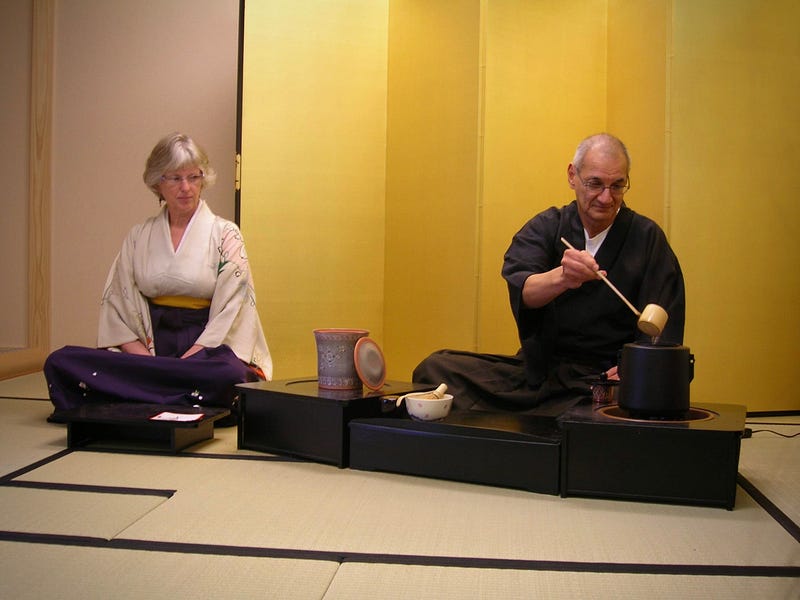
Gerad Carrier and I lived in Japan for 6 years while teaching at an international school on an island in Osaka Bay near Kobe and Osaka. Most of our students were the children of international business people in the region, although we had some Japanese students also.
One of the Japanese cultural activities the students and teachers could choose to learn was the Japanese Tea Ceremony or The Way of Tea. Both Gerad and I participated in the afterschool classes for teachers to prepare, serve, and drink matcha green tea in a traditional Japanese ceremonial style.
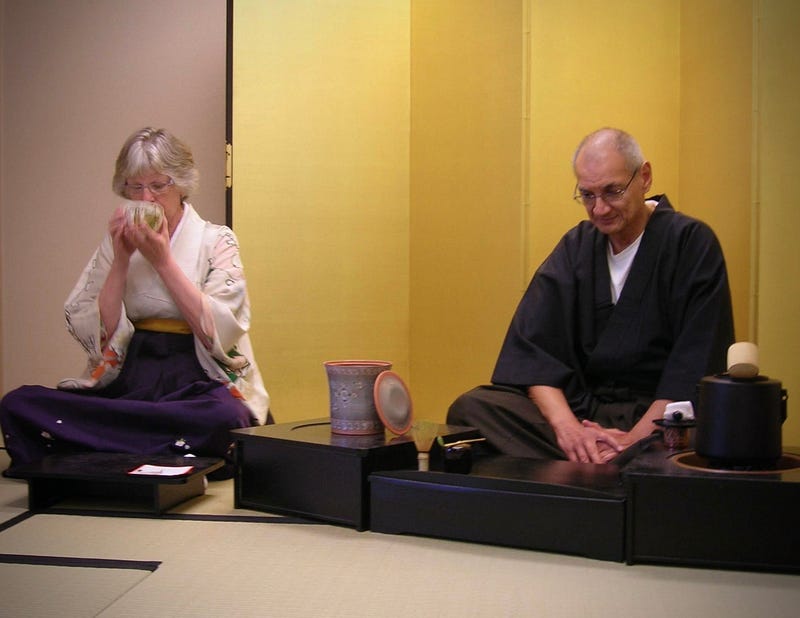
Anyone who knows the Way of Tea will recognize that there are inconsistencies in the photo with traditional Tea Ceremony settings and procedures. In the photo, we are not in a Tea Room. We were doing a Tea Ceremony demonstration for a large group of students. We would not have all fit in the school’s small formal Tea Room so we had a special setup for the demo. The school’s Tea Room had white walls with a single framed photo or a scroll hanging. The Tea Room floor was covered in a tatami mat made of woven rush grass.
You can also see in the photo that we are sitting in casual styles with our legs crossed. The more formal position is to sit in a kneeling position with both knees on the floor.
The preparation of the tea is done in silence to promote respect and symbolic purification. The host prepares and serves the tea to the guests and does not drink the tea himself. The purpose of the ceremony is to prepare tea for the pleasure of the guest and to promote well-being, mindfulness, and harmony for the guest and the host.
In another Tea Ceremony demonstration a year earlier, I made Gerad tea. You can see in the photos below, that we are not sitting on the floor. I can sit on the floor and can get up without help, but not smoothly. Tami, our instructor had me do a demonstration in front of our students in a modified tea ceremony style that allowed me to be seated on a chair.
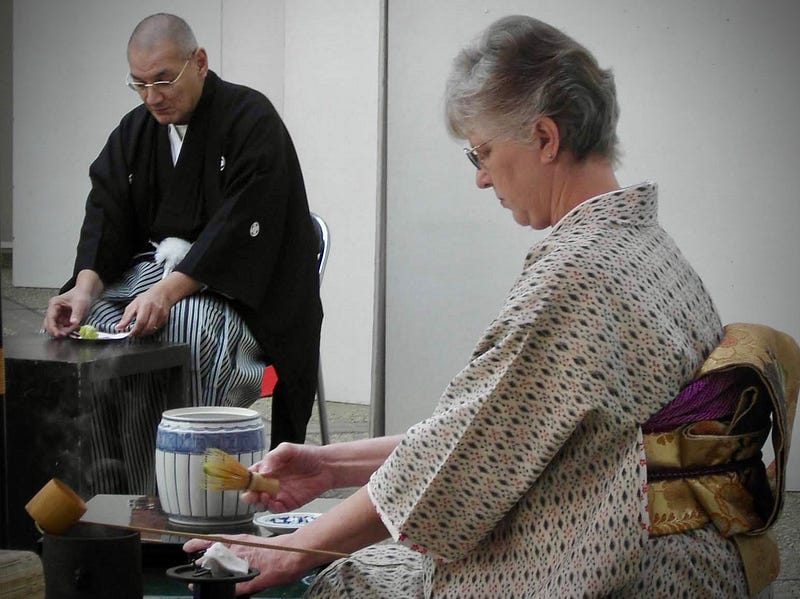
I had practiced all of the movements over and over again at home and in our tea classes. I wanted to get it all done as smoothly and correctly as I could.
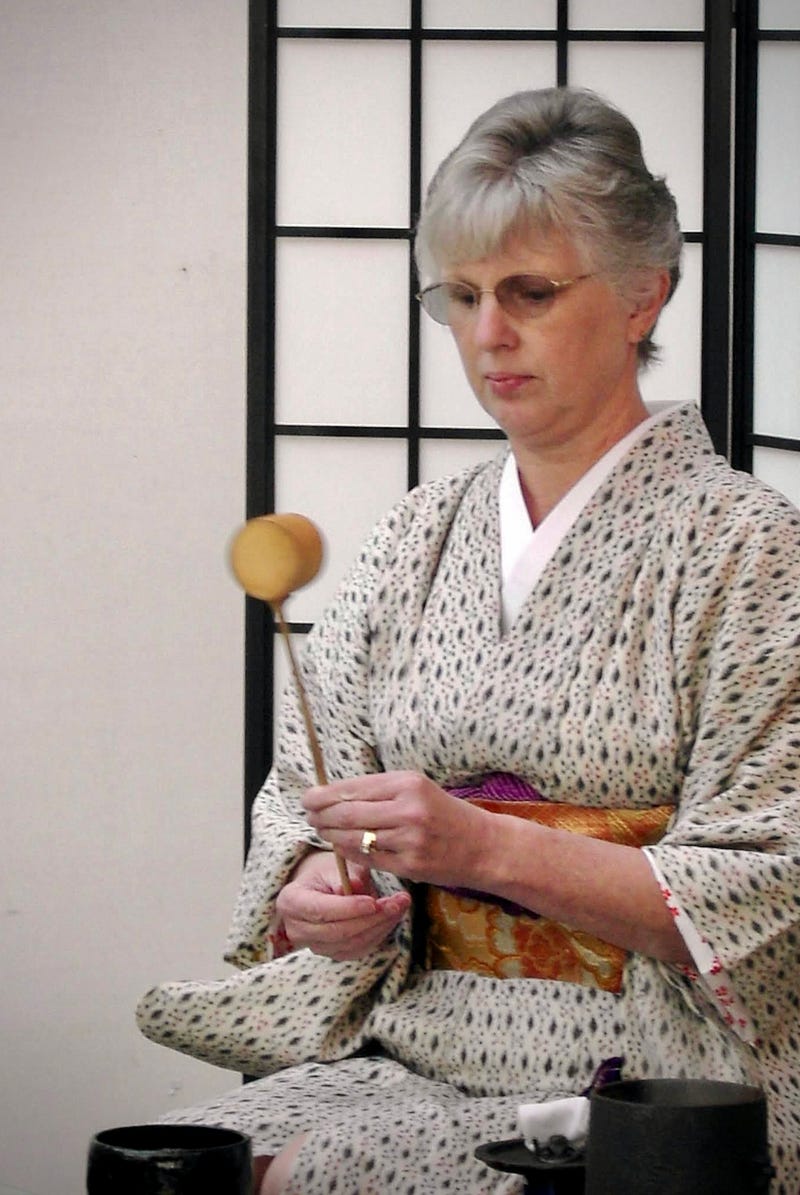
Shortly after the conclusion of my demonstration, two of the Japanese secretaries came to seek me out. They were excited and happy and gave me a huge compliment. “Rhonda-san, you made Tea like a Japanese! You were fluid throughout the ceremony! Well done”. That was one of the best comments that I can remember from our years in Japan.
I also love putting on the formal kimono for the tea ceremony demonstrations, but of course, I always had help from the Japanese teachers when putting on the kimono. In the photo below, I am a guest at another demonstration ceremony. Isn’t the kimono beautiful?
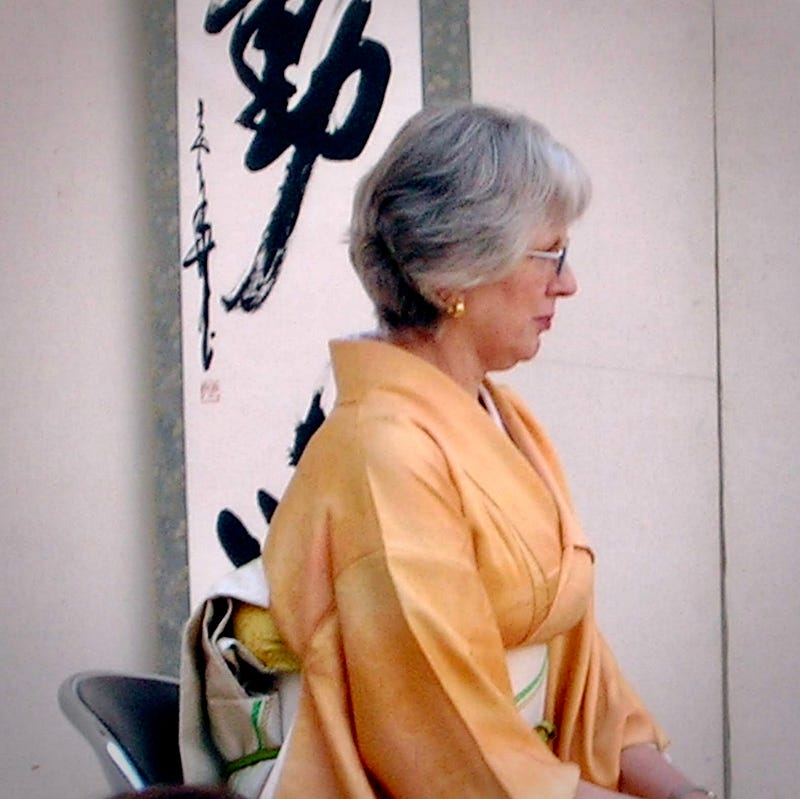
One of the amazing activities we did after taking Tea Ceremony lessons for 2 years was to take a trip to Kyoto with our Tea Instructor to be the guests of one of the top Tea Masters in Japan. What an honor. What a special cup of tea to drink.
Read more about the history of the Tea Ceremony and the history of tea in Japan. Maikoya — Tea Ceremony in Japan
I continue to read about and learn about Japan here in Medium. Here are 3 articles I’ve read recently that I have enjoyed.
Lost in Translation: A Milk Misadventure in Japan — by B.R. Shenoy — We remember looking for the products we wanted in the supermarkets when we first arrived in Japan. Our biggest surprise was the price of imported citrus fruit. Wow. We didn’t eat many fresh oranges while we were there.
My Japanese Wife Taught Me the True Meaning of Spirituality and Respect — by Iain Stanley — I lived in Japan but didn’t know I should not walk through the center of a Torii gate. Always walk through on the side of the gate. What other blunders did I do?
Unique and Fun Experiences Only in Kobe Japan — by DC Palter — Some good advice on visiting Kobe. We were in Kobe often and enjoyed the sake tours. Delicious and interesting.