
The Vital Home Inspection That You Can’t Ignore (But Always Do)
Because you’re buying more than a house.
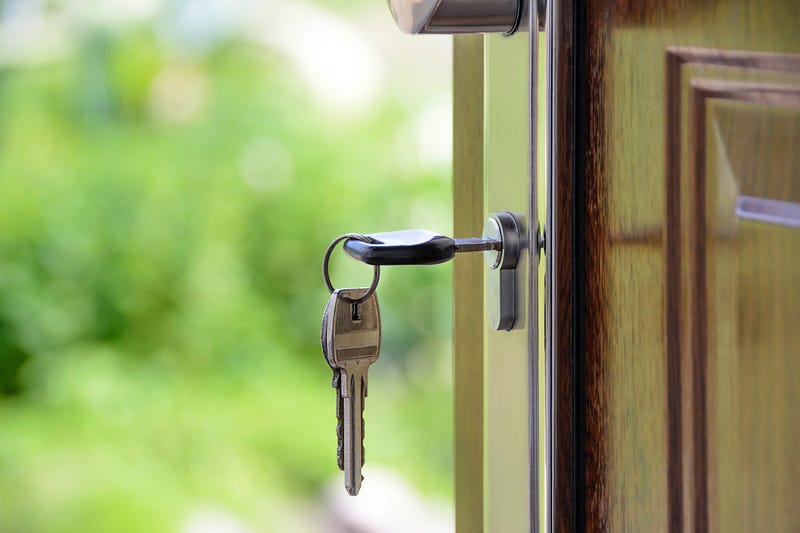
When thinking of home inspections, you probably imagine someone poking around your house with a flashlight, testing the faucets, and ensuring there isn’t any mold in the basement.
You might even go as far as remembering to get the sewer/septic system inspected, along with the water pipes/well that bring water into your house.
But there is one item that most everyone forgets, and it can come back to bite you in a big way.
The inspection I’m talking about is trees.
Beyond the House
When you buy a house, you not only buy the physical structure but also the grounds and any plant life that exists on them.
Most of us think of grass, shrubs, mulch, and garden beds when looking at a home, and we usually include that in the calculus when deciding whether or not to buy.
- Do I need a riding mower or a push mower?
- Will I need to buy a new mower, or will my old beater still work?
- How much time will I spend mowing the yard?
- How often do I need to trim the bushes out front?
- Are these flower perennials or annuals?
That is a good place to start, and if there is something wrong with those items, they are usually inexpensive to fix. Plus, you don’t need to be a certified landscaper to effectively evaluate your lawn.
On the other hand, trees pose a much different problem.
Trees Require Attention
I work as a facility manager, and part of our grounds maintenance is inspecting, pruning, and sometimes removing/replacing trees.
Why?
Because they are a physical asset, just like our roof or HVAC system. Costs need to be tracked, liability needs to be assessed, and end of life needs to be planned for.
Just because trees are not man-made does not mean we can ignore the time and money it takes to maintain them.
The Benefits of Trees
In life, trees provide myriad benefits.
They provide shade to have an outside picnic, give your kids something to climb or attach a swing to, attract birds and other small wild animals, and allow us to reconnect with the natural world in a reduced scope.
The shade from trees can lower our cooling bill in the summer, and the wind break they provide can lower our heating bill in the winter.
In death, trees provide even more benefits.
They provide wood to burn for warmth and comfort, other wood to use for furniture (if that’s your thing), and, after being cut down a sliced up into large chunks, another play place for your little ones.
It takes time and effort to properly maintain a tree to ensure that it continues its life as an asset as long as possible, postponing its inevitable decline and death, resulting in a liability.
Live trees need to be pruned on a regular schedule, allowing healthy expansion, proper distribution of nutrients, and balanced growth to maintain a center of gravity over the trunk.
The Liability of Trees
Dr. Seuss had it right in The Lorax.
The Lorax: Which way does a tree fall? The Once-ler: Uh, down? The Lorax: A tree falls the way it leans. Be careful which way you lean.”
A live tree, even one with deep roots, can completely fall over when unbalanced, especially if assisted by a stiff wind. The liability that trees present goes beyond structural damage, extending to loss of life or limb.
Take a look at the incidents from just the past decade in New York City.
- In 2013, Google engineer Sasha Blair-Goldensohn, 44, had her spine partially severed by a 100-pound oak tree limb that fell on him. He won an $11.5 million settlement against the city.
- That same year, the city agreed to pay $3 million to the family of Elmaz Qyra, who was killed in February 2010 by a falling branch in Central Park.
- A Queens woman, Roberta Colores-Martinez reached a $750,000 settlement from the city and two private tree companies after a falling limb fractured her skull in May 2010.
- In 2018, two city EMTs were injured by a falling branch during a snowstorm.
- In 2013, a pregnant Queens woman was killed when a 60-foot oak tree fell over and crushed her as she sat on a bench in Kissena Park.
- In February 2010, 46-year-old man was killed in Central Park by a fallen branch which snapped under the weight of heavy snow.
- On August 15, 2017, Monoky Goldman had been in the park with her month-old baby son strapped into a carrier on her chest, two-year-old son and four-year-old son…when a 75-foot-tall tree suddenly fell. She is now suing the City for $200 million.
This is just a sample of all events in one, albeit large, US city. Imagine all of the trees that are in all of the residential neighborhoods across the country.
Now, imagine that a limb fell or a tree toppled onto one of your neighbors.
Who would pay for the health care costs?
Your neighbor? Their insurance? Your insurance? You?
To help prevent that situation, its best to maintain your trees the same as you maintain your home.
If the tree can be saved, then go ahead and have it pruned and rebalanced.
If the tree can’t be saved, then go ahead and have it completely removed.
Our Story
In 2016, we bought an older home on 1 acre that had some fantastic trees. It was the original house that was occupied when the surrounding suburbs were just farmland, and many of the trees dated back to when the house was built in 1920.
- In the front yard, there were 3 immense white oaks, each reaching 50 feet high with sprawling branches and plenty of shade.
- In the back yard were two more oaks, a red oak and a pin oak, both about 60 feet tall, and both beautiful specimens.
- There were other minor trees throughout the property that were much smaller and nowhere near as attractive.
We bought the house as we normally do, inspecting the building but ignoring the grounds.
This was a big mistake.
After moving in, we realized that we really didn’t know how to take care of such old and large trees, so we brought in a certified arborist to take a look.
The news wasn’t good.
- The white oaks in front had a fungus that needed to be treated but wasn’t that serious.
- The red oak had been hit by lightning years back, and the bark hasn’t fully healed. This allowed fungus to enter into the heart of the wood, decaying it from the inside.
- The pin oak had an infestation of beetles, which had eaten away the main support structure that keeps the tree upright.
Both trees were a threat to fall down and needed to be removed within the year.
After getting multiple quotes, it cost about $4,000 to remove just the two oaks in the back yard, and that’s with leaving the wood on the property for us to chop up on our own.
All of this could have either been avoided or paid for if we had only hired the arborist as part of our home inspection prior to the sale, then asked for the seller for a reduced price or an allowance.
The Takeaway
When purchasing a home, never forget that you are buying more than the physical house. The grass, trees, fences, etc. that are present on the plot are also yours to maintain.
This can be extended to water and sewer mains, electrical connections, and a few other things, so be aware of what exactly you’re getting into when buying a house.
Even if you do get everything inspected, always expect that you missed something. plan to save 1%-2% of the cost of your house annually for any maintenance items, and you will be in a good financial spot.
Most Recent Stories
- Why the Middle Class Hates the Poor
- What’s Going on With Biden’s Capital Gains Tax?
- Your Super Cheap Health Care Deductible Is Too Expensive
- Will Student Loan Forgiveness Actually Work?
- My Worst Financial Mistake
Don’t miss my next article! Click here to get notified when I publish new material.
If you love the articles published in Money. Daily., then become a member of the Medium community and get full access to our full archives.
This article is for informational purposes only, it should not be considered Financial or Legal Advice. Not all information will be accurate. Consult a financial professional before making any major financial decisions.