
The Value of Time in the Stock Market
Become a millionaire over decades, not overnight

Time is everything when it comes to the stock market. And while Isaac Newton coined the phrase “what goes up must come down,” that doesn’t seem to apply to the stock market.
It is foolish to think the stock market can not go down, but it is practical to assume it will go up over the long term. All the evidence needed is a chart of the overall market from 1960, 1980, or 2000. The common denominator between all those years — they were a long time ago.
There is always risk when investing in the market and some of the gains over time are offset by inflation and other costs, but if approached correctly, the stock market is a great way to make money IN THE LONG RUN.
Too often investors get caught up in the short term. More often than not, investing for the long term will yield better results, and at the very least, a lower chance of losing money.
Sideways Stocks
There have been many stocks that have had several years of little or no growth, only to then see their price shoot up. These extended periods without much gain are referred to as moving sideways.
Plenty of stocks have experienced stretches of this, even some of the biggest names.
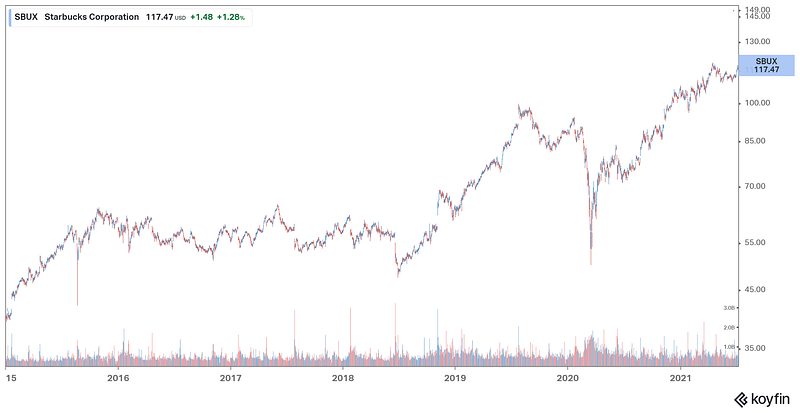
Starbucks is the biggest name in coffee. But from 2015 to 2018, their stock didn’t move much. The stock price fluctuated between $50 and $60 from Fall 2015 to Fall 2018, before then taking off.
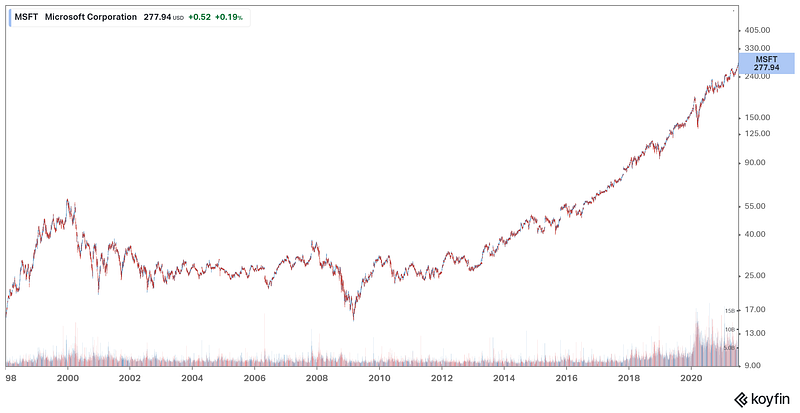
Microsoft has the second biggest market cap. It is a monster of a company and stock. Their stock benefited from the dot-com bubble of the late 90s. But for more than a decade after, the stock didn't move. For years, investors weren’t rewarded with gains. But if investors held on for the long-term, they would be rewarded today.
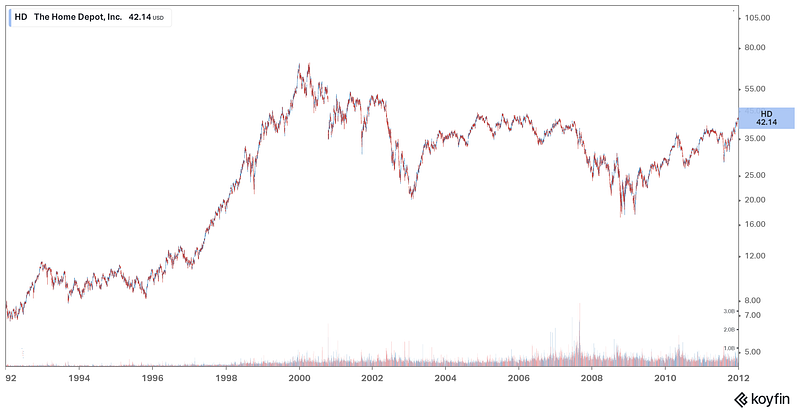
Home Depot is part of a duopoly industry. As a result, they hold a large share of the market. Their stock has been great in recent years. But they have had several periods in the past where the stock moved sideways for several years. From 1993 to 1996, the stock didn’t do much; the same can be said of 2004 to 2007. But again, investors who have held on since then have been rewarded, as their stock price is now over $300.
The Example of Warren Buffett
Some refer to Warren Buffett as the greatest investor. Nothing against him, but I think a more proper title is the longest-tenured investor.
Warren Buffett allegedly bought his first stock at 11 years old in 1941. He is now in his nineties and the sixth richest person alive.
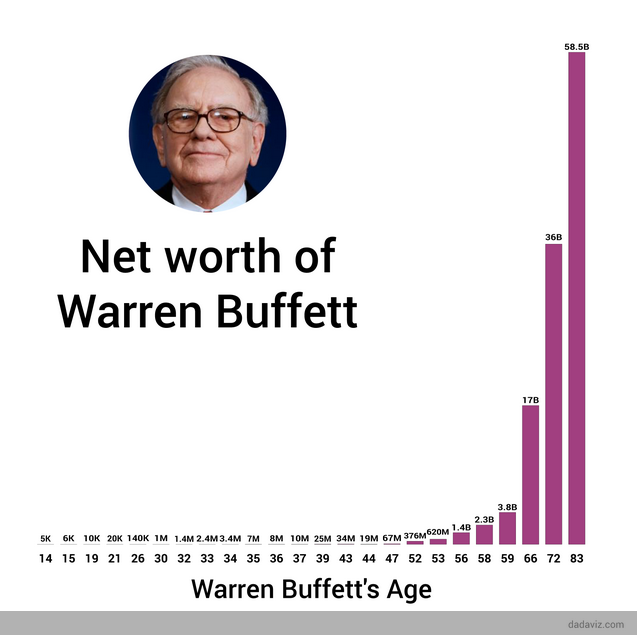
Time value of money has really benefited Buffett. While he has had great stock picks, the biggest factor in his success has been time. Buffett invested in Disney way back in the 1960s and Coca-Cola in the 1980s.
Below is a very telling image of how time can help grow wealth.
Final Thoughts
Rome wasn’t built in a day. Investing, like anything, takes time to build something of worth.
It’s tough to stay grounded when seeing internet posts about trades with 50% gains in a week. It’s tempting to make very bold trades. But the advantage of time should not be overlooked.
For me, investing in solid companies (such as Starbucks, Microsoft, and Home Depot) and letting them grow over time have yielded great results. All three can be thought of as leaders in their respective industries.
I have many years left; I will happily wait for good companies to provide returns instead of risking money on overnight success. Patience is a virtue.


