
Fiction book reviews
The Three-Body Problem: A Review of Liu Cixin’s “Remembrance of Earth’s Past” Trilogy
Exploring the depths of space, time, and the human condition in a futuristic odyssey
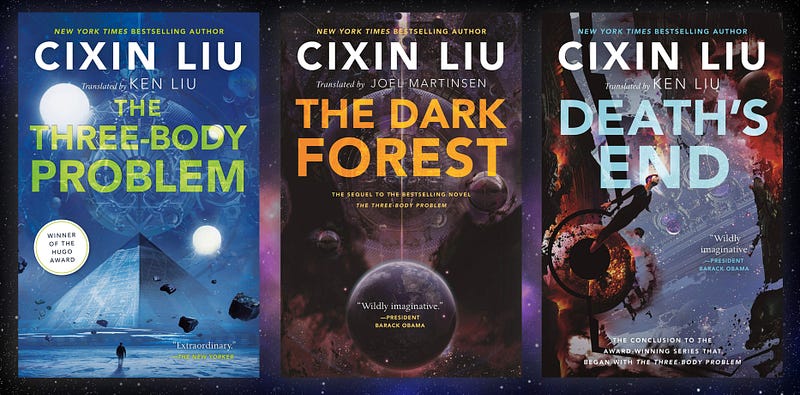
On Earth, humankind can step onto another continent, and without a thought, destroy the kindred civilizations found there through warfare and disease. But when they gaze up at the stars, they turn sentimental and believe that if extraterrestrial intelligences exist, they must be civilizations bound by universal, noble, moral constraints, as if cherishing and loving different forms of life are parts of a self-evident universal code of conduct
Why Read This?
When my friends started talking about “Remembrance of Earth’s Past”, I knew there was something special about this series. My curiosity grew even more when I saw bloggers mentioning the books in their “dark forest” debates. These discussions made me realize that this story was more than just a thrilling adventure — it was a chance to explore big ideas. The more I learned, the more I knew I had to read it.
“Remembrance of Earth’s Past” is a must-read for fans of hard science fiction who love stories about space, time, and what it means to be human.
The author of this thrilling trilogy captures readers’ imaginations with exciting adventures, amazing science, and characters that keep you hooked from beginning to end.
The trilogy combines elements of outer space, political struggles, and big questions about humanity’s role in the universe. Perfect for those who enjoy a thrilling adventure, this trilogy is sure to satisfy the cravings of hard science fiction enthusiasts.
Who Is the Author?
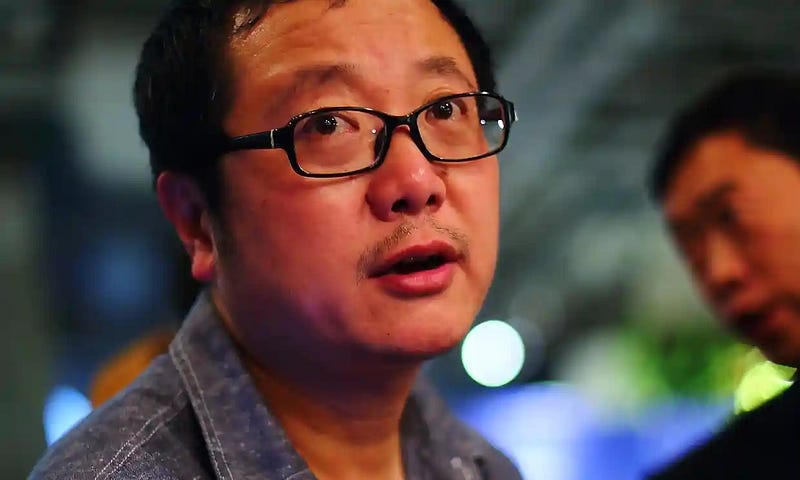
Liu Cixin, born June 23, 1963, is a renowned Chinese science fiction writer and one of the most celebrated authors in the genre. Liu graduated from North China University of Water Conservancy and Electric Power, where he studied power engineering and automation. He initially worked as a computer engineer before committing himself full-time to writing.
Liu’s outstanding work in the “Remembrance of Earth’s Past” series has garnered global acclaim, with “The Three-Body Problem” earning him the prestigious Hugo Award for Best Novel in 2015, making him the first Asian author to win the award in this category.
Often deemed a hard science fiction writer, Liu Cixin is an imaginative storyteller who intricately weaves complex scientific concepts with compelling narratives, deepening readers’ appreciation for the interplay between science, technology, and human society. His stories challenge the limits of imagination, inviting readers to ponder the fate of humanity within the broader context of the cosmos.
Overall Impressions
First and foremost, the book series left a strong and positive impression on me, although there are some nuances, as is always the case.
Most of the earth-based events take place in China, which I’m completely fine with. It’s natural for authors to focus on their own country and its characters to avoid clichés and stereotypes that may arise from a lack of knowledge about other cultures. In my opinion, the books didn’t come across as propaganda, although it’s worth mentioning that Liu Cixin has made several controversial statements about the Chinese Communist Party’s actions and the Uighur situation.
Many concepts in the trilogy made me want to Google whether such ideas have been researched or hypothesized by scientists, or if they were purely the author’s own creation. I also appreciated the references to books I had recently read — not only did Liu Cixin borrow and expand on concepts from classic science fiction, but his characters also discussed some of these books, like Asimov’s “Foundation” series or Anthony Burgess’s “A Clockwork Orange”. The links will take you to my reviews of these books here on Medium.
As I read each book in the trilogy, I took notes and recorded my thoughts. Each part is distinct and deserving of a more detailed analysis.
The Three-Body Problem
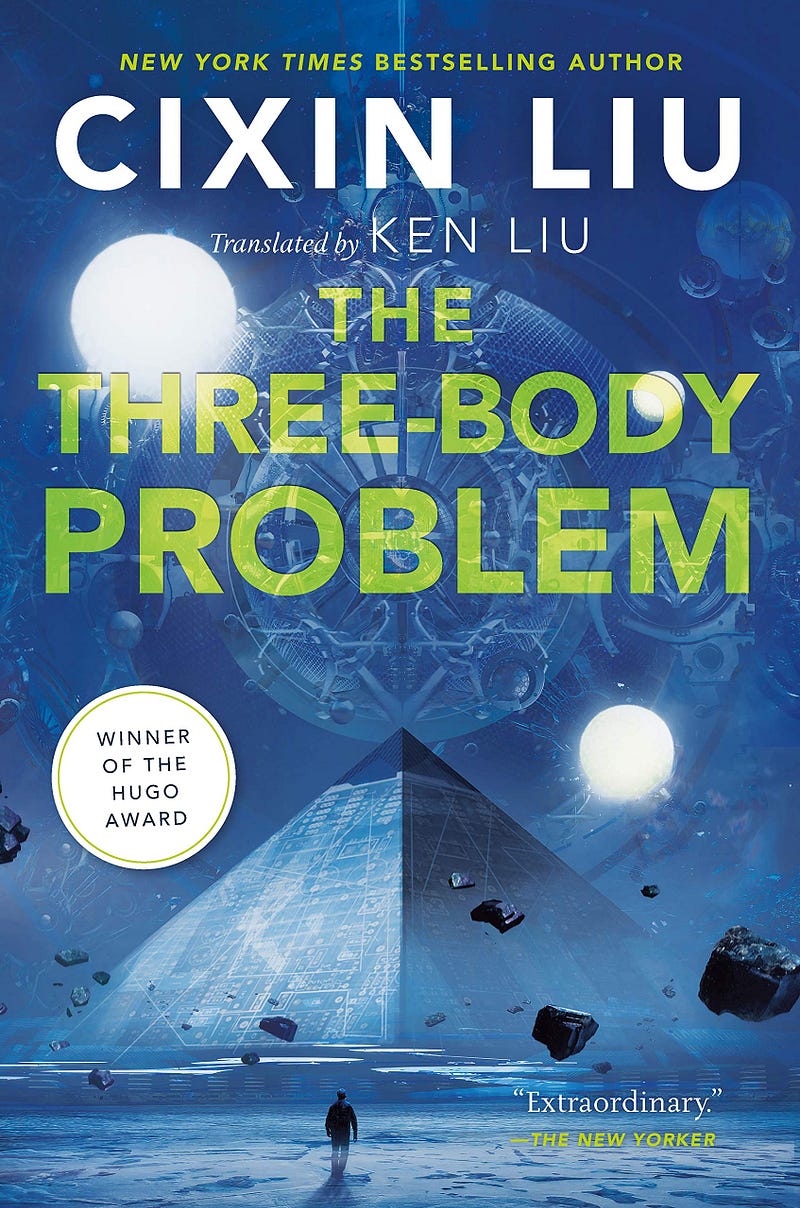
Even if God were here, it wouldn’t do any good. The entire human race has reached the point where no one is listening to their prayers.
The book takes readers on an adventure through two connected storylines and timelines, making it a little harder to follow, but ultimately resulting in a more captivating story.
Here’s what caught my attention:
- The detailed portrayal of the Chinese Communist Revolution, faked opposition cases, and the Cold War period: nuclear and thermonuclear bombs, and the arms race. These mentions made me curious about Chinese history, so I ended up reading several articles on the subject.
- The book provides a brief introduction to discrete mathematics and explains how RAM, hard drives, and displays work. I found amusing the cause for why the author would explain all of this. Since I have an IT background, these devices are familiar to me, but the explanation might be informative for others.
- Energy mirrors and amplification via the sun? It turns out, the super antenna is an actual scientific theory.
- Sophons may not be a real concept, but they serve as a sort of “plot twist device” in the author’s works and I don’t mind their introduction.
While reading the first book in the series, I experienced feelings of melancholy but also hope for a positive outcome. Additionally, it’s worth mentioning that the author clearly planned a sequel — a fact evident because of the pleasantly shocking conclusion.
The Dark Forest
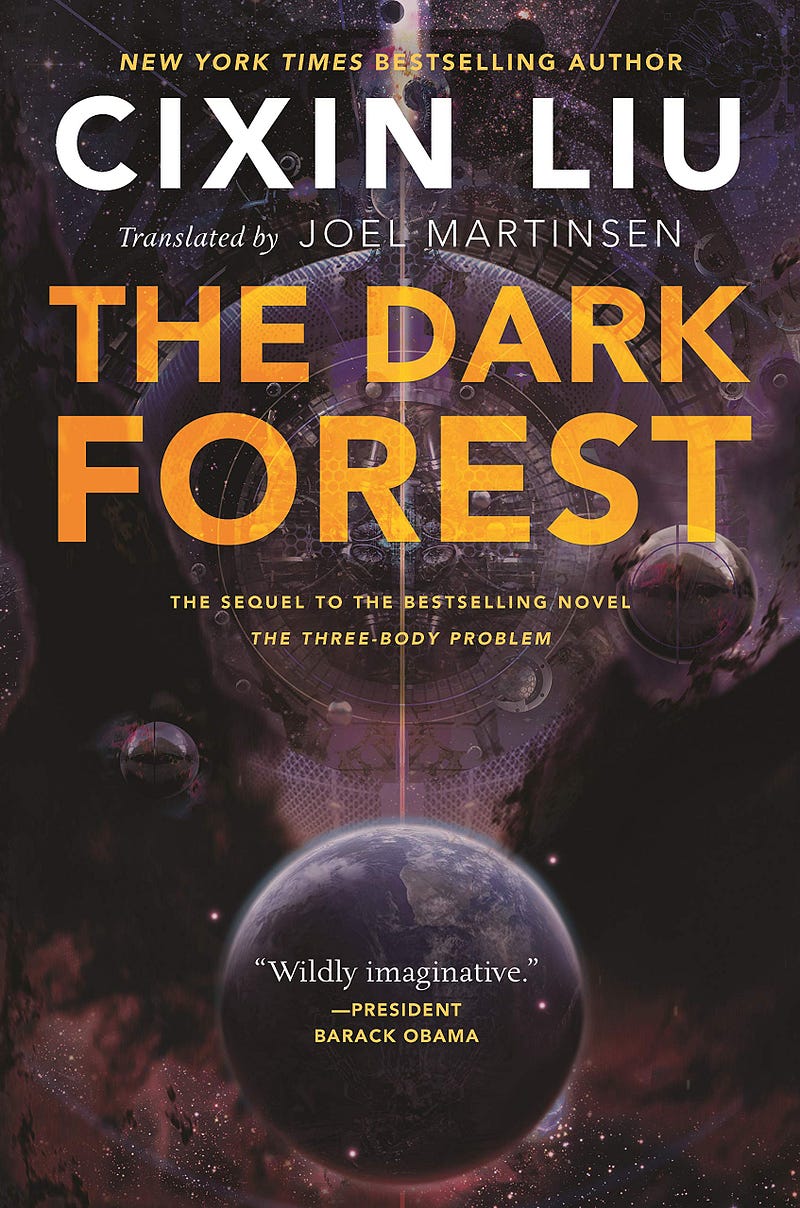
Staying alive is not enough to guarantee survival. Development is the best way to ensure survival.
The second book in the series is, subjectively, the strongest and leaves a much more lasting impression, thanks largely to fascinating plot elements like the Wallfacers concept. At the same time, the Three-Body Problem game lost its purpose and became more like a virtual reality room. It seems the author either changed his approach mid-story or initially struggled to find another way to depict an alien world.
Some interesting points to mention:
- The idea of the impending assault is like the Sword of Damocles hanging overhead. It resembles Vernor Vinge’s concept in “A Deepness in the Sky” and “The Children of the Sky”. It’s possible that the author read Vinge.
- Nuclear energy and Oppenheimer, along with other historical achievements in energy, become significant plot elements again.
- Observing social, territorial, and geopolitical changes is intriguing, such as the role of Al-Qaeda in the story’s context or the nations’ struggle for resources.
- Time jumps become a new tool in Liu Cixin’s arsenal, allowing him to skip potentially dull details while keeping familiar characters in play.
- The book explores the Fermi Paradox and the Dark Forest concept. Without revealing spoilers, my expectations were fully met, even though this theory isn’t considered one of the main ones.
Overall, the second book is even sadder and delves more into the philosophical thoughts and regrets about human nature. There’s a stark contrast between the first and second parts of the story. The scale has grown both spatially and temporally, the stakes have been raised, characters have become deeper, and their storylines have become more touching.
Death’s End
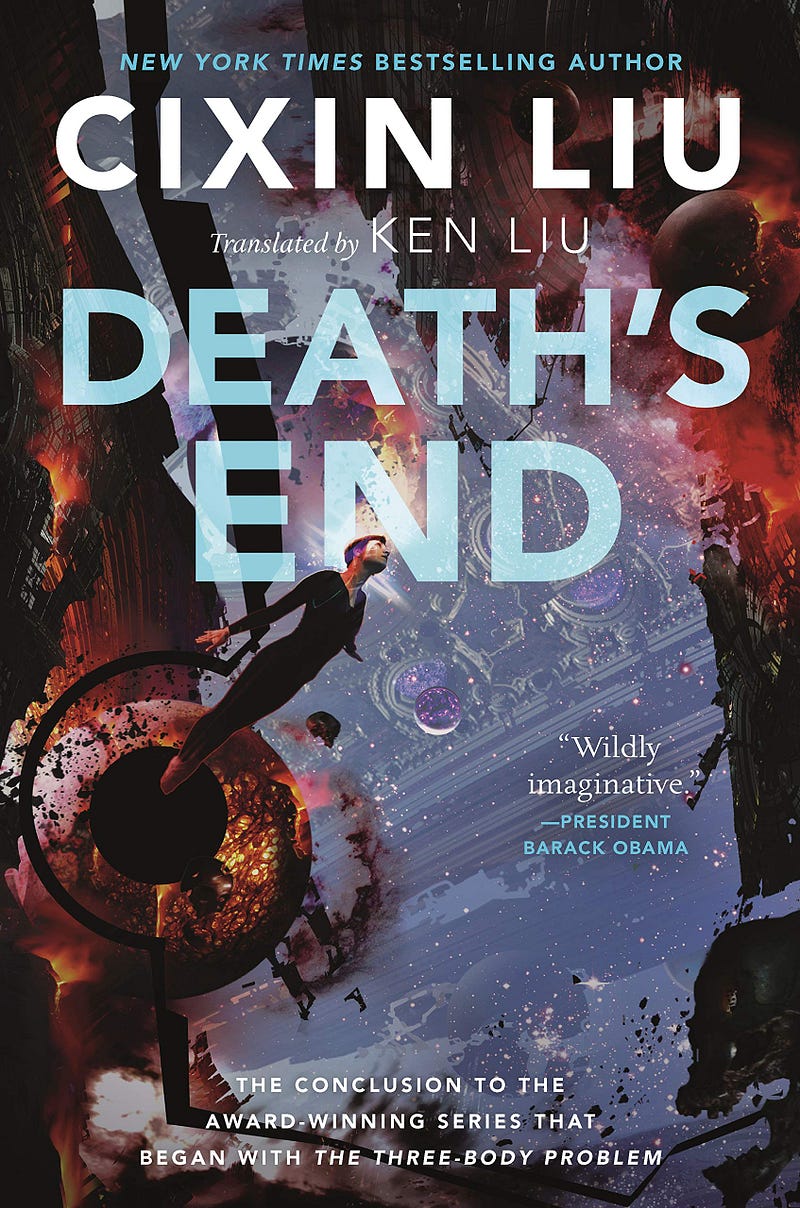
The ultimate fate of all intelligent beings has always been to become as grand as their thoughts.
The third book is the longest in the trilogy, and at the same time, the storytelling felt somewhat compressed to me — too many events and concepts have been packed into one volume. It makes me wonder if it would have been better to split it into two or even three books.
Here are some points worth mentioning:
- Some plotlines seemed to be forgotten, such as the outcomes and consequences of the work of one of the Wallfacers named Hines.
- The fairytales and metaphors were beautiful; they made me rack my brain along with the main characters.
- The concepts in this book reminded me of the works of Robert Charles Wilson in his “Spin” trilogy.
- The dizzying leaps into the future. If it was a plus in the previous book, it becomes harder to follow in this one, especially towards the end.
- The twists in the book are surprising but don’t appear to be random coincidences or authorial whims.
Like the entire trilogy, the book is full of pessimism, bitter poetry, and yet faint glimmers of hope for a positive outcome.
The Redemption of Time
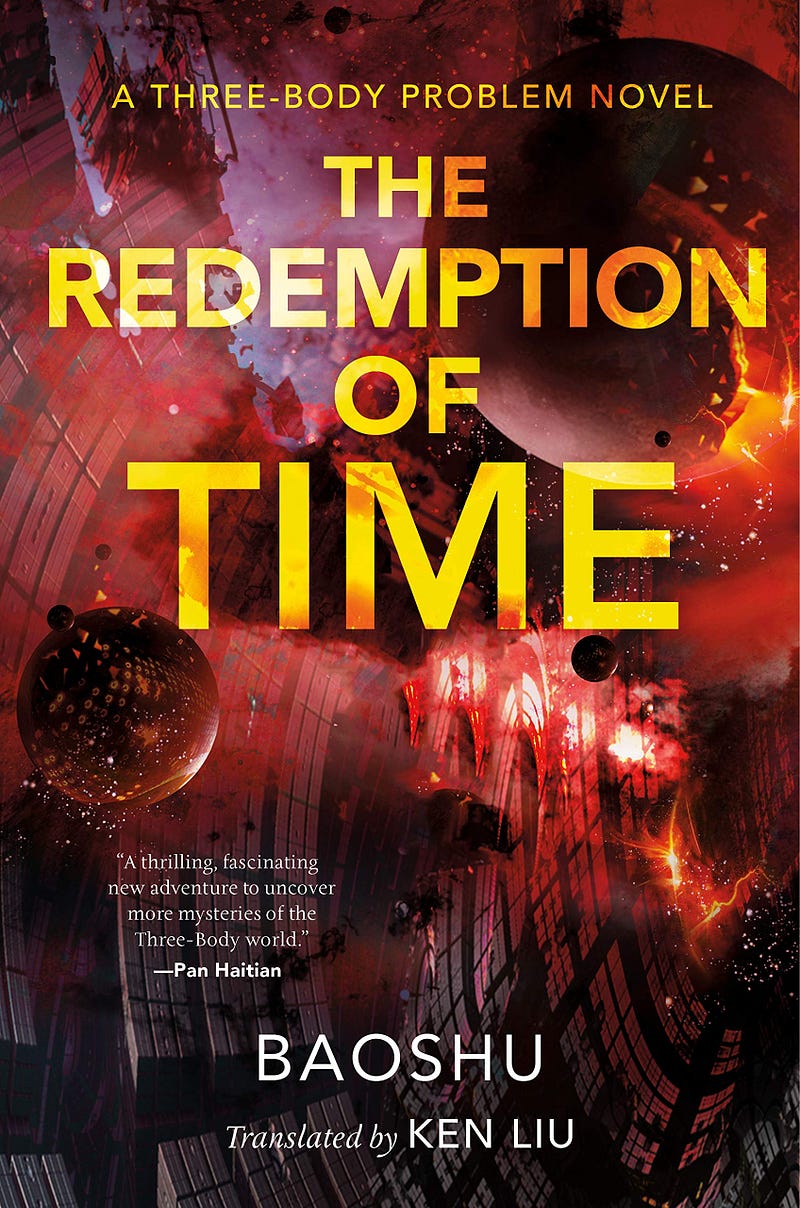
Only while doing research for this post I discovered that there’s another novel set in the same universe, which is connected to Liu Cixin’s works.
The book, originally written as fan fiction by Li Jun (under the pen name Baoshu), was posted on an internet forum back in 2010. With Liu Cixin’s permission, it was later published by Chongqing Press, the original trilogy publisher, in 2011.
I’ve added it to my reading list and will definitely give it a go in the future. However, I’m not setting my expectations too high since it is, after all, a fan fiction.
TV Series Adaptation?
There’s a Chinese live-action adaptation of the book series called “Three-Body” that closely follows the first book. The series has received high praise in China, boasting an impressive 8.5 score on Douban. Fans have admired the production quality, faithful adaptation, and casting choices, while domestic critics have lauded the stunning visual effects. Meanwhile, a New York Times critic in the United States commended its loyalty to the original text but found the screenplay, cast, and game scenes to be somewhat lacking.
I haven’t had the chance to watch the series yet, but I’m open to checking it out in the future, especially as my memories of the book series begin to fade.
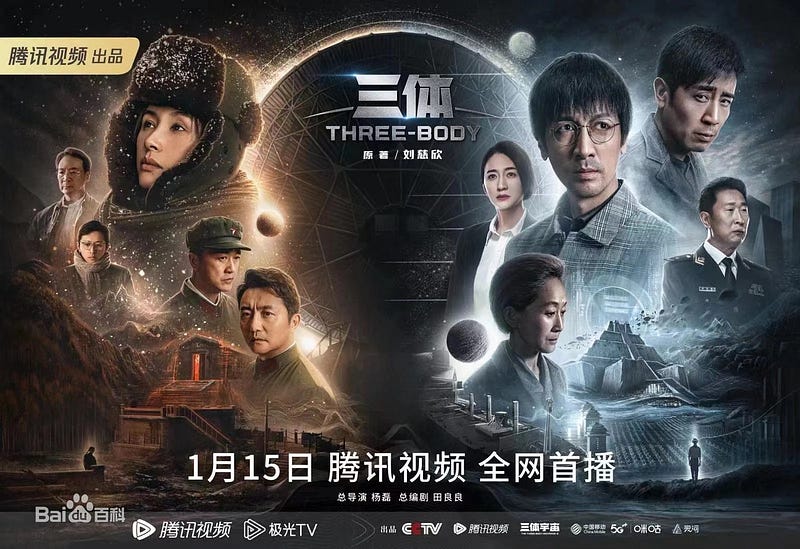
A separate adaptation of “The Three-Body Problem” has been ordered by Netflix, with “Game of Thrones” creators David Benioff, D. B. Weiss, and Alexander Woo taking on writing and executive producing roles. Given the reception to their work on “Game of Thrones”, I have mixed expectations for this series. According to Netflix’s Tudum blog, the show officially entered post-production in September 2022, with a planned 2023 release. Looking forward to watching it!
Conclusion
I really enjoyed the trilogy, despite it not being perfect and occasionally straying from the typical conventions of hard science fiction.
The books are packed with philosophy, as well as bitter and bittersweet moments. Liu Cixin has a talent for making the narrative emotionally engaging, which is crucial for a gripping fiction book.
I’d highly recommend this series to any fiction lovers out there seeking a captivating and immersive reading experience.
We don’t know what extraterrestrial civilization is like, but we know humanity.
Have you read any of the books in this series? I would love to hear your thoughts in the comments below.
If you enjoyed this review and want to support me as an author, please clap on this story and follow me for more content like this. Also, check out my other reviews. Thank you!