
Fiction Book Reviews
The Shocking Tale That Still Resonates: “A Clockwork Orange” by Anthony Burgess Reviewed
An Examination of Free Will, Violence, and Humanity
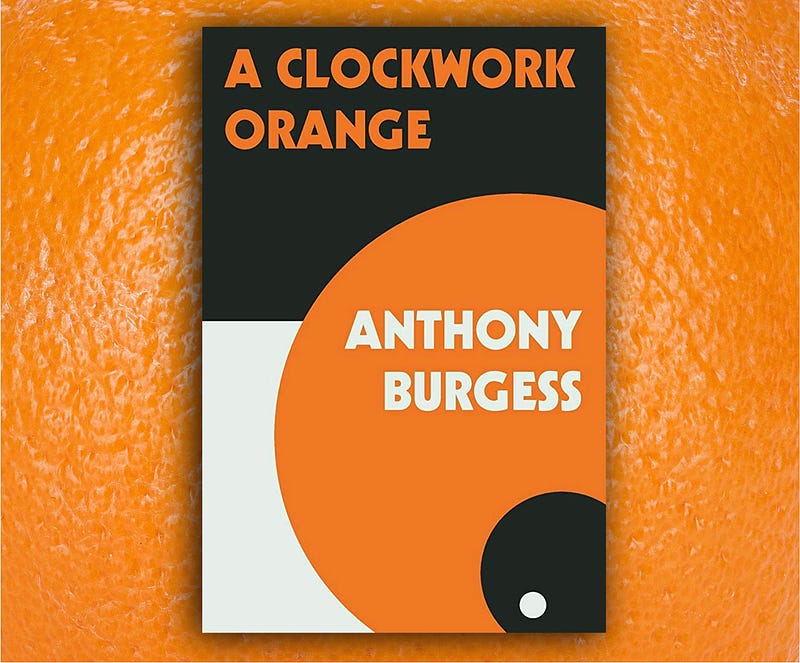
Is it better for a man to have chosen evil than to have good imposed upon him?
Why read this?
“A Clockwork Orange” remains relevant because it raises timeless questions about human nature, morality, and the balance between individual freedom and social control.
The novel’s themes of violence, free will, and the impact of technology on society are still important today, as we continue to grapple with issues of crime, punishment, and the role of government in shaping our lives.
Recent scientific research and theories surrounding determinism have added further complexity to the subject, making “A Clockwork Orange” a good starting point for exploring the workings of different societal models and the controversies they generate.
Who is the author?
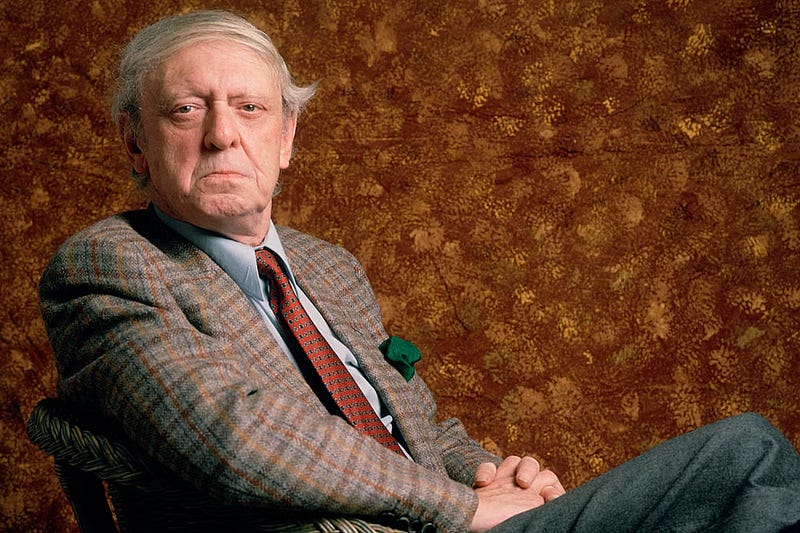
Anthony Burgess (1917–1993) was a British author, poet, and composer who wrote more than 50 books, including novels, non-fiction, and literary criticism. He became world-famous after “A Clockwork Orange” was adapted into a highly controversial film by Stanley Kubrick. Burgess was a versatile and prolific writer, and his works spanned a wide range of genres and styles, from literary fiction to science fiction, historical fiction, and beyond. In addition to his literary career, Burgess was also an accomplished composer and linguist, and his interests in these fields often found expression in his writing.
Impressions and thoughts
I knew nothing about the book except for the image of Alex from Kubrick’s movie and the fact that there will be violence. Completely avoided spoilers 😅
“A Clockwork Orange” was a lasting impression. It left me with much to ponder about the role of authority, power, and individual freedom in our lives:
- The lack of clear red lines and consequences led to a society in which a young individual without proper parental supervision was on his own and constantly testing the boundaries, looking for more adrenaline and enjoyment in the worst possible way, amplified by drugs
- At the same time, the author showed us another side of the coin, where the system held all the power, leaving individuals unable to resist. Should the state punish wrongdoers for their crimes or educate and train them on how to become a part of society again? Is force acceptable? The state in the book is clearly looking for shortcuts and acting in the light of upcoming elections only
- The depiction of violence, while not overly detailed or graphic, was still disturbing, though it paled in comparison to the brutality of “American Psycho” by Bret Easton Ellis, which I had read some time ago
- One of the most memorable aspects of the novel was the striking contrast between the viciousness of the protagonist’s actions and his love for classical music, which added a layer of complexity to the character and the story
The last chapter's issue
The final chapter of Anthony Burgess’ work left me feeling somewhat uncertain about the novel’s overall message. The sudden conclusion of Alex raised questions about whether the events of the book were simply a metaphor for teenagers testing their boundaries, set by parents, and growing into adulthood, or whether it was just a sudden statement about the potential for people to change.
While I appreciated the ambiguity of this ending, I couldn’t help feeling that the book might have been better off without it.
Nadsat slang and my confusion about it
I speak English, Russian, and Ukrainian, and when I first started reading the book in Russian, I was confused by the use of English transliteration for certain words instead of the Cyrillic alphabet. This was the only differentiation.
It wasn’t until I was in the middle of the book that I finally realized what was happening, and after some quick research, immediately switched to reading the original English version rather than the translation.
Having gone through this experience, I can only imagine how challenging it might be for someone who doesn’t speak Russian to read “A Clockwork Orange,” with all its new and unfamiliar words suddenly being introduced without any warning.
So, grab a glass of moloko, and be prepared for some extra effort while reading the book, droog!
Stanley Kubrick's movie adaptation
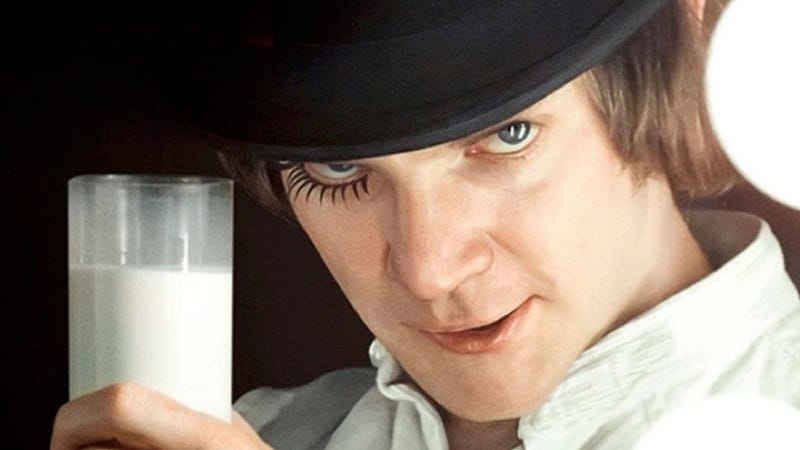
Having not seen the movie before reading, I was able to approach the book with fresh eyes. Watched it only a few days after finishing the novel.
Stanley Kubrick used the first American edition for his adaptation, meaning that the last chapter was not included. Personally, I feel that this was probably a good decision.
I found that the film paid too much attention to frame and scene details, which is a common trait in Kubrick’s works. The movie felt like a theater set, with most of the actors overacting. I had pictured the story as being more serious and dark than it was portrayed on screen.
Ultimately, I didn’t particularly enjoy the movie and found it to be somewhat silly by modern standards. Would be much interested in seeing a remake, although I doubt anyone would be bold enough to attempt it in the 21st century.
Conclusion
To sum up, “A Clockwork Orange” is a valuable and thought-provoking novel that aged really well. I highly recommend it to anyone seeking to explore the more profound questions of life and society
If he can only perform good or only perform evil, then he is a clockwork orange — meaning that he has the appearance of an organism lovely with colour and juice but is in fact only a clockwork toy to be wound up by God or the Devil.
Have you had the opportunity to read “A Clockwork Orange” or are you planning to? If yes, I would love to hear your thoughts. Please leave a comment below.
If you enjoyed this review and would like to support me as an author, please consider following me for more content like this. Thank you!