
Fiction book reviews
Unveiling the Secrets of the Foundation: A Review of Asimov’s Visionary Universe
A journey through the timeless sci-fi realm
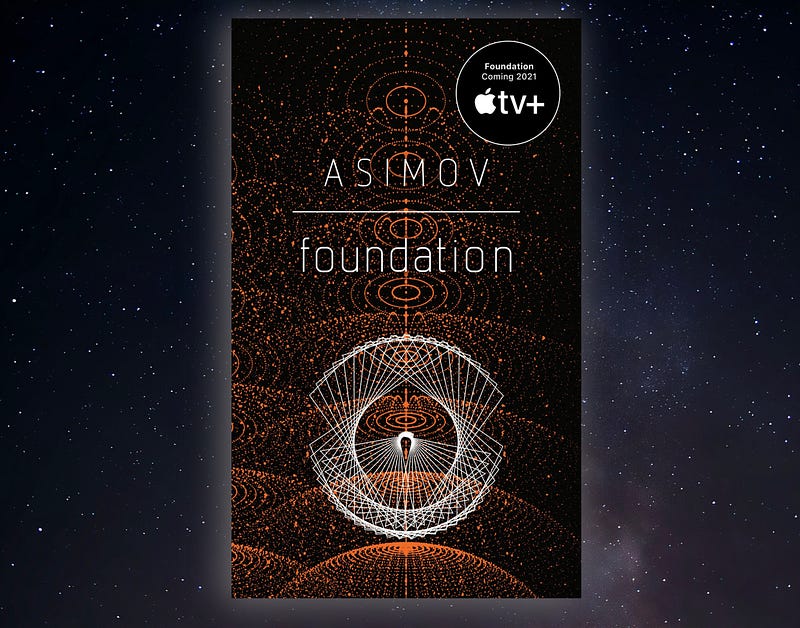
The laws of psycho-history are as absolute as the laws of physics, and if the probabilities of error are greater, it is only because history does not deal with as many humans as physics does atoms, so that individual variations count for more.
Why Read This?
For starters, the “Foundation” series by Isaac Asimov is undeniably one of the most famous writings from the Golden Age of Sci-Fi, a true classic that has left a mark on the genre.
Its significance extends beyond the time of publication, as it serves as a foundation (pun intended) for modern space opera and has influenced countless future works in science fiction.
With the 2021 release of the “Foundation” series on Apple TV and the upcoming season 2 of the show, it raises the question of how well the books have stood the test of time and how good is the TV adaptation.
In this article, I’ll do my best to tackle both of these questions. At the same time, if you’re curious about a classic sci-fi that has shaped the genre and continues to captivate audiences today and want to make your own conclusion, delving into the “Foundation” could be worth your time.
Who is the Author?

Isaac Asimov (1920–1992) was a renowned American writer and professor of biochemistry. He is widely celebrated as one of the most prolific and influential science fiction authors of all time. Asimov’s literary career spanned over five decades, during which he authored and edited hundreds of books, including novels, short stories, and non-fiction works. His extraordinary breadth of knowledge allowed him to seamlessly blend scientific concepts with compelling narratives, earning him a devoted following.
Born in Petrovichi, Russia, Asimov immigrated to the United States at a young age. He pursued a strong academic path, obtaining a Ph.D. in biochemistry from Columbia University. While Asimov’s scientific background influenced many of his stories, his impact extended far beyond the realm of science fiction. He authored popular science books, delving into diverse subjects such as physics, chemistry, astronomy, and history. As a gifted science popularizer, Asimov had a remarkable ability to make complex topics accessible and engaging for a wide audience.
Asimov’s prolific writing, imaginative storytelling, and enduring legacy make him an iconic figure in the realm of science fiction and a revered literary giant whose works continue to inspire generations of readers.
Impressions
According to fans, there are two approaches to experiencing “Foundation”:
- Some suggest reading only the original trilogy and skipping the rest.
- Others recommend reading the entire series, with the awareness that it was initially intended to conclude after the third book. However, commercial success and demands from publishers led Isaac Asimov to write two additional sequels, and then two more.
In my opinion, both the original trilogy and the full series feel somewhat incomplete due to Asimov’s untimely passing and not finishing the 1000 years arc. Nevertheless, the existing body of work presents a captivating and expansive story set in a vast galaxy, featuring diverse worlds and competing powers.
To put it simply, I’m immensely impressed by the attention to detail and the concept of “Foundation”. It becomes even more remarkable when considering its publication during a time when nothing like it existed. For sci-fi enthusiasts who have not yet experienced it for some reason, it is undoubtedly a must-read. Just read them in the order they were written, not in chronological order. Otherwise, there will be spoilers, and the original trilogy will lose its value.
Asimov indulges in the “Mary Sue” trope throughout the entire cycle, encountering a “deus ex machina.” It slightly diminishes the reading pleasure. The easy path and minimal challenges are signs of commercialism.
There is more to say. Let’s talk about specific books in more detail in the following sections.
Original Trilogy
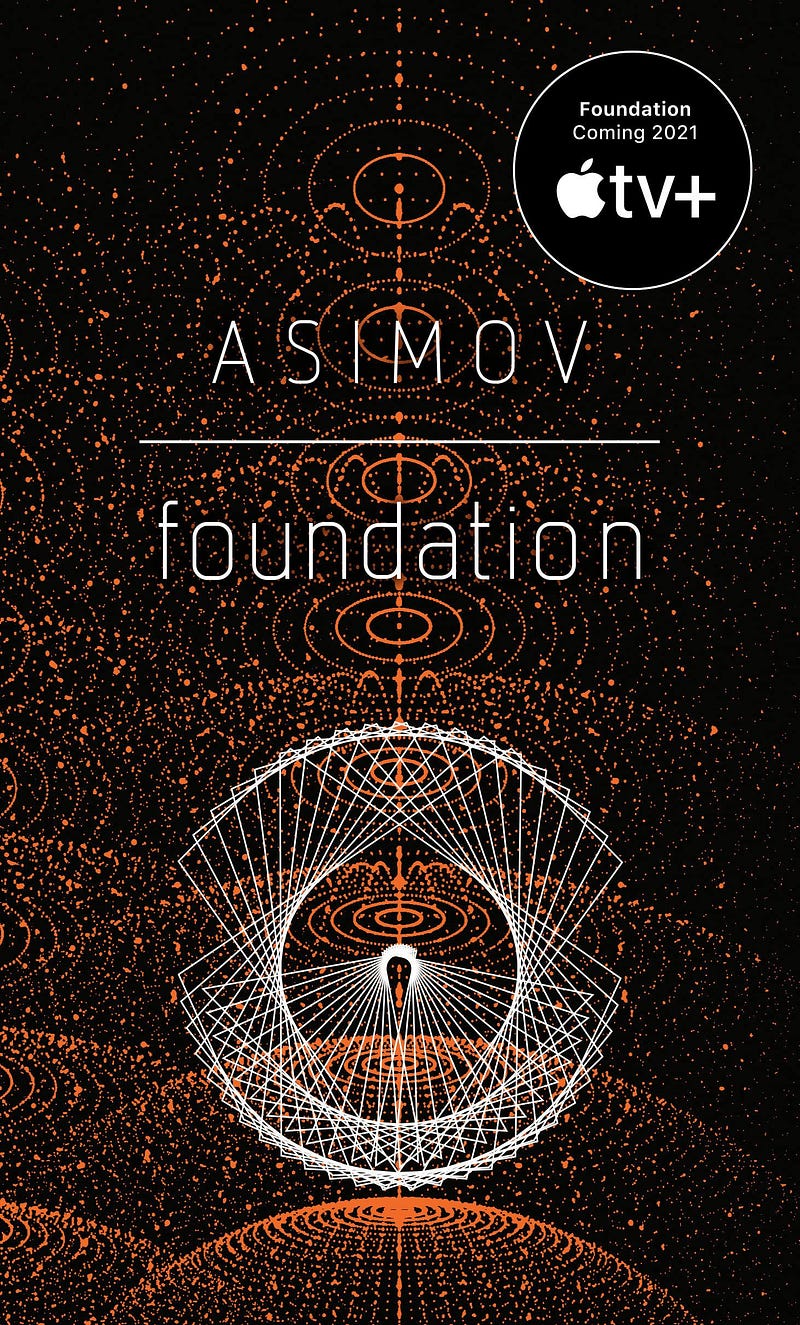
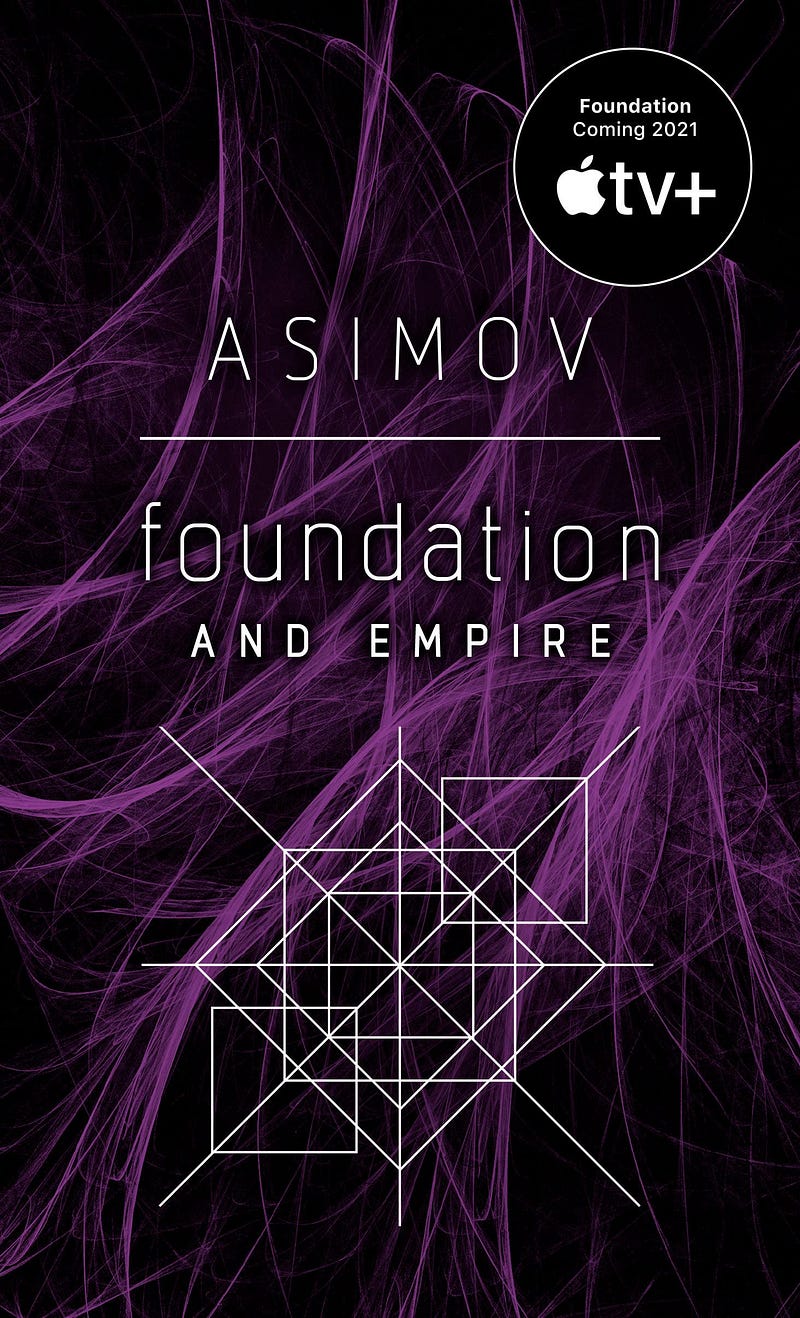
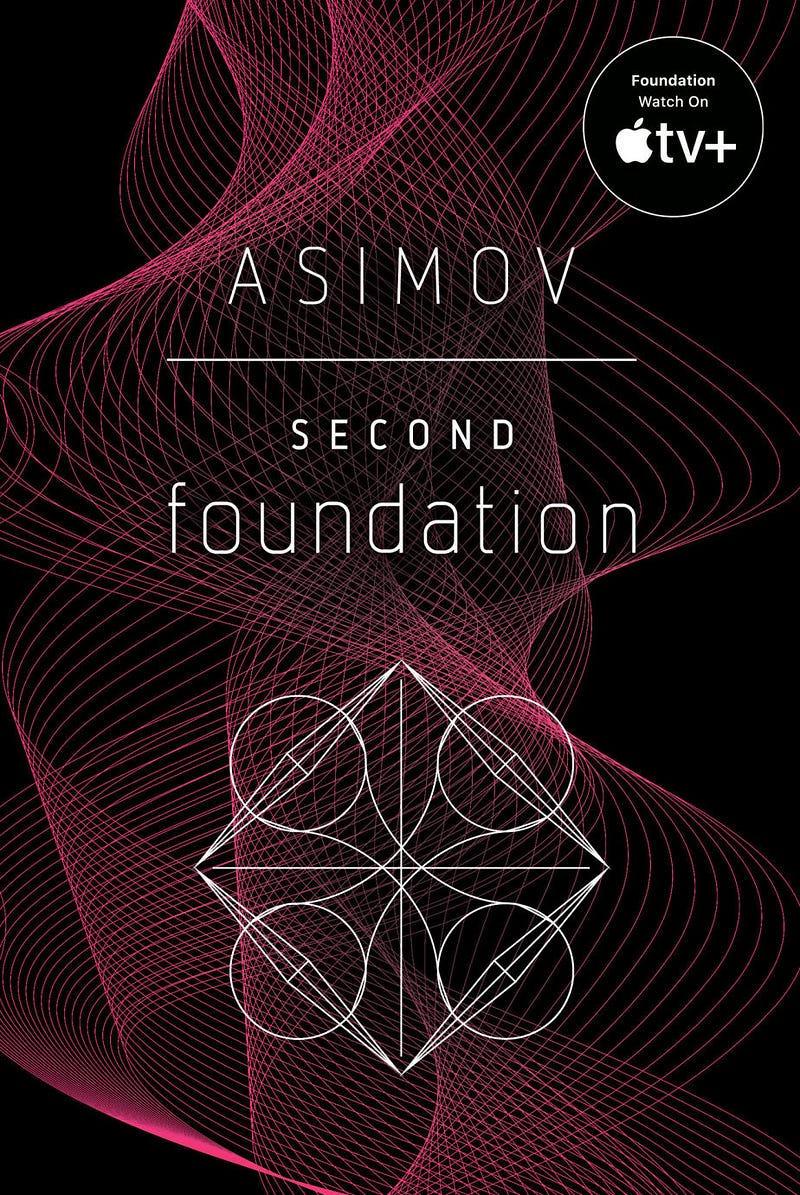
A few notes that I made while reading:
- Time jumps of 30–70–200 years and the introduction of new characters make it difficult to become attached to individuals, but this aligns with the assertion that on a scale of hundreds of years, individuals hold very little significance. However, the author will later challenge this assertion.
- Psycho-history is a blend of psychology, sociology, history, and mathematical statistics, that allows predicting the future of large groups of people. There is very little real science here even though it is the core concept. Perhaps, science beyond comprehension always resembles magic.
- Atomic energy is the ultimate dream. Hyperatomic engines, atomic force fields, atomic disintegrators for cigarette butts — now all of this seems amusing. On the other hand, the book series turns out to be a bright representative of the atompunk genre!
- Religion and trade (sanctions) as instruments of control. Familiar concepts, that are widely used nowadays.
- Court intrigues, politics, and elite rivalries — remind me of Dune.
I didn’t particularly like the third book as it disrupts the ideology of the first two, but it seems that this was the author’s original idea, and one simply needs to accept Asimov’s decisions.
Sequel Dilogy
The original “Foundation” trilogy set a high standard and gained recognition among readers. As a result, the publisher ordered additional books from Asimov.
In terms of spirit, both books are much closer to Asimov’s other series than to the “Foundation”, especially to the first book. There are no time jumps, the main character remains the same throughout both books, and the story is an 850-page road trip split into two parts.
Unfortunately, there are many meaningless events/dialogues (especially in “Foundation and Earth”) that fill the pages. It feels as though Asimov stretched the story to make two books.
Despite how the trilogy concludes, the author manages to find a loophole for continuation, raise the stakes once again, and skillfully incorporate fan service by referencing his other series. It’s a good thing I had already read other Asimov’s works and could recognize the characters. If “Foundation” had been my first exposure to Asimov, there would have been no surprises, only confusion.
Initially, I had a skeptical and disapproving reaction, but the ending and the justification of events convinced me of their logic. On the other hand, it is disappointing that decisions of galactic magnitude are made by extraordinary individuals. Psycho-history? No, not anymore.
The confrontation between individualism and collectivism throughout the story is interesting and well-integrated into the plot. However, it pales in comparison to the conflict between the Mule and the Foundations in the original trilogy.
The technological progress, happening in the real world in between original books and sequels, is depicted and explained admirably. Asimov did not fixate on atomic energy but incorporated new concepts, such as antigravity.
To sum up, the sequels to “Foundation” are a commercial product. At times, they are drawn out and meandering, with references for the sake of references. Nevertheless, they still convey the author’s style and push the universe forward. It’s also a crossover that I did not expect.
Prequel Dilogy
“Prelude to Foundation” follows the same patterns as the two sequels mentioned above: the protagonist is accompanied by helpers, traverses different locations, and encounters troubles while working on the foundations of psycho-history. Overall, it introduces nothing new but further solidifies the connection between “Foundation”, the cycle featuring the robot Daniel Olivaw and the series about the Trantor Galactic Empire.
“Forward the Foundation” returns to the format that I loved in the original trilogy: it includes time jumps and provides a detailed look at the events directly preceding the first books of the series. Asimov’s final work turned out strong and met expectations.
The setting of the prequels is Trantor, the capital of the Galactic Empire during its decline. Although the locations on the planet are diverse, they are still less captivating and expansive compared to the exotic planets in the previous books.
Overall, I enjoyed the prequels more than the sequels.
Legacy Trilogy
A Second Foundation trilogy of prequels was written after Asimov’s death by three authors, authorized by the Asimov estate. These included:
- Foundation’s Fear (1997) by Gregory Benford
- Foundation and Chaos (1998) by Greg Bear
- Foundation’s Triumph (1999) by David Brin
I have read none of these and still hesitate to even include them in my reading list because of the controversial reviews and the fact that, once again, the books are prequels which means that they don’t expand the storyline and their ending is predictable or has no impact.
If someone has read this trilogy, please let me know whether it is worth attention or not.
Apple TV+ Series Adaptation
The novels look really hard to adapt, so I was thrilled and excited to watch the series, yet worried about the outcome.
Unfortunately, the TV show has very little to do with Asimov’s works except for the name and a couple of characters. Some things and events are taken from the books, but corrupted and deformed beyond recognition. The show’s messages are completely opposite of the books.
It’s sad, why even call it an adaptation at that point? Not going to watch the second season.
Conclusion
In conclusion, despite its imperfections, the Foundation series holds immense significance in the realm of science fiction.
As a reader, I found great enjoyment in delving into Isaac Asimov’s expansive universe. Each book offered its own unique experience, some resonating with me more than others.
Nevertheless, the series stands as a pillar of the genre, with its compelling narratives and profound ideas shaping the landscape of science fiction literature. I strongly recommend the Foundation series to all sci-fi fans. It takes you on an incredible and essential journey through vast realms of imagination.
Never let your sense of morals prevent you from doing what is right
Have you read any of the “Foundation” books or watched the TV series? I would love to hear your thoughts in the comments below.
If you enjoyed this review and want to support me as an author, please clap on this story and follow me for more content like this. Also, check out my other reviews. Thank you!