
The Threats and the Beauty: A Few Words on the Concept of My Writing On Medium
My work focuses on two aspects of life on this planet: it deals with the threats to life on our planet and celebrates the beauty of life on Earth. You will recognize that in the articles I publish on Medium, and at the beginning of the year, I decided to write a few words on the concept of my writings on Medium.
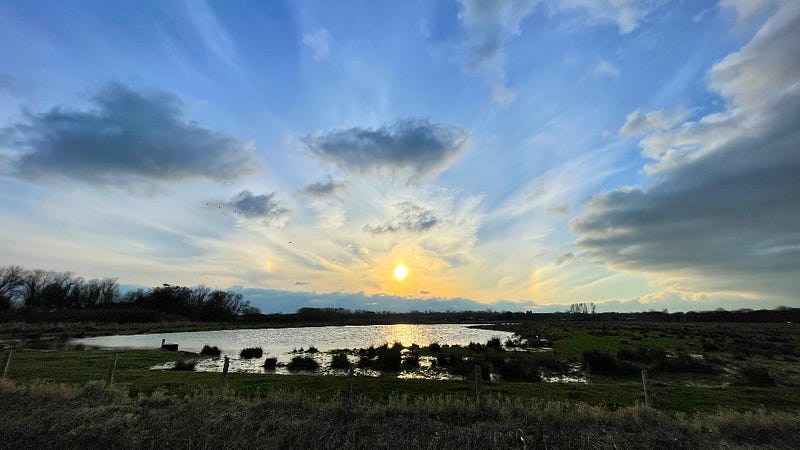
Let’s start with the photo at the top of this article. It exemplifies this planet’s beauty; I took it a few hours ago. Just before sunset, I walked from home on the Dutch island of Schouwen-Duiveland into the nearby wetlands, former agricultural lands that have been ‘rewilded’ and given back to nature. It was freezing, and only the more extensive open waters weren’t frozen. I saw a group of deer huddled together between some shrubs to stay warm, and, a bit further, a large hare ran away when I got too close. I love this island’s natural beauty, especially the many efforts to preserve and expand natural areas.
There is a strong connection between these two central themes — the threats and the beauty — because the more people reconnect with nature and appreciate its value, the more supportive they will become in taking action to protect and preserve it.
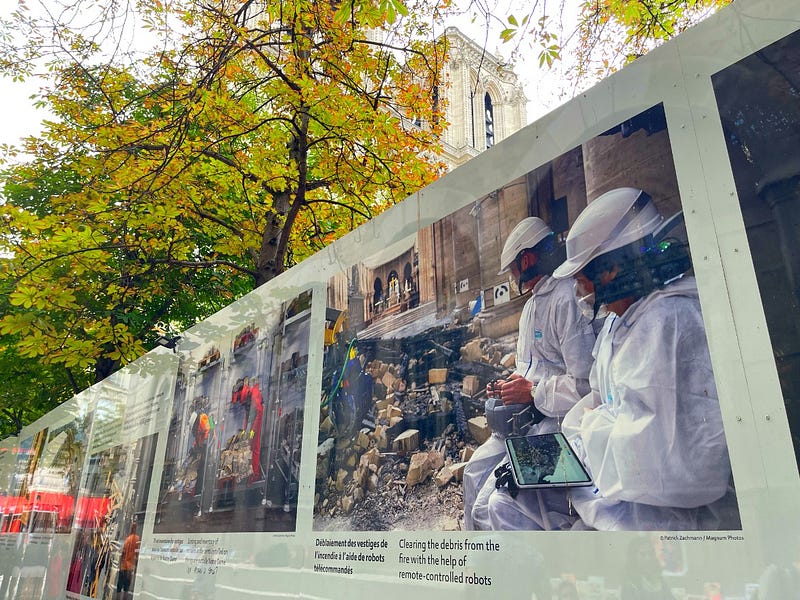
I’ll give a Parisian example, mainly because I just returned from France’s vibrant capital. You may remember the fateful day in 2019 when the roof of Notre Dame Cathedral in Paris caught fire. The media was quick to publish the latest photos of the damage. To remind readers of the Cathedral’s beauty, they added pictures that showed the iconic facade and other parts of this marvel of French Gothic architecture that were still standing, although unstable and at risk of collapse.
So, the reporting focused on the beauty lost and the remaining — often fragile — beauty at stake. This is an approach similar to what I use when writing about the impacts of climate change and other perils while telling the story of the beauty around us.
Staying with this Notre Dame parallel for a moment, another storyline exists. Two other aspects of the fire received more attention a few days after the breaking news of the fire. Journalists and politicians wanted to know how we can prevent such disasters in the future. They also made restoring the Cathedral to its former glory a priority.
Again, I follow a similar approach, which leads to the two sub-themes: avoiding losing more of the world’s natural beauty and restoring nature in case we have lost it. To summarize, my articles are about:
The threats: climate change, biodiversity loss, pollution, and many related problems that I’ll catch under “governance” (inequality, poverty, media, education, justice, etc.).
For example, here is a quote from the article I wrote about the steep rise of atmospheric CO2 in my lifetime and its impact on the climate.
“We started wiping out other species at unprecedented rates, polluted everything from the deepest trenches of the ocean to high levels in the atmosphere, and in the past decades (a fraction of the last millisecond of the 24-hour clock), we efficiently started the project that will assure that more intelligent forms of life in a far future will forever remember us as the villains of the planet; long after we have died out, we’ll be known as the species altering the temperature of Earth while calling ourselves sapiens.”
The beauty of life on our planet: first of all, nature, but there is also beauty in culture, traditions, history, travel, or storytelling.
Here is another example, a quote from a short introduction to a three-minute video I made from a walk to the beautiful Pink Lake in Canada:
“So, while the world should focus on the climate crisis during COP28 in Dubai, I’ll take you on a three-minute natural walk to provide some balance. The video is a short version of a walk of a few hours I made in late September when the weather was pleasant, and trees in the forest were still mostly green, with only a few leaves starting to show their spectacular autumn coloring.”
Positive action to avoid further losses: climate mitigation and adaptation, conservation initiatives, good governance, innovation, or international cooperation.
For example, this is from an article about unlocking your leadership potential for a better world:
“But no history book is complete without the counterbalance of those who bravely stand on the right side of morality and motivate change against all odds. Inspiring individuals like Mahatma Gandhi and Martin Luther King demonstrated the transformative power of nonviolent resistance, proving that courage and conviction could overcome societal structural flaws.
Anne Frank, in the confines of her hiding place in Amsterdam, wrote words of beauty and resilience in the face of Nazi oppression. It’s hard to accept that those who arrested her followed the law and that she was the one breaking it.
Anne’s brilliance brings me to art, which can also be a platform for positive change through rebellion and individualism. Vincent van Gogh may not have been successful in society by any of the norms of his day. Still, he pursued his own path and left behind a legacy of timeless, beautiful paintings and writing that, more than a hundred years later, still challenges our perception of the world.
These influential historical figures have a common thread: they show the courage to be different, have the nerve to challenge the status quo, and can inspire others to strive for a better world. I often find myself revisiting the stories about these icons in my writing, not just as historical anecdotes but as timeless lessons that resonate with the challenges of our era. The list is longer, but you get the idea: each has contributed to making the world better and more beautiful.”
Restoration: Think of the rebuilding of a cathedral or the restored wetlands in the first photo, which on a planetary scale means rewilding, reintroducing species that had disappeared in ecosystems, buying back agricultural land, reforestation, connecting ecosystems, etc.
For example, the subjects covered in the Conference on World Affairs in Boulder, Colorado. I wrote after last year’s meeting:
“Another reason I always come back is the chance to hear new and exciting ideas from leading experts in their fields. Over the years, I have listened to debates from politics and social justice to science and the arts, and there was never a shortage of engaging and insightful topics to explore.”
And then there is the odd article that may, at first sight, not fit logically into this setup. On closer reading, you’ll see that most of those are part of the beauty I share with you. My travel stories, cafe descriptions, or posts with mostly photography fall into that category.
For example, these paragraphs are from an article I wrote shortly after the death of Tina Turner.
“Parts of songtexts still appear as snippets in my writing; the first thousand words or so I ever learned in English were not at school, but I found them in songtexts. (Bruce’s “No Surrender” comes to mind since I might claim in this regard that I learned more from a three-minute record than I ever learned at school). Listening to the music of the ’70s didn’t only influence my English; it formed me in many other ways, which is why I wish that more songs would have powerful lyrics for Generation Z on issues like climate change and inequality.
And then, If I may, one more memory, a recent one. Again, Proud Mary singing in the back of my head while driving down from a small desert town towards a river I followed from its source to the border, seeing the lush green area on both sides of the river as a ribbon of life far ahead of me in the brownish Arizonan desert. And then searching for the song on Spotify at the next stop. This was just about a month ago.”
Some of you have already suggested some topics for this year, but more ideas are always welcome.
Subscribe to receive email notifications when I publish new articles.


