
The Sun & The Moon Making Love
An Art Journey to Alchemize the Lies of Racism- Part 5
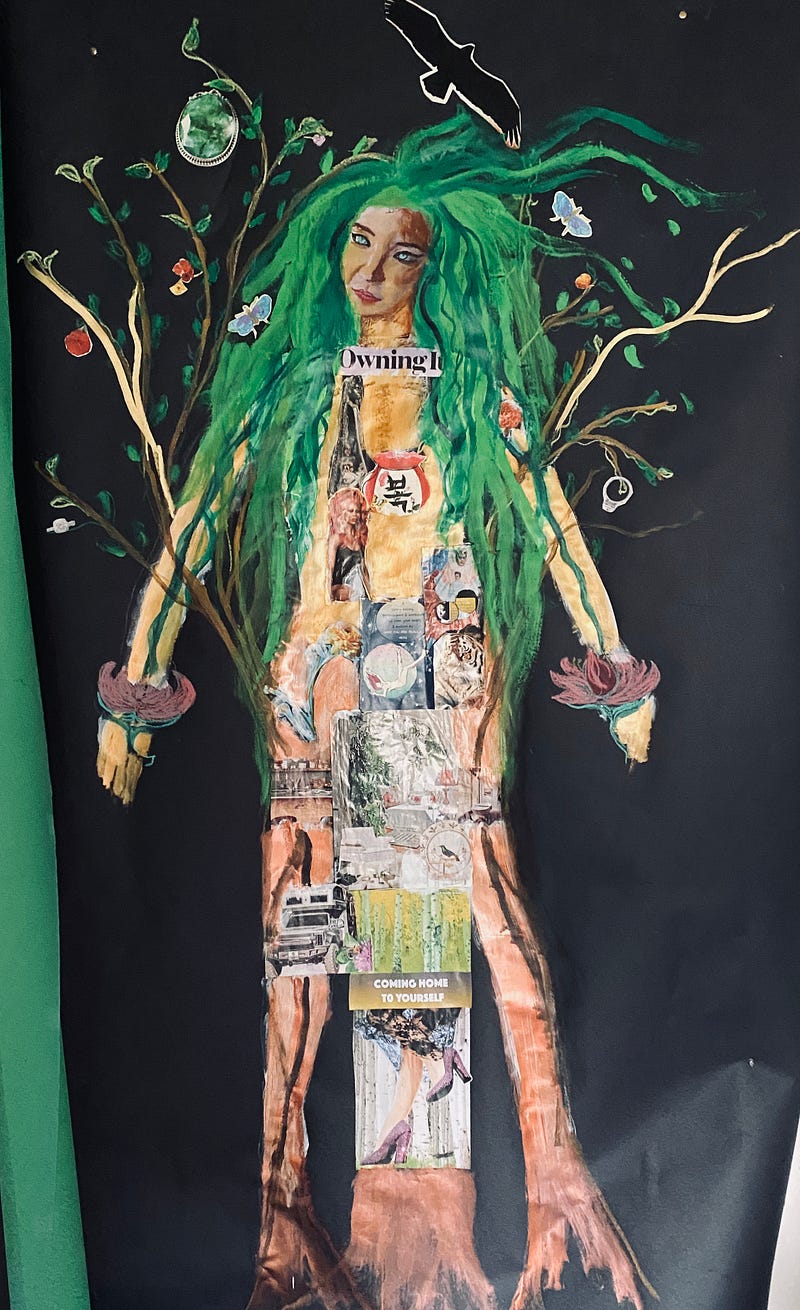
After I made the painting/collage of myself as a flowering tree, I didn’t know what to do with the haunting cut-out full of white faces.
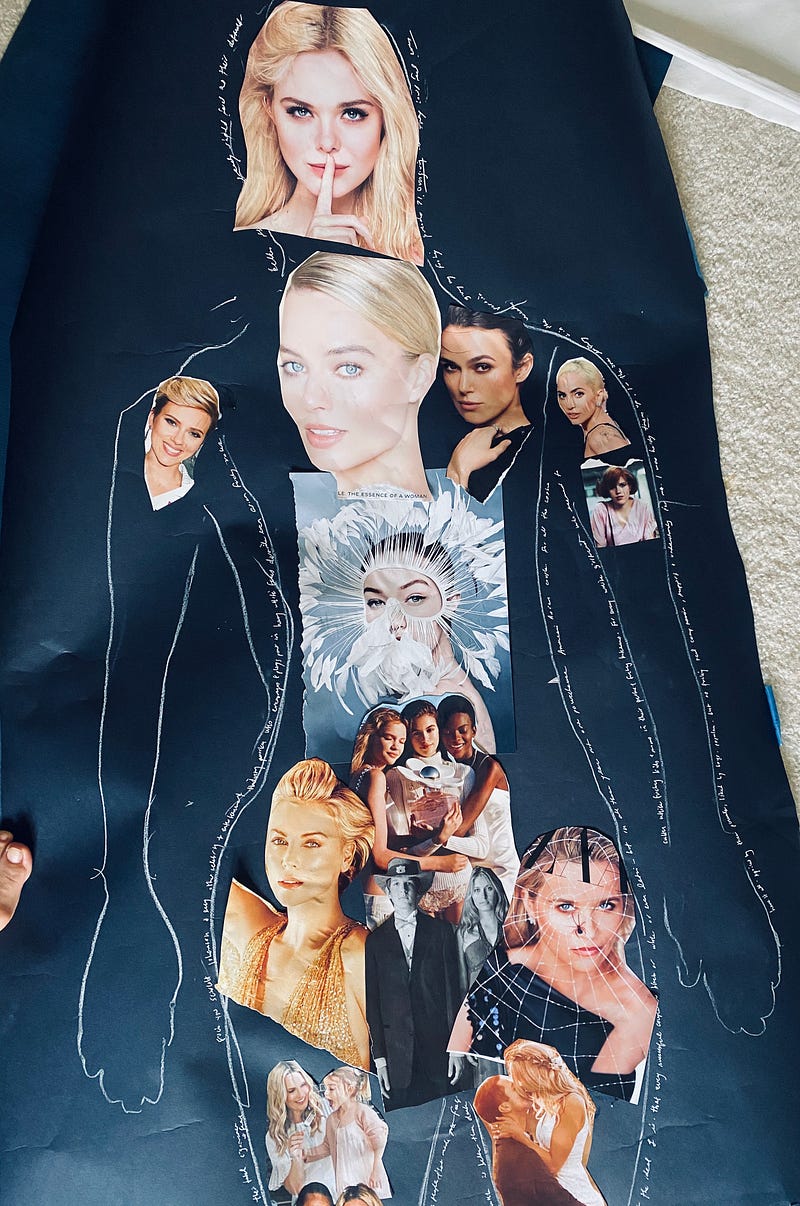
I had originally thought I would put pictures of myself or my ancestors on top of the white celebrities.
But that didn’t feel quite right. I’d always had my parents and relatives as mirrors for my Korean body- and yet that had never been enough to make me feel OK about what I was.
My instinct was to destroy the image. Every time I looked at it, I felt repulsed.
But, I’m always going to be surrounded by Western ideals of beauty in the media. Destroying this image is never going to make that go away.
I had to learn how to be in a different relationship with the images and standards I’m presented with.
Over time, as I continued to see this big cut-out, draped over pieces of furniture, laying on the floor (I never hung it up- it didn’t seem worthy of that), I started to feel differently about the figure.
It was like a vulnerable paper doll, easily bent and ripped- that was unwanted, always in the way, without a proper home.
And I realized this figure represented a part of myself that I didn’t respect. That I felt disgusted by. The part of me that is insecure and still sees myself as less than the societal norm I was raised within.
I wondered if I should make some kind of performance art where I’m hugging the paper doll, or dancing with it.
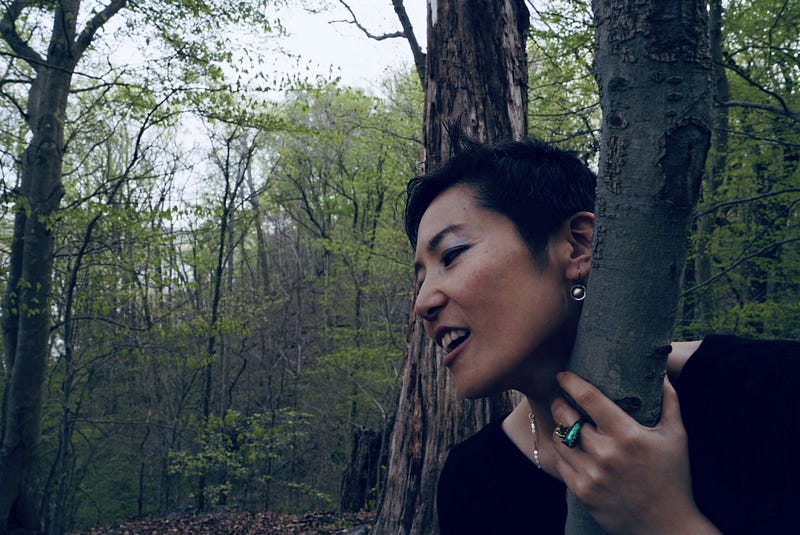
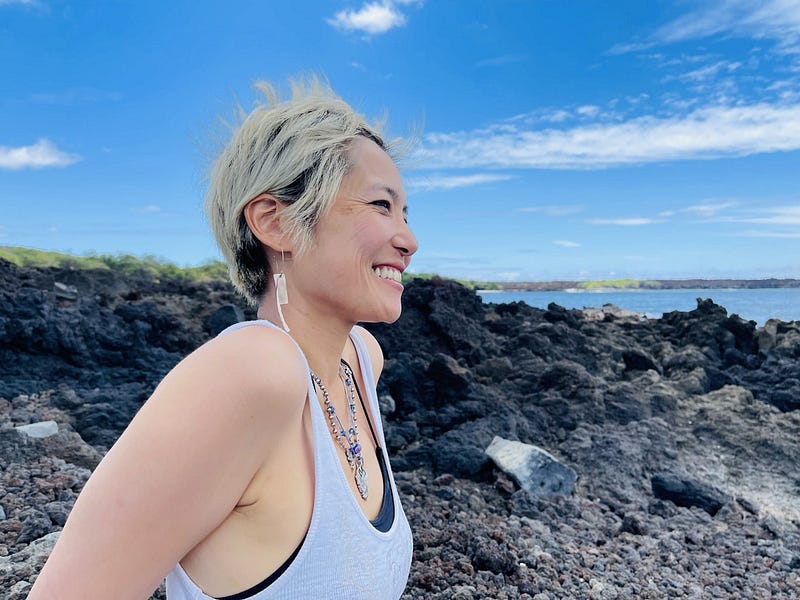
Instead, one day I decided to cut my hair off. As part of a ritual to let go of the self disapproval that I’ve been carrying all my life.
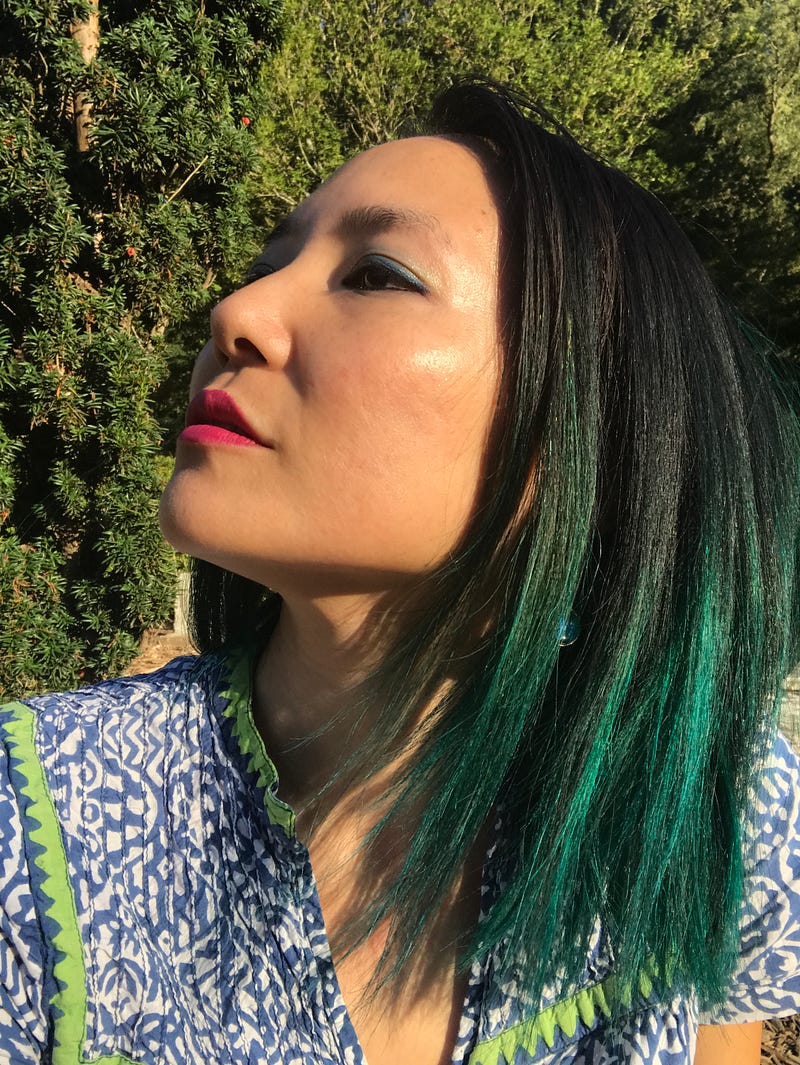
In Korea, hair was traditionally seen as a part of your history and ancestry, something precious that was to be preserved.
So deliberately cutting my hair to let go of the past- not just for aesthetic purposes as I would usually do- felt significant to me.
For it was clear that the distorted way I saw myself was not only a result of racism, but also of the way women have not been valued.
And beyond that, the way humanity has not valued the realm of the divine feminine- the physical body, the unknown, and the infinite diversity of life.
I was nervous to cut my hair so short, but I’d had short hair before and I didn’t think it would feel much different. I thought it would feel liberating.
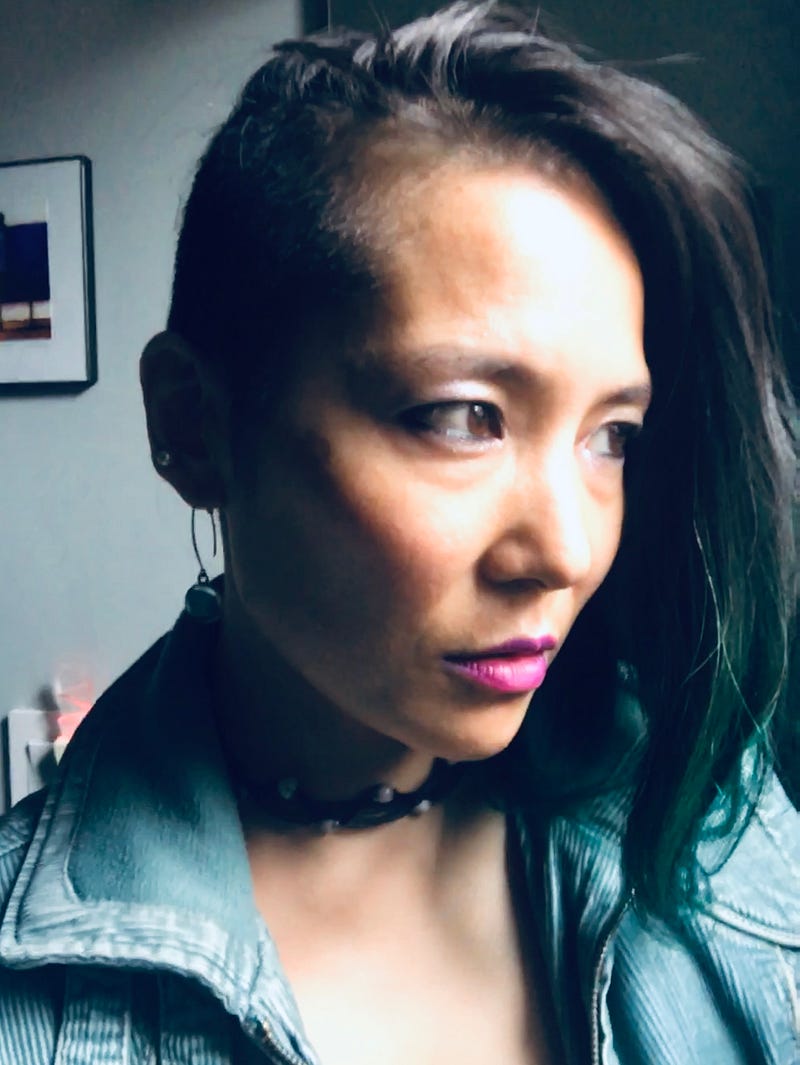
Instead, I was surprised to find that more insecurity and self disapproval came up! I suddenly did not feel “feminine” enough. I felt compelled to put on a little make-up or jewelry so I would feel more attractive.
Even though I’ve gone through times in my life where I wished I was more skinny, or that I didn’t “look Korean,” or that I was taller or had bigger boobs… I’d never suffered from not feeling “feminine enough.”
It didn’t feel like any accident that this act- revealing more of myself, being more naked- would bring up yet another layer of not being enough.
I performed a ritual in which I burned the hair I’d cut off, along with the pieces of paper that made up the white-face-collage-paper doll, with roses that were given to me as a gift of love- from one who truly sees me.
I used this ash to complete a painting I’d begun 13 years ago. I’d started the painting as a portrait of myself, with the adornments of a bodhisattva.
I was hoping the image of me as a selfless and compassionate spiritual warrior would help me embody these traits. But, it felt flat and I never finished it.
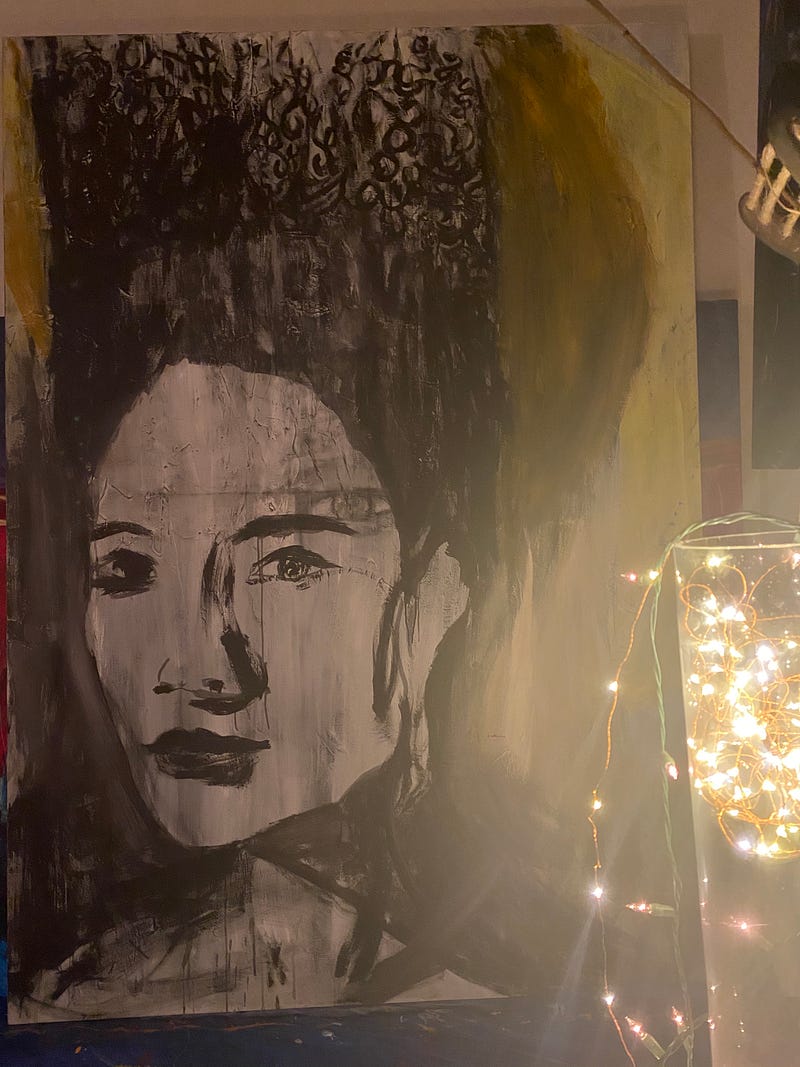
Well, last year, I was called to add another layer to the painting. I wanted to show both the dark and the light aspects of myself.
Yes, there is a part of me that is generous and divine and compassionate. And there is also the aspects that are selfish and scared and small.
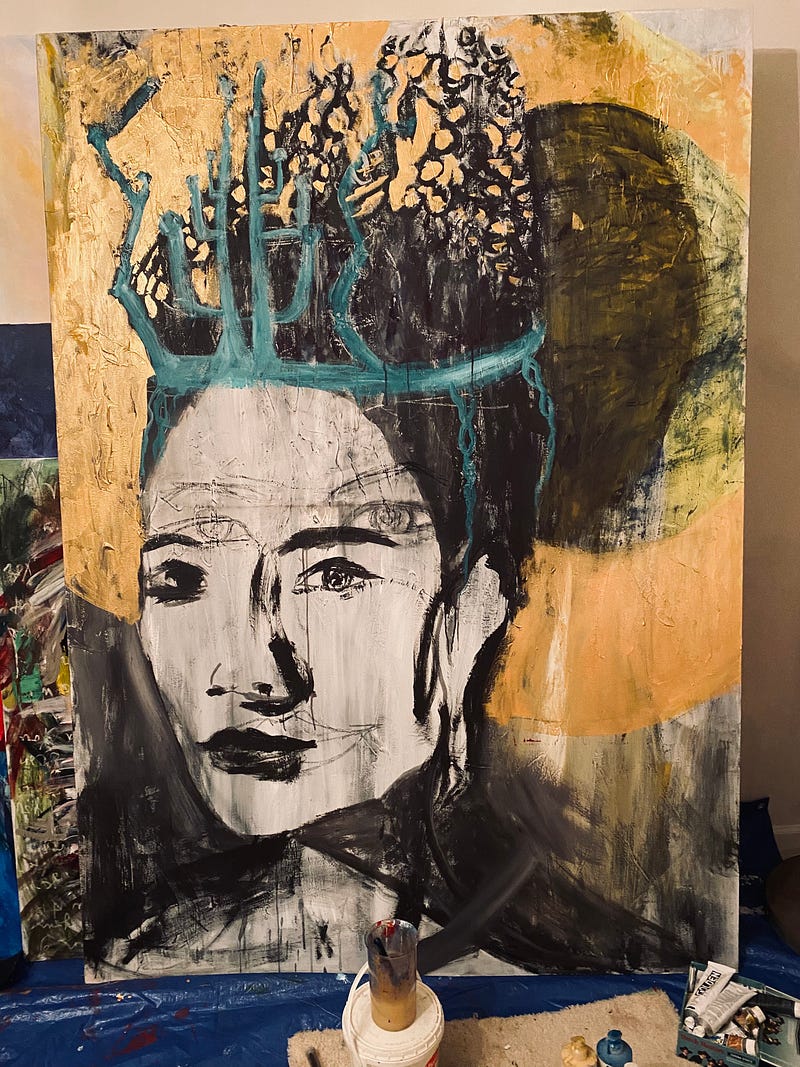
I decided I wanted the figure’s face to embody both- to be a symbol of the dark and light, the yin and yang within, in harmony. To reveal the beauty of both, together.
Like the sun and the moon, rather than competing for light, or overshadowing one another- to support each other to shine even more brightly together than either could alone.
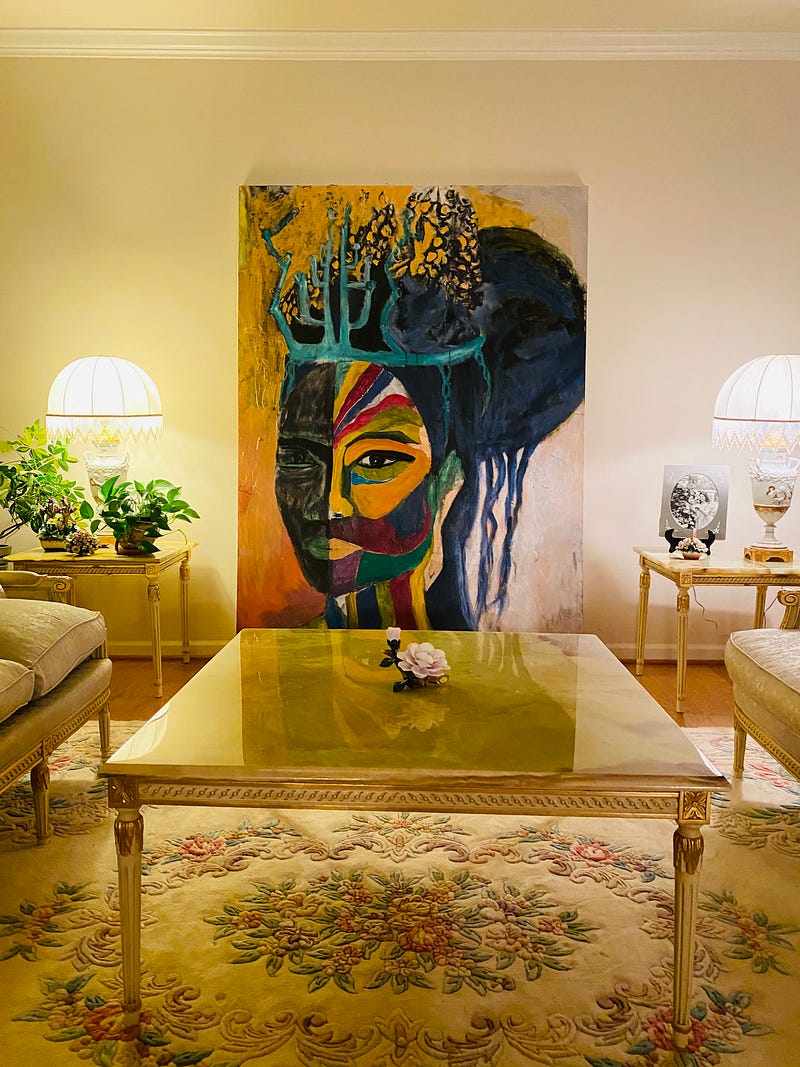
The ash from the racial imprinting piece and my old hair made up the dark side of the face… the soil, the history, the suffering from which the light one shines forth.
It also went into the figure’s hair — symbol for life, memory, and ancestry.
The painting is called “The Sun and the Moon Making Love.”
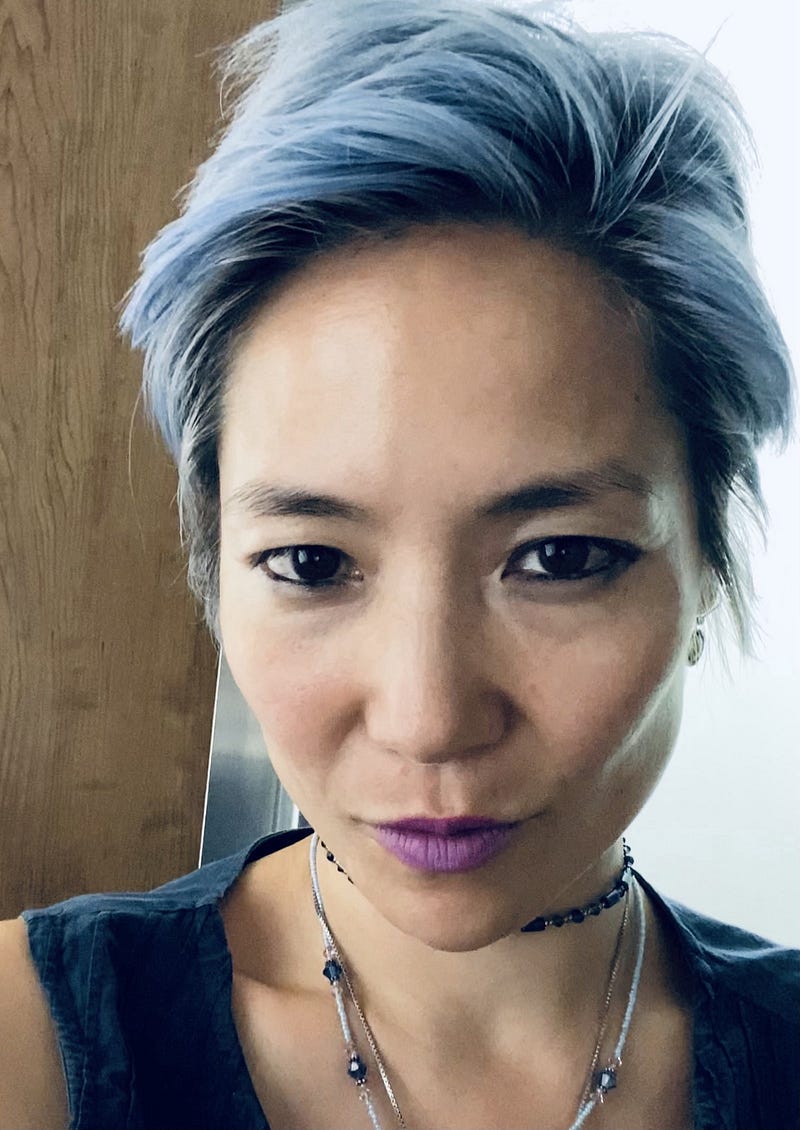
After a little while, I started to love the short hair.
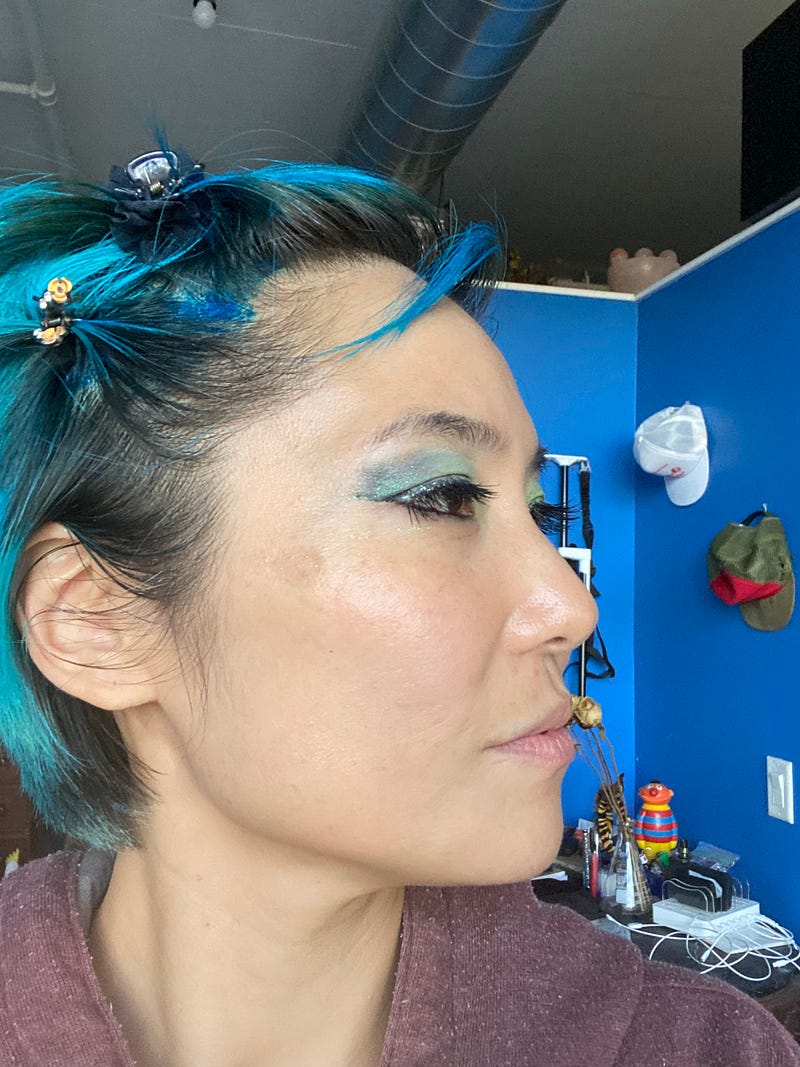
And as you can see, I’ve been having fun playing as my hair grows out :)
Click here to see previous part of journey. Or to go the beginning of the journey.