avatarLucianoSphere (Luciano Abriata, PhD)

Free AI web copilot to create summaries, insights and extended knowledge, download it at here

3178

Abstract

<img src="https://cdn-images-1.readmedium.com/v2/resize:fit:800/1*h65UhbcUtRoqLl0X7d-AKQ.jpeg"><figcaption>This one is neither too simple nor too complex. And it combines orange and red colors. Photo by author Luciano Abriata.</figcaption></figure><p id="7ecb">And this one just doesn’t decide to which group it belongs. A complex pattern seems to want to emerge above a simple 5-petal arrangement:</p><figure id="e573"><img src="https://cdn-images-1.readmedium.com/v2/resize:fit:800/1*q-cgCM1Hm2Zva_jUh9mY1g.jpeg"><figcaption></figcaption></figure><p id="ccdb">We last get back to the simplest pattern, but in yellow color:</p><figure id="edfa"><img src="https://cdn-images-1.readmedium.com/v2/resize:fit:800/1*0vA4zs4q8wl5leWIbuxVGA.png"><figcaption>Back to the simplest pattern, but in yellow. Photo by author Luciano Abriata.</figcaption></figure><p id="9eab">Those were photos of individual flowers, but this is how they look in the groups they form:</p><figure id="8bb4"><img src="https://cdn-images-1.readmedium.com/v2/resize:fit:800/1*XrWr3jW-N48g6oi6by-CBA.jpeg"><figcaption>Another self-arranged set of various flowers from plants growing in of the elongated pots that I showed with the germinating seeds. Photo by author Luciano Abriata.</figcaption></figure><figure id="cedb"><img src="https://cdn-images-1.readmedium.com/v2/resize:fit:800/1*_e-vCQCc7LiU82tfaQch6g.png"><figcaption>A self-arranged set of various flowers from plants growing densely packed in the same small pot.</figcaption></figure><figure id="cd6f"><img src="https://cdn-images-1.readmedium.com/v2/resize:fit:800/1*zw5TUK_wxWhamPuYxv6O3g.jpeg"><figcaption>One of the pots I showed you above with the germinating seeds in the elongated pots. Of course I removed many plants from them, to give the roots space to grow. And the other elongated pot, well, I gave that one to a friend. Photo by author Luciano Abriata.</figcaption></figure><p id="71fd">I close this story with a collage that my phone made automatically:</p><figure id="ee8e"><img src="https://cdn-images-1.readmedium.com/v2/resize:fit:800/1*zAsheMBlKHroZW9KZ7spQw.png"><figcaption></figcaption></figure><p id="2a4f">Tell me in the comments what’s your favorite kind. Simple floral structure? Complex? Yellow? Red? Orange? Mottled?</p><p id="df05">And if you like photos of flowers, check my other publications. Some highlights of special interest here:</p><div id="b69b" class="link-block"> <a href="https://readmedium.com/a-summer-spotting-the-wild-orchids-of-switzerland-406ded80eccf"> <div> <div> <h2>A summer spotting the wild orchids of Switzerland</h2> <div><h3>PART OF MY SERIES Natural wonders of Switzerland’s canton Vaud</h3></div> <div><p>medium.com</p></div> </div> <div> <div style="background-image: url(https://miro.readmedium.com/v2/resize:fit:320/1*y7RoCwXwu3tNfiLkwPKj3A.jpeg)"></div> </div> </div> </a> </div><div id="8370" class="link-block"> <a href="https://readmedium.com/a-corner-of-jungle-and-wildflowers-on-my-balcony-cc92f0f68

Options

ca8"> <div> <div> <h2>A corner of jungle and wildflowers in my balcony</h2> <div><h3>My balcony has full sunshine all day long, which allows all kinds of local weeds and wildflowers to grow vigorously in…</h3></div> <div><p>medium.com</p></div> </div> <div> <div style="background-image: url(https://miro.readmedium.com/v2/resize:fit:320/1*W6Lp3vZp_eOGii-s_t_s4w.jpeg)"></div> </div> </div> </a> </div><div id="f99b" class="link-block"> <a href="https://readmedium.com/la-rambertia-a-swiss-alpine-garden-at-2000-m-a-s-l-bonus-57705edfa229"> <div> <div> <h2>La Rambertia, a Swiss alpine garden at 2000 m.a.s.l. + Bonus</h2> <div><h3>PART OF MY SERIES Natural wonders of Switzerland’s canton Vaud</h3></div> <div><p>medium.com</p></div> </div> <div> <div style="background-image: url(https://miro.readmedium.com/v2/resize:fit:320/1*AzzXIJ71ncL8oykbCKNBuw.png)"></div> </div> </div> </a> </div><div id="ad14" class="link-block"> <a href="https://readmedium.com/flower-spotting-hike-up-from-montreux-to-rochers-de-naye-part-1-23f51b5e8d2f"> <div> <div> <h2>Flower-spotting hike up from Montreux to Rochers-de-Naye. Part 1.</h2> <div><h3>PART OF MY SERIES Natural wonders of Switzerland’s canton Vaud</h3></div> <div><p>medium.com</p></div> </div> <div> <div style="background-image: url(https://miro.readmedium.com/v2/resize:fit:320/1*22Bpm7ajZKZvJV14crvF8Q.png)"></div> </div> </div> </a> </div><div id="5a8d" class="link-block"> <a href="https://readmedium.com/flower-spotting-hike-up-from-montreux-to-rochers-de-naye-part-2-d99f6e0259d3"> <div> <div> <h2>Flower-spotting hike up from Montreux to Rochers-de-Naye. Part 2.</h2> <div><h3>PART OF MY SERIES Natural wonders of Switzerland’s canton Vaud</h3></div> <div><p>medium.com</p></div> </div> <div> <div style="background-image: url(https://miro.readmedium.com/v2/resize:fit:320/1*22Bpm7ajZKZvJV14crvF8Q.png)"></div> </div> </div> </a> </div><p id="fb04"><i>I am a nature, science, technology, programming, and DIY enthusiast. Biotechnologist and chemist, in the wet lab and in computers. I write about everything that lies within my broad sphere of interests. Check out my <a href="https://lucianosphere.medium.com/lists">lists</a> for more stories. <a href="https://lucianosphere.medium.com/membership">Become a Medium member</a> to access all stories by me and other writers, and <a href="https://lucianosphere.medium.com/subscribe">subscribe to get my new stories</a> by email (original affiliate links of the platform).</i></p></article></body>

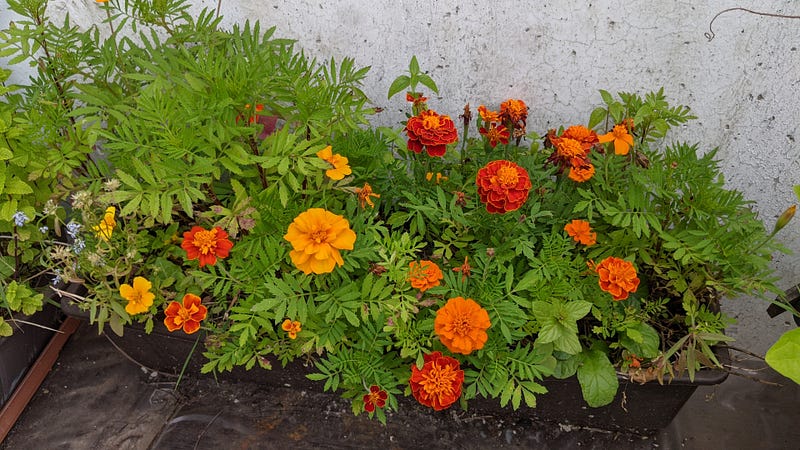
Various small Marigolds growing together in a single pot. Photo by author Luciano Abriata.

The summer when small marigolds took over my balcony

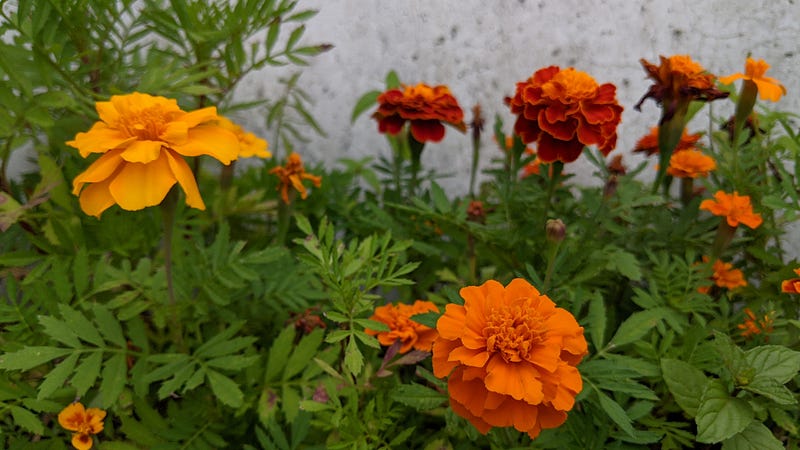
Marigolds (various species of the Tagetes genus) reproduce very easily, grow quite well in both sun and shade, and are quite resilient to both moist and dry weather. That’s how last summer I got my balcony garden taken over by the smallest and simplest yet beautiful kinds of Marigolds. Check the shots I made to the different colors and patterns that bloomed.

Over the years I developed the habit of taking seeds from dying flowers everywhere. Including Marigold seeds. I then plant the mixtures of seeds (often stored just in my pockets, hence fully mixed) and then enjoy free flowers throughout the full season, with the added surprise that I often don’t know exactly what I will get.

Last year I apparently went too far with Marigolds. I got literally hundreds of plants, growing densely packed in most of my pots… These are just 2 of these pots, where you can appreciate the large number of germinating seeds:
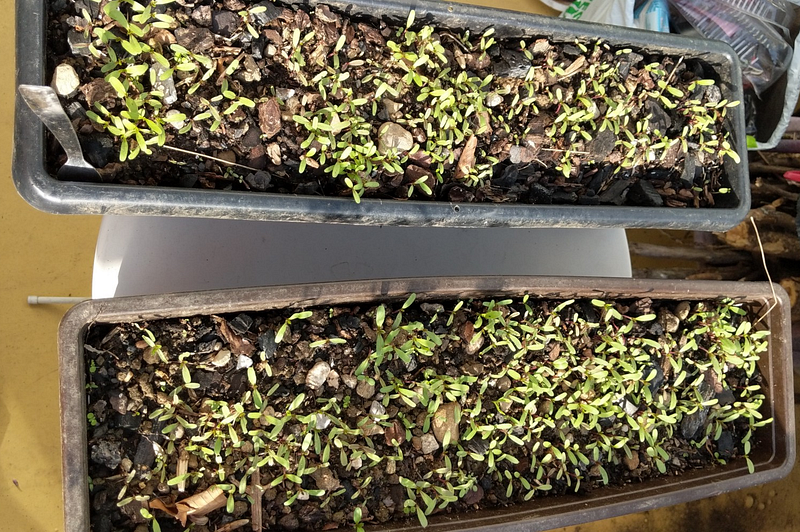
Two of the several pots where I planted Marigold seeds during the pandemic. Each of these pots is around 50 cm long x 10 cm wide. Photo by author Luciano Abriata.

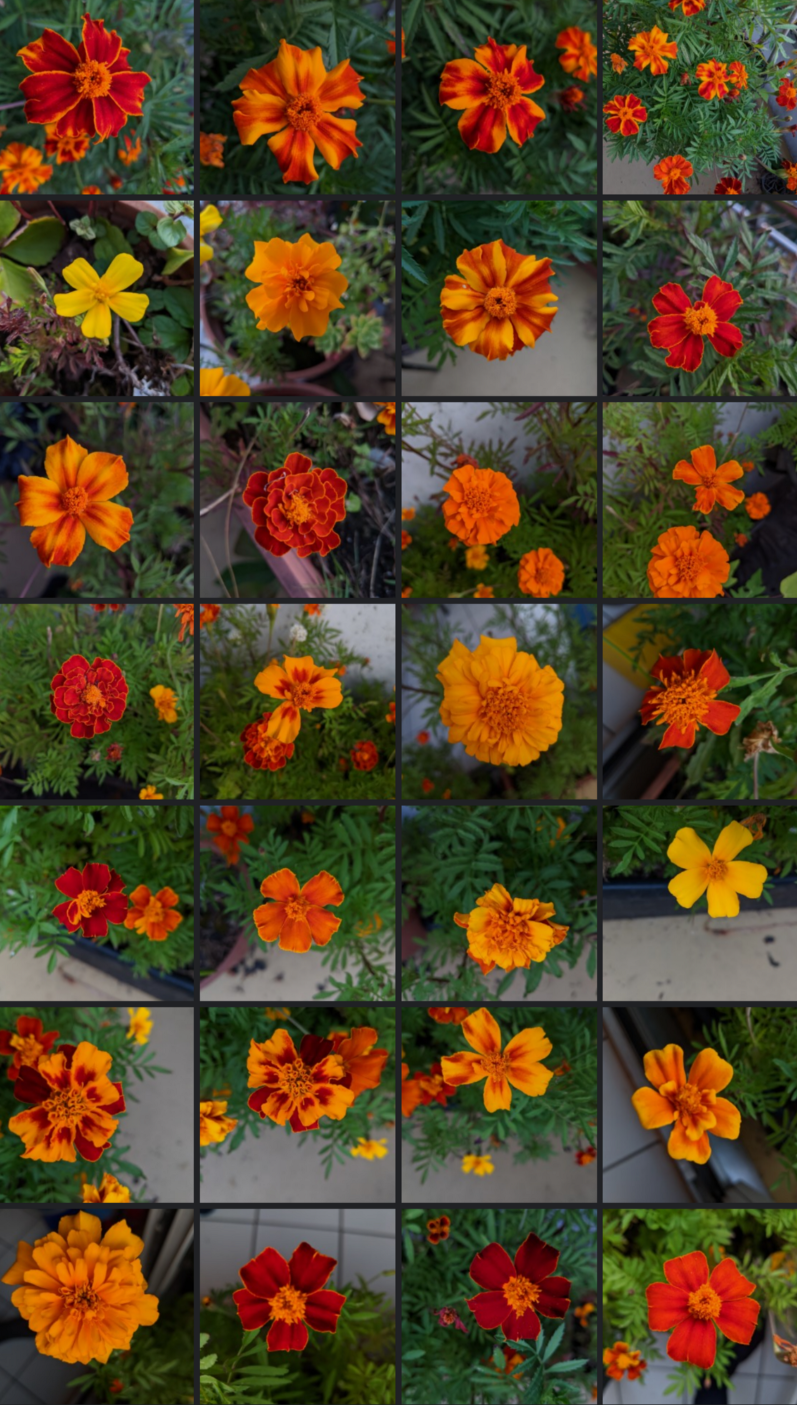
This would have been a disaster for any serious gardener, but it was a pleasure for me. The pleasure of enjoying long-lasting, easy-to-take-care-of flowers of all colors ranging from yellow to orange, red, and brown, in various shapes and patterns. I took tens of photos of these flowers from May until November when the last plants died out. In fact, I collected so many photos that my phone made an automated collage that I also share at the end of the story.

Starting with the simplest and most common color:
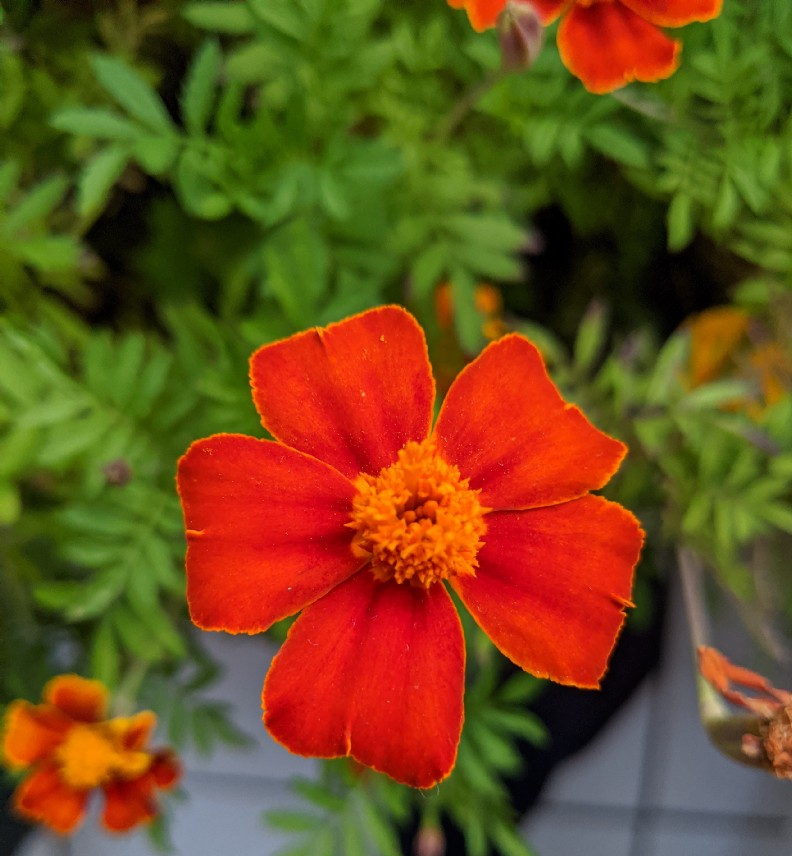
Probably the most classical 5-petal Marigold of most standard color. Yet beautiful! Photo by author Luciano Abriata.

And then a more complex structure using more petals of the same color:
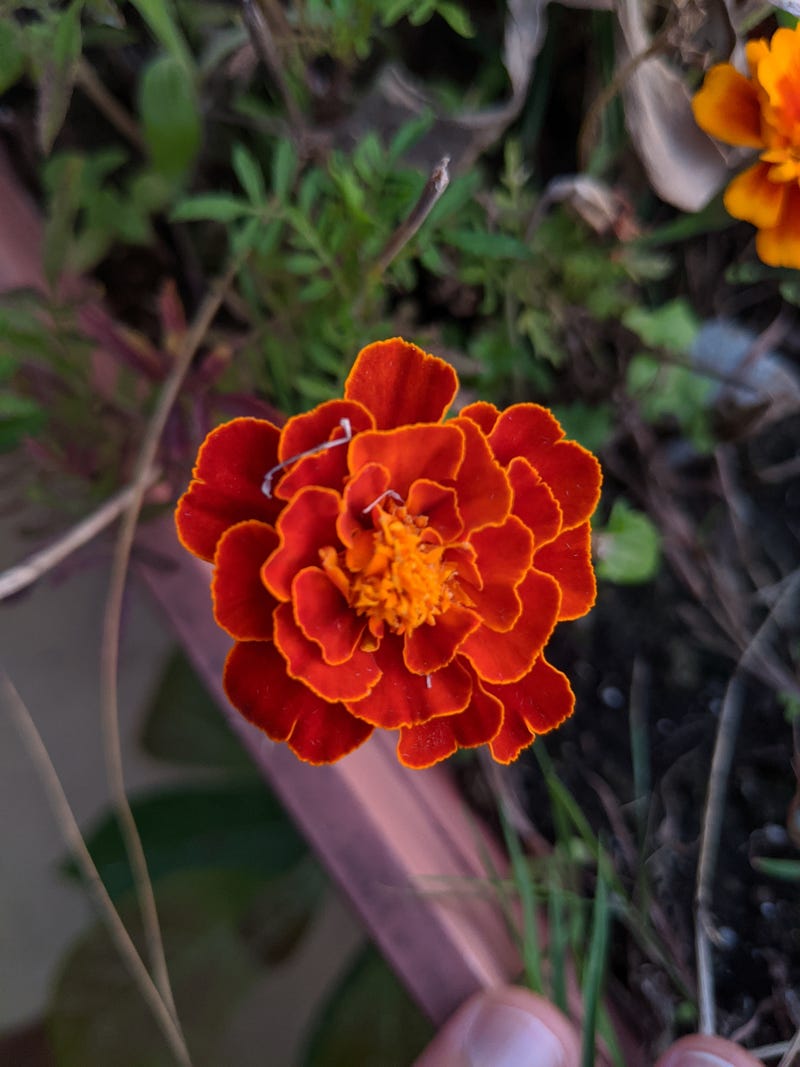
Same color as above, but with a more complex arrangement of petals. Photo by author Luciano Abriata.

Then keeping the last floral structure but changing color to orange:
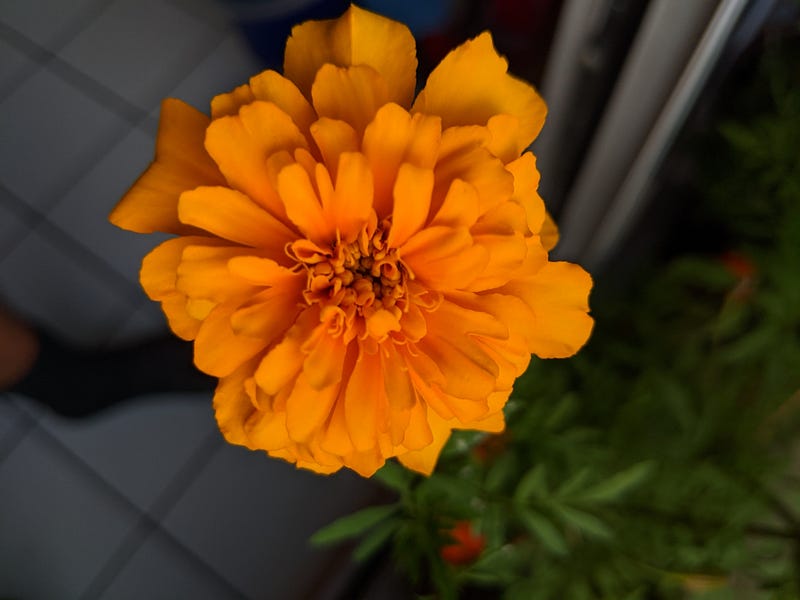
The same complex arrangement as above, but in orange color. Photo by author Luciano Abriata.

Now this one seems to have combined the orange and red colors of the flowers above:
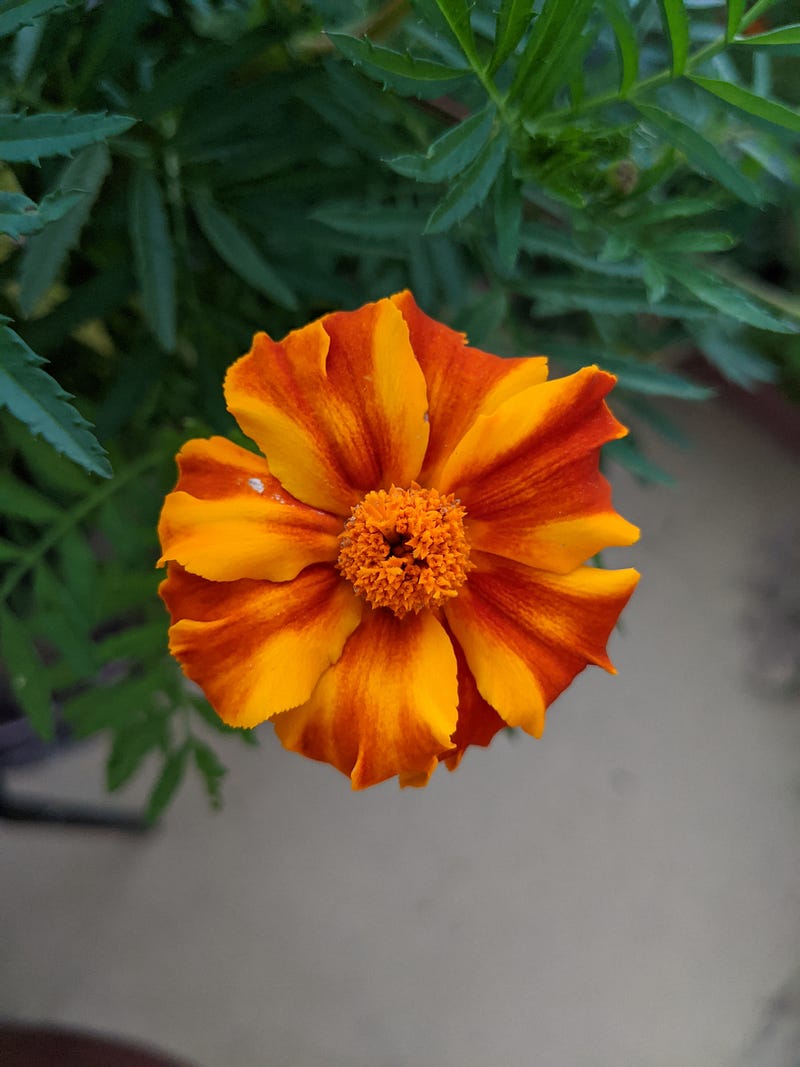
This one is neither too simple nor too complex. And it combines orange and red colors. Photo by author Luciano Abriata.

And this one just doesn’t decide to which group it belongs. A complex pattern seems to want to emerge above a simple 5-petal arrangement:
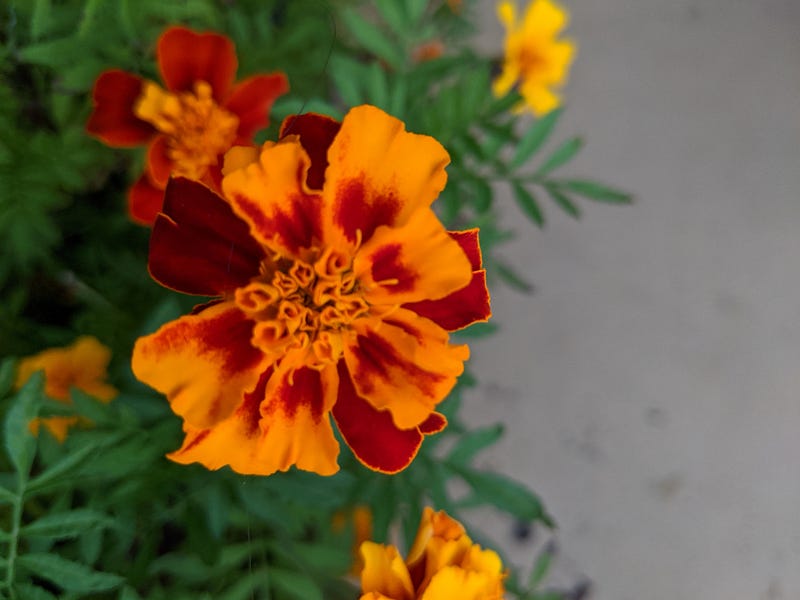
We last get back to the simplest pattern, but in yellow color:
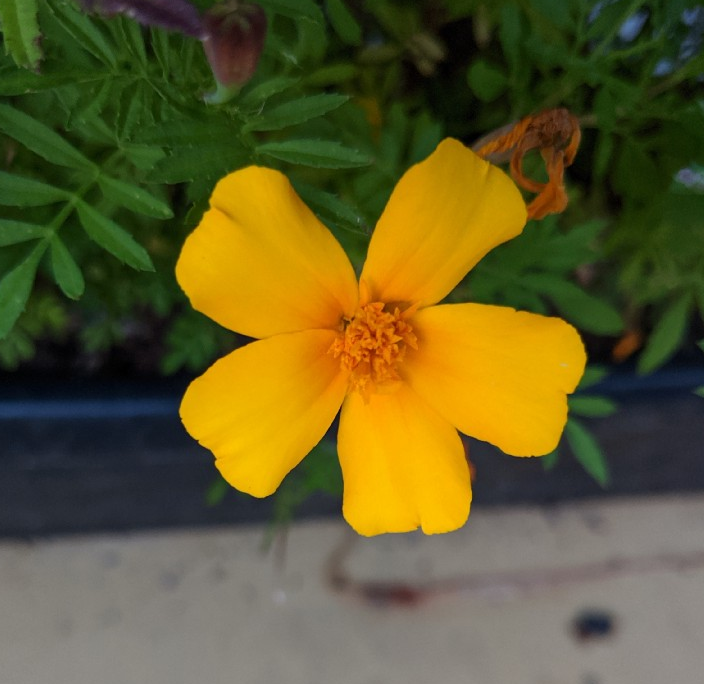
Back to the simplest pattern, but in yellow. Photo by author Luciano Abriata.

Those were photos of individual flowers, but this is how they look in the groups they form:
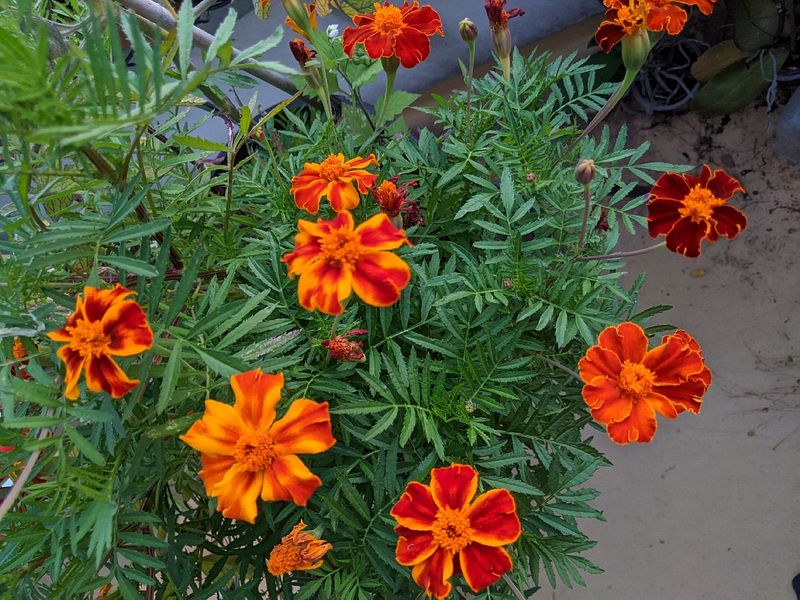
Another self-arranged set of various flowers from plants growing in of the elongated pots that I showed with the germinating seeds. Photo by author Luciano Abriata.
A self-arranged set of various flowers from plants growing densely packed in the same small pot.
One of the pots I showed you above with the germinating seeds in the elongated pots. Of course I removed many plants from them, to give the roots space to grow. And the other elongated pot, well, I gave that one to a friend. Photo by author Luciano Abriata.

I close this story with a collage that my phone made automatically:
Tell me in the comments what’s your favorite kind. Simple floral structure? Complex? Yellow? Red? Orange? Mottled?

And if you like photos of flowers, check my other publications. Some highlights of special interest here:

I am a nature, science, technology, programming, and DIY enthusiast. Biotechnologist and chemist, in the wet lab and in computers. I write about everything that lies within my broad sphere of interests. Check out my lists for more stories. Become a Medium member to access all stories by me and other writers, and subscribe to get my new stories by email (original affiliate links of the platform).

Flowers
Gardening
Nature
Photography
Colors
Recommended from ReadMedium