
The Stoic Universe
There’s no “how to live” without a “why”
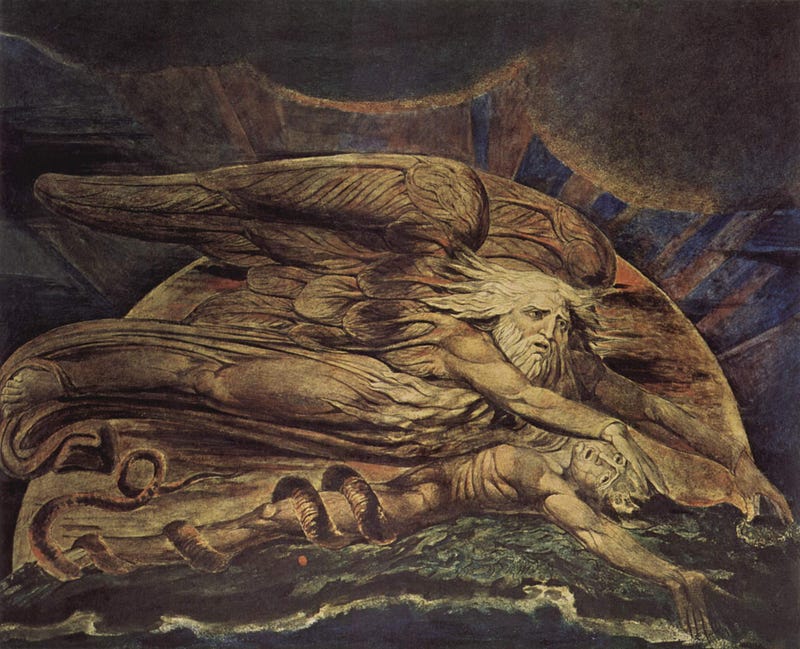
At one moment the universe we inhabit is beautiful, ordered and nurturing, at another moment it can be coldly indifferent, even menacing.
For the Stoics the universe (Kosmos) was both at the same time: perfectly ordered and imbued with divinity, yet indifferent to our mortal wellbeing. This perculiar view of our world profoundly influenced the Stoic idea of living the good life.
Stoic ethics are a path well-trodden. Given the rise of popularity of the ancient philosophy in recent years, many people are aware of the principles of Stoic ethics.
The most basic tenet of Stoic ethics is: you cannot control what happens to you, but you can control your response. It is through Roman writers like Epictetus, Seneca and Marcus Aurelius that we have come to know these principles. Our knowledge of Stoic ethics is extensive. What is lesser known is why the Stoics held these ideas.
The lesser known aspects are, however, just as fundamental, since they form the basis of Stoic thought. The primary texts of Stoicism, written in Greece hundreds of years before the Roman Stoics mentioned above, are lost. It’s for this reason that the most famous Stoics of ancient times are lesser known in today’s world.
Chrysippus of Soli is perhaps the greatest of the Stoic philosophers. He was head of the school in ancient Athens in around 230 B.C.E. Building on the Stoic founders before him (Zeno and Cleanthes), Chrysippus is believed to have written more than 750 works that definitively established the Stoic system of thought. We only know his ideas through second hand accounts, but enough to get a good idea of the fundamentals.
There are three theoretical aspects of Stoic philosophy: ethics, physics and logic. These aspects of thought cover how to live (ethics) based on an understanding (logic) of our place in existence (physics). The Stoics thought it pointless to study one and not the others, since these aspects of Stoic philosophy are interdependent.
Chrysippus used a rather beautiful metaphor of a garden. The fruits of the garden are the ethics of Stoicism, the means by which we can lead a good life. To get good fruit, our soil must be rich and fertile. Stoic physics — the understanding of the universe’s purpose and workings — is the soil.
The garden must then be protected from invasive weeds, these are damaging influences grown from poorly maintained land that threaten our fruits. The fence protecting the garden is Stoic logic, which applies a defensive rigor to all arguments.
Physics is the basis of Stoic ethics, and logic gives all Stoic thought an internal intergrity. These aspects of Stoic philosophy were the assumptions that the well-known Roman writers had in mind as they expounded upon Stoic ethics.
When explaining the Stoic universe it’s perhaps best to start where logic and physics intersect: universal causality, or what we commonly refer to as cause-and-effect.
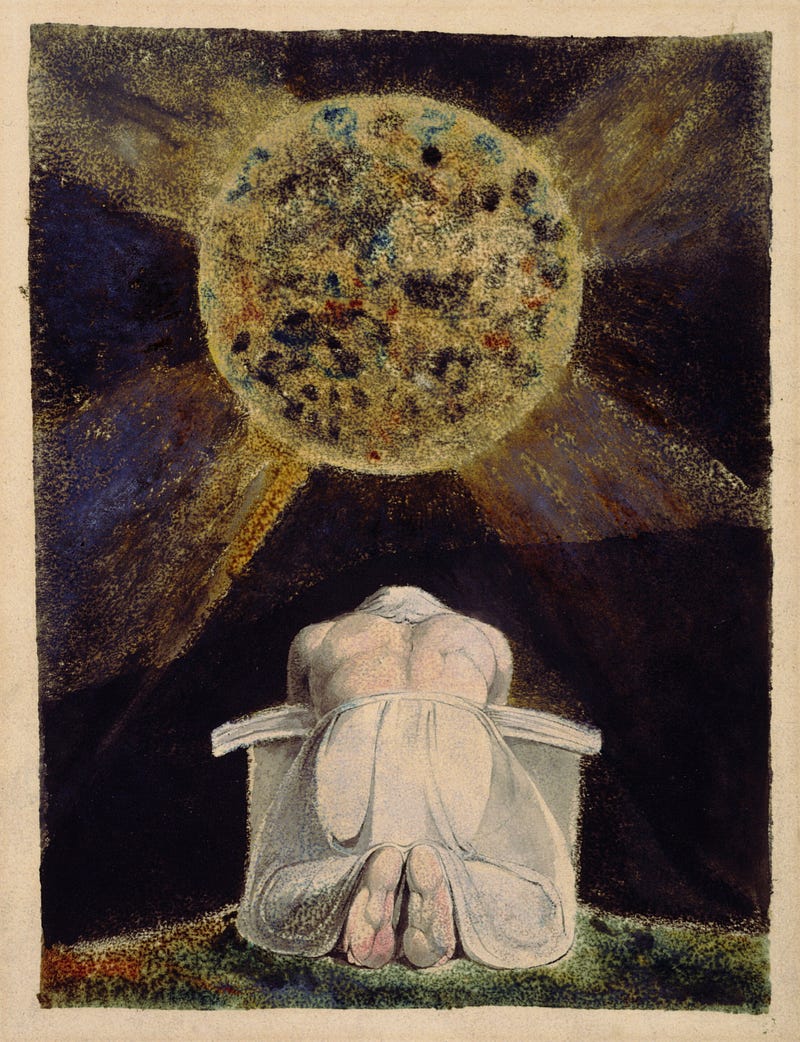
A Living Cosmos
Universal causality is the principle that everything has a physical cause. According to the Stoics, Everything that happens in the universe adheres to natural processes that we observe. For the most part, there is no divine intervention or supernatural miracles, nature follows laws that can be understandable through reason.
But the Stoics were not anything like the atheists or agnostics of today. They believed passionately in God. Instead of believing in the capricious gods that intervene in people’s lives and making miracles happen, they subscribed to the idea of Pantheism.
Pantheism is the notion that God — or Zeus, as the Stoics would call the king of the gods — is in everything.
Greek and Roman cultures were polytheistic — they believed in many gods, and the Stoics also write of “the gods” in plural. The gods, such as Hermes, Athena and Dionysus, were divine and immortal but Zeus has a special place as the generator of all reality. The gods do the bidding of Zeus.
Everything that happens is set in motion and organized by the Logos — a divine logic (or reason). This logic is carried by the breath — pneuma — of Zeus. The cosmos, then, is a single and whole living entity of which all things — people, stars, planets, clouds, deserts and oceans — are an intrinsic part.
The cosmos is composed of two things: matter — the inert “stuff” all around us; and pneuma — the energy that animates matter to give us universal causality.
Think of the Logos as the words, and pneuma as the breath that carries those words. Pneuma pervades all things, it is what has set all things in motion and keeps them in motion. The two fundamental substances — matter and pneuma — make up the four traditional elements. Matter is divided into earth and water; pneuma is divided into air (motion) and fire (heat).
Without pneuma, matter would not have the heat or movement to give it form. Pneuma shapes matter by giving things a unity. This is as true for inanimate objects like mountains and chairs as it is for people and animals. The pneuma within things gives them shape and cohesion, otherwise the world would be a chaotic soup of matter.
Living things — from plants to people — have a higher amount of fire in their mixture of pneuma. With more pneuma, animals have souls that endow it with movement and thought. Human beings have more fire in their soul and are uniquely endowed with rationality. Reason therefore makes humans both distinct from all other animals and capable of being in communion with Zeus.
A Perfect World
If God pervades all things, and all things are governed by God’s divine Logos, then the cosmos is perfect. The cosmos works according to providence — the divine will of God. This is why, in Stoic ethics, events are out of our control.
Events are directed by the providence of the divine Logos. The fragment of God’s pneuma that makes up our soul allows us to contemplate and understand the world, but not to change the course of events. Marcus wrote:
“if [the gods] were supremely good and supremely just […] if it is so, they would not have let any part of their arrangement of the world escape them through neglect of justice or reason.”
The argument then, is that the universe is arranged for the best. All that happens — no matter how awful, no matter how seemingly unjust — happens for a greater good that the human mind cannot understand (since the human mind is but a fragment).
It’s the Stoic equivalent of “God works in mysterious ways” or “all is for the best in the best possible world” arguments, which Voltaire, the Enlightenment writer, bitterly satirised in his 1759 novella Candide. In a world where earthquakes and storms kill millions of people, it’s only possible to justify a providence that is indifferent to physical suffering.
That is where Stoic ethics come into play. Rather than arguing that God is looking out for us if we’re nice to God, the Stoics argue that physical harm and bad luck needn’t worry us.
Our bodies are merely matter, God is within the immaterial part of us, the pneuma. God would not harm itself and would not therefore harm our true selves. That’s why Stoicism is so strongly associated with resilience in the face of pain and equinimity in the face of bad luck and uncertainty. It’s where we get the lower-case adjective “stoic” from.
For Epictetus, the physical world is “none of our affair”. His teaching (written here as a dialogue) makes an inventory of exactly what is “not our affair” and its extreme reductiveness would be surprising (shocking, even) to the modern reader:
“A man only loses what he has. ‘I lost my clothes.’ Yes, because you had clothes. […] Loss and sorrow are in only in respect to things we own. ‘But the tyrant will chain…’ What will he chain? Your leg. ‘He will chop off…’ What? Your head. What he will never chain or chop off is your integrity. That’s the reason behind the ancient advice to ‘know thyself’.”
This is the junction station of the Stoic theory of reality (what philosophers call cosmology) and Stoic ethics. We live in a material world guided by a logic that is not known to us and our bodies are part of that material world.
But human beings demonstrably — unlike any other animal — have reason: the ability to discern between right and wrong in their actions. This reason within us allows us to understand and make the best use of our predicament. Matter — which includes our body and brain — is not “us”. It is inert and meaningless without our soul, the pneuma, that animates us.
Our reason, the Stoics claim, demonstrates that our possessions, our reputation, our friends and family, and ultimately our body, is not in the power of our rational self.
What is in the power of our rational self are our impulses, desires and aversions. What good does it do then, to worry about what we cannot control? We should instead act according to what nature has uniquely endowed us with and cultivate the reason within us.
Modern Stoicism: Providence or Atoms?
The Stoics stood firmly on one side of a great philosophical debate in the ancient world. Expressed by Marcus in his Meditations: “Revisit the alternatives — providence or atoms.” Atoms here alludes to the purely materialistic theory of the world put forward by a rival school of philosophy, the Epicureans.
For the Epicureans there are only atoms and “void”. The atoms fall through an infinite void and collide and clump together, causing the universe to come into being. Everything in the universe, including the gods themselves and the human soul are made of atoms. It’s a surprisingly modern viewpoint.
The Stoics teach that we should conduct our ways “in accordance with nature”, that is, we should embrace the rational power that is uniquely endowed to us. Epicureans saw no order to nature, no real design as such, merely random combinations of billions of atoms so complex that it gave rise to life.
In many ways, Modern Stoics are more like Epicureans than ancient Stoics. Why? Firstly, the foundational belief in providence has been jettisoned. The Modern Stoicism movement adheres to the now widely-accepted notion that timeless — but indifferent — laws and not the logos of God governs causality. While the Epicurean cosmology seems primitive, it is perhaps the ancient Greek philosophy that best aligns with the modern scientific understanding of the universe.
Modern Stoics, like Epicureans, fall on the side of “atoms” when confronted with the question “atoms or providence?” For modern Stoics, just like most liberal humanists in the western world, the universe is indifferent. It is a mere “heap of matter”, as Lucretius, the Epicurean poet, described it.
Modern Stoicism is unlike its ancient predessesor in this enormous respect. The implications are profound, because what follows is an entirely different understanding of the cosmos and personhood.
Firstly, let’s look at personhood. The ancient Stoics reductively defined personhood as the ruling power of the mind that cannot be touched by the world. This is the fragment of Zeus within us. This is most strongly expressed by Epictetus, but also by Marcus who wrote: “things cannot touch the mind.”
In one of the witty dialogues he is famous for, Epictetus imagines speaking to Zeus about his personhood:
[Zeus] “This body does not belong to you, it is only cunningly constructed clay. And since I could not make this body yours, I have given you a portion of myself instead, the power of positive and negative impulse, of desire and aversion — the power, in other words, of making good use of impressions. If you take care of it and identify with it, you will never be blocked or frustrated; you won’t have to complain, and never will you need to blame or flatter anyone. Is that enough to satisfy you?”
[Epictetus] “It’s more than enough. Thank you.”
In the Modern Stoic universe the mind is “things”, not the distributed soul of God. Your “self” is made up of the same atoms that everything else is made of and subject to the same laws of nature as everything else. This is not unlike Epicureanism. Epictetus takes the opposite view to an extreme. You can literally have your head cut off yet not lose the “integrity” of your self.
In Modern Stoicism, the cosmos is indifferent. It is not an organism, a whole of which we are an intrinsic part. This presents a major shift from the ancient Stoic idea that virtue follows from “acting in accordance with nature.”
In a purely material world as atheist-materialists imagine it, there is no essence to humanity: humanity has no set place in the grand scheme of things. Earthquakes and draughts that have caused death and misery to millions of people have no reason to the Modern Stoic, they are the random consequence of an unthinking causality.
“When we face the universe,” wrote Lawrence C. Becker, a Modern Stoic, “we confront its indifference to us and our own insignificance to it. It takes no apparent notice of us, has no role other than Extra for us to play, no aim for us to follow.”
This is starkly different from the thoughts of Marcus, who wrote, “By remembering then that I am a part of such a whole, I shall be content with everything that happens” (My emphasis). The problem for Modern Stoicism is that there’s no belief in “the whole”. There is just a multiplicity of stuff.
Modern Stoic ethics are not about adhering to divine logos. Living in “accodance with nature” is living by the will of God to the ancient Stoics since their Pantheistic idea of God and “nature” are one and the same thing. For the Modern Stoic it is living by an agreed notion of rationality that has practically the same ethical consequences.
In his How to be a Stoic, Massimo Pigliucci, a prominent Modern Stoic, points out moments of agnostic doubt in the writings of Marcus. The Emperor wrote: “But if there is a confusion without a governor, be content that in such a tempest you have yourself a certain ruling intelligence.”
There are a number of moments of speculation like this in Marcus’s writings that show the Emperor was content with the notion that even in a purely materialistic (or even godless) universe, the “ruling intelligence” within him could steer him to Stoic happiness.
Pigliucci sees this as Stoicism’s flexibility to be “ecumenical” — a broad church capable of housing a plethora of beliefs about the origin and nature of the universe but united around a shared understanding of the rational self.
Personally — and humbly — I am sceptical. Faith in the divine is intrinisic to the Stoic notion of selfhood to the extent that it seems a different species of thought entirely from Modern Stoicism.
The ancient Stoic contempt for matter, expressed so vividly in Marcus and Epictetus, would be contempt for the Modern Stoic self, which is matter.
This is where a fundamental incompatability arises between a philosphy intertwined with faith in God and a modern philosophy intertwined with a faith in science.
Sure, “reason” is intact, but is reason wholly selfsufficient? Delve deeper and you’ll find reason means different things as it’s put to different uses.
Like doing yoga without knowledge of scriptures, or practicing zen without any knowledge of Budhism, Modern Stoicism works theraputically, but it is a facsimile of its ancient predesessor. You can only wonder just how resilient a Stoic can be without the fortitude of faith. Stoicism is a way of life, not a way to cope.
Marcus wrote: “It is high time now for you to understand the universe of which you are a part, and the governor of that universe of which you constitute an emanation.”
The basis of Stoic thought lies in the intrinsic dignity of the human soul, significant and eternal in the grand scheme of the glittering universe.
Thank you for reading.
I’m writing a book. Sign up here to get early drafts and a free copy when it’s finished.
If you enjoyed this article, you may also enjoy my article on Marcus Aurelius and the Stoic practice he used to rise above it all:


