
The Small Things in Your Child’s Life Matter More Than You Know
Reflecting back I see the wisdom in paying attention to what is important to your child
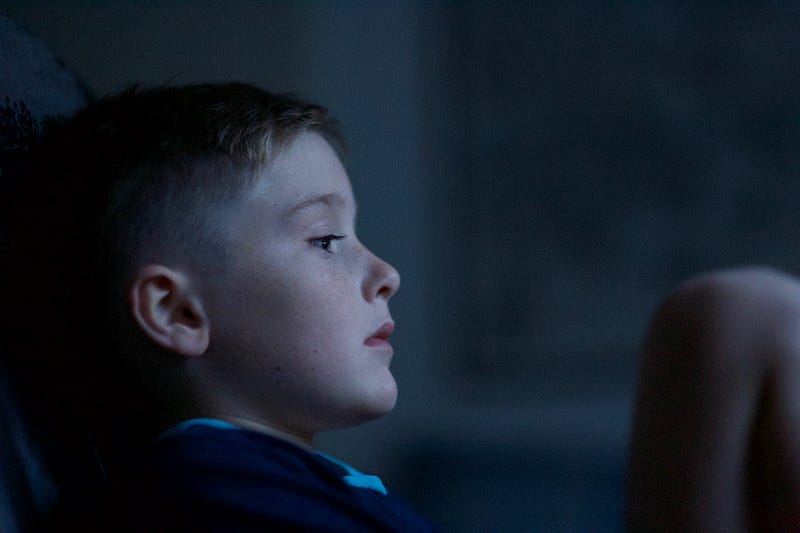
He comes to me with those worried it’s-the-end-of-the-world eyes, and the corners of his mouth turned down. I’m still in bed and feeling miserable with the worst head cold I’ve had in years.
“There’s a spider in the fish’s bowl. A really, really big spider.” He whispers.
“It’s okay,” I croak from under the covers, “Daddy will get it out when he gets up.” I hope this will satisfy him for now and communicate to my husband that I’m too sick to get up and take care of the children.
But my five-year-old son’s sadness only intensifies as he registers the fact I’m not dashing out of bed to tend to this latest crisis. The look on his face communicates to me in a way he cannot with words, how deeply concerned he is about the welfare of his fish.
“No,” he says, close to letting tears spill, “I want it out now.”
Still trying to wriggle out of the responsibility of an immediate fish rescue, I ask, “Is the spider dead or alive?”
“Dead,” he replies. Thinking I’ve found a loophole and bought myself a few more minutes of sleep, I assure him, “then it can’t hurt your fish, don’t worry.”
No relief comes to his troubled features. His concern grows deeper and anxiety starts to rise up, threatening to spill forth in tears or panic-induced yelling. He’s frustrated that I am such an insensitive mom and cannot comprehend his heartfelt concerns and fears.
“But what if Bowler tries to eat it?” He asks fearfully.
“He won’t,” I confidently answer, “He knows what real food is.”
Not at all reassured, he presses me one more time to get out of bed and attend to his fish. He has already experienced the death of a gerbil and numerous fish and is determined that nothing goes wrong with his newest pet.
“Okay, I’ll get it.” I give in because by now I’m wide-awake and because the look on his face is more than I can bear.
Greatly relieved, he bounces into the kitchen to find the net. He can’t find it. Panic tries to take hold again as his five-year-old reasoning tells him there is no hope without the net.
“It’s alright,” I calmly tell him, “I don’t need a net.” I scoop up the spider with a spoon and present it to my son.
Relief floods over his face along with a look that I will cherish forever, a look of wonder, respect, and gratitude. At that moment, it was clear I was his hero.
My son’s fish had no interest in eating a spider and clearly the deceased invader posed no harm to the fish, but to a little boy, the danger seemed real and his concern genuine.
I was struck by his gentle nature that cared so much for a fish. How simple and pure his faith was in me that I could find a way to help his pet. How small his world is and how much bigger I know it will become.

Fish will give way to broken hearts and the dangers of spiders will pale in comparison to the perils of growing up. At that moment, however, the perceived danger to his aquatic friend was all that consumed him and had the potential to wound his heart. I could solve the problem and he trusted me to do so. I had all the answers and his confidence in me was complete.
I know the day will come when I will not have all the answers, nor will I be able to solve all his problems so easily. I hope he’ll still come to me. I want to believe that even though his problems may no longer be those of a young child, his faith and trust in me will still be.
Looking back on my decision to answer his plea for help, I realize I did more than scoop up a spider that morning. I invested in our relationship.
I could have a stayed in bed, justifying my decision by how bad I felt. I could have belittled his fears and told him to go away and let me sleep in peace. Instead, I chose to communicate to him that he was important to me and that his concerns were legitimate.
I have often heard the heartbreaking accounts of teenagers making decisions that forever alter the course of their lives, bring consequences that follow them into adulthood, and cause pain to both them and their parents. And too often, along with these stories comes the parents’ anguished question, “Why didn’t you come to us and talk about it?”
Sometimes there’s no clear answer to that and sometimes the child responds with the painful statement, “I didn’t think I could talk to you about it.”
I realize that as parents we have no foolproof methods of child-rearing and no written guarantees that we will not make mistakes in raising them, but I do know that seeds of trust, unconditional love, and communication are sown long before the life-altering situations arise in our children’s lives.
By cultivating in their hearts the knowledge that they can turn to us for help and by reinforcing this truth in the moments that too easily can be dismissed as insignificant or childish, we communicate to them over and over in a way that words alone can never say, “I’m here for you. You can count on me. I care about everything that touches your life.”
From pet fish to peer pressure, lost baseball games and unrequited love, my son will move through life experiencing crisis after crisis, looking to me for guidance, comfort, and understanding. My responses to him now set the stage for him to turn to me in later years when he finds himself facing greater challenges than a dead spider in a fishbowl. I’ll always want to solve his problems as easily as I did that morning, but I realize that it’s not the solution that counts, but rather his trust in me.
This story was originally written in 2007. My son is now 22 years old, still rescuing animals, and still opening up to me with his heart. The teenage years did indeed involve more than fish rescues but we made it through them with love, grace, and communication as the anchors of our relationship. You can read more about that journey in the stories below.
Thanks for reading…