Amy Grant’s Divorce From Hell
Remember when Evangelicals canceled their Pop princess?
I’m thinking back to 1999, when the woman who’d been the #1 contemporary Christian singer for two decades announced she was getting a divorce.
Seventeen years and three kids into her marriage, Amy Grant was leaving her husband, Gary Chapman. There was talk she might prefer another man — the country singer Vince Gill.
For Evangelicals, that’s not how it worked.
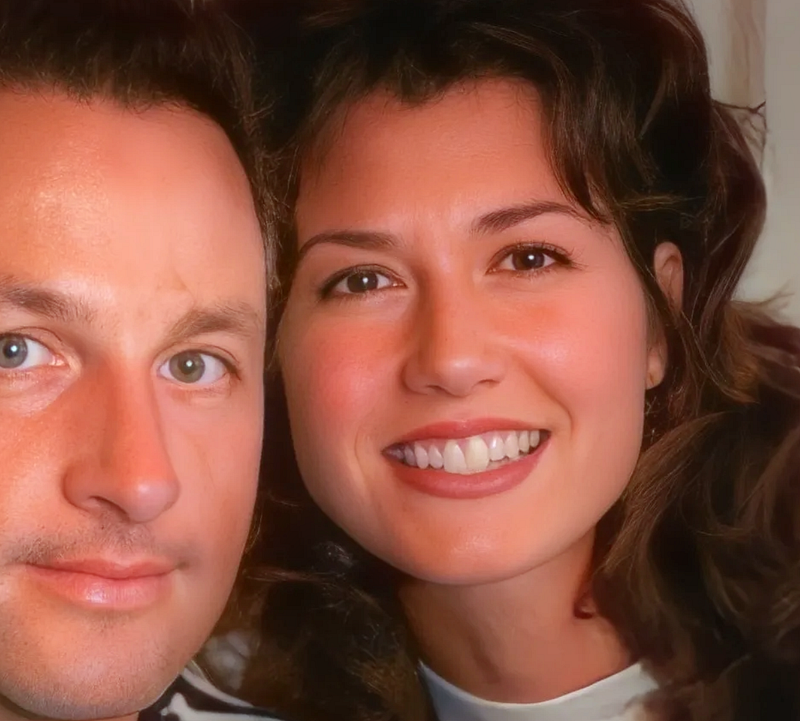
Christian radio quit playing her music.
Christian bookstores took her products off the shelves. That she kept her record deal was front page news. As far as Evangelical America was concerned, Amy Grant was canceled.
Gary was all but accusing Amy and Vince of having an affair. “Since the beginning of 1994, they had what I would call an inappropriate friendship, which was destructive to our marriage,” he told People.
She and Vince were paraded in the tabloids. There was talk of them being secretly married. “I guess people are so anxious to have some news that they kind of create news where there necessarily isn’t any,” she clarified.
The religion’s sex-shaming was in full gear.
Amy Grant was now widely proclaimed throughout the Evangelical world as an ‘adulteress’, a ‘slut’, a ‘whore’. Households were purged of her music. Her songs were dropped from church events.
Then a 38-year-old woman with hardly any theological training turned to her own religion, and took them to church.
“Let’s get real,” she told CCM. “You want to know what my real black ugly stuff is? Go look in the mirror and everything that’s black and ugly about you, it’s the same about me. That’s what Jesus died for.”
How little we know about the private lives of other people.
Funny how that works? I’m going through old magazines and newspapers, noting details about the marriage of Amy Grant and Gary Chapman that somehow didn’t make it into the church chatter.
In November 1997, Chapman did a profile for Texas Monthly to spice up his new career as a talk show host. He tells quite a tale.
He’d had a “drug habit” since age 20, doing “cocaine and marijuana” for as long as he’d known his wife. “I had two distinctly different lives,” he says. “Different sets of friends, different likes, dislikes, actions, everything.”
The reporter notes that Amy had let drop that “her wedding-night deflowering wasn’t quite what she had hoped. In fact, she termed the first four months of connubial romps a ‘yawn.’”
I sit with the story of the most famous Christian marriage in the world: an addict husband, years of bad sex and counseling, living separately while she’s profoundly drawn to someone else.
And all the religion cared about was the rules about divorce.
The marriage was never much of one.
In 1979, Gary asked Amy out when she was a freshman at Furman University, already with one album. She said no—repeatedly.
He was a singer-songwriter, and she’d be the most gifted interpreter of his music. His song “Father’s Eyes” became the title track off her second album, and her first big hit.
It was like she’d stepped out of his creative imagination, the girl of his dreams. He kept calling her, sending tapes of his music. In the summer of 1981 he got a spot as her opening act.
“I guess I didn’t realize he was courting,” she says. “I thought we were great friends, that’s all. He became a part of my family. They took him in because they thought he was just a companion to their little girl. It was pretty sneaky.”
In June 1982, they married.
Years later she recalls of the divorce that it “had been rocky from the get-go. I’d been holding steady for 15 years in something that was not easy to hold steady.”
Two years into her marriage, she knew it was in trouble? Two down, fifteen to go. Of course she was busy — being Amy Grant.


It was amazing that Amy Grant was even Christian.
Looking over her work in the 1980s, I realize how un-Christian she seems, in being dynamic and alive. In many churches, they were solemnly singing hundred year old hymns, as women weren’t to speak, and their clothes were patrolled to make sure they were ‘feminine’.
Amy’s clothing was, in fact, often masculine or androgynous. She was widely known, after all, as the “Christian answer” to Madonna.
It was a bizarre spectacle: a Christian woman keeping up with big league pop stars. “I am really striving as an artist to be relevant and to communicate,” she said in 1985 to the Washington Post. “I don’t want to cling to the past.”
She was strangely…sexual?
An interview in Rolling Stone startled her Christians fans. She was talking about a scene of skinny-dipping in the ocean. She’d gotten into Bible study, she says, for the boys. But then, she adds, “I encountered the Bible in a way that really affected my life.”
But she’d talk of her immersion in religion, curiously, with the language of sexual awakening. She’d recall a scene in which she’d read the Song of Songs and get her theological bearings. She’d be the sex voice of Christianity, ever light on moralizing. Her idea of ‘Jesus’ seemed to be people getting along, and be a community having ‘fun’ together.
“I feel that a Christian young woman in the ’80s is very sexual,” she said in a 1985 interview. This seemed as un-Evangelical as could be. The religion was gearing up for its “purity culture” phase—as it wasn’t clear Amy was even much against premarital sex.
“It seems to me that people who are most adamantly against premarital sex have experienced some kind of pain in their own lives,” she said in 1985.
Evangelicals loved her, but apprehensively.
In 1985, Christianity Today sent a reporter to interview her pastor. “She’s not always wise in the way she says things,” the guy sighs. “She doesn’t want to be a sex symbol, but wants sex to be seen as a good thing, a godly thing.”
But was never too alarming — since Amy Grant, after all, was married.
As I suddenly wonder if that’s why she’d married him.

There was talk that Gary was jealous of Amy’s career.
Some of it is from Amy herself. “It gets weird when I’m always in the forefront,” she said in 1986. When he got a recording contract, she added, that “has really been a boost for our relationship.”
The Texas Monthly profile was a portrait of a Gary Chapman who spent years simmering that his wife was selling out stadiums, while he was with the band or the kids. He took to performing during her intermissions, but nobody was much paying attention.
“I had a lot of reasons to be angry,” he said. “I don’t think any of them were valid, but they were to me at the time. I know that I felt overlooked.”
I’m browsing fan memories in newsgroups. Giving a concert in the early 1980s, Gary was playing and coming off poorly, as the audience started booing him. He threw down his guitar and shouted, “You’re just jealous because I’m married to Amy Grant!” And he stormed off stage.
The reviewer added: “Then he hit on my friend backstage when she was trying to interview him. Told her she was ‘nice and curvy.’”
Another memory, from a concert in the mid-80s. Amy came out at the end to take her bow. Gary came out to take her hand, and she snatched it away.
She gave lip service to being a good Christian wife.
“If I had my druthers,” she says, “I would be at home. It would suit me just being Mrs. Gary Chapman.”
But she never took her husband’s name. There was never an ‘Amy Chapman’. As hard as she tried, she kept being herself—sort of suggesting she wasn’t exactly in love with her husband.
“My personal feeling on love is,” she says in 1985, “if you’re with somebody long enough and have an inclination toward one another, chances are you’ll fall in love. I know there are people who meet for the first time and fall in love. A lot of times it comes from being stuck in a situation.”
She and Gary were in therapy—seeing one ‘Christian counselor’ after another. But it didn’t seem to help.

In retrospect, Gary was lying like crazy.
His interviews over time seem nearly delusional. When interviewed for a 1988 cover story for CCM, he said it’d been “a little harder than I have ever admitted. Living in her awesome shadow… has been difficult,” but adds: “the marriage is great.”
But many people around them were lying too. The religion was lying. A 1986 biography of Amy by the Christian journalist Bob Millard—an elder at his church, he notes—had painted a rosy picture. In a 1996 update Millard reveals that he knew Gary was an addict and decided to conceal it.
Stories would come out later. One day at home in 1986, Gary had been “coked out of his head” and Amy’s father came over to talk to him.
“I know what kind of problem I have,” Gary yelled at his father-in-law. “You might run the rest of this family, but you don’t run me!”
Amy later reflected: “When I look back on those early years, while I have some great memories, they were some of the hardest years of my life, so lonely and confusing.”
At a charity concert in 1990, she noticed someone.
She recalls later: “I think that a part of me loved him instantly.”

By 1992, she wanted her marriage to be over.
It was reflected in her music. Gary stopped being involved. “There was a conscious decision to let her go on and make her own mistakes and chart her own course professionally, and for me to do the same,” is how he put it.
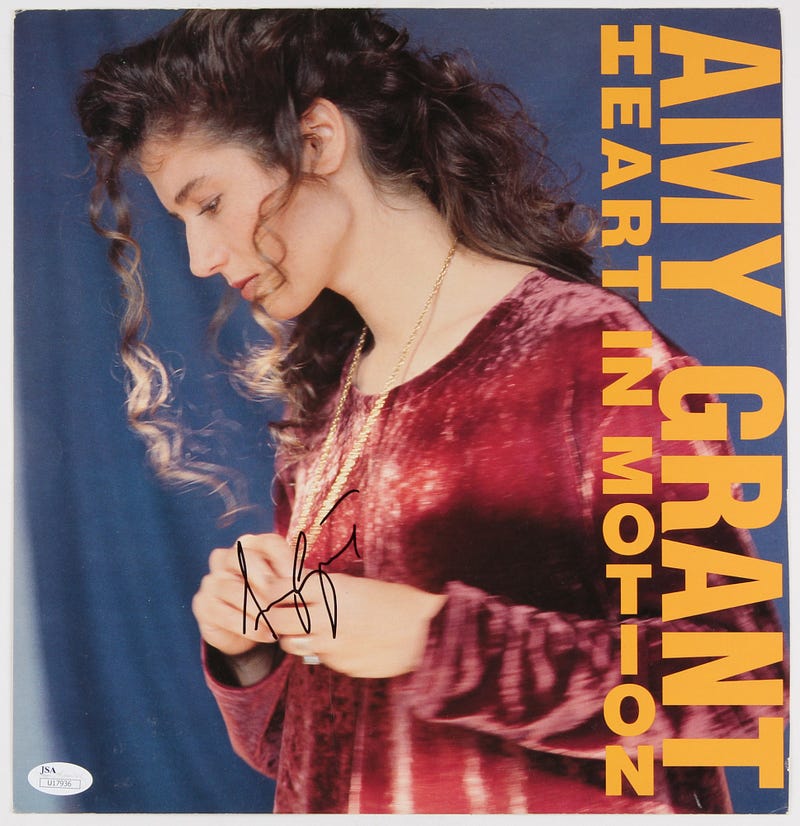
He wasn’t involved on Amy’s Heart in Motion album in 1991. Her jubilance and sense of rebirth and glee on the album, fueling its massive success, was surely a result. He is listed in the credits for “I Will Remember You” — a song about the difficulty of parting.
There was more notice of Amy’s lead single, “Baby Baby,” as it caused an Evangelical uproar for her playfully dancing with a male model.
On the album cover, she was wearing a scarlet dress. It could’ve all been clues to a religion that wasn’t good with them.
Amy asked Gary for a divorce in 1994.
Gary recalled that Amy told him: “I don’t love you anymore. You’re the biggest mistake I’ve ever made . . . I’ve given my heart to another man.”
He’d had meetings with parents, pastors, managers, friends. The consensus, he recalls, was this: “It’s just something she’s going through. Let’s just work through it.” He told her ‘no’.
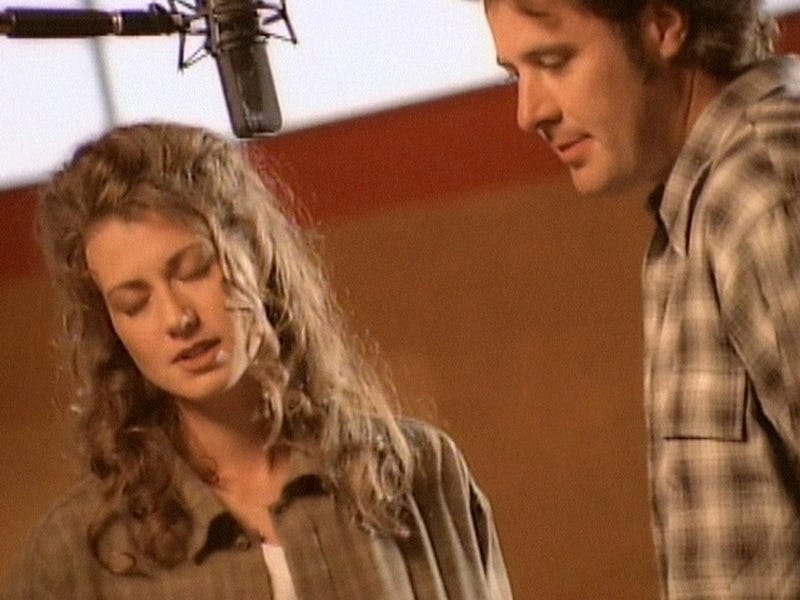
For her next album, House of Love, she picked Vince Gill to be a collaborator for the title track. She’d talk it up as nearly an accident that they got together, but the video shot for the track seems outrageously flirty.
In the gossip whirlwind later, there were bits of history. Vince’s wife, Janis Gill, reported finding a note in his golf bag: “I love you…Amy.”
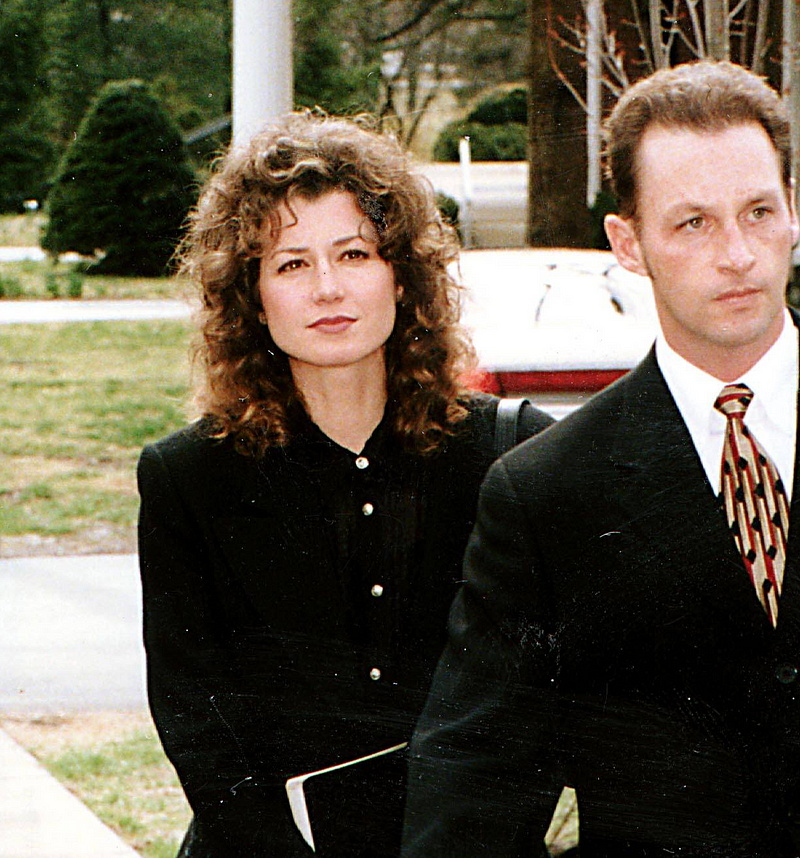
Gary and Amy went to get more counseling.
Amy recalled that a line from one counselor stuck in her mind:
“Amy, God made marriage for people. He didn’t make people for marriage. He didn’t create this institution so He could just plug people into it. He provided this so that people could enjoy each other to the fullest.”
She was listening to her own music, and it all seemed different. Her Christian music didn’t seem like her anymore. Even a song on House of Love, “Say You’ll Be Mine,” struck her as odd.
She’ll recall thinking: “No person really belongs to another, you know?”
She began to realize she’d felt dead for years.
She’d say later: “I just felt like I was really doing the unspeakable and at the same time feeling like I was coming back to life.”
She started work on her 1997 album, Behind the Eyes, which narrates the end of a marriage. It’d be called her ‘divorce album’. With tracks like “I Will Be Your Friend” and “Takes a Little Time” it can seem she was prepping her fans for the announcement — and teaching Christians how to uncouple?
After “a lengthy state of separation under the same roof,” she told Gary: “I believe and trust that I’ve been released from this…”
For a final opinion, she went all the way up the feeding chain.
She arrived to play a Billy Graham crusade in Minneapolis in 1996, and felt she should tell him, as she put it, “that my life was derailing.”
She sat with Graham, the aging patriarch of Evangelicalism, and updated him on her decision. He seemed understanding? Amy recalls him saying: “God is always at work in our lives, even when we take the long way home.”
Though having been a regular performer at his productions, she notes: “I never shared the stage with him again.”
Not long afterward, Vince Gill announced he was separating from his wife, as a divorce soon followed.
Amy knew her fans would try to cancel her.
I realize the story is that she’d known what was coming, but had no intention of playing the expected Christian role of ‘shamed’ woman. She mobilized her reputation and resources to ride out the storm.
She finished her Christmas 1998 concert tour. She recalls: “my family knew what was coming. So I had a real sense of dread just approaching the life change of going through a divorce… It’s like slipping off a waterfall.”
To Evangelicals the story was Amy Grant “selling out,” leaving Jesus, going secular and—sexular? Chris Williams, a Patheos blogger, recalls the talk:
“Amy Grant had sold out, people exclaimed, trading in the glory of God for mainstream success. It felt like a betrayal. When she and Chapman divorced in 1999, it seemed that people’s fears had come to pass . . .”
She’d describe her marriage’s end as “a devastating personal failure.”
Was that enough punishment? The religion had to think. Was it enough to gossip, malign her, keep her music off the radio, and not see her CDs in stores for awhile?
An unexpected scene reminded everyone of what Amy Grant had meant to them all. The Columbine school shooting on April 20, 1999 was a gaping wound in the nation and the world.
Two Evangelical figures were called to preside at the memorial: Franklin Graham and Amy Grant. He lectured about ‘sin’. She sang her song “Somewhere Down the Road,” about meaning being elusive.
A father of one of the slain students, Grant recalled, told her, “I’m just so glad that I’m getting to hear you sing today because my daughter really loved your music and it feels like a connection to her.”
It felt, she recalled, like “the lump in your throat is never going to go away.”
She went back to her apology tour.
She explained her divorce in interview after interview. “I did the very best I could and I wound up here,” she says in one.
It remained a bumpy ride. In August 1999, when playing at the Gospel Music Association’s “Music in the Rockies” in Colorado, she was singing a hymn, “‘Tis So Sweet to Trust in Jesus,” and began weeping.
The audience watched in silence.
That fall, she had another round of Christmas products, the season she’d come to own. “It’s been a long time since I felt clear-headed, and I do now,” she says in late 1999. “It came at a really high price, but evidently, it was a price worth paying.”
Gary kept playing the role of cheated-on husband.
“It was not God’s will that we divorced,” he said to CCM in 2000. “From my vantage point, we had one ‘irreconcilable difference’: I wanted her to stay, and she wanted to leave. Everything else, God could have reconciled.”
The same year, he re-married, and divorced in 2007. The same year, he got a DUI, found at the time with marijuana. He remarried in 2008—without much public commentary on any of that.
As Amy notes in a 2001 profile in CCM that “because my life is so public, I got a good talking to from a lot of people.”
She came to her peace about it as a Christian. “Jesus led by compassion,” she says. “No one is ever changed because of judgment. No one’s ever healed through judgment.”
The wish for her penance became insistent.
Finally, Christian media decided it was time for her to repent. In 2002, CCM sent a reporter, Matthew Paul Turner, to interview Amy Grant about her new album of hymns.
He arrived at her house with his editor’s ultimatum: “If she doesn’t make a public apology, then she’s not going in the magazine.”
Awkwardly, Turner explained to Amy that he had to ask her to apologize.
She thought about it.
“Do I feel sorry because my life hasn’t turned out like I thought it would,” she replied, “and because of that, I have fans that feel disappointed or betrayed? Sure. I never make a decision without considering how it will affect the people in my life. Sometimes I do that to a fault.”
She thought some more, and added: “The hardest part for me, Matthew, was forgiving myself. But once you do, you can’t keep going back. You accept the grace and live.”
Turner wrote the story he wanted to write.
Later he saw that CCM had run a re-written version. Somehow, Amy was apologizing—using, he said, “fabricated” quotes.
I look up the story as it ran.
“I did the best I could, and in some areas, my best was not good enough,” the fake Amy says. “I’ve made some bad choices.”
But mostly, people saw she was happy. Even in Evangelicalism, that counted for something. 🔸