
Amy Grant’s Queer Career
Did the Christian superstar sneak in LGBT themes?
When you grow up Evangelical, you’re told your religion doesn’t have any of that ‘LGBT’ stuff.
That’s the talk. But what happens, in reality, is endlessly sexually strange—as ‘queer’ as could be. Consider the career of Amy Grant.

She was tomboyish as a girl.
She was athletic, and had a delayed puberty. In Bob Millard’s 1986 biography, she’s quoted recalling of her teenage circle of female friends:
“We all looked around and checked each other out. It seemed like everybody’s body was changing but mine.”
She recalls her teenage years in another interview: “I was still playing neighborhood football and doing all my tomboy stuff and going out on Friday and Saturday night. And it continued to be that way through high school.”
She loved Pop music—like Cher, Elton John and Bette Midler. In 1972, at age 12, she went to a Bette Midler concert.
“I remember seeing all these men dressed really strangely,” she recalls. “I wondered, ‘Why do they have Vaseline on their faces?’ I don’t think I knew what a homosexual was but, at the time, the majority of her crowd was homosexual. She said all kinds of jokes that I didn’t understand, but when she opened her mouth to sing, it just totally removed me from the world.”
Her parents’ church left her cold
“They all looked dead to me, sitting in church with their coats and their ties and their stock answers,” Amy recalls in a 1984 interview. Her own Bible reading suggested a different approach. “I realized that there are a lot of mysterious things in there that cannot be put into a box.”
Her big insight came at age fourteen after she developed a crush on her older sister’s boyfriend. His name was Brown Bannister.
Amy recalls in a 1984 interview: “Can you imagine? We’d have such a future together—him being 23 years old, me being 14 with four years of high school left to go. But I said to myself, ‘I’ve just got to win his heart.’”
She began attending Brown’s church, Belmont Church.
Very vaguely Pentecostal with Evangelical leanings, Belmont Church was firmly non-denominational. Amy would say that’s when she really became Christian. She added: “I grew up in a Christian home but I never really thought about it. But when I went to the Bible study group I was completely swept away by the sincerity of the experience.”
Part of the shift within her owed to an encounter with a woman. At Belmont Church, a prostitute got up and gave a testimony. Amy recalls:
“…in the most atrocious language you can imagine, she explained how she had found God and how it had changed her life. I mean, she wasn’t trying to be foul. It was the only language she had. Well, she made my hair stand up on the back of my head. And I said to myself, I am seeing this woman’s life change right before my eyes.”
As also with Dolly Parton, it seems very ‘trashy’ hookers inspired Christian women to use her own voices.
She thought Christian music was “boring.”
She started writing Pop songs of her own, narrating her life. She sang them at school. “I saw people start crying,” she recalls. But it was because they were good. She was unusually honest and direct.
Among her first songs was her composition “I Know Better Now,” a youthful contemplation of female gender identity — rejecting traditional femininity. As the song was released on her debut LP, Amy sings:
“I used to think it took a giggly girl To win some fame in this mixed around world. But I know better now.”
A 1981 profile explains that the song had Amy “struggling with becoming a young lady. She was trying to shed her tomboyish past.”
But Amy Grant was never other than tomboyish or overtly masculine in her style. Far from shedding her past, she was actually trying to be less ‘feminine’.
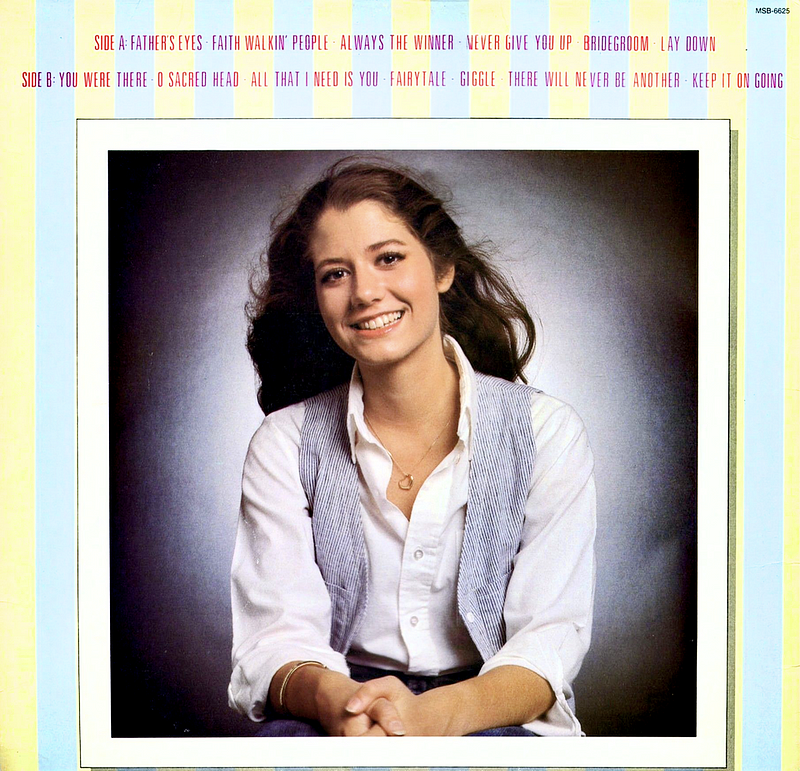
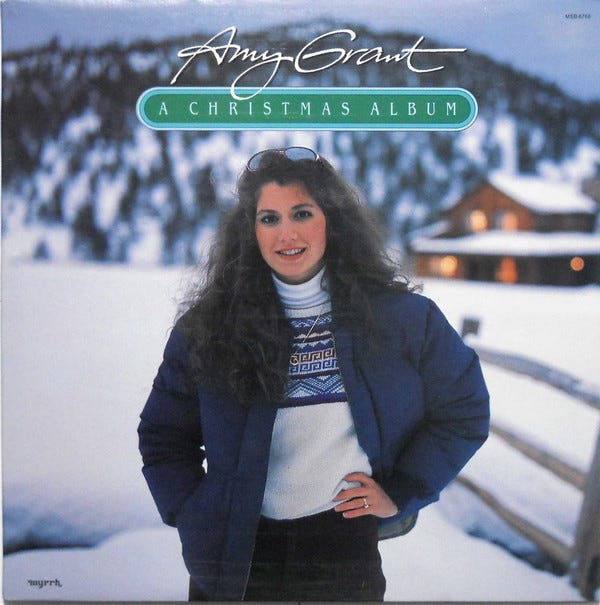
Her first hit was “Father’s Eyes,” the lead single off her second album
It would become an Evangelical classic, sung by many a girl at church.
“I may not be every mother’s dream for her little girl And my face may not grace the mind of everyone in the world”
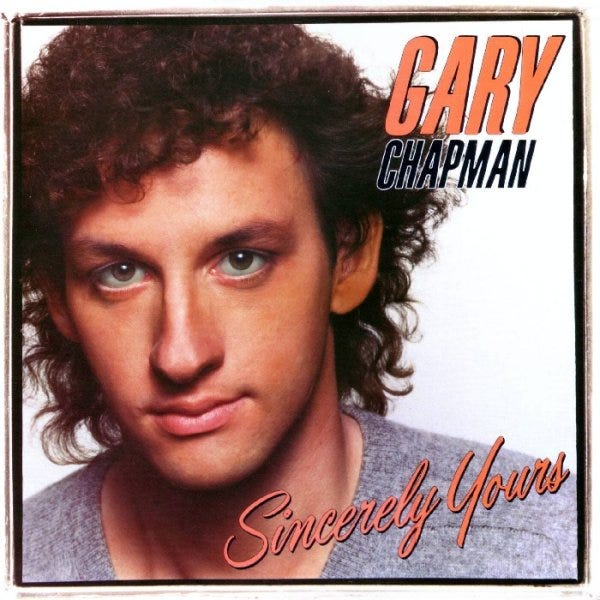
At the album release party, at age 18, she met the songwriter, 21-year-old Gary Chapman, who was already a cocaine addict.
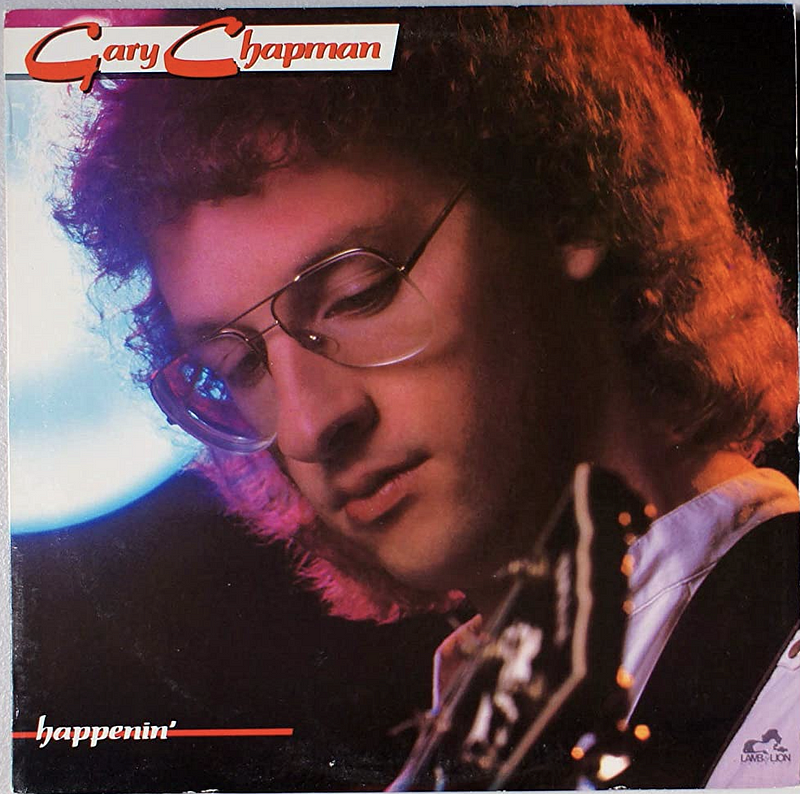
He released his own cover of “Father’s Eyes” on his 1982 album, Happenin’. He sings in the character of a girl — except the lyrics change when she is perceived by others.
Then Chapman sings: “He’s got his father’s eyes…”
We seem to have a narrator who self-identifies as female, but is seen by others as male.
She had gay friends in college.
How did she know? “Someone might have just seemed theatrical or, I don’t know, effeminate,” she says.
And then she had Gary as a friend.
“I guess I didn’t realize he was courting,” Amy recalls. “I thought we were great friends. That’s all. He became a part of my family. They took him in because they thought he was just a companion to their little girl.”
Gary landed the job of her opening act, and they travelled together. “We really liked each other and kind of fell in love,” Amy recalls.
That’s the strongest language she’ll ever use about the man she’ll marry.
A concert in Orlando became famous
Age 19, she recalled seeing everyone in the crowd half-dressed—and getting turned on. Amy doesn’t narrow her focus to the men.
“I looked at those kids,” she recalls, “and all the girls were hot. They’re wearing halter tops or tube tops, and are here are these young, budding figures and all these horny guys.”
She starts talking about it from the stage! “I’m not married and I’m dying to have sex, too.” As she recalls later, she’d chattered on:
“I really want to know Jesus and I really want to love him except my hormones are on ten and I see you all sitting out there getting chummy and praying together, and we’re horny. My feeling is, why fake it?”
With her Age to Age album she announces her artistic—and sexual—maturity
All dolled up on the cover, she looks like she’s about to get married, except the makeup is rather heavy. Is she both Madonna and whore?
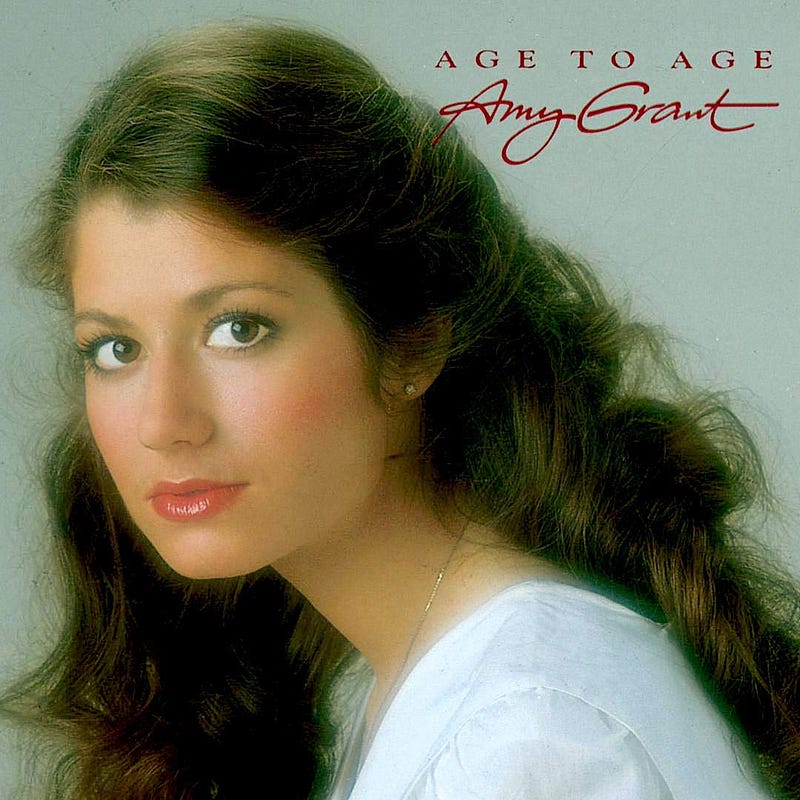
Her first single off the album—and her first #1 hit—was “Sing Your Praise to the Lord.”
It was a song by a young musician named Rich Mullins. It was strangely sexual for a ‘praise’ song. A music executive recalls asking Mullins what inspired the epic prelude. Mullins replied:
“Well, it’s just like sex. You’ve gotta have a really good foreplay before you get to the climax.”
What kind of sex was this? He’d sometimes speak of a girlfriend that he had sometime, or other, as she can also seem oddly not there. Don’t get me started on Rich Mullins’ sexuality.
Amy later recalls the moment the song was played for her. “I have been moved by a lot of songs, but when that song reached its iconic release point, I was levitating.”
Meanwhile, sex with Gary leaves her cold
A comment she later makes is understood to suggest that after winning her hand in marriage, Gary didn’t quite know what to do with it.
“We always had to fight so hard to be together,” she sighs. “So, when we were finally left alone, there was about a four-month yawn.”
Ever on tour, she was dragging along an increasingly unhappy Gary—now tasked with playing the ‘Christian husband’ in her shadow. Gary tried evolving a new performing identity: an ‘Everyday Man’, as his 1988 album is titled. A good Christian husband, if even more lonely and dark.
The same year, for her Lead Me On album, Amy seems to pose in the same barn—as a man?


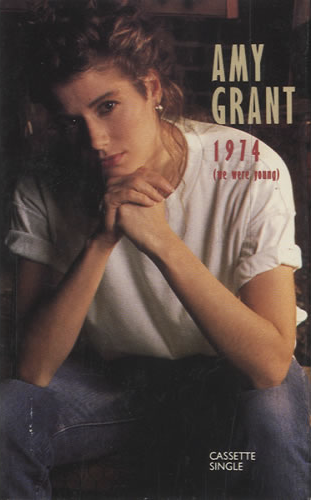
Amy’s album Lead Me On has her song, “Faithless Heart,” a true-life account, she’d say, about her uncertainty about her marriage to Gary Chapman. In evoking another lover, is the song trying to conceal gender?
“A heart running for arms out of reach. But who is the stranger my longing seeks? I don’t know . . .”
As she sang an adultery fantasy to her Evangelical fans, one might notice the lack of pronouns. Around Amy, gender is unexpectedly hazy.
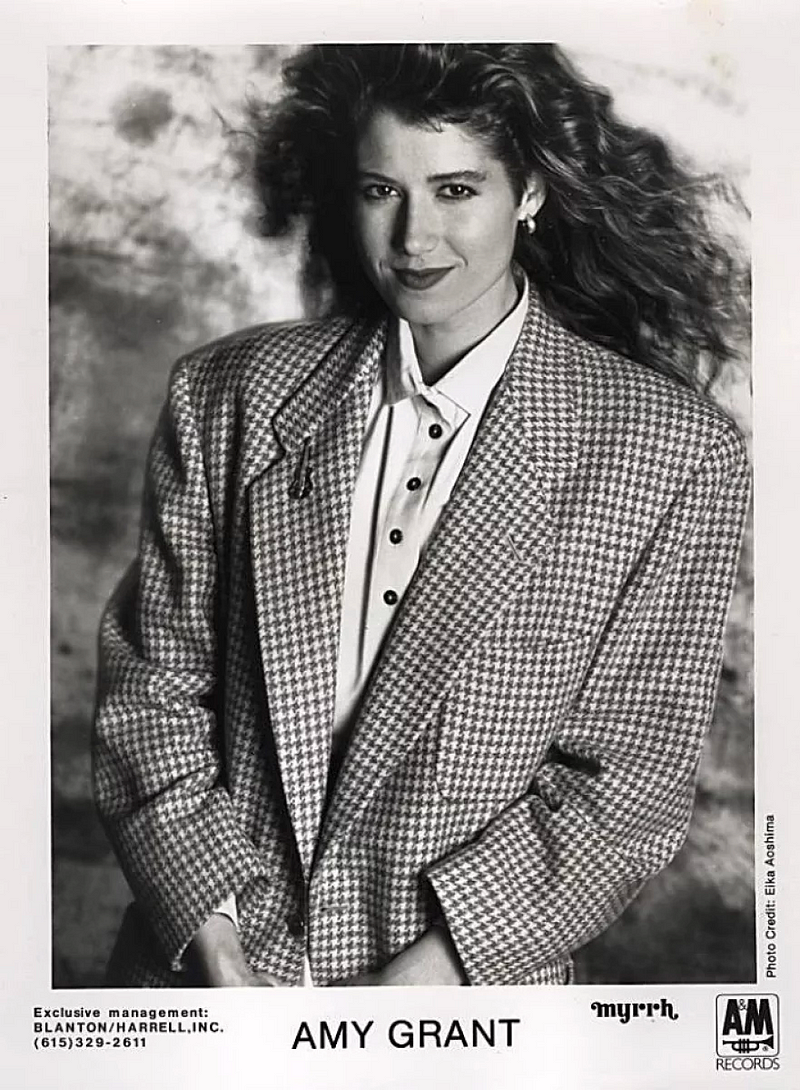
The androgynous theme would continue for years.
In 1997, she did a commercial for the National Hockey League. A lone figure skates aggressively, as the singers Brooks and Dunn look on. “Who is that guy?” one of them asks.
The hockey player removes her helmet to reveal it’s Amy Grant.
There are other entries about an odd gendering throughout her life—but most especially in the theological status she acquired. A woman who acquired spiritual authority—in a tradition that disallowed it
A woman speaking about true-life, difficult dilemmas, when women were ‘to be silent’ in church.
A woman who cut her own path, Amy Grant was boundary-crossing in a religion that didn’t even have words for that concept.
She showed them—how did she put it?
A mysterious thing that cannot be put into a box. 🔶


