
Emotional Intelligence
The Self-Healing Power of Learning to Identify with the Feelings of Others
The facts of your lives may be and usually are very different but you have still experienced the same emotions
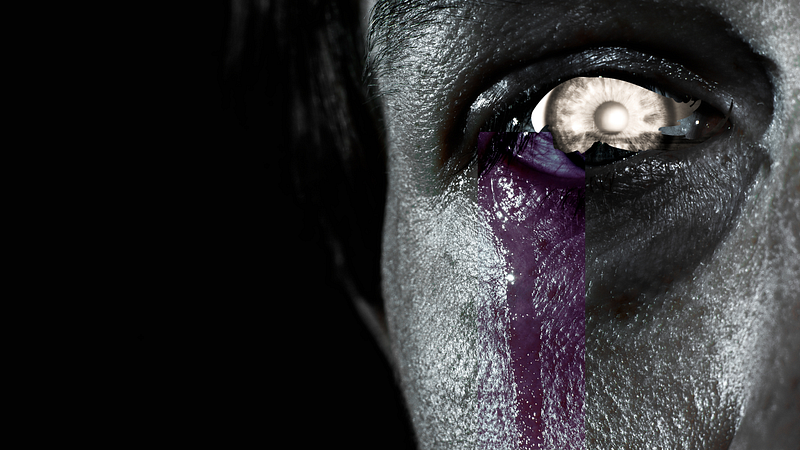
Marilyn Flower’s great story today inspired me to write this essay
Please read her story. I will discuss it as little as possible to provide the context for mine.
Marilyn alludes to the self-healing powers of the 12-steps, which I do not believe need be followed in order (and I believe every human would benefit from practicing [1]), and the step she had arrived at in her story is Step Nine, where people make amends to those they have hurt if to do so will not harm others.
Marilyn writes of her most vulnerable and sincere offer of amends to her ex-husband and writes of his reaction:
Simon listened attentively as I sputtered out an honest but summarized confession. Nothing I said seemed to shock or surprise him. He just took it all in. Then I waited, holding my breath.
He didn’t ask any of those questions. No interrogation.
Instead, he went over to his desk to get a framed photo of himself at age nine. Dressed in a suit if I remember correctly.
He put it in my hands and told me about his inner child. The lost little boy sat on the front steps every time Mommy left the house. Waiting for her to come home.
I cried upon reading this passage. As did another reader as I know from the comments.
I cried because I am that little boy (now 55-years old). Not because my mother wasn’t both emotionally (mostly) and always physically present. I cried because I now better understand the emotional wounds my covertly narcissistic father inflicted upon me.
Very different facts.
Same feelings.
For those with an understanding of the steps, this was a fourth and fifth step moment for me.
I miss my father, or more accurately, the father I never had, as I realized many years ago at the funeral of a friend’s father and cried listening to my friend’s eulogy for his best friend.
A type of best friend I never got to have and realized then I had longed for my whole life, and still do but know it is not meant to be.
Last week I wrote a poem called Losses [2], that contained three cinquains about the loss felt from the deaths of loved ones (two friends and my lover) and this fourth, cinquain:
Father You crushed my soul You cannot empathize Living life as empty vessel So sad
A friend, my oldest and dearest, who reads my work offsite, texted me:
“I’m not sure you need your dad.” “Better off without.”
I replied, “It’s still a loss that pains me and more than the others. Yet, I do not regret my decision at all.”
I am long past resenting my father, with whom I have not spoken since May 2020 [3, 4] when my spiritual awakening helped me know in my mind what I had always known in my heart.
That was until Monday night. I called him Monday night. Not to reconcile. That ball is in his court. I called because I still love the asshole, and my mother, who had been exposed to my nephew’s COVID-19 in Chicago, was still hellbent on returning to the apartment over the objections of each of my younger sisters.
Did they listen — no. Nevertheless, maybe they heard the little boy who resides in this 55-year-old vessel.
I could and maybe should end this essay here and let the emotional impact sink in, but I like longer essays and have another point I planned to make about not distinguishing facts but instead listening for and identifying with shared emotions, which is an emotionally intelligent skill that those that get the most out of 12-step programs learn.
I grew up, white, wealthy, handsome, and privileged. Easy fodder for distinguishing my life from others and easy fodder for others to think that I can not possibly identify with them. That’s why these lines from a poem of mine [5] stood out to people:
Born enslaved with trappings of advantage Handsome wealthy white male privilege Even in the darkest of times All saw his incandescent light as sublime Please rid your ship of vermiform infestages
As a 15-year-old, these lines from my third-favorite band, The Jam, spoke to and stuck with me, and the song [6] synchronously came on my shuffle-play while contemplating my response to Marilyn’s story:
“Rows and rows of disused milk floats stand dying in the dairy yard And a hundred lonely housewives clutch empty milk bottles to their hearts Hanging out their old love letters on the line to dry It’s enough to make you stop believing when tears come fast and furious In a town called malice
…
To either cut down on beer or the kid’s new gear It’s a big decision in a town called malice”
Why did these lines stand out to someone without these issues? Maybe I simply have a conscience? From what I know now, I think it has more to do with the value of gaining an understanding of reincarnation and experiences from already-lived lives that we carry with us. [7, 8 and 9]
Before I get to my endnotes, I want to embed this video from a couldn’t-be-more-different artist than The Jam that came on my shuffle play while in the midst of writing this essay and I cried my fucking eyes out. There are many interpretations of why it had that effect upon me that I can offer you, all of which would be true. I’d rather you decide for yourselves and perhaps why you may be now crying too.
Endnotes:
- Spirituality Redefined, Plus a program for living a spiritual life
- https://readmedium.com/losses-217380d2da9b
- Why I Canceled My Father
- Canceling My Father — The Ultimate Expression of Empathy, And the kindest thing I could do for his tortured soul
- Oh Soulful Mariner
9. Life Is School for the Soul
Last but not least, dear readers, in case you did not read the caption to the feature image, thank you jules for creating the feature image, upon my request, for this story. Jules read the draft and created the image without any other input from me.
In Rama I create, with soul-energy surging through my body, inspiring me and breathing wind into my sails,


