
The Science Behind Decision Making
and how you can PROBABLY overcome indecision.
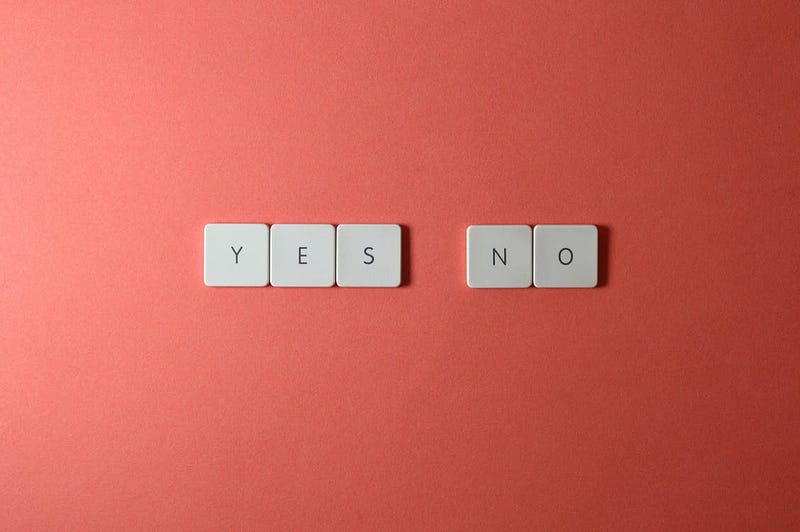
One of my biggest flaws is having the initiative to make a decision. Even the smallest one… where to eat, what to wear, whether to buy that lipstick or not. I really hope you don’t have to face these kinds of important decisions on a daily basis. But, if you do, here’s what I found out.
I won’t lie, for a long time I overlooked this behaviour of mine up until it started to have an impact on others. Like any human being, I’m not perfect. I try to implement what I preach here.
To some, my indecisiveness might translate as a trait of pleasing people. It seems easier to let others make decisions which might not have a major impact on my existence. To others, it might seem like I don’t care, which is frustrating and far from the truth.
I began reflecting on my attitude when I came across the theory of Optimal Stopping. In the book “Algorithms To Live By: The Computer Science of Human Decision” by Brian Christian, the author pointed out that this research has no clear evidence of the “brilliant mind” who actually made this discovery. It’s more like a legend transmitted from one mathematician to another, but it is said to be dating back to the 1950s.
Suffice it to say, I won’t bother you with any more technical information, numbers or names.
The answer to the mathematician’s “Optimal Stopping” problem is: 37%.
What does the 37% Rule mean?
Learn to stop searching after covering 37% of your options. This is it. Does this appeal to you?
When I first read this I told myself “No way”. As a proclaimed overthinker, I need to make sure I make the right decision after evaluating all my options. Even though, each time I might end up selecting the first or second one…
The Optimal Stopping theory derives from the “famous almost perfect mathematical puzzle” called the Secretary Problem and many believe it can actually be applied to many other aspects of your life: dating, finding the perfect home and even parking spots.
To make it more simple for anyone who struggles with numbers and percentages — me, let’s say you want to hire someone. You create your job posting and wait the candidates to apply. There are 10 candidates for your job. The people behind this study claim that after you interview the first 4 applicants, you need to stop.

Why? Because the best candidate (decision) for you is one of the first four. You need to pick the one who stood out for you.
So, when you pick the next parking spot (if you find more than one) just stop when you find the best one out of the 37%. You can actually stop your car, and make a quick calculus of how many spots are available and closer to your destination and then pick one of the 37% suitable parking spots for you.
Actually, no.
To apply this, you need to decide beforehand how many parking spots you’re going to look for before making the decision. But isn’t picking a number of parking spots you’re going to look for also another decision?!
Now, when it comes to dating, sincerely I don’t know how this would apply. Do you know the number of candidates during your lifetime? It doesn’t seem like a decision you can leave it up to fate (or math in our situation) . I wouldn’t. Is it rational?
I don’t know if I could apply this rule to all of my decisions in life. It is nice to think that statistics actually want to make our lives easier because it’s also a bad thing to stumble upon an important decision for too long.
On the other hand, research show that the majority of people actually stop after only analysing 31% of their options. Well, it’s kind of close to 37%, right?
I believe this theory comes in handy when you have to make a rational decision in a short amount of time and when you are sure of how many options you have.
The ultimate trick to overcome your indecisiveness is to stop looking.
Not making a decision means forgoing an opportunity. ― Auliq Ice
As human beings, I don’t think we can be guided by only facts and scientifically proven facts. Sometimes, the best decision you can make for yourself is to listen to your heart.
What do you think about this concept? Do you think this Look-Then-Leap Rule can help people become the best decision makers or at least make a better decision?
Hire me or let’s connect!


