
5 tips to deal with Impostor Syndrome
Here’s how you deal with feelings of self-doubt.

“I was lucky to land this job.”
“Everyone will figure out I’m not good enough for this.”
Have you ever told yourself you don’t deserve something you hardly worked for? If you’ve ever felt like an impostor at work or school, you’re not alone.
Turns out there’s a simple explanation for this: The Impostor Syndrome. Also known as perceived fraudulence, it involves feelings of self-doubt and incompetence despite your education, accomplishments and obvious experience.
Basically it means you never acknowledge your success and you think everything good that you achieved was due to sheer blind luck.
To some it might sound weird, but others (myself, included) resonate deeply with this concept. I never celebrated any accomplishments of mine. No matter how hard I worked for them. It felt natural to think that it’s a pure chance that I got a job or even a good grade.
I never felt entitled to say that I got something because I was capable enough to obtain it.
Why do we experience Impostor Syndrome?
There’s not a certain reason. Some believe that it comes from your childhood background — parents comparing yourself to your siblings or classmates, being expected to excel in school, criticism or even a deep emphasis on your intelligence.
Others think that a plausible reason are factors outside of individuals — racism, discrimination or sexism. It is believed that women and people of colour are more inclined to experience this syndrome than the rest of the world.
You simply feel more confident when you are part of a group in which you think you belong — you look the same and you have the same traditions or values.
Personality traits can also play a major role. Being a perfectionist, not asking for other’s help or believing you’re a natural expert at things can make it difficult to overcome failures.
How does it feel?
When I first read the characteristics of the Impostor Syndrome, I had a high school flashback. One time, a teacher of mine asked me to submit my work for an essay contest. I immediately thought that she asked me because no one else would accept her offer, so I said “yes”.
Turns out, a month later, she randomly announced in class that my essay got the first prize. I remember going home and rereading my essay. I was in awe. I even thought there were no other candidates.
A week later, I was asked to participate in a regional award ceremony with all students who were awarded in olympics or other competitions. I remember meeting other teachers of mine there and I thought they were surprised to see me there, even though they genuinely congratulated me and were glad I was there.
This is a typical example of feelings of self-doubt. Believing you don’t belong in the top and you’re not worthy of it.
“I am not a writer. I’ve been fooling myself and other people.” — John Steinbeck
But, we need to make a difference between true impostor feelings and being in an environment where you are not welcomed or in which your qualities are not valued.
Let’s say you got a job in a more men-dominated workplace. If someone makes a comment like “women don’t usually get this job”, then it’s a different type of situation. Don’t be afraid to ask for help or guidance to avoid feelings of unworthiness.
5 tips to deal with the Impostor Syndrome
Even though there’s no sudden cure to this behaviour, you can learn a few tricks to ease your “symptoms”:
- Acknowledge your feelings.
Every time you catch yourself having this narrative, identify your feelings and highlight your accomplishments.
2. Talk to a friend or a close family member that can help you get the reassurance you need.
Sharing your feelings with others can diminish their importance in your mind.
3. Avoid comparing yourself to others.
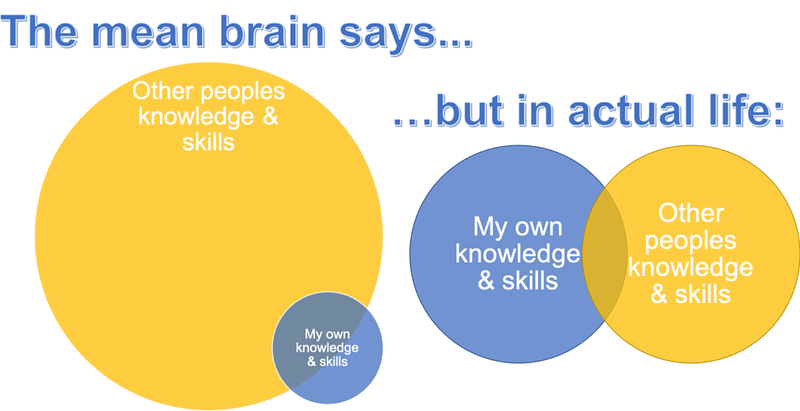
There’s no other explanations you need for this.
4. Don’t let your feelings drive your actions.
Apply for that job you don’t think you can get. Value constructive criticism without letting it crush your self-esteem and use it to improve yourself.
5. Don’t be afraid to ask for help.
If you feel like you could use a more professional perspective, don’t hesitate reaching out for help.
In the end, we all might experience these feelings sometimes. It’s the response to your mind’s narrative you need to “polish” from time to time.
Hire me or let’s connect!


