
The Psychology of Scary Science
Climate change and its impacts on our psyche

“The world as we have created it is a process of our thinking. It cannot be changed without changing our thinking.” — Albert Einstein
An emotional response is natural
The phrase climate change tends to evoke a plethora of emotions for those familiar with the phenomenon. Taken apart, each word doesn’t sound so bad. The definition of climate from Merriam-Webster is “the average course or condition of the weather at a place usually over a period of years as exhibited by temperature, wind velocity, and precipitation.”
Nothing scary about that.
We know that every region of the world has different climates from polar to tropical, and everything in between. We also know that a given climate is never static, but rather can change in response to several environmental factors. This is evident by the fact that our present-day climates are vastly different in many respects compared to the climates of 25,000 years ago during the last glacial period. The word change may be somewhat scary to some, but change occurs all around us and within us whether we like it or not. Time changes, weather changes, economies change, politics change, religions change, species change, civilizations change, and just about anything you can think of will change at some point. So, why does the phrase climate change elicit such strong emotions?
Climate change is a complex problem that needs complex solutions, but all complex solutions are comprised of smaller, simpler solutions.
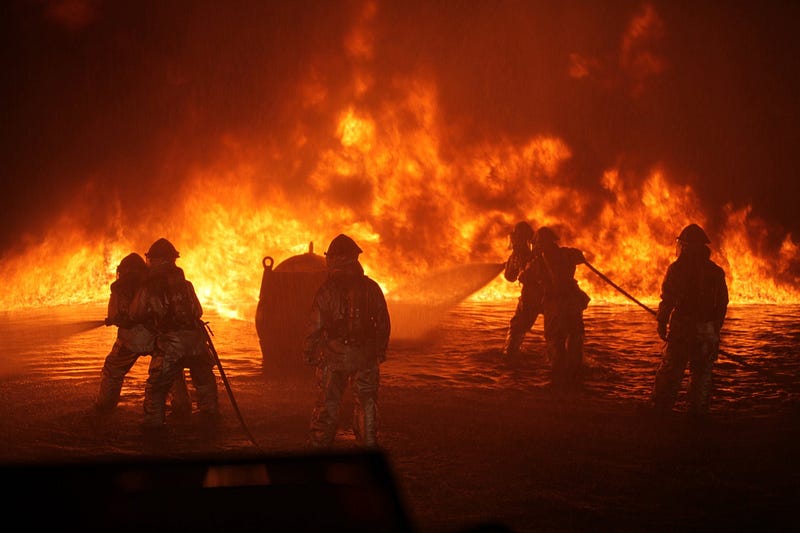
For starters, when I think about the phrase, I see images of Arctic ice melting, forests burning, coral reefs bleaching, coastal cities flooding, and animals and people fleeing.
Not such a nice picture, right?
Feelings of horror and grief from these pictures of environmental destruction are compounded with feelings of desperation, helplessness, fear, and anger.
Desperation from feeling like we’re running out of time to solve the climate crisis and not implementing solutions quickly enough.
Helplessness from the complexity of the situation and not feeling like your actions can make a difference.
Fear from what the future might hold if we don’t get our act together.
Anger from those who deny climate science, or worse, oppose any action to try to ameliorate the current state of affairs.
The combination of such feelings usually leads to an overall mood of depression that for some may be chronic while for others may be fleeting.
The important thing to remember is that all these feelings are completely normal, and that you’re not the only one out there who feels that way. As I write this, I am getting flashbacks to when I first started researching the subject of climate change several years ago. I remember that the more I researched about the scope, scale, and required efforts to stop the crisis, the more I began to feel the desperation, helplessness, fear, anger, and eventual depression take hold of me. Additionally, I felt a sense of confusion as I tried to understand the various predictions and potential impacts that, at times, were conflicting.
Or, as Aristotle put it, “The more you know, the more you know you don’t know.”
So, if you’ve ever had trouble sleeping at night with all these terrible thoughts swirling around in your head and weren’t sure how to handle them, just know that you’re not alone.
I think many of us grapple with these thoughts and questions that we might be too afraid to ask such as:
What will the impacts be on my children and their future children?
What about the rest of the species on this planet? Do they still have a chance for survival?
Is technology alone really enough to avert the crisis?
Even if I make changes to my own lifestyle, will that even matter on a global scale?
And the scariest question of all:
Do we still have a fighting chance or are we already doomed?

Making the Science Less Scary
Although it is important to ponder these questions and natural to experience negative feelings, it is even more important to not be consumed by them. Furthermore, too much debate will only lead to further inaction. But how do we overcome these negative feelings to actually make the changes necessary?
Although climate change certainly deserves more attention than it gets, worrying is the last thing on the solutions list that will help us avert this crisis.
Well, the first thing for us to do is to stop worrying so much about these questions and stop listening (temporarily) to the thousands of talking heads that feed us with information on a daily basis. If humans do one thing excessively more than anything else, it’s worrying. We worry about what we’re going to eat, what we’re going to wear, where we should live, what career we should pursue, what school to go to, who we should date, etc. Although climate change certainly deserves more attention than it gets, worrying is the last thing on the solutions list that will help us avert this crisis.
Instead, here’s what I suggest. Sit down in a quiet room away from everyone and close your eyes. Clear your mind of all the horrible images of natural disasters and destruction that we see in the media all the time. Now, try to imagine a world that is not in its current state, but rather is free of emissions, full of biodiversity, and has well-preserved natural resources and a stable climate.
What does that world look like? Can we achieve that? What would it take?
As an engineer, I believe that no problem is unsolvable. Climate change is a complex problem that needs complex solutions, but all complex solutions are comprised of smaller, simpler solutions. Therefore, if we break down all the issues that climate change presents us and break those down into sub-issues, we will find simple solutions that, in the aggregate, will result in large, positive impacts.
So, the next step after visualizing our ideal, sustainable world, is to write down a list of things you can do to address those issues. When it comes to solutions, the simpler the better and there are literally hundreds of them. To get you started on the right track, you can:
- Change your light bulbs to LEDs
- Make sure to turn off the lights before leaving the house (or get smart lighting so you can turn them off with an app)
- Bike or walk to work instead of driving, and for any other short trips
- Eat less meat (or ideally none)
- Buy produce from local farmers’ markets
- Buy energy-efficient, electric appliances
- Use blankets instead of your heater
- Join a climate protest or environmental organization
- Educate others about climate change
- Purchase only what you actually need and use
- Waste less and compost any organics
- Divest from fossil fuels
- Make more home-cooked meals
- Avoid products with palm oil
- Plant a tree or start a garden
- Attend a city council meeting in your community and ask your councilmembers to take more action to address climate change
- Check out Project Drawdown’s Climate Solutions at Work to get ideas for how you can take climate action in your role at work
- Vote for politicians that support bold climate legislation
…and you can take it from there. If you can go beyond the simple solutions, and have the capital, then invest in solar panels for your house, an electric vehicle, and a home battery for energy storage 24/7 like the Tesla Powerwall. If you can’t, that’s totally fine, because we all have to start somewhere. So start simple.
The last step is to go out and do one thing on your list, and not tomorrow, but today. Try to develop a habit of doing those things every day, week, or whatever frequency makes sense, just like a workout routine. Each year, look back at your list and see which things you were able to accomplish, and add more to your next year’s list. Think of it as a New Year’s resolution, but for the climate, or Climate Resolution.
After you get into the habit of performing this meditation, writing out solutions, and then acting upon those thoughts, I suggest you come back to this article and see if you’re still experiencing the same negative feelings. I have a suspicion that those feelings will instead be replaced by feelings of optimism, determination, and pride. The reason for this is that just like with any problem we face, such as trying to lose weight, we either worry so much about the problem that we are overcome by our own mental inertia, or we solve our problem through intense focus and careful planning. Using the same analogy regarding weight loss, there is no “miracle pill or diet” for the climate crisis. However, if each of us puts the necessary focus, time, and effort into these solutions, then perhaps we won’t have to visualize our ideal world in the future because it will be right outside our front doors.
If you enjoyed this story, then you might also like:
To address the crises we face, we all need to work together and contribute our knowledge, ideas, and skills. If you share my vision of building a better future together, then please consider subscribing here to stay connected and be notified when I publish a new story.


