
The Problem With the AAP Guidelines on Opening Schools
They are being used as a blank check for reopening when they should be seen as a call to fundamentally alter our priorities
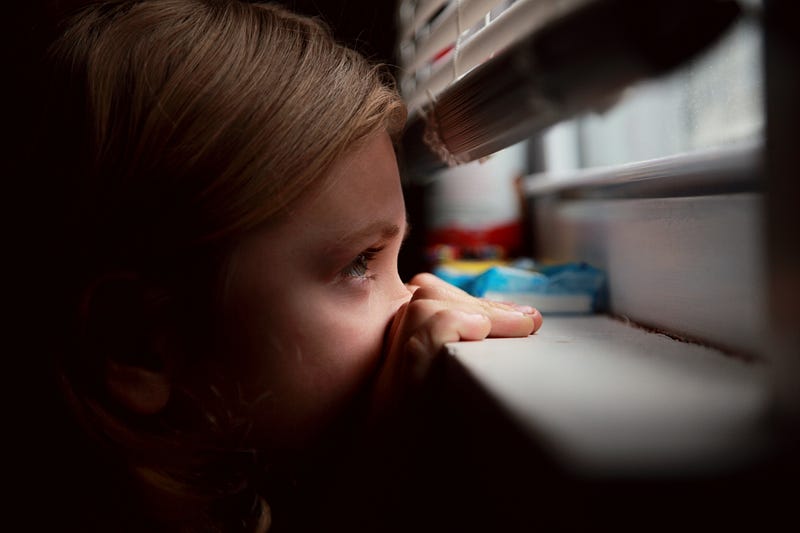
Like so many parents, I have become increasingly anxious about the impact of extended time away from school on my child’s development. I have felt frustrated, even desperate, that my own life is on hold as I now have to fill all the roles that used to be played by teachers, friends, and school-based activities.
So I understand the collective sigh of relief that has greeted the American Academy of Pediatricians (AAP) guidelines calling for a return to in-person schooling. The main takeaways of the AAP report being promoted are that the health needs of kids outweigh the risks of the coronavirus, that the risks have been overstated, that many of the guidelines for reopening are overly cautious, and that returning kids to school must be the top priority.
This is being used to build support for the mounting pressure to reopen schools this fall — even as new cases of coronavirus reached new heights this week and deaths approached 130,000. But the news coverage of the guidelines provides false assurance about the safety of reopening schools. At the same time, there are critical aspects of the report that should serve as a call to fundamentally alter our priorities but are being ignored.
There are several problems with the AAP guidelines and, more importantly, how they are being commonly understood and promoted:
- They correctly diagnose real needs, but wrongly assume these needs can only be met through in-person schooling.
- Their assurances about the low risks involved rest on still-evolving knowledge about transmission risks and are focused on the dangers to children. They do not account for the risks to adults or the broader impact of reopening schools on increasing community spread.
- Many of their recommendations do not account for the conditions that currently exist in schools. They do not acknowledge that budget cuts — following years of underfunding — make many of their recommendations impossible.
- The most important parts of their guidelines — those prioritizing the social and emotional needs of children over academics — are at odds with existing priorities for reopening and are being ignored in all of the coverage.
A review of these issues should make us way more cautious about allowing the AAP guidelines to be used as justification for current reopening plans. In the rest of this article, I discuss these issues more fully and draw some conclusions about where we should go from here.
The AAP identifies real issues, but wrongly assumes schools are the only solution
“Schools are fundamental to child and adolescent development and well-being and provide our children and adolescents with academic instruction, social and emotional skills, safety, reliable nutrition, physical/speech and mental health therapy, and opportunities for physical activity, among other benefits.” — AAP guidelines on reopening schools
These points are undoubtedly true. It is widely acknowledged that remote learning was largely a failure. Moreover, any parent who's been home with their children for the last 3 months can see that they are craving time with friends and a wider world to explore. Many young people are suffering from mental health challenges or live in precarious situations. And the mounting social and economic crisis has only worsened the issues of food insecurity and other physical needs that schools fill.
However, it is wrong to assume that all of these needs can only be filled by in-person schooling. It is true that kids need in-person social interaction for their development, but we should be decoupling that need from schools as the solution.
For younger children this need could be met with playgroups that could happen in locations close to their homes such as empty schools, libraries, outdoor spaces, or universities. These could be shorter sessions a few times each week. This could dramatically reduce the need for adults in the same space and the transportation needs that accompany schools. Similarly, older students could form clubs or have group counseling sessions to share their experiences over the last several months.
These solutions de-emphasize academics but do meet the pressing needs for social and emotional development. This is a prioritization that the AAP itself argues for in its guidelines (more on this below). Detaching these needs from a focus on lost learning time and meeting academic timelines provides more room for imaginative solutions.
The fact that so many children rely on schools to get their basic physical needs met should signal a major crisis in our economic and social system and its priorities. Short of a living wage and guaranteed income for all, there are solutions that don’t require sending kids back to school. In NYC, all families with children registered in the public school system — regardless of citizenship status or income — are being provided with food stamp cards equivalent to the value of meals their children would have received at school. This could simply be continued and expanded nationally.
While the AAP guidelines do not address this directly, it is obvious that another factor driving the push to reopen schools is the need for childcare for working parents. In an interview with the New York Times, the author of the guidelines made this clear: “So much of our world relies on kids being in school and parents being able to work. Trying to work from home with the kids home is disproportionately impacting women.”
I am one of those women who is unable to work while schools are closed so I am extremely sympathetic to this concern. The toll that this pandemic has already taken on gender equality is immense. But again, reopening schools cannot be the only solution on offer. Instead, employers should be required to offer remote work where possible and, where it is not possible, working parents should be provided with paid leave. Employers should also be required to hold positions open for working parents forced to take leave due to the pandemic.
We also need to recognize the bind that reopening schools will place many working parents in. Employers will feel more confident to compel their staff to return to physical workspaces. Parents who have relied on grandparents to provide care during the pandemic will not be able to do so if there is a heightened risk that children might carry the virus home from school. And teachers who are unable to return to work due to their own vulnerabilities or those of people they care for may be forced out of work.
Reopening schools is an imperfect solution to the problems identified and it increases the risk of the virus spreading. Instead of seeing it as our only option, we should be aggressively exploring alternative solutions.
The AAP guidelines minimize the risks involved in reopening
The AAP argues that the risks of opening schools are lower because children are less likely to get sick and become less severely ill when they are infected. They also point to evidence suggesting that “children may be less likely to become infected and to spread infection”. Their assumption is that if children are not a significant vector for viral transmission, then the risks of opening schools are minimized. There are several problems with this.
First, while it seems pretty conclusive that children themselves face minimal risk of serious illness, it is still unclear whether children can be a significant source of transmission. Thus far, it does seem that children are less likely to transmit the virus. However, we are still learning a lot about the nature of transmission and putting millions of kids into close contact in poorly ventilated and crowded indoor spaces for prolonged periods is a high-stakes test of whether this is true.
But, more importantly, the AAP does not address the biggest risk of transmission in reopening schools: the number of adults it puts into frequent contact both indoors and over large geographic spaces. Every school has multiple adults in it. Large schools in urban areas can have more than 100 adults in them. A single classroom can have up to 4 adults working in close proximity throughout the day.
In addition to the adults working in the schools, children need to be transported to and from school. In large cities, this often happens on crowded public transportation systems. In NYC, where I live, many children — even very young ones — travel up to an hour each way to attend schools far from where they live.
Reopening schools exponentially increases the number of interactions that potentially infected adults have with others. Each of those adults then returns home to households, many of them with vulnerable or elderly members, or travels on to workplaces where they interact with still more adults. It is easy to see how opening schools, particularly in the context of a reopening economy, could open up and multiply new chains of transmission.
It could be true that children never transmit the virus and the risk of reopening schools would still be high. This is even more true in places where the level of community spread remains high (which is a majority of the country right now) and where mask-wearing compliance is uneven. The risks that need to be considered are not confined to schools but extend to the broader social impact. This is an issue that the AAP guidelines do not even discuss.
Their recommendations do not account for real-world conditions in schools
Many of the AAP recommendations reveal what seems like a total ignorance of how schools actually function or what it would require for teachers to implement them. This is even more true as school budgets are being slashed across the country. NYC, for example, just passed a budget that cuts nearly a billion dollars from our schools — making many of the recommendations, from either the CDC or the AAP, utterly impracticable.
For example, the AAP suggests that adults maintain as much physical distancing as possible and advises that “meetings and curriculum planning should take place virtually if possible.” There are several problems here. For one thing, many classrooms have multiple adults who need to collaborate throughout the day. These can include co-teachers in classes serving students with disabilities or English language learners.
Many classes also have paraprofessionals to assist students with special needs. And then there are specialists who come into classrooms to work with children one-on-one. If these teachers are to be effective, it requires frequent interaction and close, individual contact with students to help them work through problems.
The recommendation to hold meetings and curriculum planning remotely also does not square with reality. If teachers are required to be in the school building all day to teach, when are they supposed to do this remote planning?
One of the greatest strengths of physical schools is that they are collaborative communities in which adults work together to help children and in which teachers can provide individualized, hands-on, real-time attention. But these strengths are also what makes them risky. You cannot remove the risks without simultaneously removing the advantages.
The AAP guidelines point out that wearing a mask may interfere with a teachers’ ability to be effective in particular situations — working with students with anxiety or sensory needs, English language learners, students who are hard of hearing, etc. But it does not propose any solution to this problem.
Moreover, it does not grapple with the challenges of teaching for 6 hours a day with a mask on. Expecting 100% infection control compliance (no touching of the mask and then the face or other surfaces, keeping the mask in place, etc) in a classroom setting is unrealistic.
Many students have intensive physical and other special needs that require care in schools and that potentially increases risks of transmission. Attention to health needs will be a higher priority if schools reopen. The AAP recommends that “School nurses or nurse aides should be equipped to measure temperatures for any student or staff member who may become ill during the school day and should have an identified area to separate or isolate students who may have COVID-19 symptoms.”
However, many schools do not even have a nurse onsite. In many instances, teachers act as first-line providers and might have to deal with a student, for example, who has an asthma attack and needs to use an inhaler or nebulizer. The AAP recommends that teachers be equipped with N95 masks for such events, but a classroom is not a hospital and is not set up for the kind of strict infection control that might be necessary — especially when those teachers have multiple needs they are trying to fill.
Finally, the AAP’s argument that physical distancing recommendations — including smaller class sizes — should be modified if they would preclude full-time in-person school is dangerous and irresponsible. It essentially gives a blank check to school districts that do not want to spend the money required to open schools safely.
The most important AAP recommendations are being ignored
Despite my criticisms of many of the AAP guidelines, they do make several important points that should be taken seriously in discussions of how to reopen schools. Most centrally, their guidance on the social and emotional needs of returning students deserves far more attention.
Much of the urgency around reopening schools has been framed in terms of the dangers of lost learning time and a fear that children will fall behind academically. The AAP recognizes this as a reality but argues that it should not be the focus for schools this fall. Instead, “schools will need to be prepared to adjust curricula and instructional practices accordingly without the expectation that all lost academic progress can be caught up.”
They explain that many students will have “difficulty with the social and emotional aspects of transitioning back into the school setting, especially given the unfamiliarity with the changed school environment and experience.” Others may not return due to fear and separation anxiety. They acknowledge that many may not be ready to cope with academic demands and recommend that schools be sensitive and provide accommodations rather than increasing academic pressures.
The AAP warns that a focus on lost learning time and meeting academic expectations could be harmful to vulnerable students.
“It is important that schools do not anticipate or attempt to catch up for lost academic time through accelerating curriculum delivery at a time when students and educators may find it difficult to even return to baseline rates. These expectations should be communicated to educators, students, and family members so that school does not become a source of further distress.” — AAP guidelines
In my opinion, these are the most important recommendations made by the AAP and yet I have not once seen them mentioned in the many mainstream articles I’ve read about the guidelines. They are buried at the end of the lengthy document and have not figured prominently in the AAP’s own publicity efforts.
This is significant because these recommendations fly in the face of most of the discussions surrounding reopening plans. Betsy DeVos has urged that schools begin testing students in the fall to assess academic progress and many states are contemplating intensified remedial efforts or extended school hours.
The AAP correctly points out that such pressures can increase distress for anxious and traumatized students. These are the kinds of pressures that also lead to more conflict and potential abuse at home.
The likely impact of the AAP guidelines on opening schools — and an alternative
Currently, the AAP guidelines are being treated as a blank check for schools to move forward with reopening plans rather than as a call to fundamentally alter our priorities. If this is not clarified, then these recommendations will end up doing more harm than good.
Instead, the AAP guidelines should be read as a call to prioritize the needs of children and families. This would mean hitting the brakes on moves to reopen the economy and instead prioritizing essential services and finding ways to meet the pressing social, emotional and physical needs of children. It would mean abandoning the idea that we can just “return to normal” and all of the expectations that involves and instead beginning to re-examine our priorities.
This would have to start with funding. It requires providing economic and social support for non-essential workers to stay at home or work remotely. And it means infusing our schools with billions of dollars to lower class sizes and hire more teachers, counselors and nurses.
Without these conditions being met, we should insist that schools cannot reopen. The AAP is absolutely correct about the pressing needs of children and families that are going unmet right now. But we cannot allow that fact to be used to pressure us into a premature reopening of schools. It will not meet those needs, will likely create new ones and it will put millions of people — particularly our most vulnerable — at increased risk.