
Resisting the New Normal: Their Pandemic and Ours
Those in charge are waging a war of attrition on the rest of us.
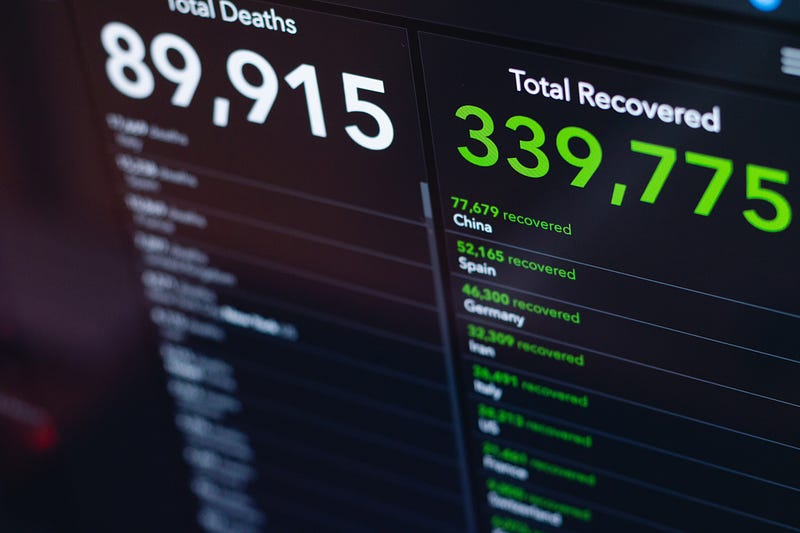
I can remember New York City the week before quarantine with a clarity that feels enviable from today’s vantage point. As terrible and scary as those days were, constantly pierced by the sounds of sirens, there was a shared sense of purpose and urgency.
The tasks were clear: stay inside unless you were an essential worker, going out only for groceries, medication or exercise; wash your hands constantly; sanitize everything that came through the door; check in on the elderly, the vulnerable and your own loved ones. If we could do these things faithfully, together we could “flatten the curve” and avoid mass death.
Now, however, we are almost two months in and that terrifying clarity has given way to a mounting sense of dread and creeping confusion about what comes next. Conflicting and shifting modeling predictions about how many deaths to expect have finally converged into something approaching a consensus.
But these predictions are based on the status quo of existing social distancing orders. They are not able to account yet for what happens if various aspects of the economy are re-opened. And yet, as new infection rates have peaked, that is precisely what is beginning to happen in states around the country. Even in New York, the epicenter of the global pandemic, Governor Cuomo has given the go-ahead for a phased re-opening in parts of the state.
In states that have lifted all restrictions, some have pointed to the lack of a spike in hospitalizations and fatalities as evidence that it is safe to re-open. Of course, this ignores the lag between infection rates and serious illness and fatalities.
But it also misses another important factor: many people are still voluntarily adjusting their behaviors. Despite high-profile armed protests of social distancing orders, solid majorities continue to support these protective measures. Simply lifting government-imposed orders will not lead, at least initially, to a surge of social activity.
This highlights an aspect of the pandemic response that has been largely missed in the analysis and commentary. The initial move to shut down businesses and shelter-in was driven by actions from below not orders from above. Despite the dire warnings of many public health experts, most government officials insisted on “maintaining normalcy” far past the tipping point.
Whether it was teachers organizing sickouts, parents keeping their kids home, nurses and other essential workers demanding protective equipment or workers in the private sector walking off the job, at every turn, it was the working class majority that pushed for measures to secure our safety and well-being.
Meanwhile, those in power — both government officials and Wall Street representatives — delayed closing businesses and schools as long as possible and from the moment they did were focused on when they could get the economy started again.
Instead of using the pause in the virus’ momentum to develop nation-wide capacity for contact tracing and mass testing and re-organize production to meet basic necessities safely, they bombarded us with messages promoting a false choice between lives and the economy.
When some economists and epidemiologists began floating the idea that “the cure is worse than the disease” and we must focus on saving the economy, the reaction from most of the public was decisive: we won’t die for Wall Street.
But what’s become increasingly clear is that those in charge are waging a war of attrition on the rest of us. They have calculated that if they can bleed and starve us without any clear path to an end in sight, they can force us to cry uncle and submit to their terms.
The only thing more terrifying than the idea that there is no plan is the realization that this is the plan. That they expect us to adapt to a “new normal” in which we all try to bend our behavior as best as possible around the inevitable risks while those whose personal choices are limited by economic necessity die quietly.
It is true that the virus exposed the stark class and racial inequalities that run through our society. It is true that millions of people never had the option to stay home while others were forced home not by government order but by layoffs. Nonetheless, the state of lockdown engendered a sense of social solidarity — an idea that we were all in this together and should do our part. There was a sense that the whole world was watching what was happening.
It was in this context that workers felt confident to walk off their jobs. Healthcare workers protested and exposed their administrators. Mutual aid networks sprung into action.
But now we are at a crossroads. More than 36 million people have filed for unemployment since the pandemic began and 27 million have lost their employer-based health insurance. And more than 40% of those who have filed for unemployment have not received any benefits yet. Lines at food banks grow by the day and a Columbia University economist predicts that homelessness rates could rise by as much as 45%.
Meanwhile, those who have been at home for the last 7 weeks are starting to fray. It is not clear what the end game is. No one can say when it will be safe to venture out again or what precautions are most effective. It doesn’t help that confidence in our public health system has been eroded by constantly changing numbers and shifting advice.
While the government has failed to provide the economic and social supports that would enable people to weather a prolonged period of economic shutdown, it has increasingly shifted attention to the behavior of individuals. The same Mayor who encouraged us all to go out to restaurants and a Broadway show in mid-March is now overseeing arrests for failure to socially distance. Predictably, the vast majority of arrests are of people of color.
The rest of us are left desperately trying to gauge what behavior is safe and what personal risks are acceptable. In the absence of any sense of trust or confidence in traditional sources of authority and information, debates over individual and social behavior are shaped by the broader political polarization.
Right-wingers, spurred on by President Trump’s dangerous mix of arrogance and ignorance, have confidently flouted social distancing regulations. Retail workers have faced violence when asking customers to wear masks while shopping. When the Wisconsin Supreme Court ruled that businesses must be allowed to open, many bars and restaurants saw a surge of customers.
Meanwhile, in liberal enclaves social shaming — fueled by fear, frustration and a sense of powerlessness — is common and sweeping in its targets. Some have responded by rightly arguing that shaming people is not effective and will only undermine attempts to reduce harm. Others have pointed out, also rightly, that the risk of transmission through commonly shamed activities, such as running in the park, is minimal.
While the right-wing virus denialists remain a minority, there is also a growing recognition that, as one essay put it, “quarantine fatigue is real” and that the status quo is unsustainable. But the focus on harm reduction and how to mitigate risk mirrors the emphasis on what individuals can and should do to respond to this “new normal”.
But the idea that we can respond to the pandemic through our own individual risk management is an illusion. And it is a dangerous one as it works against the sense of social solidarity that emerged in the early days of the pandemic response. It engenders an “each person for themselves” response in which the most vulnerable will always lose.
Here is what this looks like in action. Governments begin to lift local restrictions on non-essential businesses. In some places, bars and restaurants open. People decide for themselves whether they will go out or not. Businesses develop models to try to maintain sales while catering to a risk-averse population. This prevents a spike in deaths in the general population while infection rates concentrate amongst workers in those businesses and their families.
Meanwhile, those who can will negotiate with their employers to continue to work remotely. As lockdowns lift, however, and especially if and when schools re-open, there will be pressure on many of these workers to return to physical offices.
While there is a lot that is still unknown about this virus, one thing is clear. It is prolonged and repeated exposure — the kind you get when you go to work — that poses the greatest risk of transmission. This is precisely what can only be controlled by social measures, not by individual behaviors.
Yet, right now, in a climate in which confusion, fear and economic desperation mingle, we are each going to be asked to make horrifying individual choices about how to navigate that risk.
Millions of people have no choice. For a worker in a meat processing plant in which more than a third of the employees are infected and safety protocols are non-existent, there is no option to stay home. So long as the employer insists on remaining open, you are not entitled to unemployment benefits if you leave your job — even if the cost of staying might be your life.
In the absence of government shutdown orders or a guaranteed subsidized income, millions of workers will be forced to choose between risking their life by going to work or risking hunger and homelessness.
The absence of any plan for testing, contact tracing, medical quarantine or other safety measures means that the virus will continue to devour those caught in its path. An unplanned, staggered series of re-openings makes it more likely that deaths will continue to be concentrated amongst the most vulnerable.
From the perspective of those in charge, the gamble is that the burn will be slow and steady enough that it won’t overwhelm healthcare capacity and cause dramatic spikes.
In this way, the burden of pandemic response shifts from those with the most power to those with the least. The need for decisive (and expensive) social measures is displaced by a focus on individual level behaviors. Those whose lives are devastated by the inevitable fallout are left to fend for themselves.
This is the end game of their war of attrition. It feeds on our own sense of exhaustion and confusion. The fact that the status quo feels intolerable makes any change to it seem welcome — or at least inevitable. The lack of a clear plan or center of authority is what can make authoritarianism seem appealing.
And right now, there are strains of authoritarianism developing on both sides of the aisle. In nightly briefings, Trump attacks science and praises his own leadership — all wrapped in a rhetoric of bigotry. There is the terrifying specter of armed protestors on the steps of state capitols.
But the popularity that someone like Andrew Cuomo has gained from people desperate for a competent leader has its own danger. Under its cover, he is enacting billions of dollars in deadly budget cuts while working with hedge fund managers, real estate executives and billionaire tech profiteers to re-open, and re-shape, the economy in their interests.
Meanwhile, it is becoming clear that “saving the economy” has nothing to do with actually saving jobs or ensuring economic well-being. The wealthy are doing just fine. US billionaires have increased their wealth by more than $400 billion during the pandemic, the stock market is recovering and Jeff Bezos, founder and CEO of Amazon, is expected to be the world’s first trillionaire.
But far from saving jobs, the first moves to re-open the economy have been accompanied by new announcements of layoffs and fresh rounds of budget cuts. It was never about lives vs the economy. It was always about their profits vs our lives.
Part of what makes the future seem bleak, and the tasks so overwhelming, is the feeling that there is no alternative. In the dystopian landscape presented to us, the agent of destruction is the virus and we are all powerless in the face of its inexorable march.
But while the virus may be a force of nature, it derives its destructive power from the social and economic relations that govern our society.
The power to resist the manufactured inevitability of mass death lies in articulating alternatives that challenge the very organizing logic of our system. This can feel like a daunting task. And it will require that we prepare to fight not just today or tomorrow, but over the long haul.
Nonetheless, we can begin by refusing the idea that this is the new normal — or that there is anything normal about this.
We can begin by saying no. No to any order to return to work in conditions that are unsafe or to any job that is not absolutely essential.
In New York, the nurses’ union that led a fight for protective equipment and life-saving measures has now laid out demands for what would be required for New York to safely reopen. Until those conditions are met, we should resist any order to return.
And we can fight for unions and community organizations across the country to develop similar demands. What will happen with schools in September is a looming question and the answer to it should be shaped not by educational consultants and politicians, but by teachers, students and parents.
We can and must build solidarity with workers who are walking off the job and refusing to work in unsafe conditions.
This is the starting point for broader demands about how to organize society during this pandemic: taxing the rich, using that money to provide a guaranteed income and healthcare to every household (regardless of citizen status) and re-organizing production to meet our most essential needs while providing essential workers with proper protective equipment and workplace safety measures.
It means insisting that the priority during the pandemic must be preserving human life at the expense of profit.
None of this will be easy. The last four decades have seen the greatest transfer of wealth from the bottom to the top that this country has ever seen. The measures required to fight this pandemic and prioritize life would amount to a reversal of that process — one that will be fiercely resisted by its beneficiaries.
But if ever there was a time to fight like our lives depended on it, this is it. Because they do.