
Lost Learning Time Is Not the Crisis
We should be focused on our kids’ social and emotional needs, not academic expectations
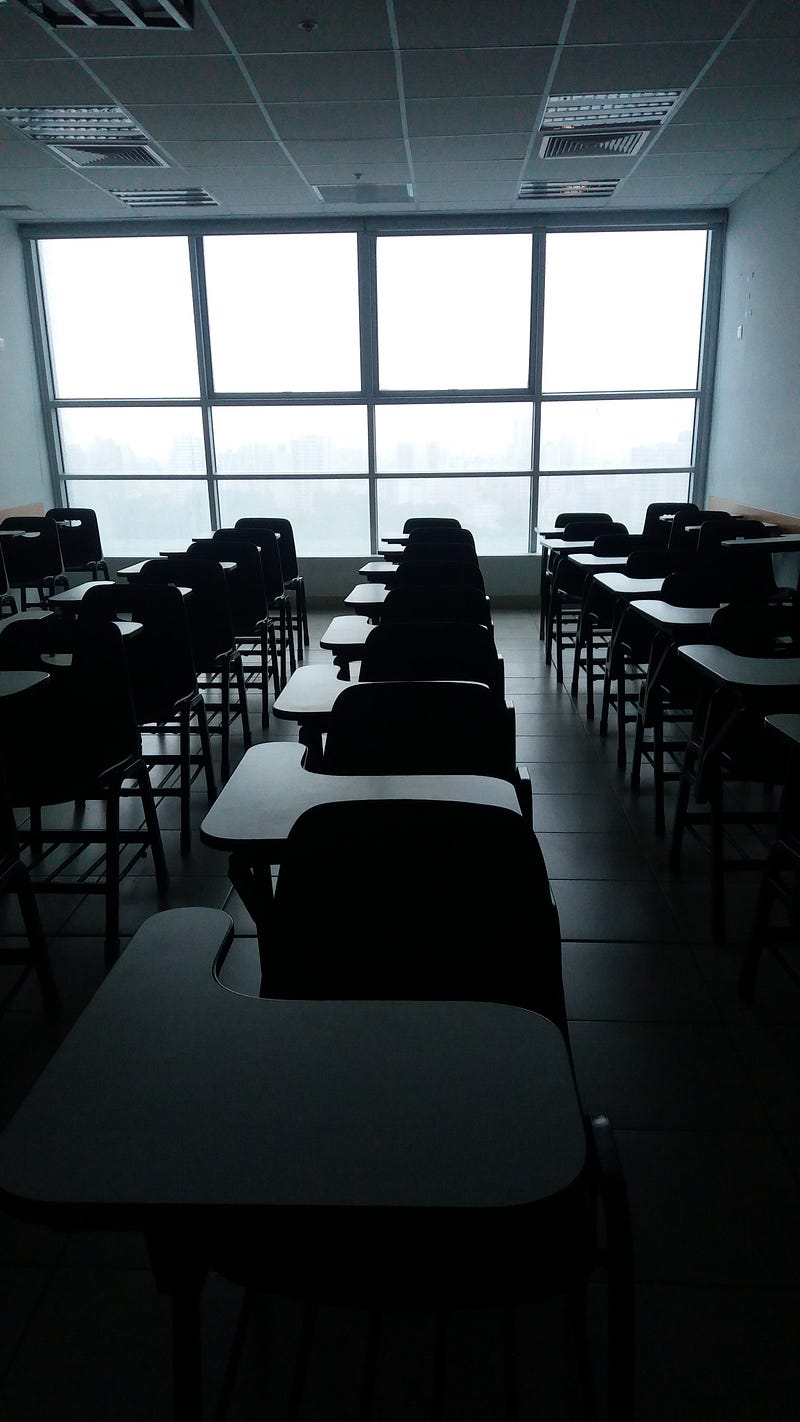
As school districts begin planning to re-open this fall, a panic about lost learning time is dominating the discussion. This focus directly pits measures to close the achievement gap against the health, safety, and emotional well-being of students, teachers, and families.
New research — widely circulated in the media — asserts that students have fallen months behind during the coronavirus. This makes intuitive sense to parents and teachers who have watched their children and students struggle with remote learning. And polling shows that a majority of parents are worried that their children are falling behind.
It would be strange if closing schools for more than two months in the midst of a national crisis and widespread trauma didn’t impact academic gains. But there are also important reasons to challenge this focus and its underlying premises.
Research on learning loss, like much educational research, is presented in stark terms that imply it is based on conclusive results. In reality, this is very hard to measure. Many of the current projections are not based on new data but simply extrapolate from previous research on learning losses that take place over the summer break. However, even that research is questionable. Much of it is based on studies that were done in the 1970s and 1980s.
More recent studies have used the results of MAP (Measure of Academic Progress) tests. These tests have been criticized by educators and opponents of high-stakes testing. If you follow the money, you realize that the NWEA administers the MAP test and also happens to be one of the leading disseminators of research and position papers on the “Covid-19 Slide” as they call it. They also have a $5.25 million contract with the country’s largest school system to provide testing.
Another study on learning loss in math during the pandemic compares results in assessments on online platforms used during the school year and during remote learning. It seems obvious that results on assessments during remote learning would be skewed and hard to draw conclusions from.
We can accept that most students will enter the 2020–2021 school year academically behind where they would have been had schools stayed open without buying into hyperbolic and fear-inducing claims — especially when those claims lack solid evidence to support them.
The problem with a focus on the loss of learning time and declines in academic achievement is that it drives a sense of urgency about reopening schools and shapes the proposals for what that will look like. Two of the largest teacher unions in the country have sharply criticized plans to reopen without union input, a commitment of necessary resources, and plans to protect the health of students and staff.
There are real reasons that keeping schools closed has negative consequences for children and families. Schools provide space for children to engage with and learn from their peers and adults beyond their families. This is critical to their social, intellectual, and emotional development. For many students, schools provide stability and necessary resources. Parents and children being stuck home together for months on end can take a toll on the mental health of everyone in the family.
However, the emphasis on academics in the push to reopen does not address these critical issues. In fact, it can exacerbate them while creating unnecessary risks to public health. In order to reopen safely, the CDC and others have recommended measures like desks set far apart, strict hygiene protocols, and minimal social interactions. Recess and other unstructured activities are likely to be prohibited.
These measures, while likely necessary to minimize the risk of virus transmission, make it challenging for schools to provide for the social and emotional needs of children — needs that rely on time for free play, hands-on exploration, and social activities. They also make it difficult for teachers to meaningfully interact with students while increasing demands for them to monitor and police their activity.
These protocols are likely to pose particular challenges for students with disabilities or heightened emotional needs — those with anxiety, sensory difficulties, physical impairments, or other needs.
Dramatically smaller class sizes would be necessary to cope with these challenges, but school districts around the country are facing severe budget cuts. In NYC, the Chancellor has warned that class sizes might significantly increase in the coming year.
Meanwhile, the push to address academics is driving proposals that recommend extended school time either through a longer school year, summer learning, weekend academies, or a longer school day. California’s Governor Newsom is pushing to start the school year early there.
These proposals for more in-person instructional time clashes with the need for smaller classes and proposals for staggered start times, part-time schedules, and hybrid plans that balance in-person and remote learning.
To address this, many of the proposals for hybrid learning recommend further segmenting students by ability by requiring low-performing kids to attend in-person while others continue remotely. These needs would be measured by the administration of costly and time-consuming standardized tests.
Such segmentation threatens to stigmatize struggling students and increase the anxiety and low self-esteem many of these students already experience. These are also most likely to be the students who have already suffered trauma during the pandemic and most in need of support that prioritizes their social and emotional needs.
The scenario presented by most of the proposals driven by making up for lost learning time is one in which the kids with the greatest needs attend academically focused, in-person classes in which there is little room for social interaction with peers or hands-on support from teachers. It doesn’t matter how much lip service educational leaders give to social-emotional learning and needs if they are prioritizing instruction based on standards and test scores rather than meeting the needs of the whole child.
At the root of all of this is a far bigger problem. The entire discussion revolves around how to get students to meet a set of arbitrary standards that have been constructed by school reformers. Instead, the momentous events of the last year should be causing us to consider how our schools — curriculum, expectations, timelines, and how and what we measure — need to change to better meet the needs of students.
One article describing the crisis of lost learning time quotes a parent who describes having spent countless hours helping her Kindergarten daughter through remote lessons but is worried that she has fallen behind, particularly in math. She asks, “If they are transitioning into first grade, will there be time to catch up and get them up to par?”
When parents of Kindergarten children are worried about their children falling behind in math due to two lost months, it is time to question the kind of pressures that our school system is putting on our children. Yet this pressure is expressed over and over again — especially by parents of children who are most marginalized by our school system and are the primary recipients of damaging messages about how their children do not measure up.
Multiple studies have shown that when parents are subjected to external pressures, they are more likely to exhibit and communicate anxiety towards their children. We are placing unbearable expectations on families at a time when children most need their parents’ ability to marshal emotional resources to support them.
If we are serious about providing for the social and emotional needs of children who have been affected by this crisis, then we must accept that lost learning time is an inevitable consequence of the pandemic and adjust expectations accordingly. The refusal by those in charge of our school systems to do this is leading to damaging practices and will exacerbate inequities.
Instead of emphasizing academics, in-person instructional time — which should be limited for safety reasons — can be a valuable time to reconnect with peers and trusted adults. There should be time to talk and to play — and for adults to listen to how young people are understanding this moment.
The curriculum should prioritize equipping students to make sense of a world that has changed and is continuing to change around them. Between the pandemic and the explosion of protests in response to George Floyd’s murder, students have learned many lessons in the last several months. Teachers can develop innovative lessons that can help to process and extend this learning.
This does not mean that classes should only discuss current or political events. But this moment offers an opportunity to challenge our schools to make the process of learning meaningful to students and to ground it in their natural curiosity about the world. The limited-time available in-person should not be used for content delivery, but for stimulating inquiry. In-person time could prioritize helping students develop projects and providing materials that can allow them to continue and extend this learning at home.
Instead of rushing to test and measure students when they return this fall, how about giving them a break from testing? What about seeing this year as an opportunity to experiment and to reconnect with young people who crave adult attention and guidance but often resist being controlled and measured? Another benefit of this would be saving millions of dollars that could be redirected to counselors, teachers and lower class sizes.
Perhaps this does mean “lowering standards” if those standards consist of proving that you can master an arbitrary selection of content. But when did we decide that a 6th-grade student (like my own child) needs to learn about feudalism, but does not need to discuss the civil rights movement or racial and class inequalities?
My son can be driven to tears by assignments that ask him to annotate and draw inferences on a text, but he is quite sophisticated at detecting the coded language and biases in a television program or news story. They involve the same skills, but one feels meaningful and the other oppressive.
If you gave him a test with a reading passage and multiple choices and ask him to draw inferences, results might show that he is “behind grade level”. The answer is not more skills instruction. It is to change the measurement to more meaningfully assess knowledge.
In the last week, I have watched as a generation of young people — many of them labeled as “behind” by our school system — not only demonstrated courage but also the capacity to see through media lies, to shape the narrative, to articulate demands, to make rhetorical choices and to think critically about proposed solutions to racism and police violence. As someone dedicated to literacy education, these are the skills I most want to see my students attain.
Our schools may be failing, but our children are not.
The idea of a crisis of lost learning time taps into real anxieties. But it is predicated on artificial standards that privilege the knowledge base of our society’s elite and dismiss or stigmatize the abilities and knowledge that children marginalized by our system have to offer.
It is rooted in deficit-based narratives that tell poor children, children of color, those with disabilities, and English language learners that they are “less than”. And it is supported by an entire industry that makes a fortune off of testing and labeling our children while our schools are starved of the resources they actually need.
These are the ideological pillars of an education reform movement that has reshaped public education over the last two decades. Right now, the artificial crisis being promoted around lost learning time is pushing towards opening schools without sufficient regard for the safety of students and staff.
And it underpins proposals that are not designed to meet the specific needs of our children in this moment. In fact, many of these proposals threaten to increase the trauma and the inequalities faced by so many students.
If ever there was a time to reject the ideological assumptions of the education reform movement and fight for the schools and learning our children deserve, now is that time.
If you want more, here are more of my stories on education during the pandemic.