
The Politics of Identity and the Economics of Self
Or the political economy of I have no clue who I am
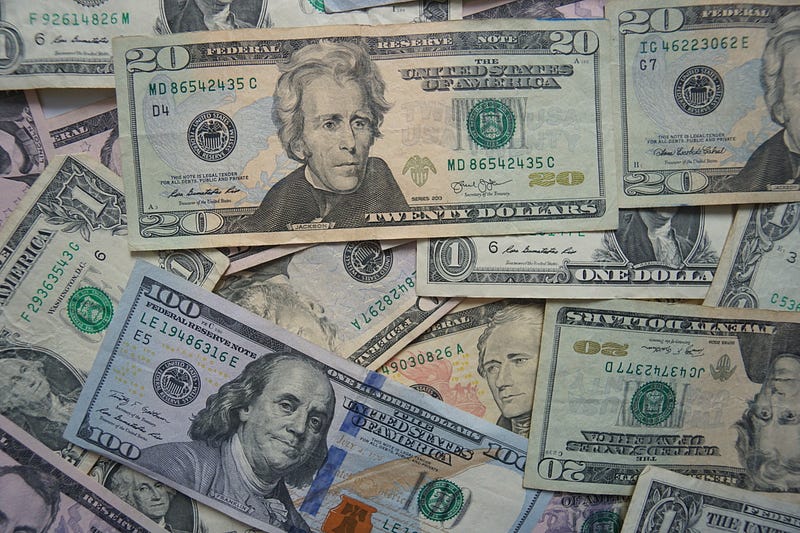
Not knowing oneself is not the best way to start an essay on identity, but it is the best foil for the process of exploring this thing we spend so much time stressing over. It isn’t by choice, this stress, this is the world we live in. There are several frameworks from which to work with identity, but the underlying fact of the matter is this, identity is a commodity, freely traded on the social markets of Facebook, Instagram, TikTok, and any other social media platform where the possibility of Warhol’s 15 minutes drives our behavior. Even if you are a social media hermit, identity is a commodity in the workplace, job market, and as we all know so well, buying a wedding cake if you’re gay.
In the politics of identity, commoditization trades not only in money, but human capital, social capital, blood, sweat, tears, and suicide.
In truth, life is the currency used to buy and sell identity on the market of social approval. With the advent of social media, we have shifted much of the ground of our will outside ourselves, a mass push to an external locus of control.
Think about that for a minute. If identity is that deep look within, why does so much of it depend on what others think? Why is the number of followers, the comments of strangers a world away, and all the other accoutrement of social media so important to our sense of self? What use is identity if it is almost wholly determined by external forces? So much of who we are is a product of socialization, of the roles we play in the social world, I often wonder what is left when we take all the masks off.
A thought experiment
Many years ago, a professor and mentor of mine gave a lecture where he posed the question, “when you remove all the masks you wear, the personas you present to the world, what is left?” What is at the core of who we are when all the descriptors, all the adjectives and nouns that swirl around us are dropped? It is the spiritual equivalent of standing naked before a mirror; how do you react? Whether it is naked spirit or naked body, can you stand before the mirror and be empty? Or do you rush to judgement, assigning every element perceived a value?
Regardless of how harsh the judgement of our identity that floats about the social-media-verse, our internalized experiences lead us to be our harshest judges. In that dark of night, when you close your eyes, is the voice you hear nice to you? Or is it a real asshole, taking you to task for every minute faux paux you stumbled through during the day? We bravely tell ourselves that what others think doesn’t matter as we try not to look at our tear-stained faces in the mirror, but this world has made us all commodities, so yeah, it does matter. What matters more is the pain we feel because of the this brutal objectification.
Observations of a different kind
Everything that makes up who we are in the world comes from the world. It is an assemblage of parts: symbols, judgements, characteristics of applied demographics, and other cultural artifacts we adorn ourselves with in an attempt to be recognizable to the tribe, or that others paste on us to make us palatable or explainable. These are symbolic pheromones of identity, and every one of them is an illusion. The power of illusion comes from the belief that sustains it. People suspend disbelief regularly, attributing truth and existence to perceptions of self and others. It is a result of our commoditized existence, the illusion we spin maintains our “brand” and allows us to profit, financially and socially, from the skill with which we spin that thread and the willingness of others to buy it.
Much of the modern philosophical work on identity and its authenticity come from Existentialism, mostly the pedigree of Martin Heidegger via Sartre, Derrida, Foucault, and a host of others. Theodore Adorno wrote a scathing critique of all that in “The Jargon of Authenticity.” What good is ‘authentic being’ if, in the end, our identities are just widgets on the Commodity Exchange of Souls? The “authentic being” makes it sound as if we control this authentic experience of ourselves, but the data suggest our penchant for external locus of control has lead us to surrender to the social forces that surround us. To give it a Buddhist slant, when you remove the commoditization, the masks, and sit in the dark alone, there really is nothing there. Perhaps more palatable, we are all emptiness, at the core, empty of judgement, empty of meaningless concepts, empty of characteristics, both ascribed and achieved. What exists there is just us without any need of adjectives.
Defying the social
So what happens if we decide to live in the naked nothingness of self, if we decide to rest in our being without descriptors? What if I decide I won’t be the “dancing monkey” that polite society requires, that I refuse to wear the trappings of tribe that clue the other in to whom they are interacting with? Nothing happens, or the same thing happens. The moment I appear in their field, the other will clothe my nakedness with symbols of their choosing. They will create the story that explains me in their world so they can comfortably ignore my presence or comfortably engage with my difference, which ever suits their inclination of the moment. If I speak, my words drape over my nakedness, giving others a context, providing understandable elements with which they can stitch together a cloak of identity and wrap it around my shoulders for their comfort. In the social field, the other controls your identity, not through dictation, but through interpretation. No matter how intentional we are in presenting our selves as we are, we are subject to the interpretation and consequent action of others. And we do it to them, too.
Yeah, no one gets out of this alive, soul intact. Social media and analogue media (i.e., face to face interactions in real time in real space) are a mosh pit of angry thrash-punk posturing and victimization. Any notions of identity that seek to find the awareness that floats above all the chaos have difficulty gaining purchase on that beach head. It makes you wonder if there is even the possibility of reclaiming one’s identity from the fray. But really, why would you want to?
Summing up
So what does all that have to do with my sense of self as a gay man? For one, I try to avoid existential qualifiers unless they really mean something. The formula “I am …” is a dangerous one. “I am gay” feels real to me, it isn’t an adjective pasted on from outside. Nevertheless, it is a separation and isolation of one characteristic, diminishing my sense of self by its fragmentation of my being. When I contemplate the emptiness, “gay” is a deep, inseparable part of the being that sits in the center of the swirl of empty adjectives, labels, and other descriptors that are external in origin. Being white and male don’t feel like they make it to the inner sanctum. I think that in my being, “white male” isn’t really there, because I don’t think of myself in those terms. But then, I don’t have to because I’m a white male.
In American Culture, “whiteness” is the transparent race. We don’t see “whiteness” because the cultural assumption is that this is how everyone should look. The intersectionality of white male tends to wash out the social stigma of most other characteristics, for the most part, but I’m finding that being middle-aged is problematic. It is apparently unacceptable for white men to get old. And while I experience life as a cis-gay male, my community sees me as cis-hetero male. I didn’t ask them to, but they do. The mind sees what it wants to see. If I had a boyfriend and we walked hand-in-hand through the local square, that would change. Probably violently.
A second thought experiment:
Assume you will be reincarnated. Of the elements you consider as part of your identity, which ones will actually make it through to the other side? To me, all the purely physical characteristics such as white, male, social status, economic status, job status, stay behind. Only the essential part of me moves forward. The trick is to figure out the difference. I know gay is here to stay.
The question “Who am I?” still hasn’t been answered. It probably won’t be. Mainly, because I don’t believe I need to be anything specific or anyone special, and because existential qualifiers are external in origin. I try not to attach to the chaos of identity politics because I don’t feel the need to justify anything to the world. I will engage in the defense of our rights because LGBTQIA+ rights are human rights. Sexuality, sexual expression, and gender identity are essential human features, inseparable from the human experience. An inclusive recognition of what makes us all human is a fight worth fighting. All the rest of it, to me, is noise in my head I don’t need. When I turn out the light and lay in bed, what I see is the absence of light, what I hear is my breath, who I am is an emptiness of all but that.

This story is a response to the Prism & Pen writing prompt Will the Real (Queer) You Please Stand Up?