
The Nature and Nurturing of Spirituality
Spiritual sites from different angles
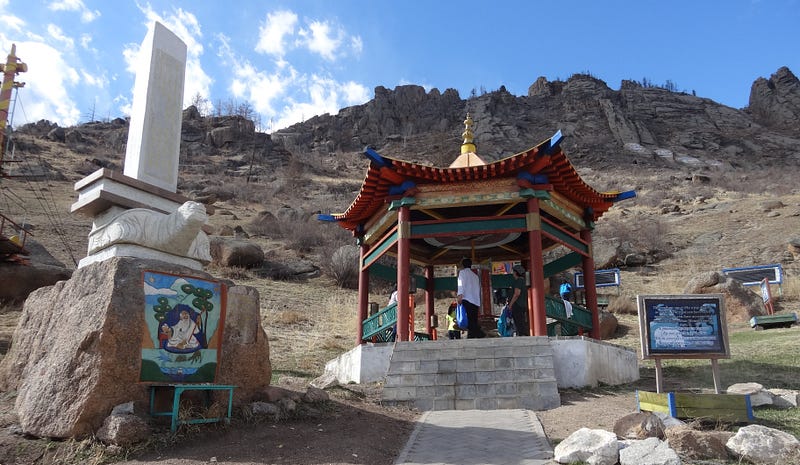
When Anne Bonfert issued this month’s Globetrotters challenge, very fitting for this time of the year, I immediately also realised that I had so many different and contrasting views on (and pictures of) sites that could be considered spiritual.
How to choose?
I started with my tried-and-tested method — considering pictures from my rather extensive collection of travel photographs and then letting my mind wander about these, trying to find connections or contrasts between them. Even while I was falling asleep at night and while I was slowly waking up in the morning, that’s when my creative juices started to bubble.
It wasn’t easy to select the images and angles of approach to this story, but I have whittled it down to a few.
Last weekend, we were singing and listening to Christmas carols in the large Cathedral of the Holy Cross, in Lusaka. Beautiful music and voices (not mine, in the choir!) in a relatively modernistic concrete Anglican cathedral. This is of course that time of the year when many (most?) of us get these warm christmassy feelings about peace and goodwill for all mankind, and so on.
For a few days, we try to forget that organised religion has played such a large role in warfare amongst mankind.
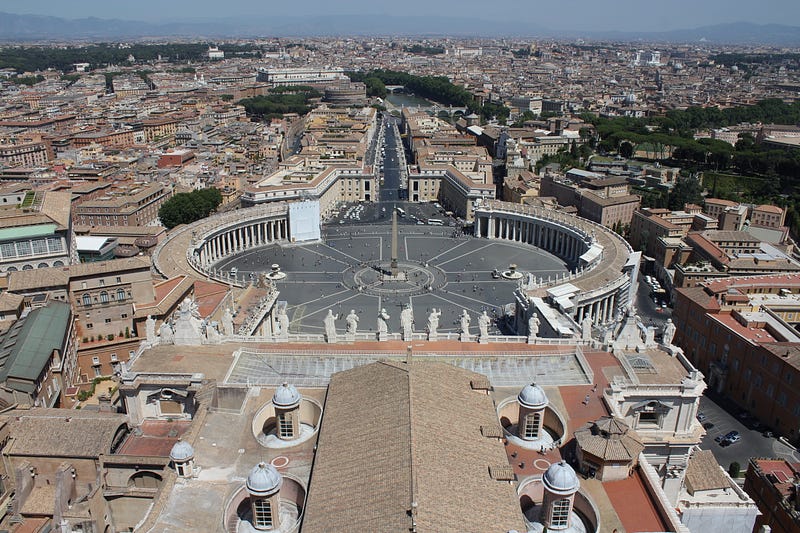
This reminded me of a brief trip to Rome, that city which had done so much to try and eradicate (and later promote) Christianity. For us visitors, during 2012, a city of contrasts: The beautifully painted ceilings in the Sistine Chapel where the horde of tourists was cautioned to be quiet, a Gift Shop sign outside the Vatican Archives; the Colosseum where gladiators used to fight each other and/or wild animals, tourists eating ice cream in the sunshine; underground musea with thousands of stacked skulls and bones of monks from centuries ago, noisy scooters on busy streets above; a city with beautiful old and well-maintained buildings, but also (temporary?) electric cables snaking out of broken distribution boxes.
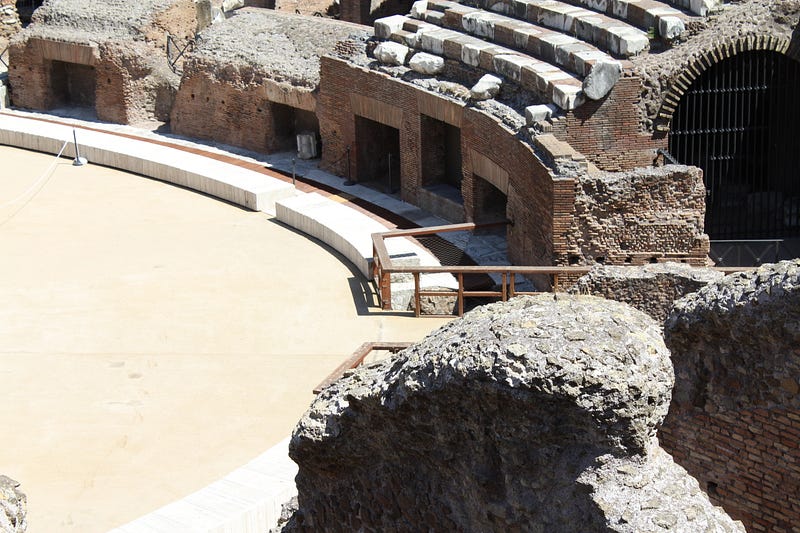
For me, Rome (and even the Vatican City) appears to have become a touristic site, certainly a place with much history, but with spirituality leaking away rapidly. Might have been due to our short visit, or maybe because I’m not Catholic.
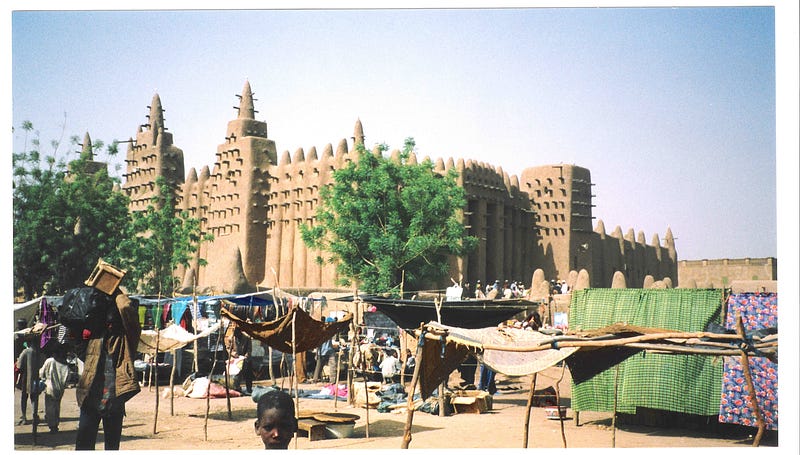
The above photograph was taken during a West African road trip, in 1999. The Great Mosque in Djenne, Mali, is very different from anything built in Rome, less ostentatious in its decoration, but nevertheless very impressive. Especially if you consider that it’s built out of mud and sticks and was probably constructed somewhere between 1200 and 1330. However it must be said that all such mud-built buildings in West Africa are maintained by regular replastering with fresh mud. And there have been some rather major repairs, upgrades and remodelling over the past centuries.
As non-Muslims, we were not allowed to enter. Unlike churches and cathedrals in other parts of the world, the Great Mosque had not succumbed to the “benefits” of tourism, or at least not in 1999.
Let’s fast forward a few years, and fly across to yet another continent, to Mexico.
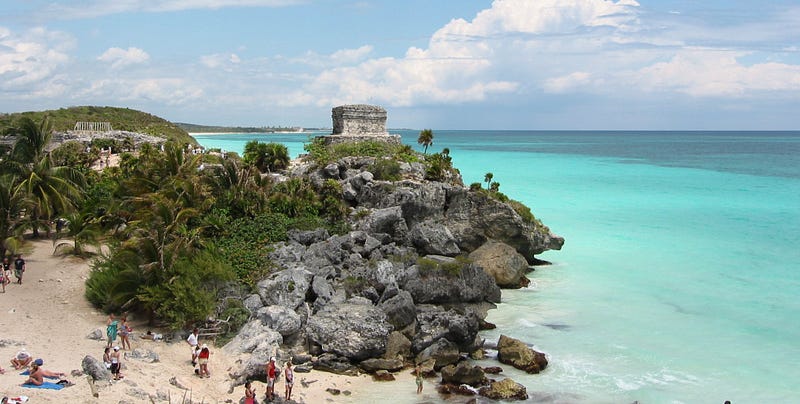
Tulum is a “must-see” location if you’re visiting the Mexican state of Quintana Roo. Somehow everybody expects that every structure that the Maya left behind is somehow a temple or a site of human sacrifice, but of course the ruins also contain palaces, market places and even a lighthouse on the cliffs. A city, in other words.
Nevertheless, I did get a strange sense of spirituality during our visit there. Not only because our tour guide Jesus (pronounce: Hay-soos) said that we could distinguish him from all the other guides, because he would be the one shouting “Follow Jesus!” when it was time to move on.
No, with the Maya people lost in the mists of history, somehow their spirituality and their worship of the sun lingered on between the gray limestone buildings.
The sun was beating down onto a fantastically blue-green sea and white sand beaches and there were numerous people also worshipping the sun in their swimming trunks and bikinis. We left to do that in nearby Xel-ha park, instead. Not a spiritual site at all, but good for the spirit, nevertheless. If only for a few hours.
Let’s trot to another part of the globe.
Very different (and much less extinct) spiritual sites can be found on the Asian continent.
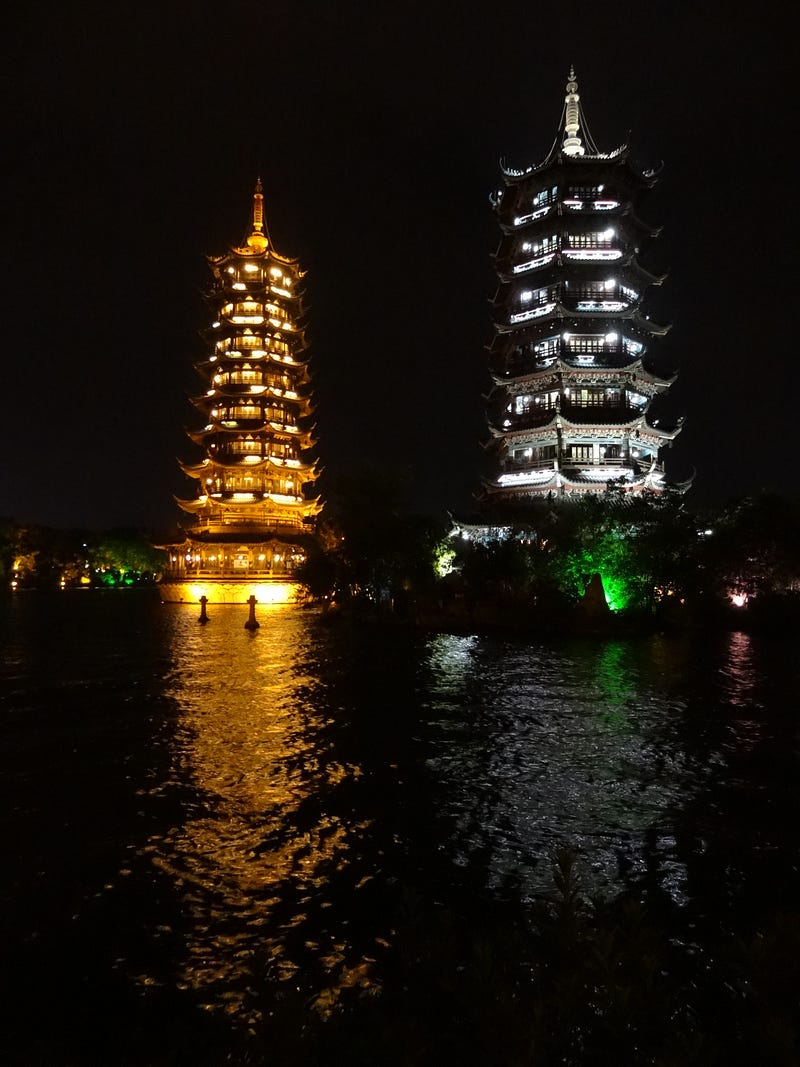
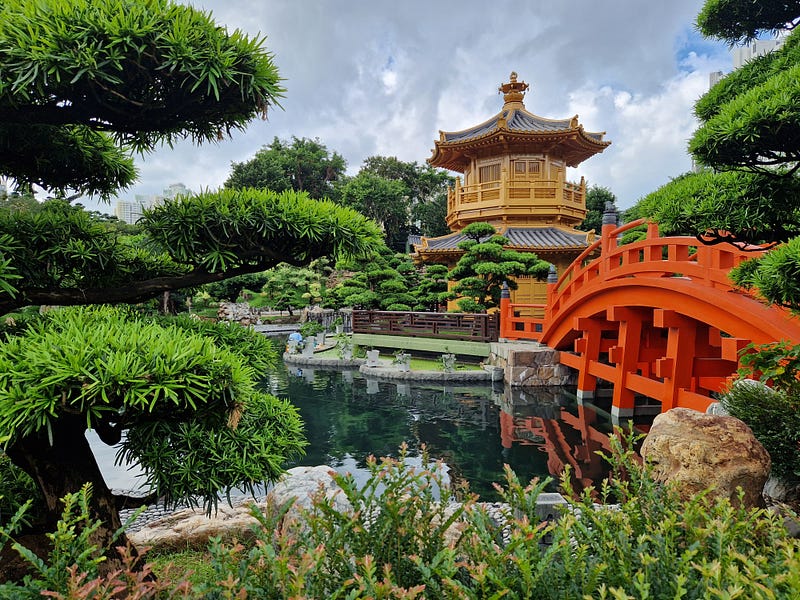
All the above have been samples of spirituality in a religious sense, in some cases also affected by a certain commercial spirit. But spirituality also has a wider meaning.
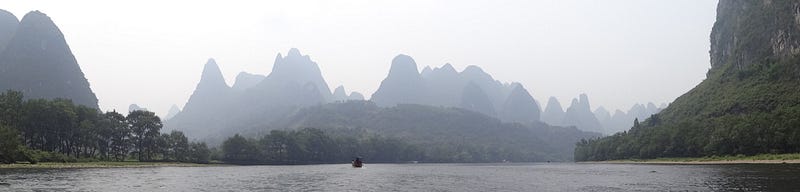
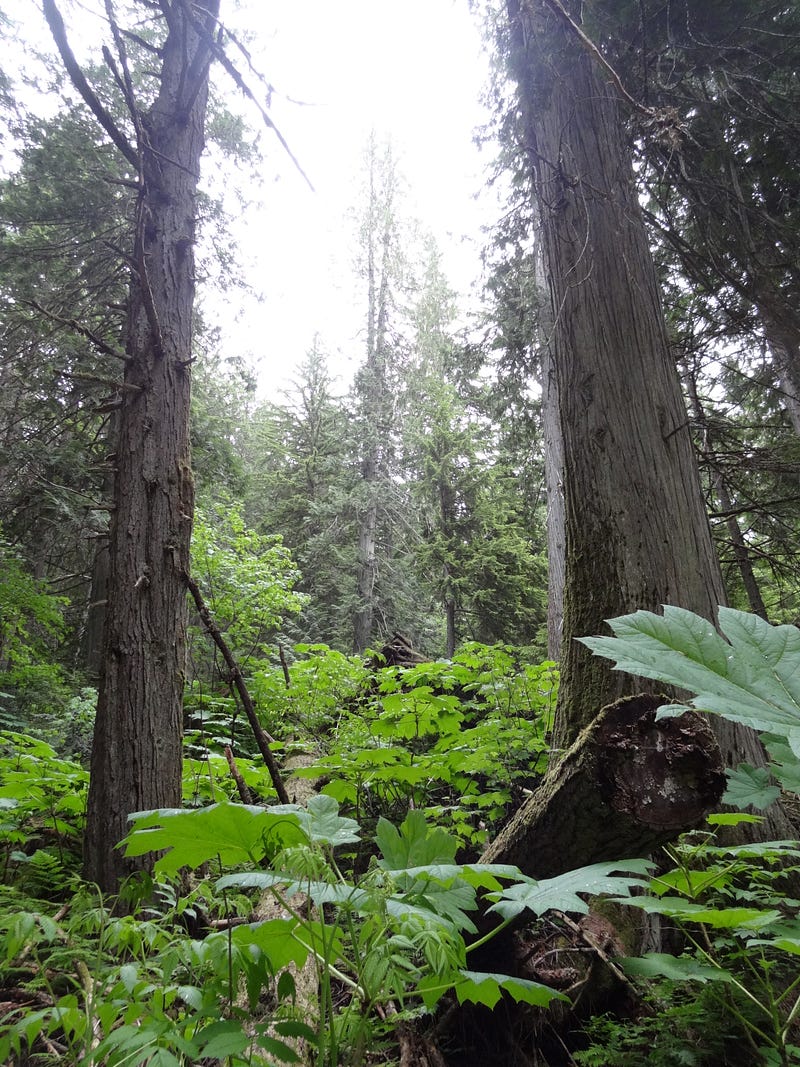
When we’ve visited beautiful natural areas during our travels, I couldn’t help but feel somehow connected to all the varieties of life, and even (don’t laugh now!) to the geological life recorded in the rocks. As a human being with a rather limited lifespan, I tend to feel that I am a very small part of a system that includes centuries-old trees and rocks for which a thousand years is a mere blip in time. Difficult to explain, but a spiritual feeling, nonetheless.
It’s fun and interesting to describe our feelings about places with a spiritual character, but I feel the urge to make a statement here:
In my view, the many different religious aspects of spirituality are often at loggerheads (or war) with each other, and they subtly change over time, reacting and adapting to our human history, whether we like it or not.
Nature may look like a largely static backdrop to the stage of our human life, but we are in fact part of nature, part of the spirit in nature, whatever that may be. As humans, we should be more aware of this, and also of the fact that we are currently changing nature at a rapidly increasing pace, perhaps suffocating it (and our) spirit.
This worries me, to put it mildly.
With an ever-increasing population on the planet, a population that wants (and needs) a higher standard of living for all, we are inevitably changing and maybe killing the most important spiritual site of all: our planet Earth.
This point was brought home by the view from Voyager 1, almost 24 years ago, looking back at our physical and spiritual home, from a distance of about 6 billion kilometres. I can’t share that image here, but do yourself a favour and Google “pale blue dot” or follow the link. Almost invisible from that distance, it shows the ultimate and (insofar as we know) only spiritual site in the universe, where all our various views of spirituality and histories of religion coalesce into one.
I’ve already written earlier about that pale blue dot, and I would like to repeat one famous quote from that story:
… There is perhaps no better demonstration of the folly of human conceits than this distant image of our tiny world. To me, it underscores our responsibility to deal more kindly with one another and to preserve and cherish the pale blue dot, the only home we’ve ever known.” — Carl Sagan, Pale Blue Dot, 1994
I hope that you’ve liked my ramblings and pictures and have tolerated my lapses into lecturing. If not, there are many other, very different submissions to this month’s challenge:
Tim Ward, Mature Flâneur, has written about his visit to a Buddhist temple in Kyoto, contrasting beautiful surroundings with commercial aspects and complimenting it with some history:
Carol Labuzzetta, MS Natural Resources, MS Nursing provided her own views on (and images of) contrasting spiritual sites in two different parts of the world:
And Scott-Ryan Abt has described how spiritual places mean different things for different people: