
Owning the Pale Blue Dot
… which also belongs to our descendants.
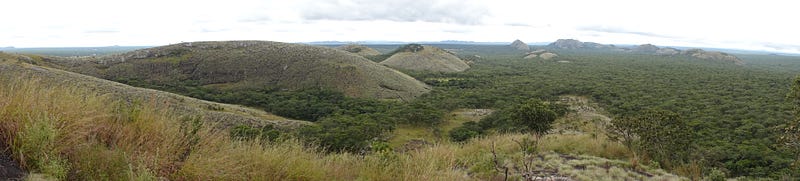
Almost thirty years ago, Carl Sagan famously mentioned our planet, as seen by Voyager 1, looking back towards us as it was leaving the solar system:
“… There is perhaps no better demonstration of the folly of human conceits than this distant image of our tiny world. To me, it underscores our responsibility to deal more kindly with one another and to preserve and cherish the pale blue dot, the only home we’ve ever known.” — Carl Sagan, Pale Blue Dot, 1994
He commented on the rivers of blood spilled by generals and emperors, in order to become masters of a fraction of that dot. It’s one of the profound statements about our world ever written. We should all print his words, which I have linked above, on our walls, and read them every day.
However, even as we humans are still stupidly making war on each other, let’s focus on something else. Our very existence has an impact on our planet. Even when our ancestors were living in caves, they were burning wood to make fire, digging up flints to make tools, and painting hunting scenes on the cave walls.
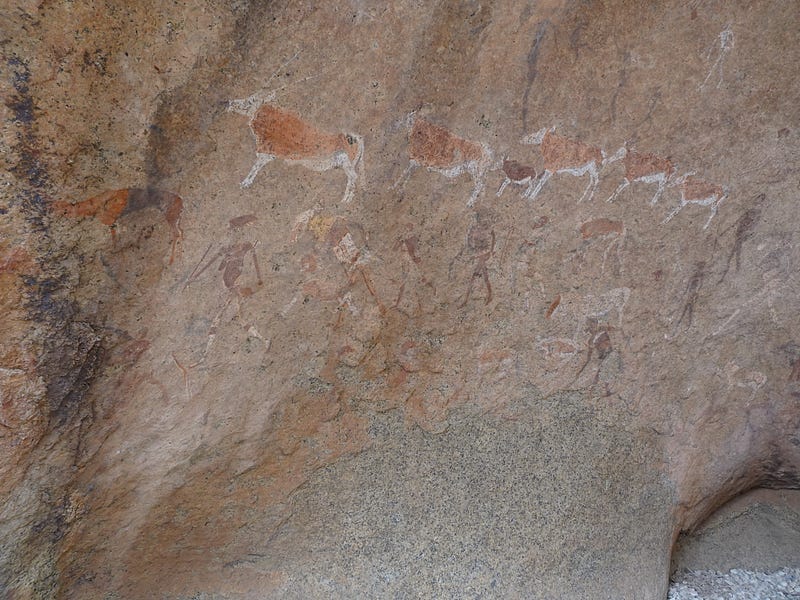
It may seem like a large step from rock art to extreme urbanization and megacities, but I sometimes wonder if we are slowly (but with increasing speed) moving towards a situation like that of the planet Trantor that Isaac Asimov describes in his Foundation novels: A planet covered by a metal shell, with the sky and stars projected onto it from the inside, with only the top classes of society having access to the outside.
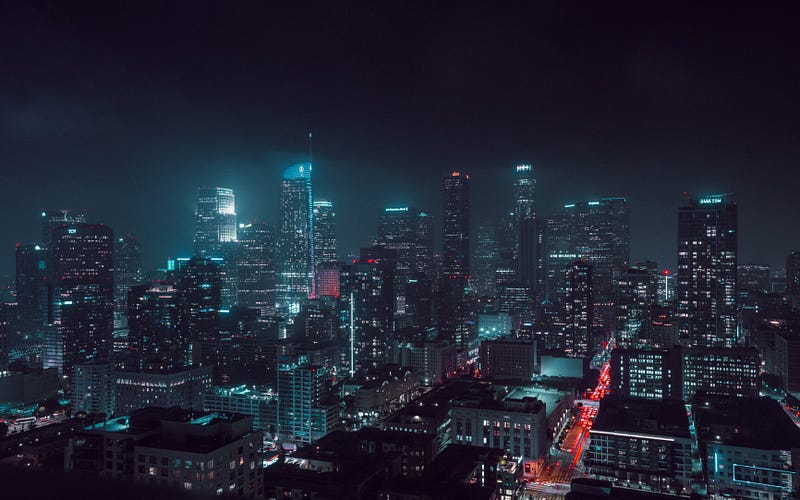
Will our Earth one day also be covered by cities inside a shell, with hardly any nature left?
While you ponder that rather depressing thought, consider something that I wrote quite some time ago, explaining my work life, to some extent:
One of the reasons that I do such work, is to try and ensure a liveable world for the people who come after us. This includes the following:
- Help monitor environmental performance at mining sites, so that damage is limited, but also so that mining companies can actually contribute to improvements of the environment, in areas where this is already impacted; and
- Assist activities to support government institutions that collect mining royalties, which should help compensate a country and its people (current and future) for the loss of mineral wealth.
These are both very complicated areas, and one could write books about each topic — the policies, the challenges, etc.
But even as I work on such issues, I am often thinking about my own choices in life.
For instance, as illustrated by a very recent story, I love to travel.
And so, on a personal level, I do have a significant carbon footprint. This leaves me with two feelings:
- Guilt, because I may be contributing to damaging our planet, which would reduce future generations from enjoying it as much as I do; but also
- A bit of entitlement — does the above not imply that I also have the right to enjoy the planet that is my home?
I’ve earlier written, somewhere, that one of the root causes of the problem is the proliferation of people on the planet. There are just too many of us, and our numbers are still increasing, wars and viral infections notwithstanding (so far).
However, I would not argue for a world with no people. Firstly, rather obviously, because I am also a person. But also because I enjoy meeting people in their various settings and countries, with their varied customs, histories, foods, etc.
So what does it all mean?
Am I just enjoying as much as I can, and at the same time trying to slow down the inevitable development that will turn Earth into Trantor?
Your thoughts?