The Mythic Power of Your Queer Story
J.M. Tolcher’s “Poof, ” and how your story can be a roadmap and lifesaver for others trying to survive in a dangerously homophobic world
I have, countless times, turned to queer memoir for inspiration and a roadmap to navigate my own journey. From Timothy Conigrave’s Holding the Man to JVN’s Over the Top, queer memoir has helped me reclaim my own self-love and courage. There are countless other examples by lesbian, bi-sexual and transgender writers.
Beyond reading the lives of others, I have written my own stories for Prism & Pen and other publications as a way of tapping the deep well of pain and struggle to transmute it into my own empowerment. This is the power of queer writing — telling your story can change your own life and that of others.
Queer fiction and film has an important place too, but there’s something viscerally more powerful in reading memoir. There’s a realness that can’t be escaped; a truth that penetrates the heart.
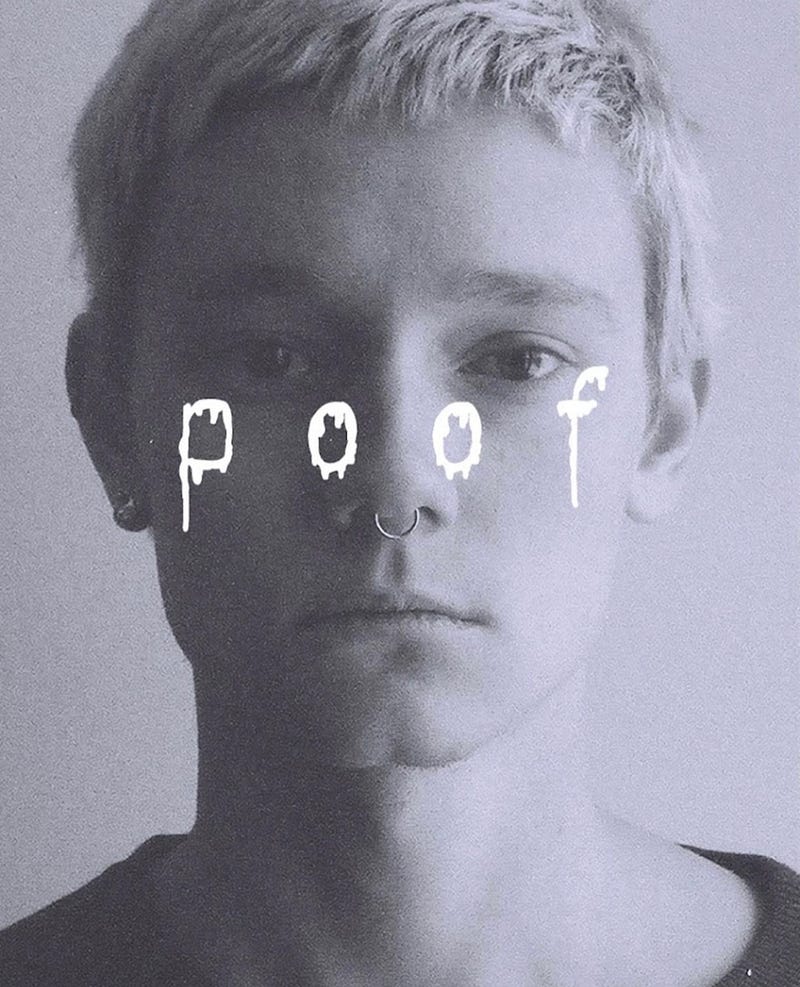
J.M. Tolcher’s “Poof”
I recently came across J.M. Tolcher’s debut memoir, Poof. I devoured it in 24 hours, and his story hasn’t left me since. Tolcher has not only delivered a powerful memoir, but also provided inspiration for how to go about the act of telling one’s queer story.
Starting out in a small town, circumnavigating the globe and weaving queer history, Tolcher’s tale is of mythical proportions. It is so epic and timely that he was offered book deals by publishers, which he turned down because they wanted to fictionalise it.
Tolcher was so committed to his own truth-telling that he decided to self-publish instead. The risk and cost were significant, but I have a sense this will pay off, not just for him, but for many readers his life has the potential to transform.
After ten-thousand-and-one nights, I withhold no details. Kill me, sue me, send me to prison for all I care, but out of respect for the dead, those involved, and those yet to live, no names or places have been changed and I have done my best to narrate all exactly as it occurred. That anyone has anything to hide is no fault of mine: I, for one, have nothing. (p.35)
Tolcher grew up in my hometown, albeit more than a decade later. It was a time of conservative political rule, with politicians making and sustaining laws that didn’t even attempt to hide their homophobia.
I identified with his early experiences of growing up in a society that not only doesn’t accept you, but actively loathes and seeks to destroy you. Nothing good comes when governments legislate who you are as wrong. Tragically, of course, this is not a theme relegated to history — these same wars are being waged on LGBTQIA+ people today.
Yet, while there were similarities between Tolcher’s and my early experiences, we each dealt with our trauma in different ways. I recoiled into the sea of repression, while he became a warrior who continually fought for love, belonging and acceptance. To fight for his place in the world.
As Tolcher moved beyond childhood and into society, the battlefield became increasingly unsafe. And yet at no point did he lay down his sword (which is more metaphor than euphemism). His resolve to fight for his place in the world — to fight for love — only became stronger.
I won’t recount or even allude to the literal torture and trauma Tolcher experienced, suffice to say that he bled at the hands of the worst of men. And we don’t talk about this enough in the gay world. How homophobia forces men to wage battles within themselves and against each other.
As much as Pride Month would have us believe in rainbows and unicorns, the gay world is not exempt from the cruelty and toxic perversion of self-loathing, fear, and and misdirected anger.
In our current age where violent pornography has become more of a norm, young people are exposed to ideas and images of sex that are more imbued with self-loathing than love. And this cultural distortion of sex classes some acts of violence as fetish or kink while putting a blindfold on care and respect.
Part of me wanted to grieve with Tolcher, yet that is not what he seemed to be asking of his readers. I oscillated between heartbreak, powerlessness, anger and disgust in his oppressors. And yet, page after page, he had me summon my own chariot. I found myself on the battlefield wanting to fight with him. For him. For every boy and child who is growing up in this still-homophobic world.
The anti-hero of our time
It’s the book Oscar Wilde was never able to write.
I cannot talk about Poof without mentioning his exquisite writing and stunning approach. The tapestry of his story — our story — poetically weaves threads from Greek mythology. A nod to the immortal fact: we’ve always been here. We have survived governments, regimes, and civilizations. And we will survive these times too.
The back cover reads:
Honouring poets of the past — Jean Genet, Veronica Franco, Euripedes, Hunter S. Thompson, Oscar Wilde — and joining in their task of finding meaning in existence and the modern world, Tolcher has produced a brazenly honest debut without precedent.
Through his writing he subverts his own shame, weaponises it, and positions himself as an anti-hero of our time right when we need him most.
Following his humble beginnings as an outcast in the dreary outer suburbs of Brisbane and escalating into a Dionysian, poetic and pornographic international climax, Poof reverberates through our political hemisphere.
Without precedent for sure. It’s the book Oscar Wilde was never able to write. I’m not sure a memoir of such vivid and gut-wrenching truth-telling exists. Poof is a call-to-arms to tell our stories without shame.
I have been reflecting on my own stories and how I can tell them in more powerfully raw and real ways. So many times in the past I’ve held back from sharing certain experiences or details because of a thought in the back of my head, what would my mother think?
I have so often filtered, diminished, or taken power away from my own story by making it palatable to others. I no longer want to do that. I feel empowered in a new way to share the story of my life in its own real terms.
Seriously, buy and read Poof by J.M. Tolcher. May his story inspire you to connect with and tell your own queer stories without shame.