
The Mystery of the Gospel Authorship
Unraveling the Origins of the Four Gospels

In my experience attending different churches, I’ve never come across a discussion about the possibility of someone other than Matthew, Mark, Luke, and John being the authors of the Four Gospels. I believe many people who go to church can relate to this. However, the truth is that the authorship of the Gospels in the New Testament is far from certain.
While some ministers may not be aware of this issue, those who learned about it in seminary often choose not to talk about it in their churches. It’s understandable because they don’t want to introduce information that might go against what the church teaches and potentially shake the faith of their congregation. As a result, many Christians remain unaware that the authorship of the Gospels is actually a topic open to debate. They assume that it’s universally agreed upon.
In this article, I explore the early Christian writings to trace how the belief that Matthew, Mark, Luke, and John were the authors of the Gospels became widely accepted. Furthermore, I present compelling reasons why these claims about Gospel authorship are not indisputable but rather fragile and subject to questioning.
The Anonymous Gospels
Many Christians may not be aware of this fact, but it’s important to recognize that the Four Gospels were originally anonymous writings. If you take a look at the text of Matthew, Mark, Luke, or John in your Bible, you won’t find any explicit identification of the authors. Go ahead, flip through the pages of the Gospels and see for yourself.
So, how did the church come to believe that Matthew, Mark, Luke, and John were indeed the authors?
The Role of Irenaeus
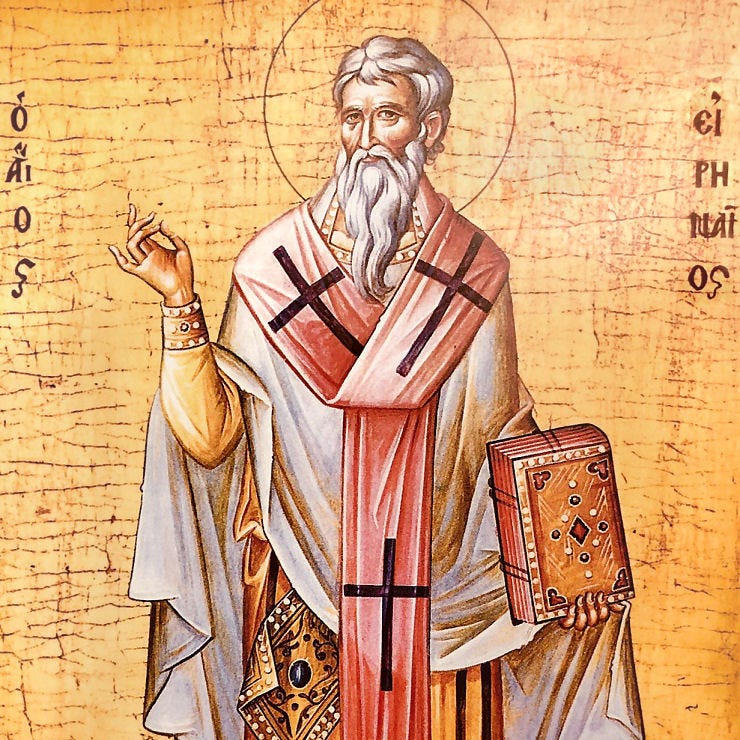

It wasn’t until the late 2nd century that the names Matthew, Mark, Luke, and John became connected to the Gospels. This association was primarily introduced by Irenaeus of Lyons (130–202 CE), an early Christian theologian, in his work called Against Heresies around 180 CE. However, it’s crucial to understand that Irenaeus didn’t offer substantial evidence or sources to support his claims.
Matthew also issued a written Gospel among the Hebrews in their own dialect, while Peter and Paul were preaching at Rome, and laying the foundations of the Church. After their departure, Mark, the disciple and interpreter of Peter, did also hand down to us in writing what had been preached by Peter. Luke also, the companion of Paul, recorded in a book the Gospel preached by him. Afterwards, John, the disciple of the Lord, who also had leaned upon His breast, did himself publish a Gospel during his residence at Ephesus in Asia.
— Against Heresies, Book 3, Chapter 1.
If the authors of the Gospels had not been explicitly identified prior to Irenaeus, how did he come up with the names Matthew, Mark, Luke, and John? Well, it’s important to understand that Irenaeus was known for his role as a “heresy hunter,” actively combating false teachings. It is possible that he sought to establish credible sources for the Jesus tradition he believed in by attributing the Gospels to specific authors who were known to be Jesus’ disciples or their companions.
What about Papias?
Certain Christians argue that Papias, who lived from 60 to 130 CE, identified Matthew and Mark as two of the Gospel authors. Unfortunately, none of Papias’ original writings have survived. We only have fragmented quotes attributed to him by other authors. Irenaeus mentions Papias as the hearer of John (likely John the Presbyter, not one of Jesus’ twelve disciples) and companion of Polycarp (Against Heresies, Book V, Chap. 33), but he doesn’t specifically address Papias’ views on the authorship of the Four Gospels.
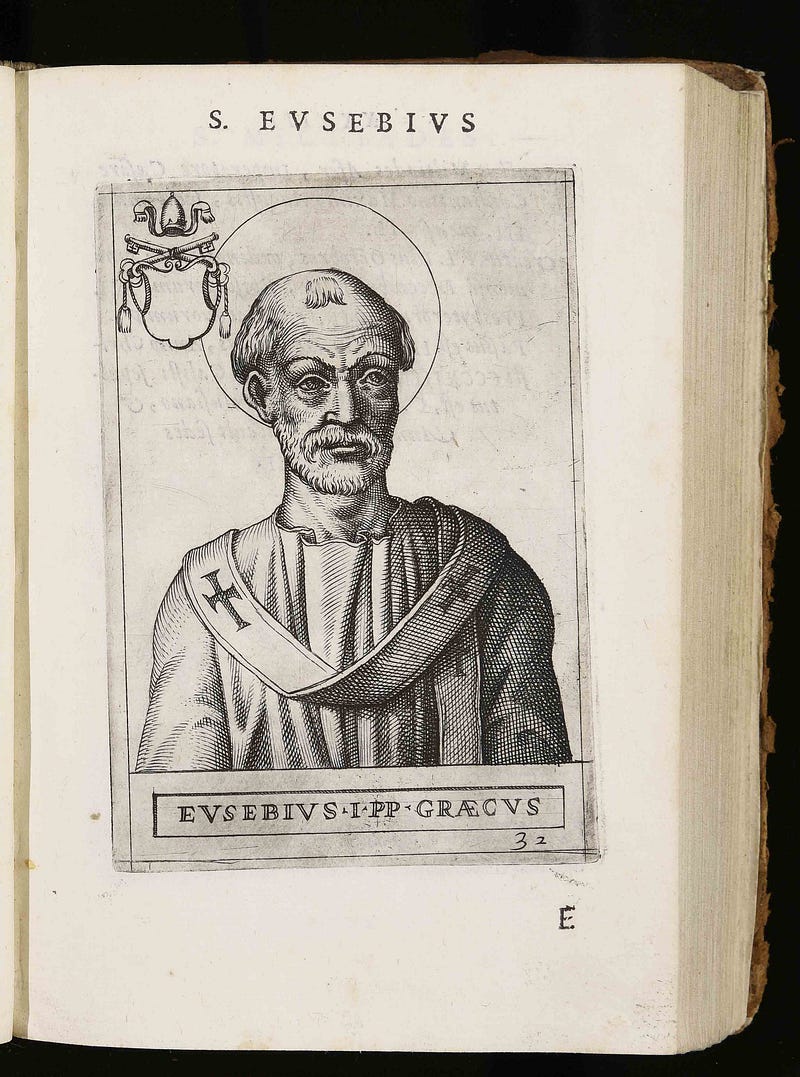
Papias’ discussion on Matthew and Mark is found in the works of Eusebius of Caesarea (260/265–339 CE).

But concerning Matthew, [Papias] writes as follows: “So then Matthew wrote the oracles in the Hebrew language, and every one interpreted them as he was able.” — The Church History, Book 3, Chapter 39
Even if we assume the quote above is authentic, the majority of scholars today hold a different view regarding the original language of the Gospel of Matthew. They generally disagree with the notion that Matthew was initially written in Hebrew or Aramaic and then later translated into Greek. It is plausible that Papias may have been referring to a different piece of work altogether, rather than the Gospel of Matthew as we know it today.
This also the presbyter [Papias] said: Mark, having become the interpreter of Peter, wrote down accurately, though not in order, whatsoever he remembered of the things said or done by Christ. For he neither heard the Lord nor followed him, but afterward, as I said, he followed Peter, who adapted his teaching to the needs of his hearers … — The Church History, Book 3, Chapter 39
Again, even if we accept the authenticity of the above quote, we cannot be certain that the writing Papias is referencing is the Gospel of Mark as we recognize it today. Papias does not explicitly describe that particular piece of writing as a Gospel. To make a more informed judgment on this matter, it would be advantageous to have access to the original manuscript, allowing us to examine the literary context surrounding the quote. Unfortunately, we do not possess such a manuscript, leaving us with limited evidence in this regard.
As a side note, Eusebius holds the belief that Papias had access to the teachings of the apostles’ friends rather than the apostles themselves (3.39.2). According to Eusebius, while Papias was a hearer of someone named John, this John is not identified as one of the apostles but rather as John the Presbyter (3.39.7). This further adds to the complexity surrounding Papias’ sources and the potential connection to the authorship of the Gospels.
Early Christian writers
If Irenaeus was indeed the first individual to explicitly mention the authors of the Four Gospels, one might wonder how other early Christian writers referred to these works. Let’s explore this issue now.
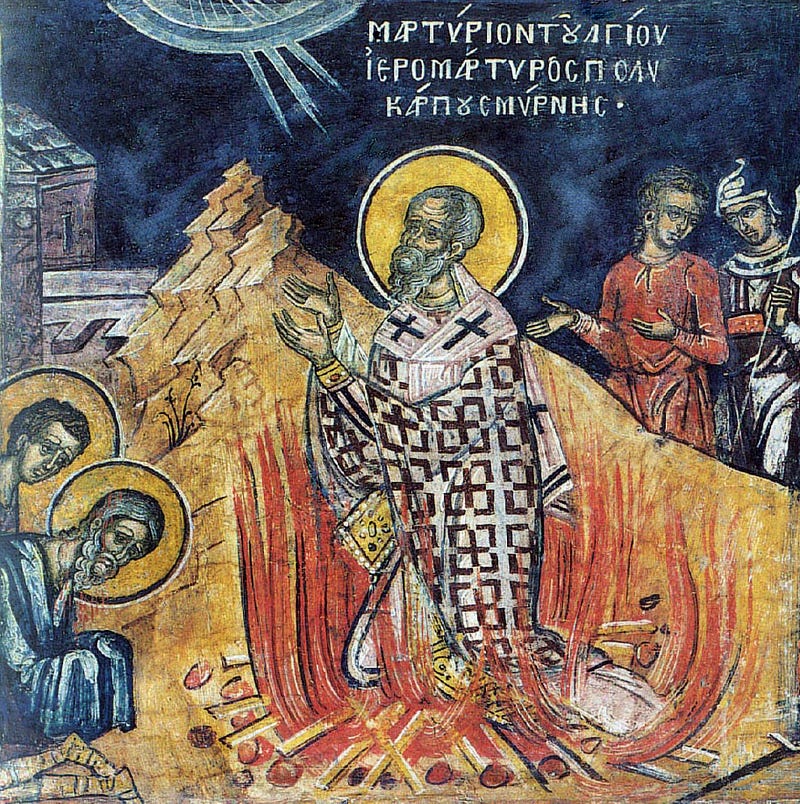
In his “Letter to the Philippians,” Polycarp (69–155CE) quotes or alludes to passages from the Gospels. For example, he references the teachings and sayings of Jesus that are found in the Gospel of Matthew and the Gospel of Luke. Polycarp does not explicitly mention the specific Gospel titles or authors, but his quotations align closely with the content found in the canonical Gospels.

During the mid-2nd century, Justin Martyr, an influential Christian apologist and writer, referred to the Gospels as the “memoirs of the apostles” (e.g. The First Apology, chap. 66). Despite extensively quoting from these texts, he did not explicitly attribute authorship to any particular individuals by mentioning their names.
Another disciple of Justin Martyr named Tatian created a harmonized version of the Gospels called the Diatessaron, but he also did not mention the names of the authors. The Diatessaron became a popular Gospel harmony in the early Christian tradition.
Athenagoras of Athens, an early Christian philosopher, made references to the Gospel accounts in his writings. In his work titled “Plea for the Christians”, he mentioned Jesus and his teachings, showing his familiarity with the contents of the Gospels, but he does not directly quote from or refer to specific passages from the Gospels.
Besides Irenaeus, the only known Christian writer who mentioned the name of one of the Gospel authors is Theophilus of Antioch. He is a contemporary of Irenaeus, so his writing To Autolycus could have been composed at around the same time as Irenaeus’ Against Heresies.
And hence the holy writings teach us, and all the spirit-bearing [inspired] men, one of whom, John, says, “In the beginning was the Word, and the Word was with God,” showing that at first God was alone, and the Word in Him. — To Autolycus, Book 2, chap. 22
Conclusion
If the early Christian writers had knowledge of the identities of the Gospel authors, it seems unlikely that they would have chosen to avoid mentioning them directly. Instead, they often employed more generic terms like “apostles” or “apostles’ companions.” This suggests that the authorship of the Gospels was likely unknown to these early writers. It wasn’t until later, during the late 2nd century, when concerns about establishing orthodoxy arose, that specific names began to be associated with the authorship of the Gospels.
Ultimately, we are faced with uncertainty regarding the true authors of the Four Gospels. Could Matthew, Mark, Luke, and John be the authors? It is a possibility, but far from a certainty. The prevailing notion within many Christian churches that they possess definitive knowledge of the Gospel authors is simply unwarranted and biased. Any individual claiming that the resurrection of Jesus can be historically established by appealing to the Four Gospel accounts being eyewitness testimonies should seriously reconsider their position.
If you are not a Medium member yet, please consider signing up using my referral link. I will get a small commission at no extra cost to you.