
Eyewitness Accounts of Jesus’ Resurrection
There are a lot of problems with them that Christians often ignore
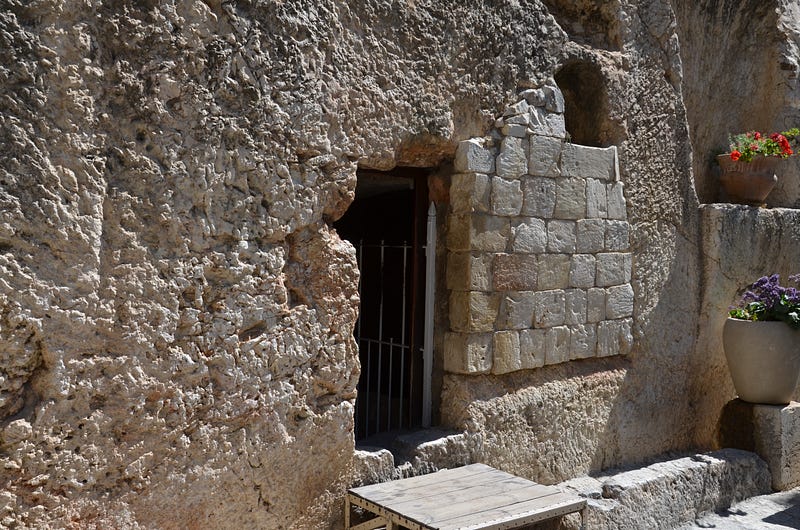
I have written elsewhere that historical eyewitnesses are not sufficient to establish a historical event that defies natural laws firmly established by modern science. In this article, I discuss further problems with the supposed eyewitness accounts of Jesus’ resurrection in the New Testament. Those problems eat away the meager credibility that these accounts have left and make them even less likely to present an accurate description of what really happened to Jesus.
I know those who are biased to believe in the Bible would still find a hard time to be convinced by my arguments. It’s OK. You don’t have to change your mind because of my words. I am only presenting my viewpoints and it’s up to you to agree with me or not. Let me know in the comment section if there are other points I should have considered.
Anonymity
The four Gospels are anonymous writings. The names “Matthew”, “Mark”, “Luke”, and “John” are not original, but were later assigned by the church. Of course, it does not mean that the real authors must be different people, but there is always a possibility that the early church got it wrong.
Why does authorship matter? Because the credibility of eyewitness accounts lies mainly on whether we can establish that those accounts were, in fact, written by eyewitnesses. If we can’t be certain who wrote the accounts, can they still be taken as eyewitness accounts?

Hearsay
Actually, even if the authorship designation of the four Gospels is correct, it still makes at least two Gospels hearsay (not composed by eyewitnesses) concerning Jesus’ resurrection. Mark and Luke were not members of the Twelve Apostles and did not witness resurrected Jesus. They only wrote down what they heard from others. Can we be sure what they wrote were accurate descriptions of the testimonies of actual eyewitnesses? No, we cannot.
While Matthew and John (assuming they are the authors) could have been witnesses to the resurrected Jesus, the inconsistencies between them and the other two Gospels make their accounts more suspicious (see next point below).
It is also noteworthy that the first witnesses of Jesus’ resurrection did not leave any written documents behind. So all accounts about those women seeing the empty tomb, angels, and even risen Jesus are all hearsay. We cannot rule out the possibility that part or all of the narratives about those women were made up.

Some Christians propose that since women were not considered credible witnesses in the court at that time, it is inconceivable that someone would invent an eyewitness account involving women. But Gospel accounts were not presented in the Jewish court, and Gospel authors (no matter who they were) clearly accepted women’s testimonies as reliable. Otherwise, they would not record them in the resurrection narratives in the first place (Do you really want to argue that the Gospel authors included testimonies they thought were unreliable?).
Furthermore, if the story was invented, it only made sense that women were the first witnesses since it was women’s job to go and anoint the body according to Jewish customs. To invent a narrative that involves men going to the tomb to anoint a dead person’s body would have been dismissed instantly as implausible.
Inconsistencies
Even though the resurrection accounts in the four Gospels are brief (Matt. 28, Mark 16, Luke 24, and John 20–21), they contain quite a number of inconsistencies. I summarize the main ones here.
How many people went to visit the tomb? Matthew says two women (28:1); Mark says three (16:1); Luke says plural, but does not specify a number (24:1), and Mary Magdalene is one of them (24:10); John says only one, Mary Magdalene (20:1). (Note that it’s just the first sentence of the narrative.)
What happened when they or she (depending on which Gospel account you are reading) arrived at the tomb? Matthew says they see one angel come down from heaven and roll back the stone (28:2); Mark, Luke, and John say the stone is already rolled back when the women / Mary Magdalene arrive(s) at the tomb, but there is no mention of an angel outside the tomb.
What happened next? Matthew says the angel outside the tomb instructs the women to go back to tell the news to others, so they head back without entering the tomb (28:5–8). Mark and Luke say the women enter the tomb. John says Mary Magdalene runs back, presumably after entering the tomb and seeing it empty, without talking to any angels (20:2).
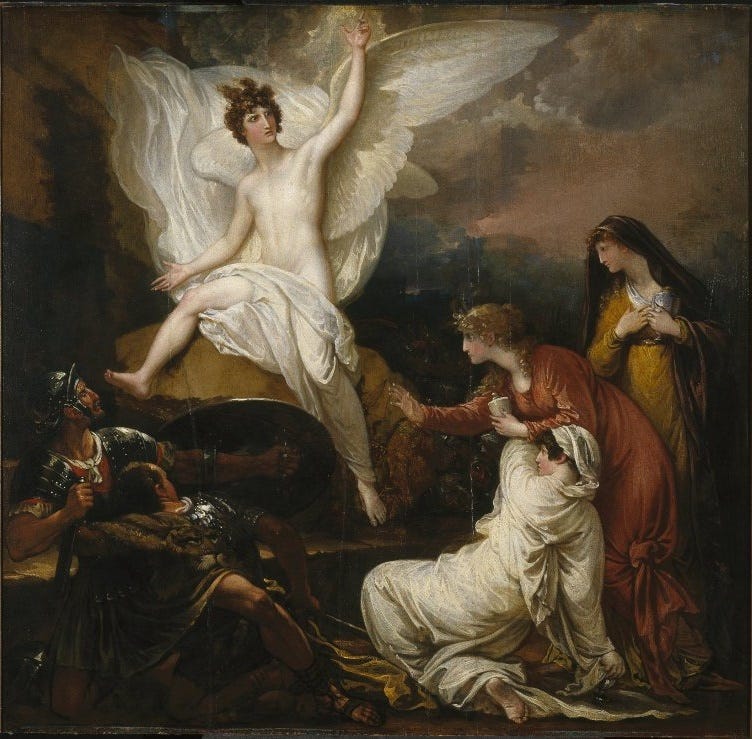
What did the women see inside the tomb according to Mark and Luke? Mark says they see a man sitting there (16:5); Luke says while they are wondering why the tomb is empty (which means no angel has informed them of the news yet), two men suddenly appear and stand beside them.
What is the message of the angel or angels (isn’t it amusing that I have to accommodate the different accounts by using “or” or “/”)? In Matthew and Mark, the angel outside the tomb / the man inside the tomb asks the women to tell other disciples to go to Galilee to see Jesus. In Luke, the angel just says Jesus is not there, without asking them to tell other disciples to do anything.
Are you confused yet? Bear with me. There are more inconsistencies to cover.
What did the women do after hearing from the angel or angels? In Matthew, the women head back, see Jesus on the journey back (28:9–10), and then report the news to the disciples, who then go to Galilee to meet Jesus. Mark, on the other hand, reports, “They said nothing to anyone, because they were afraid.” (16:8) (The longer ending of Mark, which is not considered original by scholars, is discussed below.) Luke says the women tell the news to eleven disciples (24:9), but John says Mary Magdalene only talks to two disciples (20:2).
What did the disciples do immediately after hearing the news? Matthew and Mark do not talk about it. Luke says Peter runs to the tomb. John says Peter and one other disciple (and presumably Mary Magdalene) rush to the tomb (20:3). It’s noteworthy to mention that Matthew says the women encounter Jesus on their way to see the disciples, so they already know Jesus is risen at this point, but in John, Mary Magdalene, upon returning to the tomb, is still troubled by the missing body of Jesus (20:13).
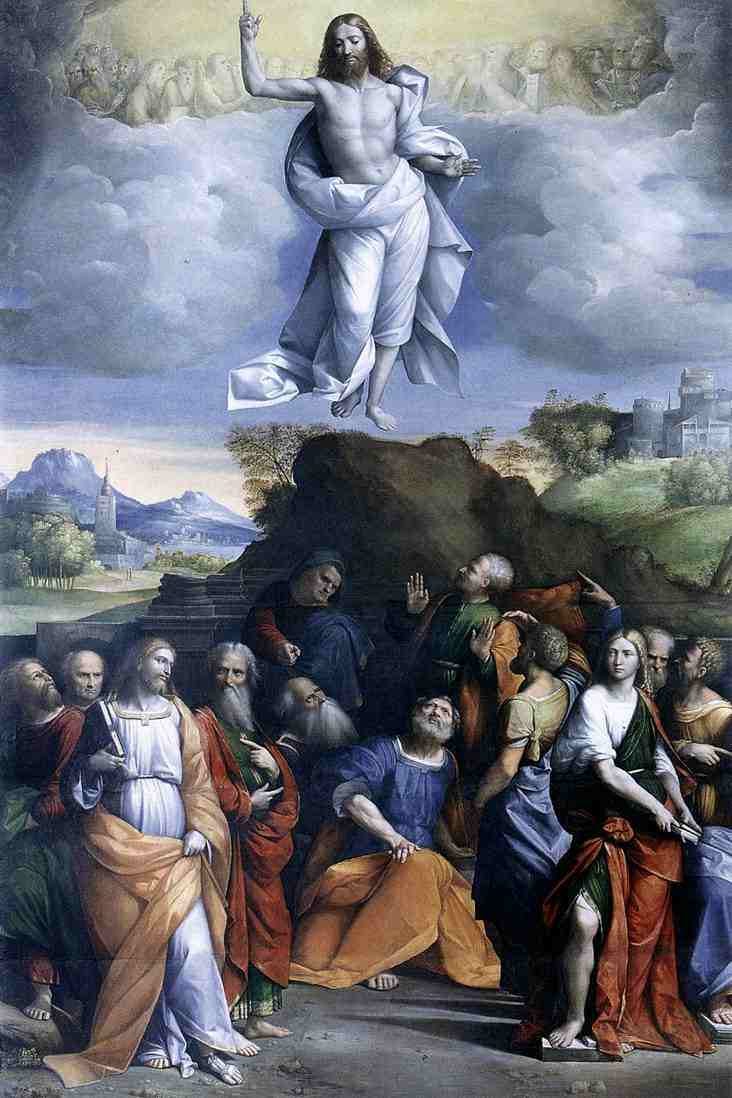
At what location did Jesus talk to the disciples for the last time and ascend to heaven? Matthew ends the narrative with Jesus giving them the Great Commission in Galilee. Luke, however, seems to have no clue about Jesus’ instruction for disciples to go to Galilee. Luke’s Jesus told the disciples to stay in Jerusalem (Acts 1:4), and the place of ascension was Bethany, a town near Jerusalem, but very far from Galilee (Luke 24:50–51).
There are still a few more minor inconsistencies, but you get the point. Many Christians are familiar with these inconsistencies, and the level of interpretive gymnastics they pull off to harmonize these accounts is stunning.
Some argue that those inconsistencies made those narratives more believable because that’s what you would expect from different witnesses who did not conspire together. That’s categorically false because we know the first three Gospels shared common sources, and some narratives are repeated nearly verbatim. But sure, let’s go along with that. My next question is: So which parts of those testimonies are right, and which are wrong, and how do you decide? For example, did Mary Magdalene, on her way to see other disciples, encounter Jesus or not? There is no coherent answer Christians can offer.
Some say that Mark, for example, only mentioned two women not because he believed only two women were there, but because he chose to focus his narrative on those two women. If that were true, it only makes Mark an unreliable witness (for conveniently leaving out important bits of the incident). Oh, wait, Mark is not a witness. He only heard about the resurrection story from other people, so that makes Mark an unreliable reteller of events.
Manuscripts not original
If having contradictory hearsay testimonies of Jesus’ resurrection embarrasses Christians, not possessing the original testimony records makes the whole situation much worse.
Earlier in this article, I note that the Gospel of Mark originally ends at 16:8, but that makes the contradiction between the Gospels too obvious. So later Christian scribes added a longer ending. You should be able to notice that the immediate concern is the women staying silent in verse 8, so the added lines contradict that verse by claiming that they did not stay silent after all (16:10).
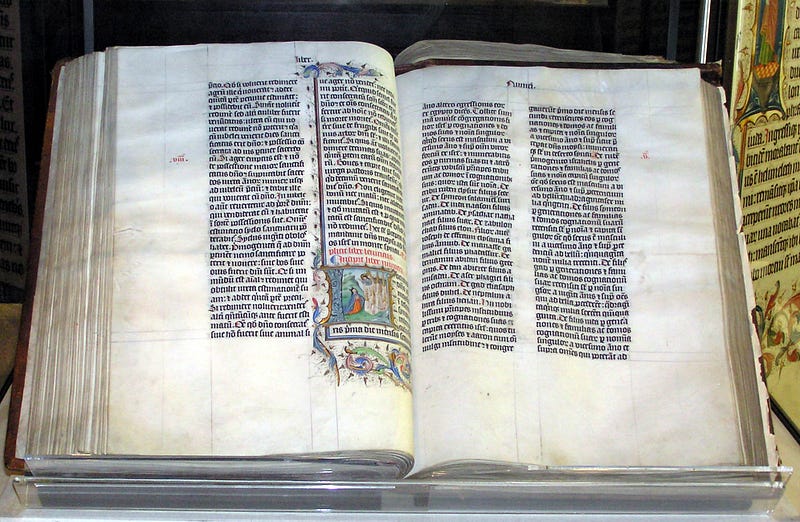
There are other confirmed revisions in the four Gospels. Another famous example is the interpolation of John 7, the narrative about an adulterous woman.
In short, embellishment or revision of the Gospel contents by later scribes is not only possible but also confirmed. Even Christian scholars today admit the presence of those embellishments. This fact diminishes the credibility of these accounts as accurate historical records of Jesus’ resurrection.
Other contemporaries who did not believe
Some Christians admit that contradictions in the Gospel narratives make ascertaining historical details more difficult, but they still emphasize that all four Gospels agree that Jesus has risen. In their thinking, as long as the main idea is portrayed consistently, it serves as a potent piece of evidence.
Not quite.
It is not surprising that we find all four Gospels proclaiming the risen Jesus. After all, the New Testament is a collection of books written by believers, who have already bought the idea of Jesus’ resurrection. Today, we can easily find new religious movements printing tracts that contain multiple testimonials all affirming their religion. Does that impress you? I hope not.
When considering the robustness of the evidence for Jesus’ resurrection, Christians often forget that there are other parties during Jesus’ time who do not think Jesus was resurrected, and they are much more numerous. If Jesus was indeed resurrected, why were the vast majority of Jews not persuaded?
Christians would say, that’s because Jesus only appeared to His disciples. Putting aside the strange fact that Jesus would only appear to those who already believed in him, why weren’t early Christians successful in persuading the majority of Jews to accept Jesus’ resurrection? The early church was only successful in proselytizing Jews in Diaspora (Jews who lived outside the region of Palestine) and Gentiles, who did not meet Jesus nor lived in Palestine. If the majority of those who lived in close proximity to Jesus and shared his religious customs did not believe in Him, why should we?
Which is more probable? 1. We, who are far removed from the scene, would know more about the facts surrounding the supposed resurrection event. 2. The majority of first-century Palestinian Jews who had first-hand experiences with Jesus’ disciples and perhaps even Jesus himself, would know more facts about the event.
Final remarks
Imagine you are a juror, sitting in the court listening to a witness testifying against the defendant. You are still struggling to decide whether that testimony serves as sufficient evidence for a conviction. Then you find out that the witness is not actually an eyewitness, but only reports what they heard from other people. Naturally, your confidence in that witness is down. Then you find out that the witness did not really hear from eyewitnesses, but only read documents that were handwritten copies of copies of copies of the original, and repeated what they read in the court. Then another witness goes up to the stand to testify against the defendant, but the details of their testimony contradict the other witness.
Do you still think the defendant is guilty, as the witnesses claim?
Now, apply that evaluation approach to testimonies of Jesus’ resurrection. What do you get?
If you are not a Medium member yet, please consider signing up using my referral link. I will get a small commission at no extra cost to you.


_-_Benjamin_West_-_overall.jpg)

