
Travel Series
The Most Exotic Food I Have Eaten Is a Korean Dish — Can You Guess What?
It was high in protein and I had it together with an equally strange alcoholic mix.
It was the late summer of 2017.
Way before COVID-19 ravaged the world and ended business travels.
I was on an international business trip to South Korea. On arrival at Incheon International Airport, I hopped onto the taxi as I made my way to the hotel.
The weather was bad. Rain had greeted me on my first visit to Seoul.
It was also my first time in Korea.
I hadn’t known this, but this business trip was going to stretch the limits of what I thought was possible to eat.
Korean Hospitality
Checking into the hotel that my Korean counterparts had graciously reserved for me, I started wondering about what to eat for dinner.
I checked the time. It was around 8 PM.
Searching for a place at this time, in the rain, in a country where I didn’t speak the language? That was going to be a challenge.
But I didn’t have to worry.
As soon I as I had put my luggage aside, the telephone in the hotel room rang.
I was surprised.
Who could be calling me?
It was my Korean colleague. She had called me and invited me to join the rest of their team for dinner. I was hungry and the prospect of eating what the Koreans ate was enticing.
I accepted the offer and met my colleague in the hotel lobby ten minutes later.
The Korean Love Affair with Alcohol
There is a stereotype that Koreans are some of the heaviest drinkers in Asia. It turns out this trope has a basis in reality.
By one estimate, Koreans consumed 8.65 liters of alcohol in 2020, the highest among Asian countries. And, in my limited interaction with the Koreans that I had met, this certainly seemed to be the case.
My hosts didn’t disappoint me.
I sat down at the table and ordered a beer. And also, makgeolli. I was in Korea after all.
I had known that the Koreans mix beer with makgeolli — surprisingly delicious, by the way — but this was my first time drinking another alcoholic mix.
Beer and soju.
My Korean host poured soju directly into my beer with what appeared to be a sadistic glint in their eyes.
Think of it like mixing beer with vodka.
As they say, when in Rome, do as the Romans do.
I downed it, and my colleagues roared with approval.
My invaluable experience as a salaryman in Japan, attending after-work drinking parties had trained me well.
I knew all the rituals. Perhaps drinking parties are not that different in Korea and Japan?
I had passed their first test — but there was more to come.
All the Exotic Foods I Had Previously Eaten
Now, before I get to the main course, I must add a warning.
*You might lose your appetite after this.*
If you are a vegan, you may want to stop reading here.
As an Asian, from Singapore, and now living in Japan, I’ve eaten a lot of things that people from certain cultures might consider exotic, weird, or just downright gross and unpalatable.
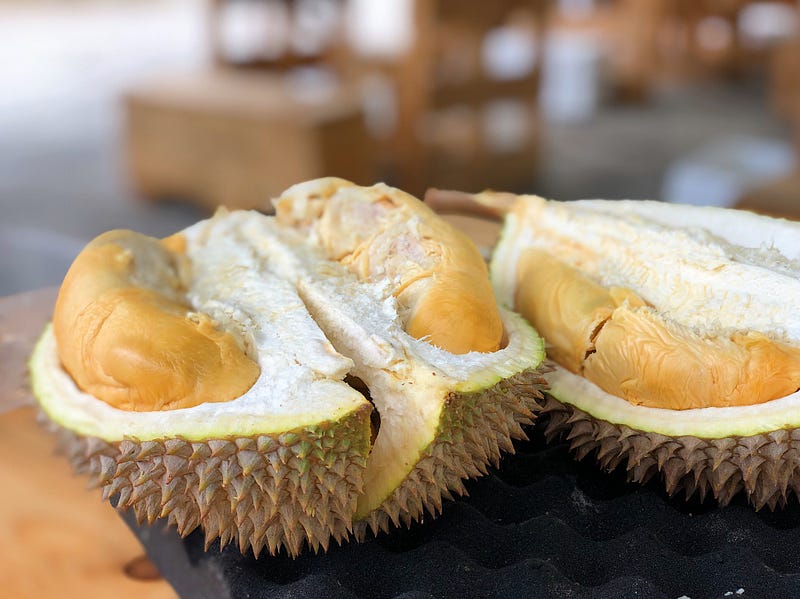
I love durian — the thorny fruit from Southeast Asia that stinks and is said to smell like a dozen different things — from cheese to garlic to unwashed socks.
I’ve tried nattō. Soybeans that are fermented with a bacterium that turns the beans stringy and gooey.
At first, I found the taste unacceptable. Nowadays, I don’t mind eating it. For the nutrients — and Vitamin K2, and an enzyme called nattokinsase, which has been shown to promote cardiovascular health.
Tempeh — of course. I love the nuttiness and meatiness of this fermented soy food from Indonesia.
Stinky tofu? I ate that too. Both the stewed and fried versions, in Taipei and Shanghai, respectively.
Frog legs? You bet. It’s a delicacy in Chinese cooking.
Beef tongue, beef tripe, oxtail, beef liver.
Pig’s ears, stomach, intestines, trotters, liver — all delicious.
I’ve eaten shirako — the sperm sac of the male codfish.
Raw horse meat? Yes, you can eat that in Japan and it’s called basashi.
Fugu — pufferfish— oh yes I tried it too and it was underwhelming. Probably in a good way.
I tried something like balut in Cambodia. What is that? It’s a developing bird embryo. To my knowledge, they are usually duck. The taste? It’s in-between egg and poultry.
You might not want to google that.
I once even tried fried cricket in Bangkok.
But this made everything else I have ever tried pale in comparison.
The Most Exotic Food I Have Eaten
None of that prepared me for what was coming.
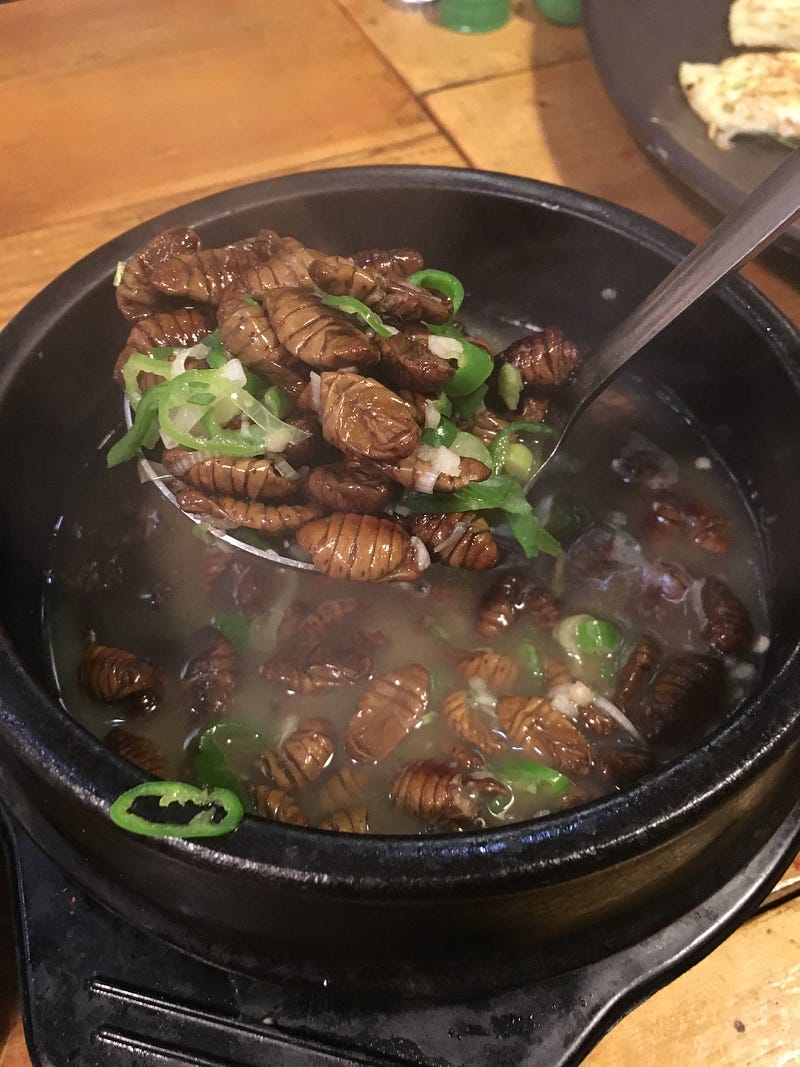
Silkworm pupae.
Google tells me that it is called beondegi in Korean.
It came out in a pot filled with a soup. There was no chickening out on this.
I knew I had to impress my Korean hosts.
So, I did what needed to be done.
I took a bite. The taste was… funky.
It tasted musty. When I sank my teeth into them, the juice from inside the cooked bugs burst open in my mouth and tasted like moldy wood.
At least the fried crickets were crispy and tasted like shrimp crackers.
Stewed silkworm pupae are juicy.
I swallowed it as quickly as I could and gave a thumbs-up sign.
The room roared with approval.
You must think I’m making this up.
I assure you, I am not.
Silkworm pupae are very nutritious. Containing 21.5% protein, it has even more protein than eggs or milk!
According to a nutritional analysis of silkworm pupae published in the scientific journal Food Science & Nutrition, the proteins of silkworm pupae are also considered “complete proteins.”
Moreover, silkworm pupae has “all the amino acids required by the human body and in the appropriate proportions based on the recommendations of the FAO/World Health Organization.”
They are also a very good source of fatty acids!
I pride myself on being quite open to learning about new cultures, and adventurous enough to try new things.
I’ve tried all kinds of foods, but something still bugs me about eating juicy, chewy bugs unless they are from the sea. It’s probably cultural conditioning, but even so, I recognize that there are limits to what I can accept as food.
Will I ever try it again? I’m not sure.
Would you try it if you were offered beondegi?
To be honest, beondegi is mild compared to another exotic food — fugu, also known as pufferfish.
As Jason Adamson writes in his story, Death by Fugu, pufferfish, if not properly prepared, could kill you. And it’s considered a delicacy in Japan.
If all of this exoticness is getting to you, fear not. Here’s a much less exotic beverage to reset your palate.
Most people have heard of matcha or powdered green tea. Less well-known outside of Japan is mugicha — roasted barley tea. Discover this popular summer beverage in DC Palter’s Why I Switched from Diet Coke to Mugicha and learn why it’s Japan’s most popular summer beverage (apart from beer).
Author’s Note: This story was written in response to Sharing Randomly’s prompt The Most Exotic Food You’ve Eaten Is…
The author writes on a variety of topics. His key topics are society, culture, modern work, and cryptocurrency, with the occasional fictional story, creative piece, or reflective essay. Discover his most-read stories here.
If these topics interest you, consider subscribing to receive new stories from the author via e-mail.


