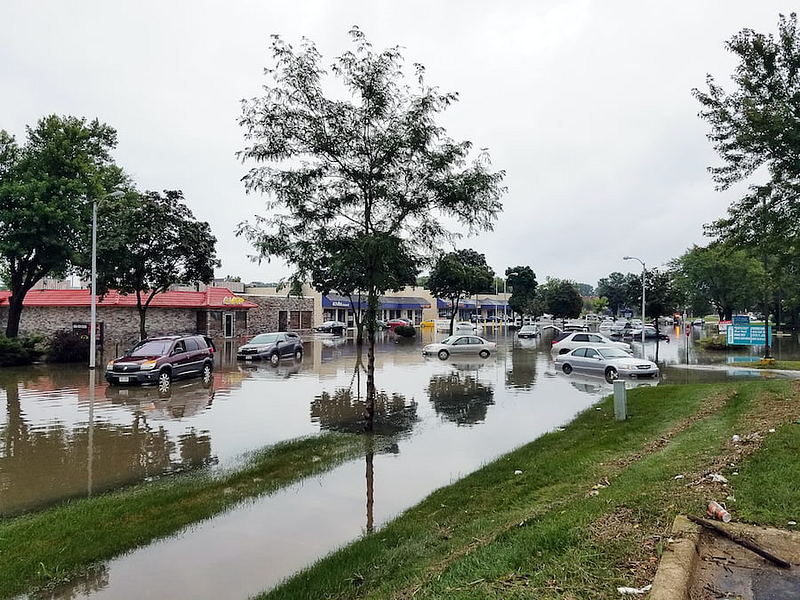
The Mississippi Flood of 1965 Threatened an Entire Town, the Highest on Record.
DEP prompt 2 of Life Column: “A memorable incident in your life.”
After our Army discharge from active duty, Brent and I moved to Rock Island, Illinois. Brent intended to work with his father in an established optometric practice. Rock Island sits on the banks of the Mississippi River. This was Brent’s hometown and my first introduction to the Midwest.
A young married couple, we leased an apartment and settled in. We had a ten-month-old baby girl and I was expecting another child. April was almost constant rain. March had been cold and now the snow began to melt. The still-frozen ground couldn’t absorb the snowmelt and rain.
The National Weather Service records March 1965 as the second coldest March. The rising river flooded five blocks inland. It displaced hundreds of citizens and businesses. April 1965 was the second wettest on record.
The crest reached seven and a half feet above flood stage. It stayed that high for three weeks. Volunteer citizens filled and stacked sandbags to halt the encroaching water. With classes suspended local high school and college students joined the fight.
Their heroic efforts protected major businesses and homes. A bronze plaque commemorates the event at the entrance to the Centennial Bridge.
Brent joined the rescue effort while I remained with our daughter, Chris. I did not want to stay behind. I yearned to help save the city also. I’m an action-oriented person and don’t do well sitting on the sidelines. I prepared high-carbohydrate meals for my husband at the end of his shift. He saw many rats scurrying away from the danger.
That flood prompted Rock Island to build a permanent flood wall to protect the city in the future. The Mississippi River floods every year. Snow melt from Minnesota and Wisconsin always causes rising water in the spring. Many river towns have erected flood walls also.
But Davenport, where I live now, refuses to do so. It endures flooded streets that inundate businesses every year. Sandbagging is a way of life here. To build a flood wall now would be astronomical.
Mankind seems to have a propensity for creating many of its own problems. Wetlands used to thrive beside the Mississippi in years past. When floods occurred there was an outlet for the excess water to go. That environment supported a variety of wildlife and birds. Nature is adept at providing checks and balances when left alone.
Many people want to live near a large body of water. It is prime property. They began to fill in the wetlands so they could build there. So flood checks were disrupted. Now man has to deal with regular flooding that Nature used to solve. When will we learn to stop interfering with Nature?
Dr. Preeti Singh has issued this prompt for the life column.
Vidya Sury, Collecting Smiles writes a marvelous poem about accepting our individual uniqueness as being enough for us to embrace.
Dr. Fatima Imam reminds us of the power that words can have on mankind.
✍ — Published by Dr. Gabriella Korosi, at Dancing Elephant Press. Click here for submission guidelines.