
Super Success Secrets
The Magic 80/20 Rule
How Doing Less Can Make You Achieve More!
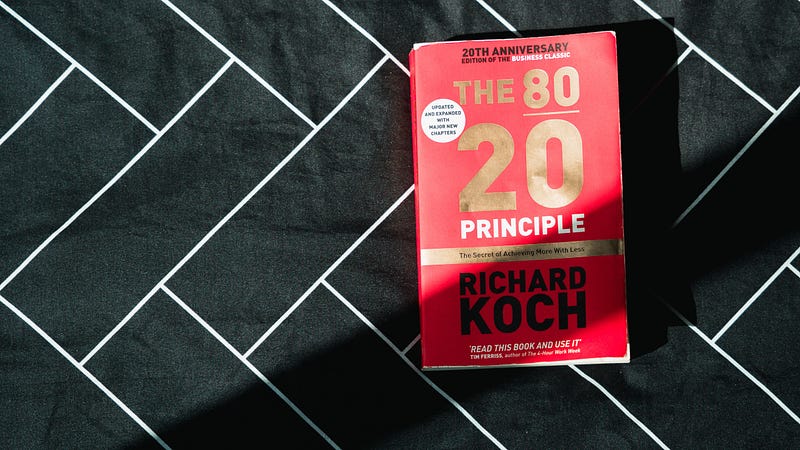
What is the 80/20 Rule?
The 80/20 rule (or the Pareto Principle) is a powerful idea that means almost 80% of all outcomes from 20% of all efforts.
Some particular small actions can give us more results than a bunch of unnecessary actions we can take.
This principle we can apply in different areas:
- Business
- Time Management
- Personal Development
Applying this rule can help you focus on the most critical tasks. You will start making better decisions and achieve more.
This rule is like magic. If you use it correctly, it gives you more time and resources for doing essential things.
Thinking 80/20
First of all, you should start with your thinking process. As this article is for everyone, I can summarise all possible areas where you can apply it:
- Working
- Learning
- Exercising
- Relationships
- Self Improvement
For example, let’s take a look at self-improvement. It’s a vast area where we can do a lot of things at the same time.

You can start reading many books on productivity and time management.
At the same time, you can watch videos on the same topic every day. You can also watch courses and do many more similar things.
But as a result, we usually get improvement only on 10–20% percent. This number means that we don’t open our potential to the maximum.
For example, if you read ten books in 2 months, you still need to learn all advice and apply all actions. The primary purpose is to learn and become better.
What if you read only one book on self-improvement? And then, you will apply those principles in your life.
For example, we can take a book, Atomic Habits.
This book is fantastic for applying daily habits with little effort.
You have two options:
- Read all books and articles on creating habits
- Read only one book and apply all those principles in your life
The second choice requires much less effort. But at the same time, only one book and perfect practice may bring you the results you are looking for in developing good habits.
80/20 Time Management
Time is one of the most expensive resources we have. We can’t buy or exchange something to get it.
Ask any older man what the most important things he has lost in his life are. The answer could be different, but most agree it’s time.

We should use our time very carefully. Every day we spend 8 hours on the work and 2 hours on the food.
Very little time we have by the end of the day. I have noticed how quickly time is gone, week by week and month by month. Now, it’s even easier to see how fast each year passes.
The rule 80/20 may help us here as well.
First of all, we should define where we spend our time. There are usually two categories of time spending:
- Necessary
- Unnecessary
In the first category, we can add eating, sleeping, working, spending time with family, etc.
We can add things like scrolling socials, playing games, watching videos, movies, and series to the second category.

We shouldn’t get rid of all these things in our lives. But it would help if you understood that every day, you may spend at least several hours on:
- Instagram, TikTok
- YouTube, Netflix
It’s good to rest and watch some series on Netflix (as for me, I love watching Peaky Blinders, Witcher, etc).
But if you ever wanted to start doing the following things:
- Reading (to get new knowledge)
- Studying (to learn new things)
- Exercising (to improve your body)
- Creativity (to create your things)
All these items need only one thing from you. It’s a time! And it’s your choice how you spend it.
Saying “No”
As I previously said, we consistently waste our time. And it’s our choice how to spend it.
One of the best principles in any area of your life is declining things you don’t need.
“There is nothing so useless as doing efficiently that which should not be done at all.” — Peter Drucker
Often, I like to read James Clear’s website. It contains many wise articles with excellent principles. In one of the articles, I found a fantastic quote that changed my thinking process.
When you say no, you are only saying no to one option. When you say yes, you are saying no to every other option.
Just think about it. If you say yes, then you say no to other possible options.

For example, if you buy chips and cola in the shop, you don’t buy broccoli and chicken.
You don’t read a book if you watch Netflix in the evening.
I can continue creating examples of this principle, but you should understand that you need more resources.
We have limited resources:
- Time
- Energy
- Money
Often, people think only about money. It’s easy to understand how you can spend them and how much you can buy.
But people need to remember two other critical resources: time and energy. With both of them, we can grow up, build a business, have good relationships, etc.
That’s why you should teach yourself to say no to many things in your life if you still want to start doing those things you dream about.


