
Build a Habit System: Steps to Become Better by Atomic Habits
You can improve yourself 37 times over in just one year by making a 1% daily improvement

Did you know that habits comprise around 40% of our daily behaviors?
Duke University researchers have found that learning to create new patterns and understanding how our current ones work is crucial for improving our overall health, happiness, and life.
Recently I have done some research on the topic of making good habits. There are different ways to make it better, but one source I found remarkable. It’s the book Atomic Habits by James Clear.
Check out James’s website for valuable insights on creativity, habits, focus, productivity, and self-improvement. Here’s the link for your convenience.
The main idea about habits is the next. It builds, defines, and describes us. Our actions depend entirely on our practices, and our habits take at least half the day we spend.
If you get used to doing sports, reading books, learning new languages, improving yourself, and creating something, you are getting better. And if you stick to bad habits like scrolling social for hours, you need to get better.
One picture that made me think differently about habits is the next. But before I share it with you, I want to ask you two questions.
- What will be with you if you improve by only 1% daily compared to yesterday?
- Do you know what will be to you if you become worse every day by only 1% compared to yesterday?
You can see the answer in the picture below.
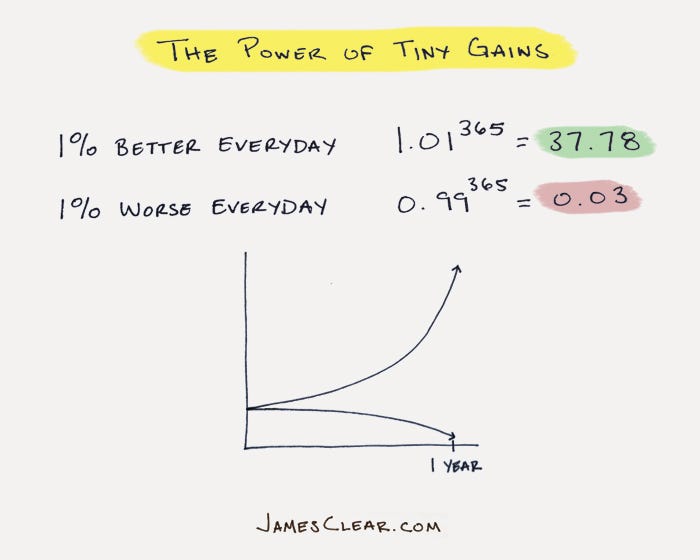
Often we run to get significant results immediately. We want a good body, a finished project, or anything else in several days, weeks, or months. But we always need to understand the definition of slow growth.
If you make minimal improvements about yourself every day, it will be a massive result in the future. If you read only 10 minutes daily, it will be 60 hours of reading per 1 year.
On average book contains 200 pages, then you will read 18 books yearly. It’s a lot. Many people need to read even a book per year. But you can spend only 10 minutes daily and have such tremendous results.
I hope you got an idea. You can apply it to anything. Essential to see the result, but not what you get only today.
Now I’d like to start sharing the main ideas about building good habits from the book Atomic Habits with you.
1. Begin by Adopting a Tiny Habit
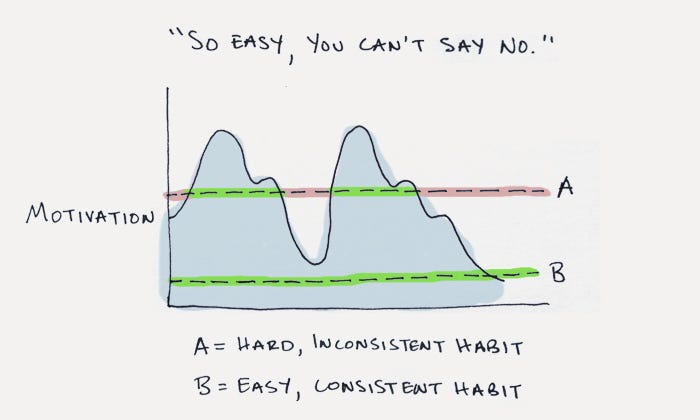
It takes a lot of work to start with something big. And usually, if you continue spending much energy and time on something, you can easily give up on it. That’s why the first piece of advice is to start with something small.
If you want to get better shape, start with one squat on the first day. And then increase it by one each day until you will do the necessary amount you would like, for example, 50 squats per day.
Another reason you should make a small habit is that you will only need a little motivation. It’s something small that won’t take much effort from you, so no dopamine and other hormones are engaged in this.
2. Improve Your Habits with Small Steps
The same image we have seen before. But it’s the image I’d like to print on a stick to my wall because it tells us much more than just an outcome from a good habit in one day, but a natural product in the long run.
As we learn finances, where we have a definition of compound interest, here works the same rule. Small and regular investments, in the long run, will give us huge profits.
Make it regular. If you break a chain, then you will lose. It’s better to get better by only 1% every day than getting better each month by 20%. You see the picture. And it says a lot.
So, make small steps, and you will get great results.
“Habits are like the atoms of our lives, each one is a fundamental unit that contributes to your overall improvement.” — James Clear
3. Break Habits Into Smaller Pieces
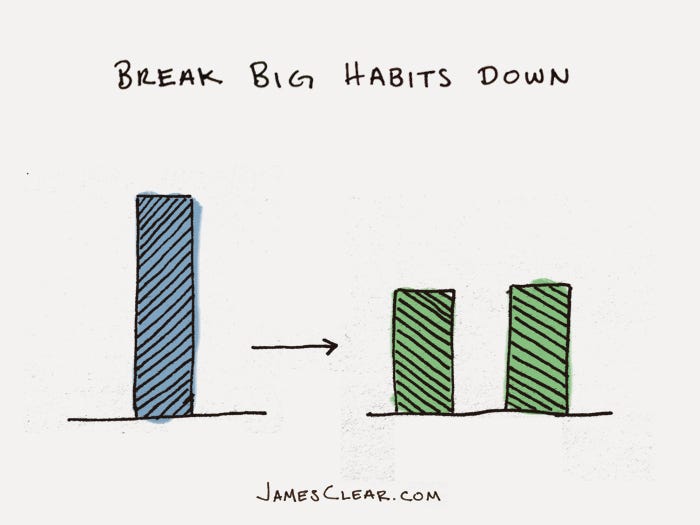
When you get bit results in your habit, splitting it into parts is better. For example, you can now meditate for 30 minutes. Meditate 10 minutes 3 times per day.
Same with your sports activities. Suppose you can do 100 push-ups. Repeat five times during your day with 20 push-ups.
That’s a fantastic rule that will help you stick to your habit, and at the same time, you will only lose a little time and energy resources on it.
4. Getting Back on Track is Crucial
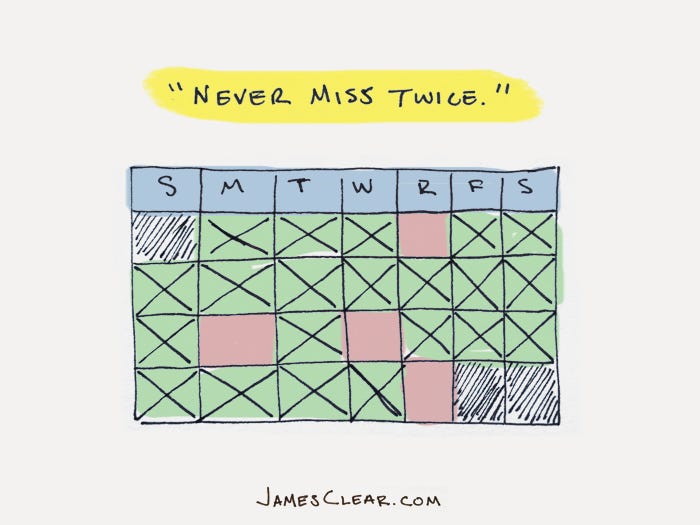
Sometimes it can be tempting to give up on something, particularly when you’ve invested a lot of time and effort and aren’t seeing immediate results.
For example, projects where people may begin with enthusiasm and motivation only to lose steam and abandon the endeavor after just a couple of months when they feel it’s not worth pursuing.
If you have set a goal, you need to stick to it. No matter what happens, it would help if you continue your work. Look again at the second point of this advice, and remember when you get your outcome.
But even if you miss one day. Remember that you can get back at any time. If you missed a month, that’s not good for a habit, but you can get back. No one will judge you.
If you don’t want to have such gaps, you need to:
- Make a plan for such days when you don’t want to do your stuff
- Analyze what happened and why
- Please find a way of getting back and see the reason why you do it
It’s good to have motivation, but not enough. You need to have a habit and make it permanent.
The best way to improve your self-control is to see how and why you lose control. — Kelly McGonigal
5. Maintain a Sustainable Pace. Be Patient
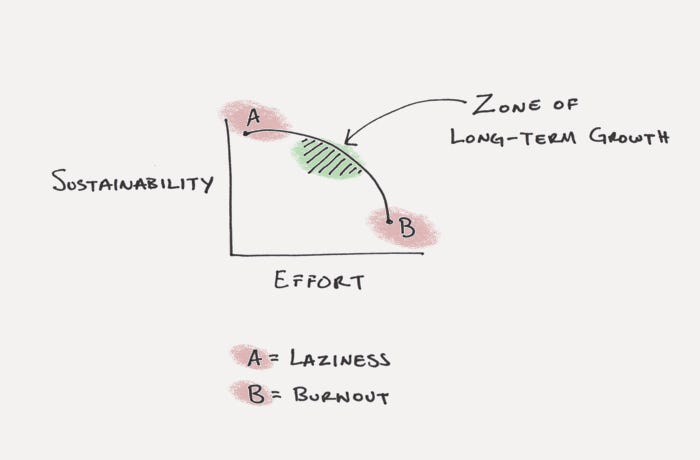
Calm down. Take your time with things you want to achieve. It would help if you got a good portion of patience. In almost all scenarios, we get results in the long term.
It’s almost impossible to get anything significant in a short period. It would help to spend at least several months or a year creating something incredible. So, it would help if you found the right rhythm for you.
Also, if you make the right system, set reasonable rules and find what works exactly for you. Then you will get what you want. Forget about motivation.
Learn to look far. And then, you will see your path, and the only thing you will need to do is to go forward.
Don’t look back. Learn your mistakes. But only repeat them sometimes. Better to repeat something good every day. Then you will get better, and everything stuck to you will get back.
“Your habits shape your identity, and your identity shapes your habits.” — James Clear
If you want to learn more about this book and the principles James Clear shared with us, I recommend watching the following video on Youtube. It will take less than 30 minutes, but you will learn much from it.


