
The Largest Human Zoo In History Was a Western Shame
Horrifying history of exploitation.

Does flipping the name of human zoos to “ethnological expositions” make it more acceptable? Definitely, not.
During the 19th and 20th centuries, world travel became more common as the world turned into a global village.
From scientists to philosophers, different people began taking an interest in other cultures, but what’s saddening is how the travel was not solely educational. Instead, established societies had to show off their superiority to the uncivilized ones and one of such was ways was through human zoos. Let’s take a peek at them:
Human Zoos vs Freak Shows
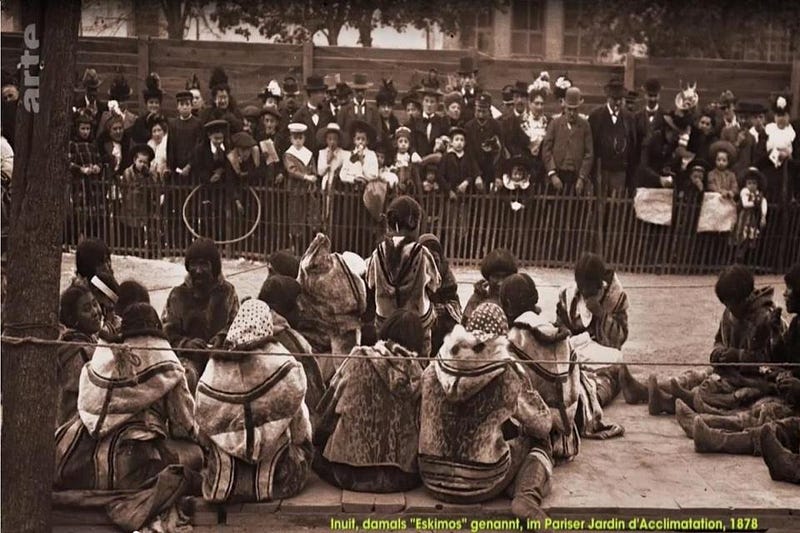
The exhibitions of human zoos were abusive and cruel — the Brussels human zoo gained popularity when it began featuring a young African girl that visitors could feed from behind the fence.
The majority of the people exhibited in the zoo received no compensation — no social help or money. Sadly, many ended up in the “unmarked” graves when they died.
Now, what made the human zoo different from the freak show? The latter was the American concept, where people with some sort of rarities would perform acts and exhibit themselves in return for compensation.
From conjoined twins to albino people, from four-legged women to a bearded lady, many had been part of P.T. Barnum’s American Museum.
Freak shows, in that regard, were less exploitative as the money earned from the show offered people a better life that otherwise would have gotten spent on streets or orphanages.
If we take an example of conjoined twins Chang and Eng, upon retiring at the age of 29, they accumulated a fortune worth $1.3 million today.
Europe — the pioneer of a horrible idea
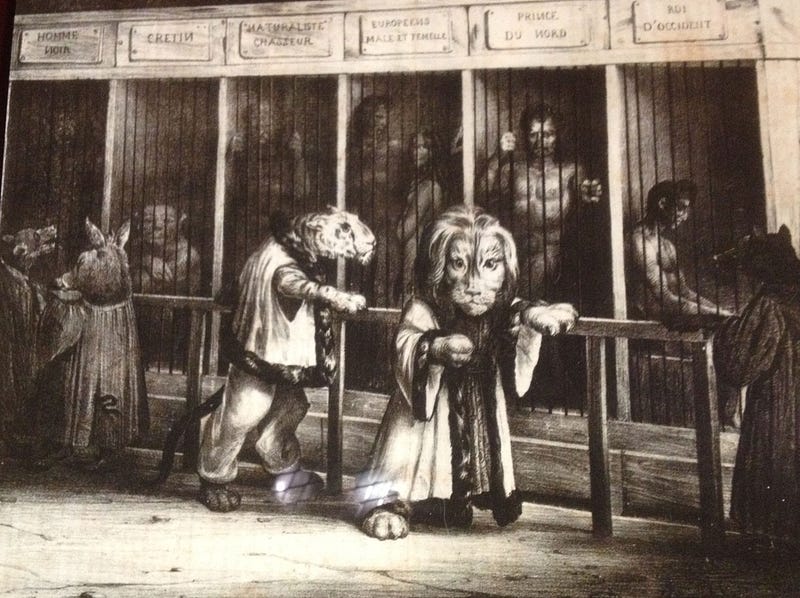
It was not until the second half of the 19th century when human zoos accumulated great popularity across several European capitals.
The statistics of Ferris State University revealed how 200,000 to 300,000 visitors visited the human zoos regularly. One human zoo in 1877 in Paris featured Nubian and Inuit people, and it attracted one million visitors.
Further, in 1889 in Paris World’s Fair, 28 million people were attracted to a “Negro Village,” which displayed 400 indigenous people who had origins from French colonies — the most prominent human zoo ever.
The village, divided into six small areas, was a place where people not only slept but also worked and lived. It was meant to show the differences in the lifestyle of savage and civilized, carrying a purpose more of entertainment than education.
Semi-nude humans were exhibited in the cage, and some were supposed to perform — especially the natives from the french colonies. By 1931, the human zoo in Paris had attracted 34 million visitors before closing permanently six months later.
The largest human zoo ever was in the U.S.
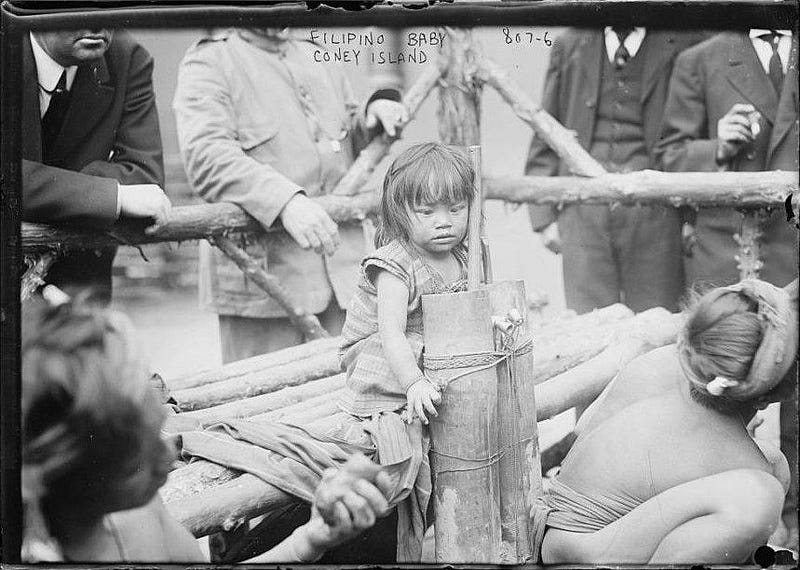
Europe was already famous for its “ethnographic exhibits,” and the human zoo soon made its way to the U.S. too. In 1904, St. Louis World’s Fair opened, spreading across an area of 1200 acres.
Apart from featuring scientific and trade exhibitions, the fair also showcased ‘living exhibits.’ The largest in the USA was a Philippine exposition which held over 1000 Filipinos from different tribes in 130 buildings.
Igorot Village in the Filipino exhibit got most of the visitors. Why? Well, it was e advertised as ‘the least civilized’ village. The semi-nude natives were given dogs to cook for food, and that too daily.
Additionally, the St. Louis World’s Fair required the “native habitats’ ‘ to perform ceremonies and dance for entertaining visitors. Apart from hosting the Filipinos, the exhibition housed Ainu people from Japan.
A heartbreaking tale of Ota Benga
If we talk about the most heartbreaking stories, one of them involves a Congolese man named Ota Benga.
Exhibited as a cannibal because of his teeth, which were filed into sharp points, Ota was bullied poorly.
Ota Benga was later taken to the Bronx Zoo, where displayed as a “savage pigmy”, he was forced to share a cage with apes.
The destiny of Ota was miserable as even after getting released from the cage, he failed to adapt to his surroundings. Eventually, he shot himself in 1936.
History reveals horrible times when normal humans were treated worst than wild animals and forced to believe they were one of them. No one cared. No one followed up. No one raised a voice for justice — until much later.
More from the author:
References: